
Luis J. Rodríguez
Luis J. Rodríguez (b. 1954) is a poet, journalist, memoirist, and author of children’s books, short stories, and novels. His documentation of urban and Mexican immigrant life has made him one of the most prominent Chicano literary voices in the United States. Born in El Paso, Texas, to Mexican immigrant parents, Rodríguez grew up in Los Angeles, where in his teen years he joined a gang, lived on the streets, and became addicted to heroin. In his twenties, after turning his back on gang violence and drugs, Rodríguez began his career as a journalist and then award-winning poet, writing such books as the memoir Always Running (1993), and the poetry collections The Concrete River (1991), Poems Across the Pavement (1989), and Trochemoche (1998). He has also written the short story collection The Republic of East L.A. (2002). Rodríguez maintains an arts center, bookstore, and poetry press in L.A., where he continues writing and working to mediate gang violence.
16 Books Written
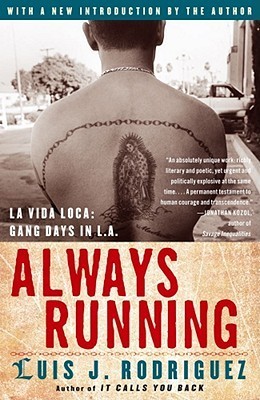
The award-winning and bestselling classic memoir about a young Chicano gang member surviving the dangerous streets of East Los Angeles, now featuring a new introduction by the author.Winner of the Carl Sandburg Literary Award, hailed as a New York Times notable book, and read by hundreds of thousands, Always Running is the searing true story of one man’s life in a Chicano gang—and his heroic struggle to free himself from its grip.By age twelve, Luis Rodriguez was a veteran of East Los Angeles gang warfare. Lured by a seemingly invincible gang culture, he witnessed countless shootings, beatings, and arrests and then watched with increasing fear as gang life claimed friends and family members. Before long, Rodriguez saw a way out of the barrio through education and the power of words and successfully broke free from years of violence and desperation.Achieving success as an award-winning poet, he was sure the streets would haunt him no more—until his young son joined a gang. Rodriguez fought for his child by telling his own story in Always Running, a vivid memoir that explores the motivations of gang life and cautions against the death and destruction that inevitably claim its participants.At times heartbreakingly sad and brutal, Always Running is ultimately an uplifting true story, filled with hope, insight, and a hard-earned lesson for the next generation.

It Calls You Back: An Odyssey through Love, Addiction, Revolutions, and Healing
by Luis J. Rodríguez
Rating: 3.9 ⭐
IN A HARROWING JOURNEY FROM DRUGGED-OUT GANG MEMBER TO ONE OF THE MOST REVERED FIGURES IN CHICANO LITERATURE AND AMERICAN LETTERS, LUIS J. RODRÍGUEZ CONTINUES THE REMARKABLE STORY OF HIS BESTSELLING MEMOIR, ALWAYS RUNNING. Hundreds of thousands of readers came to know Luis J. Rodríguez through his fearless classic, Always Running, which chronicled his early life as a young Chicano gang member surviving the dangerous streets of East Los Angeles. The longawaited follow-up, It Calls You Back, is the equally harrowing story of Rodríguez starting over, at age eighteen, after leaving gang life—the only life he really knew. It Calls You Back opens with Rodríguez’s final stint in jail as a teenager and follows his struggle to kick heroin, renounce his former life, and search for meaningful work. He describes with heartbreaking honesty his challenges as a father and his difficulty leaving his rages and addictions completely behind. Even as he breaks with “la vida loca” and begins to discover success as a writer and an activist, Rodríguez finds that his past—the crimes, the drugs, the things he’d seen and done—has a way of calling him back. When his oldest son is sent to prison for attempted murder, Rodríguez is forced to confront his shortcomings as a father and to acknowledge how and why his own history is repeating itself, right before his eyes. Deeply insightful and beautifully written, It Calls You Back is an odyssey through love, addiction, revolutions, and healing.

From the award-winning author of Always Running comes a brilliant collection of short stories about life in East Los Angeles. Whether hilariously capturing the voice of a philosophizing limo driver whose dream is to make the most of his rap-metal garage band in "My Ride, My Revolution," or the monologue-styled rant of a tes-ti-fy-ing! tent revivalist named Ysela in "Oiga," Rodriguez squeezes humor from the lives of people who are not ready to sacrifice their dreams due to circumstance. In these stories, Luis J. Rodriguez gives eloquent voice to the neighborhood where he spent many years as a resident, a father, an organizer, and, finally, a a neighborhood that offers more to the world than its appearance allows.

1991 PEN Oakland/Josephine Miles Award for Literary ExcellenceThe Concrete River is a collection of poems by poet laureate of Los Angeles Luis Rodríguez. They illuminate the gritty idiosyncrasies of immigrant life in urban barrios spanning Los Angeles to Chicago to Harlem. Rodríguez lends powerful voices to those struggling to keep the gas on, to find work, and to keep love. Populated by a vibrant cast of characters, ranging from the drugged, to the eccentric, to the heartbroken, Rodríguez’s poems protest capitalism, violence, and exploitation while reveling in the potential of compassion.

Hearts and Hands deals with many of the difficult issues addressed in Luis Rodríguez’s memoir of gang life, Always Running, but with a focus on healing through community building. Empowered by his experiences as a peacemaker with gangs in Los Angeles and Chicago, Rodríguez offers a unique book of change. He makes concrete suggestions, shows how we can create nonviolent opportunities for youth today, and redirects kids into productive and satisfying lives. And he warns that we sacrifice community values for material gain when we incarcerate or marginalize people already on the edge of society. His interest in dissolving gang influence on black and latino kids is personal as well as societal; his son, to whom he dedicates Hearts and Hands, is currently serving a prison sentence for gang-related activity. With anecdotes, interviews, and time-tested guidelines, Hearts and Hands makes a powerful argument for building and supporting community life.

In a stunning literary achievement -- with a power and scope in the tradition of John Steinbeck and Theodore Dreiser -- Luis J. Rodriguez captures the soul of a community and a little-known era in America's history in his epic novel about love, family, workers' rights, industrial strife, and cultural dislocation.When the Salcido family departs for the United States, their flight is hardly different from the journeys of the indigenous tribes who roamed America for tens of thousands of years, or immigrants who sailed across entire oceans, or countless others who have left their native lands behind for the promise of a better life.Traveling mostly on foot, Procopio Salcido and his future wife, Eladia, leave Mexico for the United States to escape the bleak realities of their homeland.Finally settling in Los Angeles, the young couple discover that the hopes they have for their children must now be weighed against the backdrop of the mighty Nazareth steel mill, their engine for survival, which will eventually become the lifeblood of their own American dream.Spanning sixty years and three generations, Music of the Mill is set in the industrial boom of post–World War II Southern California, where jobs seemed plentiful, communities thrived, and racial harmony prevailed. However, while postwar prosperity seemed to supply jobs to many migrant African American, Mexican, and poor white workers, in reality there was great struggle and racial discord -- low-paying, backbreaking labor and the cruel manipulation by manufacturers who pitted groups of workers against one another.For the Salcidos -- especially for Procopio's idealistic son, Johnny, and his young family -- the hard knocks of life often resound louder than their own sense of hope. When their aspirations have long since lost their luster, retaining their dignity and sense of worth becomes the family's greatest challenge.Destined to be a classic of American literature, Music of the Mill, the long-awaited first novel by Luis J. Rodriguez, portrays the journey of one family caught in a web of politics, racial polarization, and corrupt unions' power struggles, revealing the drama, pain, joy, and humor of working-class life.

TROCHEMOCHE means helter-skelter in Spanish, and this book expresses the turmoil of the barrio and the various themes that drive Luis J. Rodriquez's poetry. Drawing on more than ten years of poems, Rodriguez writes powerfully and passionately about urban youth, family, and the plight of neglected communities, while exploring the rich cultural roots of his Chicano ancestry.

Set in the Pilsen barrio of Chicago, this children's picture book gives a heartwarming message of hope. The heroine, América, is a primary school student who is unhappy in school until a poet visits the class and inspires the students to express themselves creatively--in Spanish or English. América Is Her Name emphasizes the power of individual creativity in overcoming a difficult environment and establishing self-worth and identity through the young girl América's desire and determination to be a writer. This story deals realistically with the problems in urban neighborhoods and has an upbeat theme: you can succeed in spite of the odds against you. Carlos Vázquez's inspired four-color illustrations give a vivid sense of the barrio, as well as the beauty and strength of the young girl América.

It Doesn't Have to Be This Way/No tiene que ser asi: A Barrio Story/Una historia del barrio
by Luis J. Rodríguez
Rating: 3.8 ⭐
Reluctantly, young Monchi becomes more and more involved in the activities of a local gang, until a tragic event involving his cousin forces him to make a choice about the course of his life.

Award-winning Latino author Luis J. Rodríguez stuns with My Nature is Hunger. The collection features 26 new poems that reflect Rodríguez’s increasingly global view, his hard-won spirituality, and his movement toward reconciliation with his family and his past, as well as selections from his previous books, Poems Across the Pavement, The Concrete River, and Trochemoche.

From Our Land to Our Land: Imaginings and Musings of a Native Xicanx Writer
by Luis J. Rodríguez
Rating: 4.1 ⭐
Essays on race, culture, and identity, Native Americans, the Latinx community, and more from the prolific writer, activist, bookseller, and LA's poet laureate.A collection of powerful pieces on race, culture, identity and belonging and what these all mean and should mean (but often fail to) in the volatile climate of our nation. Rodriguez has a distinctly inspiring passion and wisdom in his approach as he writes about current political and cultural unrest, about his own compelling background, and about his vision for America's future. Ultimately, the book carries the message that we must come together if we are to move forward. He reminds us in the first essay, The End of Belonging, "I'm writing as a Native person. I'm writing as a poet. I'm writing as a revolutionary working class organizer and thinker who has traversed life journeys from which incredible experiences, missteps, plights, and victories have marked the way.... I belong anywhere." The pieces in The Story of Our Day capture that same, fantastic energy and wisdom and will spark conversation and inspiration.

Tia Chucha Press started twenty-five years ago in Chicago with the publication of Luis J. Rodriguez’s first book, Poems Across the Pavement. As founder/editor of the Press, Rodriguez has since published more than fifty poetry collections of quality crosscultural U.S. poets, as well as anthologies, chapbooks, and a CD. Tia Chucha Press is now a project of Tia Chucha’s Centro Cultural & Bookstore in the San Fernando Valley section of Los Angeles, which Rodriguez helped create in 2001 with his wife Trini.We are honored to announce the 25th Anniversary Edition of Poems Across the Pavement—close to twenty poems of an emerging poet that began a prolific writing career.

Foreword by Martín Espada This chapbook collection offers new poems from the prolific career of a community leader, activist, and healer. Luis J. Rodríguez’s work asks profound questions of us as readers and fellow humans, such as, "If society cooperates, can we nurture the full / and healthy development of everyone?" In his introductory remarks, Martín Espada describes the poet as a man engaged in people and "Luis Rodríguez is a poet of many tongues, befitting a city of many tongues. He speaks English, Spanish, ‘Hip Hop,’ ‘the Blues,’ and ‘cool jazz.’ He speaks in ‘mad solos.’ He speaks in ‘People’s Sonnets.’ He speaks in the language of protest. He speaks in the language of praise."

Luis J. Rodriguez Lannan Literary Video
by Luis J. Rodríguez
60 min, reading poetry & memoirs ALWAYS RUNNING
Grace, power and beauty: a profile of Lila Downs.: An article from: The Progressive
by Luis J. Rodríguez
Trochemoche: Poems by Luis J. Rodriguez
by Luis J. Rodríguez