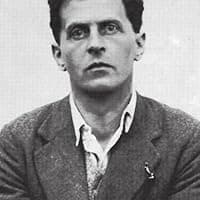
Ludwig Wittgenstein
Ludwig Josef Johann Wittgenstein (Ph.D., Trinity College, Cambridge University, 1929) was an Austrian-British philosopher who worked primarily in logic, the philosophy of mathematics, the philosophy of mind, and the philosophy of language. Described by Bertrand Russell as "the most perfect example I have ever known of genius as traditionally conceived, passionate, profound, intense, and dominating", he helped inspire two of the twentieth century's principal philosophical movements: the Vienna Circle and Oxford ordinary language philosophy. According to an end of the century poll, professional philosophers in Canada and the U.S. rank both his Tractatus Logico-Philosophicus and Philosophical Investigations among the top five most important books in twentieth-century philosophy, the latter standing out as "...the one crossover masterpiece in twentieth-century philosophy, appealing across diverse specializations and philosophical orientations". Wittgenstein's influence has been felt in nearly every field of the humanities and social sciences, yet there are widely diverging interpretations of his thought.
26 Books Written
Lectures and Conversations on Aesthetics, Psychology and Religious Belief
by Ludwig Wittgenstein
Rating: 3.9 ⭐
In 1938 Wittgenstein delivered a short course of lectures on aesthetics to a small group of students at Cambridge. The present volume has been compiled from notes taken down at the time by three of the students: Rush Rhees, Yorick Smythies & James Taylor. They've been supplemented by notes of conversations on Freud (to whom reference was made in the course on esthetics) between him & Rush

Wittgenstein finished part 1 of the Philosophical Investigations in the spring of 1945. From 1946 to 1949 he worked on the philosophy of psychology almost without interruption. The present two-volume work comprises many of his writings over this period. Some of the remarks contained here were culled for part 2 of the Investigations ; others were set aside and appear in the collection known as Zett

This book comprises material on colour which was written by Wittgenstein in the last eighteen months of his life. It is one of the few documents which shows him concentratedly at work on a single philosophical issue. The principal theme is the features of different colours, of different kinds of colour (metallic colour, the colours of flames, etc.) and of luminosity―a theme which Wittgenstein trea
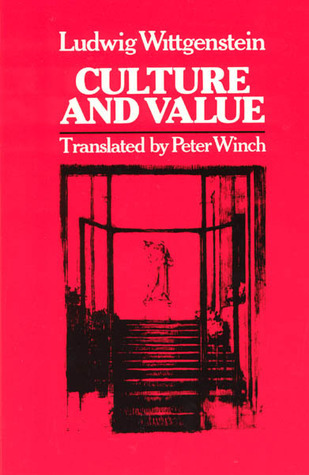
Peter Winch's translation of Wittgenstein's remarks on culture & value presents all entries chronologically, with the German text alongside the English & a subject index for reference. "It was Wittgenstein's habit to record his thoughts in sequences of more or less closely related 'remarks' which he kept in notebooks throughout his life. The editor of this collection has gone through

Philosopher Ludwig Wittgenstein had an enormous influence on twentieth-century philosophy even though only one of his works, the famous Tractatus Logico-Philosophicus, was published in his lifetime. Beyond this publication the impact of his thought was mainly conveyed to a small circle of students through his lectures at Cambridge University. Fortunately, many of his ideas have survived in both th

This considerably revised second edition of Wittgenstein's 1914-16 notebooks contains a new appendix with photographs of Wittgenstein's original work, a new preface by Elizabeth Anscombe, and a useful index by E.D. Klemke. Corrections have been made throughout the text, and notes have been added, making this the definitive edition of the notebooks. The writings intersperse Wittgenstein's technical
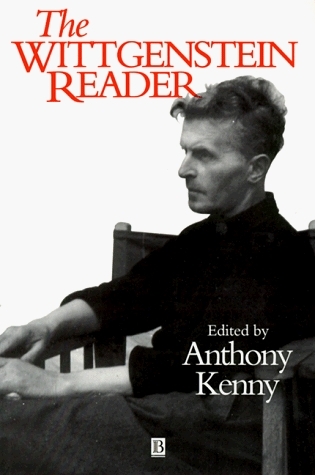
This volume is the first selection of the essential writings of Wittgenstein -- arguably the emblematic philosopher of the twentieth-century.

These works, as the subtitle makes clear, are unfinished sketches for Philosophical Investigations, among the most important & influential philosophical work of modern times. The 'Blue Book' is a set of notes dictated to Witgenstein's Cambridge students in 1933-34. The 'Brown Book' was a draft for what eventually became the growth of the first part of Philosophical Investigations. This book re
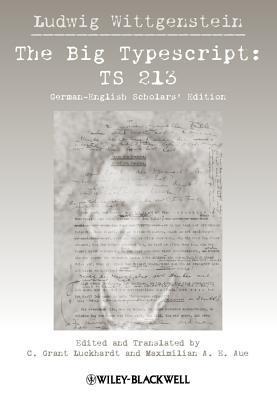
In 1933, Wittgenstein set out to dictate a collection of his recent writings to a typist in the form of a book. Even as he was dictating he began revising the text extensively, so that the surviving typewritten manuscript contains numerous corrections, additions, deletions, alternative words and phrasings, suggestions for moves within the text, and marginal comments in both handwritten and typed f

An essential resource for students of Wittgenstein, this collection contains faithful, in some cases expanded and corrected, versions of many important pieces never before available in a single volume, including Notes for the 'Philosophical Lecture', published here for the first time. Fifteen selections, with bi-lingual versions of those originally written in German, span the development of Wittge

Wittgenstein's work remains, undeniably, now, that of one of those few philosophers who will be read by all future generations.The Remarks analyzes in depth such topics as logical compulsion (the “must”) and mathematical conviction; calculation as experiment; mathematical surprise, discovery, and invention; Russell's logic, Gödel's theorem, Cantor's diagonal procedure, Dedekind's cuts; the n

In 1933 Ludwig Wittgenstein revised a manuscript he had compiled from his 1930-1932 notebooks, but the work as a whole was not published until 1969, as Philosophische Grammatik. This first English translation clearly reveals the central place Philosophical Grammar occupies in Wittgenstein's thought and provides a link from his earlier philosophy to his later views.

Written over the last 18 months of his life and inspired by his interest in G. E. Moore's defense of common sense, this much discussed volume collects Wittgenstein's reflections on knowledge and certainty, on what it is to know a proposition for sure.

Zettel, an en face bilingual edition, collects fragments from Wittgenstein's work between 1929 and 1948 on issues of the mind, mathematics & language.Editor's PrefaceTranslator's NoteZettel Text

Movements of Thought: Ludwig Wittgenstein's Diary, 1930–1932 and 1936–1937
by Ludwig Wittgenstein
Rating: 3.9 ⭐
"Wittgenstein's diary from the 1930s contains the raw material for what could have been an incomparable spiritual autobiography. For the first time in an affordable edition, the volume includes updated and expanded editorial notes on Wittgenstein's many allusions, and an introduction by Ray Monk on the larger arc of Wittgenstein's life and work"--

Incorporating significant editorial changes from earlier editions, the fourth edition of Ludwig Wittgenstein's Philosophical Investigations is the definitive en face German-English version of the most important work of 20th-century philosophy The extensively revised English translation incorporates many hundreds of changes to Anscombe's original translation Footnoted remarks in the e

Wittgenstein never did much to encourage the fossicking of amateurs, & in particular loathed phrase-making dilettantes. Yet people of a literary turn with no training in or indeed capacity for rigorous philosophy will probably go on finding him of high interest. He said we shouldn’t be seduced by language—-an admonition which will continue being useful to those whose business it is to be seduc

Book by Ludwig Wittgenstein

Perhaps the most important work of philosophy written in the twentieth century, Tractatus Logico-Philosophicus was the only philosophical work that Ludwig Wittgenstein published during his life. Written in short, carefully numbered paragraphs of extreme brilliance, it captured the imagination of a generation of philosophers. For Wittgenstein, logic was something we use to conquer a realit

Last Writings on the Philosophy of Psychology 2: The Inner & the Outer
by Ludwig Wittgenstein
Rating: 4.4 ⭐
In the last years of his life, from 1949 to 1951, Wittgenstein's writings focused upon knowledge and certainty (collected together in On Certainty) , upon colour concepts (in Remarks on Colour ) and upon the relation between the "inner" and "outer", that is, between so-called mental states and bodily behavior. His writings on this third theme, now available in paperback, are gathered here for the

When in 5/1930, the Council of Trinity College, Cambridge, had to decide whether to renew Wittgenstein's research grant, it turned to Bertrand Russell for an assessment of the work he'd been doing over the past year. His verdict: "The theories contained in this new work...are novel, very original & indubitably important. Whether they are true, I do not know. As a logician who likes simplicity,

Major Works is the finest single-volume anthology of influential philosopher Ludwig Wittgenstein's important writings. Featuring the complete texts of Tractatus Logico-Philosophicus, The Blue and Brown Books: Studies for 'Philosophical Investigations,' and On Certainty, this new collection selects from the early, middle, and later career of this revolutionary thinker, wi
For several terms at Cambridge in 1939, Ludwig Wittgenstein lectured on the philosophical foundations of mathematics. A lecture class taught by Wittgenstein, however, hardly resembled a lecture. He sat on a chair in the middle of the room, with some of the class sitting in chairs, some on the floor. He never used notes. He paused frequently, sometimes for several minutes, while he puzz
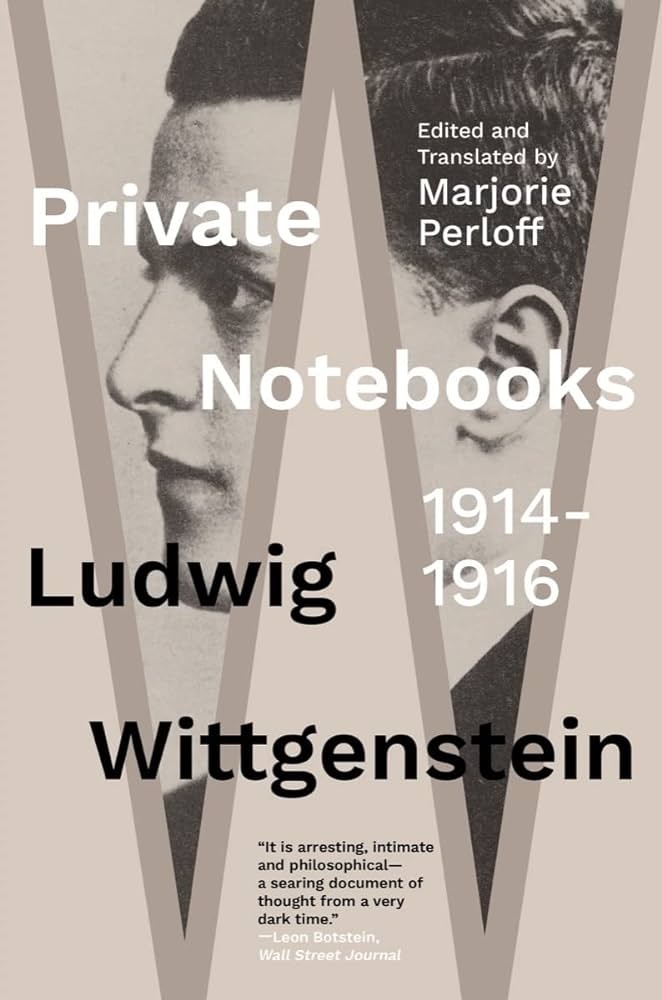
Written in code under constant threat of battle, Wittgenstein’s searing and illuminating diaries finally emerge in this first-ever English translation.During the pandemic, Marjorie Perloff, one of our foremost scholars of global literature, found her mind ineluctably drawn to the profound commentary on life and death in the wartime diaries of eminent philosopher Ludwig Wittgenstein (18

Wittgenstein finished part 1 of the Philosophical Investigations in the spring of 1945. From 1946 to 1949 he worked on the philosophy of psychology almost without interruption. The present two-volume work comprises many of his writings over this period. Some of the remarks contained here were culled for part 2 of the Investigations ; others were set aside and appear in the collection known as Zett

This bilingual volume—English and German on facing pages—brings together the writings Wittgenstein composed during his stay in Dublin between October 1948 and March 1949, one of his most fruitful periods. He later drew more than half of his remarks for Part II of Philosophical Investigations from this Dublin manuscript. A direct continuation of the writing that makes up the two volumes of Remarks