
Lu Xun
Lu Xun (鲁迅) or Lu Hsün (Wade-Giles), was the pen name of Zhou Shuren (September 25, 1881 – October 19, 1936), a leading figure of modern Chinese literature. Writing in Vernacular Chinese as well as Classical Chinese, Lu Xun was a novelist, editor, translator, literary critic, essayist, and poet. In the 1930s he became the titular head of the League of Left-Wing Writers in Shanghai. For the Traditional Chinese profile: here. For the Simplified Chinese profile: 鲁迅
30 Books Written

Le Journal d'un fou: suivi de La véritable histoire De Ah Q
by Lu Xun
Rating: 3.3 ⭐
• 1 recommendation ❤️
Le journal d'un fouDes notes dans un cahier, prises pendant sa maladie par un ami narrateur. Petit à petit, le monde révèle son vrai visage. La terre entière n'est peuplée que de "mangeurs d'hommes". Celui qui écrit est le dernier homme véritable. N'y a-t-il aucun espoir?La véritable histoire de Ah QAh Q est un pauvre bougre de l'un de ces milliers de villages de la chine impériale. Quand rien ne va pour lui, il se persuade du contraire. Alors, quand éclate la révolution de 1911, il veut être au premier rang....Une farce burlesque sur une révolution détournée de son sens et vue du côté des plus humbles.

This collection of short stories by Lu Xun, commonly considered one of the greatest writers in 20th-century China and often referred to as the father of modern Chinese literature, includes the celebrated short story, "A Madman's Diary". This short story is considered to be one of the first and most influential modern works written in vernacular Chinese. "A Madman's Diary" is an attempt by Lu Xun to describe the effects of feudal values upon the Chinese people. He uses an analogy of cannibalism to describe the way such outdated values eat away at the individual. In addition to "A Madman's Diary", the collection also includes the following: Remembrances of the past Kong yiji Medicine Tomorrow An unimportant affair The story of hair A passing storm Hometown Ah Q: the real story Dragonboat festival The white light Some rabbits and a cat A comedy of ducks Village opera New Year's sacrifice Upstairs in a wineshop A happy family Soap The eternal lamp A warning to the people The venerable schoolmaster Gao The loner Mourning the dead Brothers Divorce
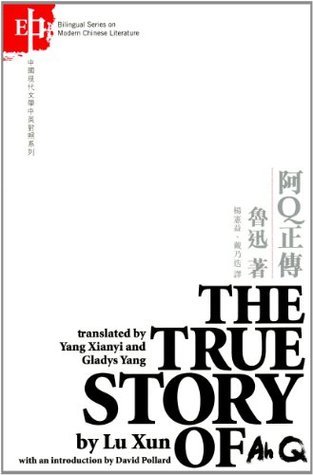
A towering figure in the literary history of twentieth-century China, Lu Xun has exerted immense and continuous influence through his short stories, which remain today as powerful as they were first written. While echoes of these stories can still be heard in the fictional works from both sides of the Taiwan Strait in the eighties and nineties, "The True Story of Ah Q" has long become an intrinsic part of the Chinese vocabulary. Like many Chinese intellectuals searching for a solution to China's problems, Lu Xun went to Japan to study medicine, a choice he later abandoned for a career in writing, which he considered to be a far more effective weapon to save China. A prolific author of pungent and "dagger-like" essays, Lu Xun is also a tireless translator of Western critical and literary works. His fictional works have been translated into more than twenty languages.

This English and Chinese bilingual edition of a "A Madman's Diary" was first published in 1918 by Lu Xun, one of the greatest writers in 20th-century Chinese literature. This short story is one of the first and most influential modern works written in vernacular Chinese and would become a cornerstone of the New Culture Movement. The story was often referred to as "China's first modern short story". This book is selected as one of The 100 Best Books of All Time. The diary form was inspired by Nikolai Gogol's short story "Diary of a Madman, " as was the idea of the madman who sees reality more clearly than those around him. The "madman" sees "cannibalism" both in his family and the village around him, and he then finds cannibalism in the Confucian classics which had long been credited with a humanistic concern for the mutual obligations of society, and thus for the superiority of Confucian civilization. The story was read as an ironic attack on traditional Chinese culture and a call for a New Culture.

The Real Story of Ah-Q and Other Tales of China: The Complete Fiction of Lu Xun
by Lu Xun
Rating: 3.9 ⭐
Lu Xun (1881—1936) is one of the founding figures of modern Chinese literature. His celebrated short stories assemble a powerfully unsettling portrait of the superstition, poverty, and complacence that he perceived in late-imperial China, and in the revolutionary Republic that toppled the last dynasty in 1911. This volume presents Lu Xun's complete fiction, including 'The Real Story of Ah-Q', 'Diary of a Madman', 'The Divorce,' and 'New Year's Sacrifice', among others.Julia Lovell's new translation of Lu Xun's short stories is accompanied by an introduction to the writer's political and literary life. This edition also includes suggested further reading, a note on Chinese names and pronunciation, a chronology, and notes.

Lu Xun (simplified Chinese: 鲁迅; traditional Chinese: 魯迅; pinyin: Lǔ Xùn) or Lu Hsün (Wade-Giles), was the pen name of Zhou Shuren(September 25, 1881 - October 19, 1936) is one of the major Chinese writers of the 20th century. Considered by many to be the founder of modern Chinese literature, he wrote in baihua (the vernacular) as well as classical Chinese. Lu Xun was a short story writer, editor, translator, critic, essayist and poet. In the 1930s he became the titular head of the Chinese League of Left-Wing Writers in Shanghai.Lu Xun's works exerted a very substantial influence after the May Fourth Movement to such a point that he was lionized by the Communist regime after 1949. Mao Zedong himself was a lifelong admirer of Lu Xun's works. Though sympathetic to the ideals of the Left, Lu Xun never actually joined the Chinese Communist Party. Lu Xun's works are known to English readers through numerous translations, especially Selected Stories of Lu Hsun translated by Yang Hsien-yi and Gladys Yang.Contents:A Madman's Diary, True Story of Ah Q,Kong Yiji,eleven other important works

《朝花夕拾》是鲁迅带有回忆性质的叙事散文集,共收入10篇散文,写于1926年6月至11月间,最初以《旧事重提》为总题目发表在《莽原》半月刊上,1927年5月编订成书时,改名为《朝花夕拾》。据鲁迅说:“《朝花夕拾》的文章是从记忆中抄出来的”。《朝花夕拾》是关于鲁迅生平史实的第一手资料,我们可以从中看到早年鲁迅的完整形象。正如郭沫若先生所说:“鲁迅先生无心作诗人,偶有所作,每臻绝唱”。

"When I was young I, too, had many dreams. Most of them came to be forgotten, but I see nothing in this to regret. For although recalling the past may make you happy, it may sometimes also make you lonely, and there is no point in clinging in spirit to lonely bygone days. However, my trouble is that I cannot forget completely, and these stories have resulted from what I have been unable to erase from memory."—Lu HsunLiving during a time of dramatic change in China, Lu Hsun had a career that was as varied as his writing. As a young man he studied medicine in Japan but left it for the life of an activist intellectual, eventually returning to China to teach. Though he supported the aims of the Communist revolution, he did not become a member of the party nor did he live to see the Communists take control of China. Ambitious to reach a large Chinese audience, Lu Hsun wrote his first published story, "A Madman's Diary," in the vernacular, a pioneering move in Chinese literature at the time. "The True Story of Ah Q," a biting portrait of feudal China, gained him popularity in the West. This collection of eighteen stories shows the variety of his style and subjects throughout his career.In a new introduction, Ha Jin, the author of Waiting (National Book Award winner), The Bridegroom, and other works, places Lu Hsun's life and work in the context of Chinese history and literature.

A towering figure in the literary history of twentieth-century China, Lu Xun has exerted significant and continuous influence through his short stories, which remain as powerful today as when first written. Echoes of these stories are audible in fiction from both sides of the Taiwan Strait. Like many Chinese intellectuals searching for a solution to China's problems, Lu Xun went to Japan to study medicine, which he later abandoned for a career in writing. As a writer he hoped to be a far more effective weapon in the effort to save China. A prolific author of pungent and "dagger-like" essays, Lu Xun was also a tireless translator of Western critical and literary works. "Wild Grass" is a collection of twenty-three prose poems written between 1924 and 1926.

《彷徨》鲁迅先生写作于“五·四”运动后新文化阵营分化的时期(1924年至1925年间)的短篇小说集,收入11篇,表现了他在这一时期在革命征途上探索的心情。

正版认证卖家: Soweinc [ 正版保证]加微信[soweinc]每天分享好书和来自全球的书友一起学习交流.并且微信好友价格低至5折 .《故事新编(汉英对照)》(鲁迅)Old Tales Retold Chinese-English作者:鲁迅 杨宪益 戴乃迭出版社:外文出版社有限责任公司ISBN:9787119097725装订方式:平装版次:第1版开本:32开出版时间:2016-01-01用纸:胶版纸页数:305语种:中文,英文丛书名:中国经典对外读库类目:外语学习|老外读本

《伤逝》选自鲁迅小说集《彷徨》;在题材上,《伤逝》是鲁迅唯一以青年的恋爱和婚姻为题材的小说,如果要用几句最简单的话客观地概括其内容,大致可以这样说:《伤逝》写的是涓生与子君对恋爱与婚姻自由的追求,这追求最初已经获得成功,但终于还是失败了,其根本原因是由于社会的迫害。但《伤逝》这篇作品着重的并不在于写出社会是在怎样地迫害涓生与子君,而是在于写出涓生与子君怎样去面对社会施加给他们的迫害。它是以涓生与子君作为分析和解剖的直接对象的。

Lu Xun is famous for his short stories, among other writings. This collection contains 13 of his stories, including: A Madman's Diary; Medicine; Storm in a Teacup; My Old Home; Village Opera; A Happy Family; The Misanthrope; Regret for the Past; and Forging the Swords.
![Opowiadania [wydanie chińsko-polskie]](https://m.media-amazon.com/images/S/compressed.photo.goodreads.com/books/1511171256i/27239080.jpg)
Lu Xun (1881−1936) jest uznawany za ojca współczesnej literatury chińskiej i należy do najwybitniejszych autorów XX wieku.Rozgłos przyniosło mu już debiutanckie opowiadanie Dziennik szaleńca, a jego reminiscencje odnajdujemy w utworach najsłynniejszych współczesnych pisarzy chińskich. W niniejszym zbiorze znalazły się ponadto trzy inne, bodaj najbardziej znane opowiadania tego autora − Kong Yiji, Rodzinny dom i Lekarstwo. Każde z nich to dowód niezwykłej przenikliwości, wrażliwości i talentu Lu Xuna, potrafiącego wzruszać czytelników niezależnie od miejsca i czasów.

Lu Hsun, pioneer and standard-bearer of modern Chinese literature, wrote this book during the early twenties. It is a study of the historical development of Chinese fiction from early myths and legends down to well-developed long novels written at the end of the Ching Dynasty. The characteristics of various forms of fiction through the centuries, the development of these forms and their influence on each other are lucidly presented, while such major works as the novels Hung Lou Meng (A Dream of Red Mansions) and Shue Hu Chuan (Water Margin) are reviewed in detail. Chinese fiction had its roots in story telling, and the feudal ruling class despised folk literature of this kind. The May 4th Movement of 1919 dealt a mortal blow to the feudal forces in Chinese culture. Then the study of this form of literature began to make headway, Lu Hsun being one of the first to carry out research in this field. This book, the earliest systematic study of the history of Chinese fiction by a Chinese writer, still exercises a great influence among Chinese scholars. This English translation is illustrated with reproductions of early Chinese woodcuts.

This edition of Lu Xun's Chinese classic Kong Yiji features both English and Chinese side by side for easy reference and bilingual support. The Lu Xun Bilingual Study Series includes a study guide and additional materials. Published in 1919 by Lu Xun, one of the greatest writers in 20th-century Chinese literature. This short story is one of the first and most influential modern works written in vernacular Chinese and would become part of the New Culture Movement. It is the second story in Call to Arms, a collection of short stories by Lu Xun. The English translation is provided courtesy of the Marxists Internet Archive. Kong Yiji is the name of the main character in the story. The story recounts the destitute outcome of a scholar, from the eyes of a young adolescent waiter at Xianheng Tavern. His name was said in the story to have derived from a common text for youngsters to practice calligraphy, which has no actual meaning, being purely a collection of characters for practice. The three characters were the 4th to 6th characters in the text, and it was used because people did not know his name other than that his surname was "Kong". Written before the May Fourth Movement, this piece is the second Vernacular Chinese story written by Lu Xun after writing A Madman's Diary. This story describes Kong Yiji as a scholar who has not passed the Imperial Examination to become a xiucai. As a result, Kong Yiji eventually loses his respectability, and descends into an object of ridicule at the local inn. His ending is not clear, other than the last time he was seen, he had suffered a beating and broken legs for stealing, and had finally traded in his usual attire. The story made clear some of the social problems of the time, including the fact that the innkeeper orders the waiter to water down the wine to be served to the working-class patrons, while not doing so for his wealthier customers. Kong Yiji is a lifelong "student", who never manages to pass the Imperial Examinations to become an official. He earns a living from copying manuscripts for rich patrons, but he often steals their writing equipment and gets beaten up for it. In fact, he is very poor and forced to steal from his employers for a living, insisting it is borrowing since he and the employers are of the higher class. Every time he is seen, he bears new cuts and bruises for his stealing. Kong Yiji is an anomaly in this small town. He wears a long gown, which is a sign of the moneyed upper-class, yet his gown is old and tattered since he has no money to buy a new one. He is tall and strong and could make a good living from manual work, yet he is too proud to stoop that low. At the inn, the workers who wear short tunics stand outside on the street to drink their Chinese wine, while the respected long-gowned officials get to sit inside. Kong Yiji wears a long gown, yet he is not allowed to sit inside. Most students during this historical period wanted to pass the examinations to become a government official. If they managed to pass the examinations, they could become rich by exploiting other people. Kong Yiji is one of these students, but he never passes the examinations. Whenever he has the money, he drinks in the inn in which the narrator works as a young waiter. It is considered by some people that Lu Xun wrote this story to express the sadness of the students at that time. Others have suggested that Lu Xun wrote the story to explain the problems with the 'feudal society', where people could waste their entire life trying to pass meaningless examinations and where people were selfish and completely indifferent to the plight of others.

Selected Stories of Lu Hsun - The True Story of Ah Q is an episodic novella written by Lu Xun, first published as a serial between December 4, 1921 and February 12, 1922. It was later placed in his first short story collection Call to Arms in 1923 and is the longest of the stories in the collection. The piece is generally held to be a masterpiece of modern Chinese literature, since it is considered the first piece of work fully to use Vernacular Chinese after the 1919 May 4th Movement in China. Lu Xun or Lu Hsun (Wade-Giles), was the pen name of Zhou Shuren (September 25, 1881 - October 19, 1936), a leading figure of modern Chinese literature. Writing in Vernacular Chinese as well as Classical Chinese, Lu Xun was a novelist, editor, translator, literary critic, essayist, and poet. In the 1930s he became the titular head of the League of Left-Wing Writers in Shanghai. Lu Xun's works exerted a substantial influence after the May Fourth Movement that began around 1916. He was highly acclaimed by the Communist regime after 1949, and Mao Zedong himself was a lifelong admirer of Lu Xun's works. Though sympathetic to communist ideas, Lu Xun never actually joined the Chinese Communist Party. Like many leaders of the May Fourth Movement, he was primarily a leftist and liberal.

Lu Xun has been the most influential Chinese writer of this century. His short stories are satiric, vivid, pungently realistic - as satisfying in structure as they are in tone and content. Lu Xun studied medicine in Japan, but soon exchanged his physician's scalpel for a literary one, which he wielded with a sure hand and an accurate eye to probe the sickness of a still-feudal Chinese society. This collection of Lu Xun's short stories is the most complete, accurate, and authoritative yet to appear. It includes the preface to his first book, CALL TO ARMS, in which Lu Xun explains how he came to be a writer.

《热风》1925年11月编定。关于集名,鲁迅解释道:“无情的冷嘲和有情的讽刺相去本不及一张纸,对于周围的感受和反应,又大概是‘如鱼饮水冷暖自知’的;我却觉得周围的空气太寒冽了,我自说我的话,所以反而称之为《热风》。”《热风》收1918年至1924年杂文,编集时,鲁迅对现状一如往日,感到“寒冽”,以“热风”作喻,正反映了鲁迅主张深刻批判社会,促醒人们去改革社会的热烈愿望。

1936年10月,鲁迅先生在上海逝世。鲁迅先生纪念委员会为"扩大鲁迅精神的影响,以唤醒国魂,争取光明"编印了鲁迅逝后第一版《鲁迅全集》。《全集》由蔡元培任主席的鲁迅先生纪念委员会负责编校,编辑委员有蔡元培、马裕藻、沈兼士、茅盾、周作人诸先生。《全集》总目以鲁迅亲定的著述目录为基础,增加了译作部分,并力求各册字数大致相当。全书大致分创作、古籍校辑、译作三大部分。各部分内容按时间先后排序。全书总计六百余万字,共分二十卷。于1938年6月正式出版并发行。本次出版,就是以1938年的这一版《鲁迅全集》作为底本的。在编辑过程中,尽可能的保留原版的风貌。全书内容和编排体例均与原版相同。按原版编排,共分20卷。其中创作、古籍校辑、译作三大部分依然按照时间先后排序。仅根据最新关于写作时间的考证,调整了个别内容的顺序。全书文字校订,只是将繁体竖排转为简体横排,仅改正了原版中个别错字和标点。其中通假字和鲁迅习惯用字,完全按照原版保留。另有外国人名、地名等,均保留鲁迅当时的译法。

《坟》是鲁迅的一部论文集,收录了鲁迅在1907年~1925年间所写的论文二十三篇。包括《人之历史》,《文化偏至论》,《摩罗诗力说》,《娜拉走后怎样》,《说胡须》,《论照相之类》,《论他妈的》,《从胡须说到牙齿》等。

This edition of Lu Xun's Chinese classic Medicine features both English and Chinese side by side for easy reference and bilingual support. The Lu Xun Bilingual Study Series includes a study guide and additional materials for each book in the series. Published in 1919 by Lu Xun, one of the greatest writers in 20th-century Chinese literature. This short story is one of the first and most influential modern works written in vernacular Chinese and would become a cornerstone of the New Culture Movement. It is the third story in Call to Arms, a collection of short stories by Lu Xun. The work explores themes around traditional culture, and ultimately man's search for meaning amidst chaos and confusing life circumstances. The English translation is provided courtesy of the Marxists Internet Archive. 周树人(1881年9月25日-1936年10月19日),字豫才,原名樟寿,字豫山、豫亭,以笔名鲁迅聞名於世,浙江绍兴人,為中国的現代著名作家,新文化运动的领导人、支持者,中国现代文学的奠基人和开山巨匠,在西方世界享有盛誉的中国现代文学家、思想家。鲁迅的主要成就包括杂文、短中篇小说、文学、思想和社会评论、学术著作、自然科学著作、古代典籍校勘与研究、散文、现代散文诗、旧体诗、外国文学与学术翻译作品和木刻版画的研究,对于五四运动以后的中国社会思想文化发展产生一定的影响,蜚声世界文坛,尤其在韩国、日本思想文化领域有极其重要的地位和影响,被誉为“二十世纪东亚文化地图上占最大领土的作家”。 这本有英文和中文的翻译。

Lu Xun (Lu Hsun) (1881-1936), father of contemporary Chinese literature, was not only a great writer but also a great revolutionary and thinker. Using the pen as a weapon he waged an exceedingly heroic struggle against imperialism, feudalism and bureaucrat-capitalism. The rich heritage he has left us is a treasure in the literature of the Chinese people. Selected Works of Lu Xun includes the most important works of the author. Volume One contains selections from his short stories, prose poems and reminiscences. Volumes Two, Three and Four contain Lu Xun's more important essays written between 1918 and 1936. These essays compose an important part of Lu Xun's works. They are a combination of poetry and political commentaries, profound in thought and trenchant in language. Written in a charming style they thoroughly reflect the social conditions of his time. Volume One is prefaced by an article 'Lu His Life and Works'', written by the contemporary writer Feng Xuefeng. Volume Four includes a chronological table of Lu Xun's writings and translations, a chronological table of Chinese history and a note on the Romanization of Chinese names. In this new edition a number of essays have been added and the translations of some important works improved.
![故郷 [Kokyo]](https://m.media-amazon.com/images/S/compressed.photo.goodreads.com/books/1385653888i/19023995.jpg)
このコンテンツは日本国内ではパブリックドメインの作品です。印刷版からデジタル版への変換はボランティアによって行われたものです。

《华盖集》是鲁迅的一部杂文集。收录了鲁迅在1925年间所写的杂文三十一篇,包括《咬文嚼字》,《青年必读书》,《论辩的魂灵》,《夏三虫》,《忽然想到》,《我观北大》,《碎话》等。

I gesti intimi della gente comune, gli stati d'animo quotidiani, gli spostamenti molecolari degli affetti e degli interessi in un'epoca di grande trapasso. La raccolta di novelle qui proposte fissa come in un grande mosaico "l'animo silenzioso del popolo cinese, che nel corso dei secoli si è sviluppato come il muschio sotto una grande roccia", per approdare a quel salto rivoluzionario che ancora oggi, nel mutare continuo delle sue manifestazioni, impegna la Cina. Non si può conoscere un paese solo attraverso i concetti e le notizie storiche; occorre sentirlo anche attraverso le immagini: la narrativa di Lu Xun è una chiave per schiudere le porte di un mondo altrimenti misterioso.

Lu Xun (1881-1936) is widely considered the greatest writer of twentieth-century China. Although primarily known for his two slim volumes of short fiction, he was a prolific and inventive essayist. Jottings under Lamplight showcases Lu Xun's versatility as a master of prose forms and his brilliance as a cultural critic with translations of sixty-two of his essays, twenty of which are translated here for the first time.While a medical student in Tokyo, Lu Xun viewed a photographic slide that purportedly inspired his literary calling: it showed the decapitation of a Chinese man by a Japanese soldier, as Chinese bystanders watched apathetically. He felt that what his countrymen needed was a cure not for their physical ailments but for their souls. Autobiographical accounts describing this and other formative life experiences are included in Jottings, along with a wide variety of cultural commentaries, from letters, speeches, and memorials to parodies and treatises.Lu Xun was remarkably well versed in Chinese tradition and playfully manipulated its ancient forms. But he also turned away from historical convention, experimenting with new literary techniques and excoriating the "slave mentality" of a population paralyzed by Confucian hierarchies. Tinged at times with notes of despair, yet also with pathos, humor, and an unparalleled caustic wit, Lu Xun's essays chronicle the tumultuous transformations of his own life and times, providing penetrating insights into Chinese culture and society.

Yanshan Press; 1 edition (August 1. 2009). Pages 455 Chinese. Beijing Yanshan Press; 1 (August 1. 2009). Featuring the essay tells the World Wind people it not only advocated a bad thing. can Value; if not advocating. just look on. just admiratio

《而已集》是鲁迅1927年所作杂文集,1928年出版。面对反动军阀大肆屠杀革命党人和进步人士,鲁迅先生既愤恨,又无能为力,“这半年我又看见了许多血和许多泪,然而我只有杂感而已。泪揩了,血消了,屠伯们逍遥复逍遥,用钢刀的,用软刀的。而我只有‘杂感’而已。连‘杂感’也被‘放进了应该去的地方’时,我于是只有‘而已’而已。”

Ah Q kendini herkesten üstün gören, güçlüden korkup zayıfa musallat olan kaba saba, haset dolu, şiddet düşkünü, âciz bir köylüdür… Cehalet içinde, zarafetten yoksun varoluşu, zarafetten yoksun bir ölümle sonlanır. Modern Çin edebiyatının kurucularından Lu Xun, “sıradan Çinli” Ah Q üzerinden hem klasik Konfüçyüsçü Çin’e hem de 1911 Devrimi’ne hiciv dolu bir bakış atar. 1921’de yayımlanan Ah Q’nun Gerçek Hikâyesi, bugün modern Çin edebiyatının en sevilen klasiklerinden biri kabul edilir. Bir Delinin Günlüğü (1918) ise etrafındaki herkesin onu yemeyi planladığı sanrısına kapılan bir adamı odağına alır, bu yamyam toplum da çok tanıdık bir toplumdur aslında… İmzalı yayımladığı ilk öyküsü olan bu eserin 4 Mayıs Hareketi’yle oluşan Yeni Kültür Akımı’na büyük etkisi olmuştur. Konuşma Çincesinin edebi bir amaçla kullanıldığı ilk örnekler arasında yer alan ve yayımlandıklarında her ikisi de büyük ses getiren Ah Q’nun Gerçek Hikâyesi ile Bir Delinin Günlüğü özgün dillerinden çevirileriyle ilk kez Türkçede okurla buluşuyor.