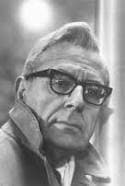
Loren Eiseley
Loren Corey Eiseley (September 3, 1907 – July 9, 1977) was a highly respected anthropologist, science writer, ecologist, and poet. He published books of essays, biography, and general science in the 1950s through the 1970s. Eiseley is best known for the poetic essay style, called the "concealed essay". He used this to explain complex scientific ideas, such as human evolution, to the general public. He is also known for his writings about humanity's relationship with the natural world; these writings helped inspire the modern environmental movement.
27 Books Written

Toward the end of his life, Loren Eiseley reflected on the mystery of life, throwing light on those dark places traversed by himself and centuries of humankind. Weaving together memoir, philosophical reflection, and his always keen observations of the natural world, Loren Eiseley’s essays in The Night Country explore those moments, often dark and unexpected, when chance encounters disturb o

Illustrated with photos.

Published in 1973 under title: The man who saw through time.

Loren Eiseley examines what we as a species have become in the late twentieth century. His illuminating and accessible discussion is a characteristically skillful and compelling synthesis of hard scientific theory, factual evidence, personal anecdotes, haunting reflection, and poetic prose.

In 1910 young Loren Eiseley watched the passage of Halley’s Comet with his father. The boy who became a famous naturalist was never again to see the spectacle except in his imagination. That childhood event contributed to the profound sense of time and space that marks The Invisible Pyramid . This collection of essays, first published shortly after Americans landed on the moon, explores inner and

A collection of the author’s favorite essays and poems. This volume includes selections that span Eiseley’s entire writing career and provide a sampling of the author as naturalist, poet, scientist, and humanist. “Loren Eiseley’s work changed my life” (Ray Bradbury). Introduction by W. H. Auden.

This graceful essay on the pivotal role of flowers in human evolution is certain to delight those readers already familiar with Loren Eiseley and to find an audience among naturalists, gardeners, and lovers of flowers everywhere. Gerald Ackerman's color floral portraits provide a visual counterpoint to the wondrous text. Two-color text & printed endpapers. 19 color photos.

A native of Lincoln, Nebraska, Loren Eiseley began his lifelong exploration of nature in the salt flats and ponds around his hometown and in the mammoth bone collection hoarded in the old red brick museum at the University of Nebraska, where he conducted his studies in anthropology. It was in pursuit of this interest, and in the expression of his natural curiosity and wonder, that Eiseley sprang t

Drawing from his long experience as a naturalist, the author responds to the unexpected and symbolic aspects of a wide spectrum of phenomena throughout the universe. Scrupulous scholarship and magical prose are brought to bear on such diverse topics as seeds, the hieroglyphs on shells, lost tombs, the goddess Circe, city dumps, and Neanderthal man.

This indispensable collection is filled with marvelous autobiographical glimpses of Loren Eiseley at different points in his life-as a young, inquisitive man during the Depression, as an astute archaeologist, as a blossoming writer, and lastly, as a world-renowned observer and essayist. Also included are poems, short stories, an array of Eiseley's absorbing observations on the natural world, and h

In an unusual blend of scientific knowledge and imaginative vision, Loren Eiseley tells the story of man. Anthropologist and naturalist, Dr. Eiseley reveals life's endless mysteries in his own experiences, departing from their immediacy into meditations on the long past, wandering—intimate with nature—along the paths and byways of time, and then returning to the present.


Examines the life, career, and thought of the Elizabethan philosopher and writer, evaluating the quality and accuracy of his vision of the future

New poems, published posthumously, by the distinguished anthropologist, naturalist, and poet reaffirm the unity of Creation, the importance of all living beings, and the wonders of ancient civilizations.


Darwin's Century: Evolution and the Men Who Discovered ItIn one of its most important aspects, the development of the concept of evolution, the nineteenth century may truly be called "Darwin's Century." This is a definitive account, by one of America's most distinguished anthropologists, of how that concept came about, what its components were, and why it so deeply affected man's view

The American poet records his observations of the living world and his thoughts about evolution and human destiny

This work has been selected by scholars as being culturally important, and is part of the knowledge base of civilization as we know it. This work was reproduced from the original artifact, and remains as true to the original work as possible. Therefore, you will see the original copyright references, library stamps (as most of these works have been housed in our most important libraries aro

Book by Loren Eiseley, Detlev W. Bronk

"This is another collection of the lovely and haunting essays by Loren Eiseley, the naturalist writer who has given us so many delightful moments with his books.... If there is a scientist anywhere writing more poetic prose, and making more sense with it, I have not encountered him, nor his productions.... In these essays Eiseley seeks to establish Bacon's remarkable vision of the future and remov

Collected Essays on Evolution, Nature, and the Cosmos, Vol. 1: The Immense Journey / The Firmament of Time / The Unexpected Universe / Uncollected Prose
by Loren Eiseley
Rating: 4.4 ⭐
To read Loren Eiseley (1907–1977) is to renew a sense of wonder at the miracles and paradoxes of evolution and the ever-changing diversity of life. At the height of a distinguished career as a “bone-hunter” and paleontologist, Eiseley turned from fieldwork and scientific publication to the personal essay in six remarkable books that are masterpieces of prose style. Weaving together anecdote, philo

Collected Essays on Evolution, Nature, and the Cosmos, Vol. 2: The Invisible Pyramid / The Night Country / Essays from The Star Thrower
by Loren Eiseley
Rating: 4.3 ⭐
The second volume of The Library of America’s landmark collection of Loren Eiseley’s essays opens with The Invisible Pyramid (1970), a book of meditations on the origins and possible futures of humankind set against the backdrop of the Apollo 11 landing. As Western civilization attains new heights of scientific awareness and technological skill, is it also blind to its own limits

Loren Eiseley: Collected Essays on Evolution, Nature, and the Cosmos: A Library of America Boxed Set
by Loren Eiseley
Rating: 4.7 ⭐
A modern Thoreau explores the mysteries of the universe in this deluxe collector's boxed set. To read Loren Eiseley (1907-1977) is to renew a sense of wonder at the miracles and paradoxes of evolution and the ever-changing diversity of life. At the height of a distinguished career as a "bone-hunter" and paleontologist, Eiseley turned from fieldwork and scientific publication to the pe
New Year's greeting book issued by the publisher. This essay was delivered as an address at the University of Kansas centennial celebration in April of 1966.
MAN AND NOVELTY
by Loren Eiseley