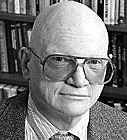
Lloyd C. Gardner
25 Books Written

Safe for Democracy: The Anglo-American Response to Revolution, 1913-1923
by Lloyd C. Gardner
Rating: 3.7 ⭐
• 2 recommendations ❤️
This ground-breaking book probes the way that two capitalist superpowers, Great Britain and the United States, responded to the momentous challenge of revolution that emerged during the early years of this century. Focusing on two key figures--Woodrow Wilson and David Lloyd George--the book explores the collective impact on the Western democracies of the revolutions that swept Mexico in 1910, China in 1911, and, especially, Russia in 1917.

Book by Gardner, Lloyd C

يوضح هذا الكتاب اعلاقات الدولية والسياسية بين مصر وأمريكا في حقبة تاريخة مهمة وهى منذ عبد الناصر إلى سقوط مبارك.

The Case That Never Dies places the Lindbergh kidnapping, investigation, and trial in the context of the Depression, when many feared the country was on the edge of anarchy. Gardner delves deeply into the aspects of the case that remain confusing to this day, including Lindbergh’s dealings with crime baron Owney Madden, Al Capone’s New York counterpart, as well as the inexplicable exploits of John Condon, a retired schoolteacher who became the prosecution’s best witness. The initial investigation was hampered by Colonel Lindbergh, who insisted that the police not attempt to find the perpetrator because he feared the investigation would endanger his son’s life. He relented only when the child was found dead. After two years of fruitless searching, Bruno Richard Hauptmann, a German immigrant, was discovered to have some of the ransom money in his possession. Hauptmann was arrested, tried, and sentenced to death. Throughout the book, Gardner pays special attention to the evidence of the case and how it was used and misused in the trial. Whether Hauptmann was guilty or not, Gardner concludes that there was insufficient evidence to convict him of first-degree murder. Set in historical context, the book offers not only a compelling read, but a powerful vantage point from which to observe the United States in the 1930s as well as contemporary arguments over capital punishment.

The Long Road to Baghdad: A History of U.S. Foreign Policy from the 1970s to the Present
by Lloyd C. Gardner
Rating: 3.5 ⭐
The renowned diplomatic historian looks back at the ideas, policies, and decisions that led from Vietnam to the Iraq War and to America's disastrous new role in the Middle East."What will stand out one day is not George W. Bush's uniqueness but the continuum from the Carter Doctrine of 1979 to "Shock and Awe" in 2003." —from The Long Road to BaghdadIn this stunning new narrative of the road to America's "new longest war," one of the nation's premier diplomatic historians excavates the deep historical roots of the U.S. misadventure in Iraq. Lloyd Gardner's sweeping and authoritative narrative places the Iraq War in the context of U.S. foreign policy since Vietnam, casting the conflict as a chapter in a much broader story—in sharp contrast to the host of recent accounts, which focus almost exclusively on the decisions (and deceptions) in the months leading up to the invasion.Above all, Gardner illuminates a vital historical thread connecting Walt Whitman Rostow's defense of U.S. intervention in Southeast Asia, Zbigniew Brzezinski's renewed attempts to project American power into the "arc of crisis" (with Iran at its center), and, in the aftermath of the Cold War, the efforts of two Bush administrations, in separate Iraq wars, to establish a "landing zone" in that critically important region.Far more disturbing than a reckless adventure inspired by conservative ideologues or a simple conspiracy to secure oil (though both ingredients were present in powerful doses), Gardner's account explains the Iraq War as the necessary outcome of a half-century of doomed U.S. policies. The Long Road to Baghdad is essential reading, with sobering implications for a positive resolution of the present quagmire.

Killing Machine: The American Presidency in the Age of Drone Warfare
by Lloyd C. Gardner
Rating: 3.5 ⭐
With Obama's election to the presidency in 2008, many believed the United States had entered a new Obama came into office with high expectations that he would end the war in Iraq and initiate a new foreign policy that would reestablish American values and the United States' leadership role in the world.In this shattering new assessment, historian Lloyd C. Gardner argues that, despite cosmetic changes, Obama has simply built on the expanding power base of presidential power that reaches back across decades and through multiple administrations.The new president ended the “enhanced interrogation” policy of the Bush administration but did not abandon the concept of preemption. Obama withdrew from Iraq but has institutionalized drone warfare―including the White House's central role in selecting targets. What has come into view, Gardner argues, is the new face of American presidential high–tech, secretive, global, and lethal.Killing Machine skillfully narrates the drawdown in Iraq, the counterinsurgency warfare in Afghanistan, the rise of the use of drones, and targeted assassinations from al-Awlaki to Bin Laden―drawing from the words of key players in these actions as well as their major public critics. With unparalleled historical perspective, Gardner's book is the new touchstone for understanding not only the Obama administration but the American presidency itself.

Three Kings: The Rise of an American Empire in the Middle East After World War II
by Lloyd C. Gardner
Rating: 3.3 ⭐
As American policy makers ponder a strategy for withdrawal from Iraq, one of our preeminent diplomatic historians uncovers the largely hidden story of how the United States got into the Middle East in the first place.A breathtaking recovery of decisions taken, brazen motives, and backroom dealings, Three Kings is the first history of America’s efforts to supplant the British empire in the Middle East, during and following World War II. From F.D.R. to L.B.J.,this is the story of America’s scramble for political influence, oil concessions, and a new military presence based on airpower and generous American aid to shaky regimes in Saudi Arabia, Iran, Egypt, and Iraq.Marshaling new and revelatory evidence from the archives, Gardner deftly weaves together three decades of U.S. moves in the region, chronicling the early efforts to support and influence the Saudi regime (including the creation of Dhahran air base, the target of Osama bin Laden’s first terrorist attack in 1996), the CIA-engineered coup in Iran, Nasser’s Egypt, and, finally, the rise of Iraq as a major petroleum power.Here, the tangled threads of oil, U.S. military might, Western commercial interests, and especially the Israel-Palestine question are visible from the very beginning of “The American Century”—a history with frightening relevance for the distant prospect of peace and stability in the region today.

The War on Leakers: National Security and American Democracy, From Eugene V. Debs to Edward Snowden
by Lloyd C. Gardner
Rating: 3.8 ⭐
Four days before Pearl Harbor, in December 1941, someone leaked American contingency war plans to the Chicago Tribune. The small splash the story made was overwhelmed by the shock waves caused by the Japanese attack on the Pacific fleet anchored in Hawaii—but the ripples never subsided, growing quietly but steadily through the Cold War, Vietnam, the fall of Communism, and into the present.Torn from today’s headlines, Lloyd C. Gardner’s latest book takes a deep dive into the previously unexamined history of national security leakers. The War on Leakers joins the growing debate over surveillance and the national security state, bringing to bear the unique perspective of one of our most respected diplomatic historians. Gardner examines how our government and our media have grappled with national security leaks over nearly five decades (in often sharply contrasting ways), what the relationship of "leaking" has been to the exercise of American power during and after the Cold War; similarities and differences between leakers over time, and the implications of all this for how we should think about the role of leakers in a democracy.

Approaching Vietnam: From World War II Through Dienbienphu, 1941-1954
by Lloyd C. Gardner
Rating: 3.8 ⭐
“An extremely solid history of Indochina in the Viet Minh War era. Essentially a diplomatic history, but one that carefully weaves in developments on the battlefield. Makes use of new knowledge and is a useful corrective to some of the earlier works on the subject by the French. Recommended.” ―Douglas Pike, Indochina Chronology The first Vietnam War, a war of diplomatic maneuver and decisions made from afar, began in 1941, while the fires of World War II raged. With masterly command of documents never before analyzed in a book, Lloyd C. Gardner paints an absorbing picture of the events of that fateful period.

A masterful account of Lyndon Johnson and America's fall into Vietnam by one of our finest historians, filled with fresh interpretations, deft portraits, and new perspectives. Absolutely terrific...simply the best book on the period. ―Marilyn B. Young

The Crime of the Century: The Enduring Mystery of the Lindbergh Kidnapping
by Lloyd C. Gardner
Rating: 3.9 ⭐
Among the many spectacular crimes of the twentieth century—the assassination of President Kennedy, the serial murders of John Wayne Gacy and Ted Bundy, the trial of O. J. Simpson—none was more mysterious and riveting than the 1932 kidnapping and murder of the infant son of Charles A. Lindbergh. Its cast of characters would delight any author of detective the father, an American aviator hero, the first to fly solo over the Atlantic; his lovely wife, the daughter of an ambassador and mother of the first-born son Charlie; an illegal immigrant from Germany charged with the kidnapping; a Bronx schoolteacher designated to carry on ransom negotiations; various underworld characters enlisted to try to find the kidnapped child; a gruff Irish detective dissatisfied with the investigation of the case; a young and aggressive FBI director interested in self-publicity; a prosecutor who may not have believed that one man alone could have done the kidnapping; and a variety of household staff who had peculiar stories to tell. In the end, as a captivated nation followed the details, a sensational trial and conviction settled the affair—but to almost no one’s satisfaction. Lloyd Gardner tells the story of the Lindbergh kidnapping and why it remains the Crime of the Century, as much a mystery as it ever was.

Spheres Of Influence: The Great Powers Partition Europe, from Munich to Yalta
by Lloyd C. Gardner
Rating: 3.7 ⭐
The war within the war was the struggle among Roosevelt, Churchill, and Stalin for the shape of the world that would follow World War II. That delicate diplomacy is spelled out in Lloyd Gardner's brilliant reinterpretation of the negotiations that divided Europe and laid the foundations of the cold war. Mr. Gardner begins his story not conventionally in 1941 but with the British attempt to appease Hitler at Munich in 1938. Here, the author argues, were the roots of the territorial agreements that culminated at Yalta―the "spheres of influence" which the Americans sought to avoid as an Old World curse on the possibilities of a freer and more liberal world economy. Using the most recently opened sources, including those from Soviet archives, Mr. Gardner captures the heady atmosphere of these momentous events in deft glimpses of the major personalities and a persuasive analysis of the course of events. He shows how Roosevelt tried to avoid the partition of Europe that Churchill and Stalin wanted, but ultimately settled for it in the hope of keeping the Allies together to make a more lasting peace. Playing for time, FDR ran out of it. The result was the cold war―which Mr. Gardner concludes may have been preferable to World War III.

The New American Empire: A 21st Century Teach In On U.S. Foreign Policy
by Lloyd C. Gardner
Rating: 3.7 ⭐
In The New American Empire, leading authorities on U.S. foreign policy examine the historical underpinnings of the new American unilateralism. Offering an accessible, critical overview of U.S. policy in Asia, Europe, Latin America, and the Middle East, they assess both the distinct continuities between past and present U.S. policy, as well as what makes the current administration’s policies dramatically different. The essays also reveal how those policies serve the ends of favored groups for whom imperialism pays both ideologically and materially.Both an essential historical primer on America’s new imperial role and a thorough dissection of the Bush administration’s foreign policy objectives, The New American Empire is sure to become a touchstone for understanding America’s role in the twenty-first-century world.Contributors include: Michael Adas, John Dower, Lloyd Gardner, Carole Gluck, Gregory Grandin, Thomas McCormick, Mary Nolan, John Prados, Edward Rhodes, and Marilyn Young.



Book by Lloyd C. Gardner
A Covenant with Power: America and World Order from Wilson to Reagan
by Lloyd C. Gardner
Rating: 3.0 ⭐
This revisionist interpretation of American diplomacy since World War I begins by examining the heritage of Woodrow Wilson, whose idealistic search for a League of Nations turned instead into a covenant with power. Gardner then presents stimulating new discussions of FDR's use of powerpolitics, the Cold War years, and the Vietnam War, ending with an assessment of power politics under the Nixon, Carter, and Reagan administrations. Original and incisive, this book offers a provocative view of more than fifty years of American power and illusions.
Paperback, as pictured (please see my image); mild shelf wear (am)
Spheres of Infuence; The Great Powers Partition Europe, from Munich to
by Lloyd C. Gardner
Rating: 5.0 ⭐

This is a book about a murder of a college co-ed by her boyfriend that sets off a long series of searches for final justice . It features a search for a proposed accomplice that is triggered by a paper given at a seminar dedicated to old cases, and a climactic sequence at Yosemite National Park.

A reprint of the 1976 Lippincott edition, this study discusses perceptions of the swift social, political and ideological changes that took place during Wilson's tenure as President, changes which opened the way to the turbulence of present day governmental relations.
American Foreign Policy, Present to Past; A Narrative With Readings and Documents
by Lloyd C. Gardner
Rating: 3.0 ⭐
Brand New ."American Foreign Policy Present To Past" edited by Lloyd C. Gardner. 1974, Publishing by Macmillian Co.,Inc. Book size is 9.4 x 7 x 1.6 inches & there are 366 pages. Binding is tight and intact. Boarders are clean, straight and edges sharp. Perfectly crisp corners.Pages are clean and unmarked, unused/unread , excellent condition overall.This edition has predominantly crisp corners. The bumping is very modest but still should be noted. See photos for exact details.

JERSEY HAUNTS OLD AND NEW
by Lloyd C. Gardner