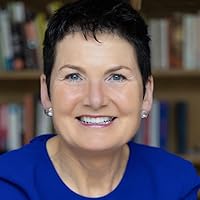
Lily Collison
Program Director, Gillette Children’s Press at Gillette Children's Hospital, Minnesota. Currently working as author/editor on the Gillette Children’s Healthcare Series–a series of nine books on childhood-acquired physical and neurological conditions. Five books co-published December 2024 with Mac Keith Press, UK, including: - Craniosynostosis - Idiopathic Scoliosis - Spastic Hemiplegia—Unilateral Cerebral Palsy - Spastic Quadriplegia—Bilateral Cerebral Palsy - Spastic Diplegia—Bilateral Cerebral Palsy, second edition Four due 2025/6 - Epilepsy - Spina Bifida - Non-idiopathic scoliosis - Osteogenesis Imperfecta Previous books include: - Spastic Diplegia–Bilateral Cerebral Palsy, first edition (2020) - Pure Grit, co-authored with Kara Buckley, (2021)
5 Books Written

An empowering and evidence-based guide for living a full life with spastic diplegia—bilateral cerebral palsy.‘A must-read for professionals, parents, and the individual with CP.’ —Deborah Gaebler-Spira, MD‘This detailed and practical book on spastic diplegia, written by a parent in conjunction with medical practitioners at Gillette, is simply brilliant and fills a huge gap.’ —Lori Poliski, parent_______________________________Cerebral palsy (CP) is the most common cause of childhood-onset lifelong physical disability. Approximately one-third of those with CP have the subtype spastic diplegia—also known as bilateral spastic CP, or simply bilateral CP. An estimated 6 million worldwide have spastic diplegia. Until now, there has been no book focused on this condition to help this large group of people. This book focuses on the motor problems—problems with bones, muscles, and joints, and their impact on walking. The Gross Motor Function Classification System (GMFCS) is a five-level system that indicates the severity of the condition. This book is relevant to those at GMFCS levels I to III: those who are capable of walking independently or with a handheld mobility device. These three levels account for the majority of people with spastic diplegia.The book addresses how spastic diplegia develops over the lifespan and explains the evidence-based, best-practice treatments. It empowers parents of young children, and adolescents and adults with the condition, to become better advocates and co–decision makers in the medical process. The focus of this optimistic, yet practical book is on maximizing activity and participation—living life to its fullest. Health care professionals, educators, students, and extended family members will also benefit from reading this book. Indeed, while this book focuses on spastic diplegia, much of what is addressed also applies to other forms of spastic CP at GMFCS levels I to III, namely hemiplegia and quadriplegia.Written by Lily Collison, a parent of a son with spastic diplegia and a medical sciences graduate, in close collaboration with senior medical experts from Gillette Children’s Specialty Healthcare—a world-renowned center of excellence for CP treatment—this is an excellent, long-needed resource for spastic diplegia._______________________________‘I highly recommend this book to people who have CP, parents, family members, and medical professionals.’ —Hank Chambers, MD‘A must-read for parents and children with spastic diplegia, and if its guiding principles are followed, it will do much to ensure that their child reaches maturity with an optimal outcome.’ —James R. Gage, MD

Pure Grit: Stories of Remarkable People Living with Physical Disability
by Lily Collison
Rating: 4.4 ⭐
“A must-read”—Julie Dussliere, Chief of Paralympic Sport, U.S. Olympic & Paralympic CommitteeNineteen people from across the globe, ranging in age from twenty to seventy-plus, tell their stories of living and thriving in diverse fields — in sport, the arts, medicine, business and more. With refreshing frankness, they share their successes along with their struggles — grit is the one characteristic they all have in common. These are not stories of people overcoming disability — they’re stories of people accommodating disability while pursuing their dreams. Pure Grit shines a light on boundless possibility whatever the individual challenge.“Pure Grit highlights the lived experience of remarkable individuals, who collectively demonstrate that growing up with a disability brings strength, perspective, and resilience.”—Dr. Cheri Blauwet, Assistant Professor of PM&R, Harvard Medical School“An insightful collection of stories.”—Dr. Christine Imms, Apex Australia Chair of Neurodevelopment and Disability, University of Melbourne“The stories in Pure Grit are a testament to human achievement no matter your ability. An extraordinary read.”—Casey Wasserman, Chairperson, Los Angeles 2028 Olympic and Paralympic Games

Spastic Diplegia - Bilateral Cerebral Palsy: Understanding and Managing the Condition across the Lifespan: A Practical Guide for Families
by Lily Collison
Rating: 5.0 ⭐
Spastic diplegia is a very common subtype of cerebral palsy (CP), and CP itself is the most common cause of childhood-onset physical disability. An estimated 17 million people worldwide have CP. Spastic diplegia is also known as bilateral spastic CP or, simply, bilateral CP. With spastic diplegia, the lower limbs are much more affected than the upper limbs, which frequently show only fine motor impairment. Now in its second edition, this practical guide addresses spastic diplegia across the lifespan and the evidence-based, best-practice treatments. It also includes the lived experience of families.The writing of Spastic Diplegia was led by Lily Collison, MA, MSc, the parent of a son with spastic diplegia. The first edition of this book gave rise to the Gillette Children’s Healthcare Series, a series of books for families who are looking for clear, comprehensive information. Health care professionals, educators, students, and extended family members will also benefit from reading Spastic Diplegia.Other titles in the series • Craniosynostosis• Idiopathic Scoliosis• Spastic Hemiplegia–Unilateral Cerebral Palsy• Spastic Quadriplegia–Bilateral Cerebral Palsy• Epilepsy• Spina Bifida• Osteogenesis Imperfecta• Congenital, Neuromuscular, Syndromic, and Other Causes

Spastic Hemiplegia–Unilateral Cerebral Palsy: Understanding and managing the condition across the lifespan: A practical guide for families
by Lily Collison
Spastic hemiplegia is a very common subtype of cerebral palsy (CP), and CP itself is the most common cause of childhood-onset physical disability. An estimated 17 million people worldwide have CP. Spastic hemiplegia is also known as unilateral spastic CP or, simply, unilateral CP. Spastic hemiplegia affects the upper and lower limbs of one side of the body. The upper limb is usually more affected than the lower limb. This practical guide addresses spastic hemiplegia across the lifespan and the evidence-based, best-practice treatments. It also includes the lived experience of families.The writing of Spastic Hemiplegia was led by Marcie Ward, MD, Pediatric Rehabilitation Medicine Physician at Gillette Children’s, a world-renowned center of excellence for the treatment of brain, bone, and movement conditions. Spastic Hemiplegia is part of the Gillette Children’s Healthcare Series, a series of books for families who are looking for clear, comprehensive information. Health care professionals, educators, students, and extended family members will also benefit from reading Spastic Hemiplegia.Other titles in the series • Craniosynostosis• Idiopathic Scoliosis• Spastic Quadriplegia–Bilateral Cerebral Palsy• Spastic Diplegia–Bilateral Cerebral Palsy, second edition• Epilepsy• Spina Bifida• Osteogenesis Imperfecta• Congenital, Neuromuscular, Syndromic, and Other CausesChanges from previous editionN/AAbout the topicCerebral Palsy is a group of conditions caused by an injury to the developing brain, which can result in a variety of motor and other problems that affect how the child functions. As the injury occurs in a developing brain and growing child, problems often change over time, even though the brain injury itself is unchanging.Spastic hemiplegia affects the upper and lower limbs of one side of the body. The upper limb is usually more affected than the lower limb. Spasticity is the most common type of atypical tone present in individuals with hemiplegia although dystonia can be present as well.

Spastic Quadriplegia–Bilateral Cerebral Palsy: Understanding and managing the condition across the lifespan: A practical guide for families
by Lily Collison
Spastic quadriplegia accounts for about one-fifth of cerebral palsy (CP), and CP itself is the most common cause of childhood-onset physical disability. An estimated 17 million people worldwide have CP. Spastic quadriplegia is also known as bilateral spastic CP or, simply, bilateral CP. Spastic quadriplegia affects all four limbs and the trunk. It is generally a severe form of CP that impacts many aspects of a person’s life. This practical guide addresses both the motor and nonmotor aspects of spastic quadriplegia across the lifespan and their treatment. It also includes the lived experience of families.The writing of Spastic Quadriplegia was led by Marcie Ward, MD, Pediatric Rehabilitation Medicine Physician at Gillette Children’s, a world-renowned center of excellence for the treatment of brain, bone, and movement conditions. Spastic Quadriplegia is part of the Gillette Children’s Healthcare Series, a series of books for families who are looking for clear, comprehensive information. Health care professionals, educators, students, and extended family members will also benefit from reading Spastic Quadriplegia.Other titles in the series • Craniosynostosis• Idiopathic Scoliosis• Spastic Hemiplegia–Unilateral Cerebral Palsy• Spastic Diplegia–Bilateral Cerebral Palsy, second edition• Epilepsy• Spina Bifida• Osteogenesis Imperfecta• Congenital, Neuromuscular, Syndromic, and Other Causes