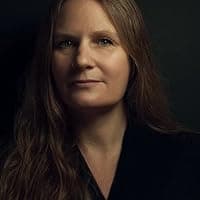
Lidia Yuknavitch
Lidia Yuknavitch is the author of the National Bestselling novels The Book of Joan and The Small Backs of Children, winner of the 2016 Oregon Book Award's Ken Kesey Award for Fiction as well as the Reader's Choice Award, and the novel Dora: A Headcase, Her widely acclaimed memoir The Chronology of Water was a finalist for a PEN Center USA award for creative nonfiction and winner of a PNBA Award and the Oregon Book Award Reader's Choice. Her nonfiction book based on her TED Talk, The Misfit's Manifesto, is forthcoming from TED Books. She founded the workshop series Corporeal Writing in Portland Oregon, where she teaches both in person and online. She received her doctorate in Literature from the University of Oregon. She lives in Oregon with her husband Andy Mingo and their renaissance man son, Miles. She is a very good swimmer.
14 Books Written

Allegories of Violence: Tracing the Writing of War in Late Twentieth-Century Fiction
by Lidia Yuknavitch
Rating: 4.5 ⭐
Allegories of Violence demilitarizes the concept of war and asks what would happen if we understood war as discursive via late 20th Century novels of war.

With an intelligence that scalds every pretense and surface, Lidia Yuknavitch's camera pans across subjects as varied as Keanu Reeves and Siberian prison laborers. She zooms in on drug addiction, crime, sex of all flavors, trauma, torture, rock and roll, and art, all the while revealing untried angles and alien shapes. She traces the inner lives of characters teetering on edges-death, birth, love,

a collection of short fictions. language shoots up and through the body in these fictions of desire inwhich women bleed, bruise, and burn their way beyond culturally sanctioned girl slots. wicked love stories and the crack and split of new intellects emerge in the wake of a sea of "isms." yuknavitch's stories leave questions like marks on the flesh of characters whose stories aren't pretty--they a

In interconnected and mutually enfolding texts protagonists face off with some deformation of psychological, sexual, political, philosophical. Plots play out across the body, as if formed, deformed, reformed by culture. Drugs, violence, and sex inscribe the literal flesh of "figures" standing in for what formerly passed for character. In these fictions a woman is more likely to appear with a needl

This is not your mother's memoir. In The Chronology of Water, Lidia Yuknavitch expertly moves the reader through issues of gender, sexuality, violence, and the family from the point of view of a lifelong swimmer turned artist. In writing that explores the nature of memoir itself, her story traces the effect of extreme grief on a young woman's developing sexuality that some define as untradi

Ida needs a shrink . . . or so her philandering father thinks, and he sends her to a Seattle psychiatrist. Immediately wise to the head games of her new shrink, whom she nicknames Siggy, Ida begins a coming-of-age journey. At the beginning of her therapy, Ida, whose alter ego is Dora, and her small posse of pals engage in "art attacks." Ida’s in love with her friend Obsidian, but when she gets clo

A masterful literary talent explores the treacherous, often violent borders between war and sex, love and art.With the flash of a camera, one girl’s life is shattered, and a host of others altered forever. . .In a war-torn village in Eastern Europe, an American photographer captures a heart-stopping a young girl flying toward the lens, fleeing a fiery explosion that has eng

In the near future, world wars have transformed the earth into a battleground. Fleeing the unending violence and the planet’s now-radioactive surface, humans have regrouped to a mysterious platform known as CIEL, hovering over their erstwhile home. The changed world has turned evolution on its head: the surviving humans have become sexless, hairless pale-white creatures floating in isolation, insc

A self-defined misfit makes a powerful case for not fitting in—for recognizing the beauty, and difficulty, in forging an original path.A misfit is a person who missed fitting in, a person who fits in badly, or this: a person who is poorly adapted to new situations and environments. It’s a shameful word, a word no one typically tries to own. Until now.Lidia Yuknavitch is a p

A fiercely empathetic group portrait of the marginalized and outcast in moments of crisis, from one of the most galvanizing voices in American fiction.Lidia Yuknavitch's characters are scarred by the unchecked hungers of others and themselves, yet determined to find salvation within lives that can feel beyond their control. In novels such as The Small Backs of Children and Th

Lidia Yuknavitch has an unmatched gift for capturing stories of people on the margins--vulnerable humans leading lives of challenge and transcendence. Now, Yuknavitch offers an imaginative masterpiece: the story of Laisve, a motherless girl from the late 21st century who is learning her power as a carrier, a person who can harness the power of meaningful objects to carry her through time. S

The frank and revealing memoir of a writer who draws from her own creativity to heal."I believe our bodies are carriers of experience," Lidia Yuknavitch writes in her provocative memoir Reading the Waves. "I mean to ask if there is a way to read my own past differently, using what I have learned from how stories repeat and reverberate and release us from the tyranny of ou

Letter to My Rage opens in a clinic where the author is waiting to be tested for COVID-19 antibodies. A sighting of the unmasked face of the president on the clinic TV makes her travel “beyond anger” to seethe at an administration ill-prepared to battle a pandemic or confront the racial and economic disparities that ensure vulnerability not just to disease but to a host of human brutalities. And s

Lidia Yuknavitch teams up with 12 of today's sharpest writers to change the way we think about menopause. Exploring a variety of themes from freedom and mortality, to sexuality and the patriarchy, THE BIG M is a kaleidoscope of unique perspectives on a universal experience, each writer navigating the profound changes in their bodies and lives in their own ways. At times funny, insightful, subversi