
Lewis Wolpert
Lewis Wolpert CBE FRS FRSL (born October 19, 1929) is a developmental biologist, author, and broadcaster. Career He was educated at the University of Witwatersrand, Imperial College London, and at King's College London. He is presently Emeritus Professor of Biology as applied to Medicine in the Department of Anatomy and developmental biology at University College London. He is well known in his field for elaborating and championing the ideas of positional information and positional value: molecular signals and internal cellular responses to them that enable cells to do the right thing in the right place during embryonic development. The essence of these concepts is that there is a dedicated set of molecules for spatial coordination of cells that is the same across many species and across different developmental stages and tissues. The discovery of Hox gene codes in flies and vertebrates has largely vindicated Wolpert's positional value concept, while identification of growth factor morphogens in many species has supported the concept of positional information. In addition to his scientific and research publications, he has written about his own experience of clinical depression in Malignant Sadness: The Anatomy of Depression. This was turned into three television programmes entitled 'A Living Hell' which he presented on BBC2. He was made a Fellow of the Royal Society in 1980 and awarded the CBE in 1990. He was made a Fellow of the Royal Society of Literature in 1999. He is a Vice-President of the British Humanist Association. Theories Wolpert is regarded as a rationalist. In an April 7, 2005 article entitled "Spiked", The Guardian asked a series of scientists "What is the one thing everyone should learn about science?" Wolpert responded, "I would teach the world that science is the best way to understand the world, and that for any set of observations, there is only one correct explanation. Also, science is value-free, as it explains the world as it is. Ethical issues arise only when science is applied to technology – from medicine to industry." In a lecture entitled "Is Science Dangerous?", he expanded on this: "I regard it as ethically unacceptable and impractical to censor any aspect of trying to understand the nature of our world." On May 25, 1994, Wolpert conducted an hour-long interview with Dr. Francis Crick called "How the Brain 'sees' " for The Times Dillon Science Forum; a video of the interview was produced by Just Results Video Productions for The Times. On January 15, 2004, Wolpert and biologist/ parapsychologist Rupert Sheldrake engaged in a live debate regarding the evidence for telepathy. It took place at the Royal Society of Arts in London. In the late 1960s Wolpert proposed the illustrative French flag model, which explains how signalling between cells early in morphogenesis could be used to inform cells with the same Genetic regulatory network of their position and role. He is credited with the famous quote: "It is not birth, marriage, or death, but gastrulation which is truly the most important time in your life." An early book was The Unnatural Nature of Science. His most recent book is Six Impossible Things Before Breakfast. In May 2008, he gave one of four plenary lectures at the European Society for the Study of Science and Theology in Sigtuna, Sweden. His talk was reported as follows: Lewis Wolpert's plenary address entitled "The Origins of Science and Religion" was provocative, amusing and from a totally materialist perspective. In his view, religion arose from the uniquely human need for causal explanations, and neither religion nor philosophy contributed anything of importance to scientific undersanding. ... ESSSAT is to be congratulated for offering its platform to a strong-minded materialist, but in the end Wolpert proved unable to enter serious debate with the conference theme or its participants. -
26 Books Written

The Unnatural Nature of Science: Why Science Does Not Make (Common) Sense
by Lewis Wolpert
Rating: 3.7 ⭐
• 2 recommendations ❤️
How is it that nobody―except maybe scientists―sees science for what it is? In this entertaining and provocative book, Lewis Wolpert draws on the entire history of science, from Thales of Miletus to Watson and Crick, from the study of eugenics to the discovery of the double helix. The result is a scientist’s view of the culture of science, authoritative and informed and at the same time mercifully accessible to those who find cohabiting with this culture a puzzling experience.Science is arguably the defining feature of our age. For anyone who hopes to understand its nature, this lively and thoughtful book provides the perfect starting point.

عانى لويس ولبرت، من الاكتئاب الحاد منذ عدة سنوات، وقد وصف ذلك لاحقاً أنه أسوأ تجربة في حياته، وهو لا يصف هنا تجربته الشخصية مع الاكتئاب فحسب، وإنما يقدم عرضاً متكاملاً عن الاكتئاب، يبدأ بتاريخه، وتعريفه، وطرق تشخيصه في الغرب، ثم ينتقل لاحقاً إلى العوامل النفسية والبيولوجية، التي قد تؤدي إلى الإصابة به. يقدم ولبرت المعلومات والبيانات تقديماً شاملاً وسلساً، يجمع فيه بين الدقة العلمية والبيانات الموثقة، والكتابة الواضحة والمبسطة.هذا الكتاب ضمن وسائل العلاج الذاتي، التي قد ينتفع بها عدد كبير من القراء، ولاسيما إذا علمنا مدى انتشار مرض الاكتئاب بدرجاته المختلفة بين الشرائح المختلفة في مجتمعاتنا اليوم.

Six Impossible Things Before Breakfast: The Evolutionary Origins of Belief
by Lewis Wolpert
Rating: 3.7 ⭐
A unique, scientific look into why we are all believers. In Lewis Carroll's Through the Looking-Glass , the White Queen tells Alice that to believe in a wildly improbable fact she simply needs to "draw a long breath and shut [her] eyes." Alice finds this advice ridiculous. But don't almost all of us, at some time or another, engage in magical thinking? Seventy percent of Americans believe in angels; 13 percent of British scientists "touch wood"; 40 percent of Americans believe that astrology is scientific. And that is only the beginning.In Six Impossible Things Before Breakfast , Lewis Wolpert tackles one of the most important causes on the horizon of public debate: the nature of belief. Looking at belief's psychological basis and its possible evolutionary origins in physical cause and effect, Wolpert expertly investigates what science can tell us about those concepts we are so sure of, covering everything from everyday beliefs that give coherence to our experiences, to religious beliefs, to paranormal beliefs for which there is no evidence.

Biologist Lewis Wolpert eloquently narrates the basics of human life through the lens of its smallest component—the cell. Everything about our existence—movement and memory, imagination and reproduction, birth and, ultimately, death—is governed by our cells. They are the basis of all life in the universe, from the tiniest bacteria to the most complex animals. In the tradition of the classic Lives of a Cell, but with the benefit of the latest research, internationally acclaimed embryologist Lewis Wolpert demonstrates how human life derives from a single cell and then grows into a body, an incredibly complex society made up of billions of them. When we age, our cells cannot repair the damage they have undergone; when we get ill, it is because cells are so damaged they stop working and die. Wolpert examines the science behind topics that are much discussed but rarely understood—stem cell research, cloning, DNA, mutating cancer cells—and explains how all life evolved from just one cell. Lively and passionate, this is an accessible guide to understanding the human body and life itself. .
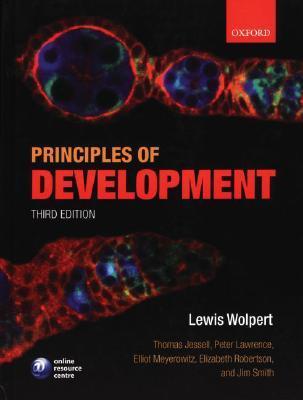
Completely updated and revised in a new edition, Principles of Development presents major principles and concepts in the field for an undergraduate audience. Emphasizing gene control as the key to understanding development, the third edition is written in accessible prose, utilizing animpressive art program - 650 full color figures - as well as summaries and diagrams throughout the text to illuminate conceptually challenging material. In addition, the third edition presents carefully selected articles for further reading that expound on principles covered in the text.
From a single cell--a fertilized egg--comes an elephant, a fly, or a human. How does this astonishing feat happen? How does the egg "know" what to become? How does it divide into the different cells, the separate tissues, the brain, the fingernail--every tiniest detail of the growing fetus? In this Very Short Introduction , renowned scientist Lewis Wolpert shows how the field of developmental biology seeks to answer these profound questions. A distinguished developmental biologist himself, Wolpert offers a concise and highly readable account of what we now know about development, discussing the first vital steps of growth, the patterning created by Hox genes and the development of form, embryonic stem cells, the timing of gene expression and its management, chemical signaling, and growth. Drawing on scientific breakthroughs in genetics, evolution, and molecular biology, he illuminates processes that are deeply rooted in evolutionary history, revealing how information is held ingenes whose vital timing in switching on and off is orchestrated by a host of proteins expressed by other genes.

We now live longer today than at any time in history. In the UK, more people are aged over sixty-five than under sixteen and by 2050, over a third of the developed world will be over sixty. How should we deal with this phenomenon? What are the scientific reasons for ageing? And can - or should - we prevent it? Lewis Wolpert, distinguished biologist and octogenarian, explores the scientific background and the implications of our ageing population. In this engaging investigation, he tackles every aspect of the subject from ageism to euthanasia to anti-ageing cream and, through it all, tries to better understand his own ageing. Witty, frank and often inspiring, Lewis Wolpert is the perfect guide to 'looking very well'.

How different are men and women, really? Controversy surrounds the question and makes uncovering the answers—based in evolution, genetics, and biology—increasingly difficult. Still, significant differences between the sexes are apparent everyday to both men and women. Whether it’s a boyfriend’s infidelity or a wife’s inability to orgasm during sex, the differences between the sexes affect how we act, interact, and think about one another. Developmental biologist Lewis Wolpert has devoted years of research on sex and gender and aims to dispel the myths and further scientific understanding of the Xs and Ys that make us all who we are.Why Can’t a Man Be More Like a Woman? is an exercise in critical and unbiased thinking. From fertilization and evolution to aggressive men and emotional women, Wolpert explores the whole gamut of sexual development and gender differentiation. With some surprising discoveries along the way, he explains how men are fundamentally “modified females,” as well as takes a close look at evolution’s effect on our differing brain chemistry—giving women an advantage in verbal tasks and episodic memory, men the advantage in spatial perception and orientation, and couples virtually no chance at understanding one another.Ladies and gentleman, if you’ve ever questioned whether men were truly better at math; imagined that women ruled the world and ended all wars; or asked, “Why can’t a man be more like a woman?” (or vice versa!), this book offers the answers and insight needed to have an informed conversation about sex and gender with your partner or friends . . . political correctness be damned.

Of the great mysteries that face modern biologists, one of the most intriguing concerns the development of the microscopic embryo into exceedingly complex plants and animals--into roses and cacti, elephants and blue whales, apes and human beings. How does one cell give rise to so many millionsof cells? How do they divide so as to form hearts, brains, eyes, and ears? Where in this pin-head-sized object is all this information encoded? Now, in The Triumph of the Embryo , British biologist Lewis Wolpert treats general readers to a lucid tour of embryology, offering the latest theories inthis fascinating field.Like the best scientist-authors, Wolpert's writing is filled with rich and unusual examples, metaphors, and descriptions. Nor does he hesitate to move beyond his overall narrative to discuss the many issues it raises, such as aging, cancer, regeneration, and evolution. Readers discover whyall calico cats are female; encounter a zebra-striped mouse and a fruit fly engineered to grow a leg out of its head; and consider such topics as why "cell death" is important in sculpting the body or why there seems to be a 110 year age barrier for the human body. Wolpert also traces the earlyhistory of the field, ranging from the original conflict of embryology raised by Aristotle right up to the belief (held even in the 19th century) that every human spermatozoa contained a fully-developed human being. And he illuminates modern embryology, sharing with readers a glimpse of theforefront of the field, including such groundbreaking concepts as CAMs (cell adhesion molecules) and induction (a mode of cell interaction whose discovery won the only Nobel Prize in embryology).To Wolpert, the triumph of the embryo is its ability to exploit with brilliant success a group of basic, elegant, and universal mechanisms in order to develop into a fully formed creature--no matter if it's to become a hydra or a horse. To readers, the triumph of The Triumph of the Embryo isLewis Wolpert's ability to tell us all about it.

Based on a highly successful BBC series, A Passion for Science features thirteen informal conversations with eminent scientists--including physicists, molecular biologists, cancer researchers, and astronomers--who speak with remarkable candor and good humor about the personal side ofscience. Edited to stand alone and including expanded introductions as well as an opening chapter, the interviews focus on why they became scientists, what they find most rewarding about their work, and what it feels like to make a major discovery.In this collection of conversations with Lewis Wolpert, such eminent scientists as Nobel Laureate Abdus Salam, Christopher Zeeman, John Maynard Smith, Stephen Jay Gould, Anthony Epstein, and Richard Gregory provide highly entertaining and non-technical accounts of the activity that dominatestheir lives. At once humorous, insightful, and inspiring, the stories these scientists tell offer a vivid portrait of scientific work, the day-to-day routine, and the moments that come once in a lifetime.

The transformation of scientific discoveries into useful products and processes is central to the way we live. There is, however, anxiety that unregulated exploitation of new discoveries may seriously affect quality of life. This work looks at various aspects of scientific social responsibility.

Ancient Greece was the birthplace of science, which developed in the Hellenized culture of ancient Rome. This book, written by seventeen international experts, examines the role and achievement of science and mathematics in Greek antiquity through discussion of the linguistic, literary, political, religious, sociological, and technological factors which influenced scientific thought and practice.


Wolpert's Principles of Development
by Lewis Wolpert
La naturaleza no natural de la ciencia
by Lewis Wolpert
Principles of Devlopment, 3rd ed.
by Lewis Wolpert
Six Impossible Things Before Breakfast
by Lewis Wolpert
Six Impossible Things Before Breakfast
Theories of biological pattern formation: A Royal Society discussion held on 25 and 26 March 1981
by Lewis Wolpert
large format, hardback cloth with sunned dustjacket, an excellent copy with a library stamp, unused, very good, this copy published in the year 1981

WOLPERT:Princ.fund.del desarrollo 3a.Ed
by Lewis Wolpert
Esta extraordinaria obra, escrita por uno de los más influyentes biólogos de nuestro tiempo, Lewis Wolpert, revela los principios universales que gobiernan el proceso del desarrollo. Se centra en los sistemas que mejor representan los principios comunes y permite de esta manera una comprensión más fácil de los complejos procesos que determinan el desarrollo biológico. Combina una cuidadosa exposición de cada uno de los temas con los aportes de investigadores de todo el mundo, brindando así tanto los procesos esenciales como los últimos descubrimientos. Sus características sobresalientes - Las lecturas complementarias cuidadosamente seleccionadas que alientan al estudiante a explorar el tema en un nivel más avanzado y lo motivan a utilizar la literatura de base. - Las hermosas y claras ilustraciones en color que ayudan a visualizar los experimentos y mecanismos enunciados y facilitan su comprensión. - Las numerosas secciones de resúmenes, en textos y diagramas, que permiten reconocer y asimilar los principales conceptos y proporcionan una invalorable ayuda de revisión. - El énfasis en los mecanismos celulares y moleculares del desarrollo que refleja la dirección de la investigación moderna, y la inclusión de numerosos avances recientes, como la comprensión de la formación del eje, del desarrollo neural y de las células madre.Su claridad expositiva, su estructura didáctica y el acento puesto en los principios y los conceptos claves hacen de Principios del Desarrollo una herramienta indispensable para la compresión de esta apasionante disciplina.

Princípios de Biologia do Desenvolvimento
by Lewis Wolpert

Cet ouvrage en 4 couleurs offre une introduction extrêmement didactique aux concepts fondamentaux du développement , domaine d'étude en plein essor. Associé à des spécialistes reconnus, l'auteur domine parfaitement le sujet, ce qui transparaît dans l'extrême qualité de son texte, rationnel dans sa présentation, mettant l'accent sur les concepts fondamentaux : c'est un manuel qui a marqué sa discipline. Le cours, très progressif, est remarquablement illustré de nombreuses figures et de schémas fonctionnels synthétiques qui favorisent la compréhension de notions souvent considérées comme complexes. De nombreux encarts mettent l'accent sur les techniques expérimentales, des encarts biomédicaux montrent l'importance de la biologie du développement pour la compréhension du fonctionnement du corps humain et de ses pathologies.Des ressources numériques complètent l'ouvrage : vidéos, compléments d'information.

Anatomie der Schwermut: Über die Krankheit Depression
by Lewis Wolpert
Limits of Reductionism in Biology: Novartis Foundation Symposium
by Lewis Wolpert
A comprehensive volume examining the fundamental questions raised by reductionists' theory about levels of explanation necessary to understand biological systems. The book evaluates the enormously powerful techniques of molecular biology, and analyzes precisely how molecular information has improved our understanding of fundamental biological processes.
Artwork Cd-Rom for Wolpert Et Al, Principles of Development
by Lewis Wolpert
This CD-ROM makes available all the artwork in the "Principles of Development" book for easy downloading to create presentations and lecture hand-outs. The book is intended for lecturers teaching a developmental biology course. System PC 486 multimedia PC with 66MHz DX processor; 8MB RAM (16MB recommended); double-speed CD-ROM drive (4-speed preferable); 256 colour display set to 640 x 480; Microsoft Windows 3.1, 3.11, or Windows 95; mouse or other pointing device. Macintosh System 7.1 or later; 68040 or faster processor; 8MB RAM (16MB on Power Macintosh); 256 colour display set to 640 x 480; double-speed CD-ROM drive (4-speed recommended); mouse or other pointing device. You will also need Microsoft Internet Explorer version 3.0 or above, or Netscape Navigator version 3.0 or above. Microsoft Internet Explorer is provided on the CD-ROM.