
Laurent Pernot
21 Books Written

Au départ de la rhétorique, il y a l'énigme de la persuasion : comment expliquer ce phénomène qui consiste à amener autrui, sans contrainte apparente, à penser quelque chose qu'il ne pensait pas auparavant ? La rhétorique, l'art qui vise à comprendre, à produire et à réguler la persuasion, a été inventée par l'Antiquité pour répondre à cette interrogation. Cet art était un secteur essentiel de l'enseignement et de la culture. Aujourd'hui, à l'heure des médias, la rhétorique antique, porteuse d'un savoir sur le langage, créatrice d'un vocabulaire encore en usage, donne, par-delà les barrières traditionnelles entre disciplines et entre périodes, des clefs indispensables pour aborder les problèmes actuels de la théorie littéraire, de la communication et du débat politique ou judiciaire. Le livre traite, pour la première fois en français, le sujet dans sa totalité, en prenant en considération à la fois la pratique et la théorie de la rhétorique, sur toute la durée de l'Antiquité, dans les deux domaines latin et grec. Un dictionnaire des termes techniques (Thesaurus) et plusieurs index en facilitent l'utilisation.
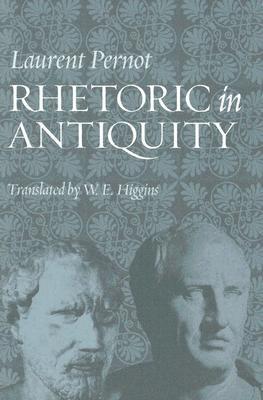
Originally published as La Rhétorique dans l'Antiquité (2000), this new English edition provides students with a valuable introduction to understanding the classical art of rhetoric and its place in ancient society and politics. Rhetoric formed an essential part of teaching and general culture. Today it gives indispensable keys to addressing current problems in literary theory, philosophy and aesthetics, communication, and political or legal debate. It bears a body of knowledge about reasoning and language, a vocabulary still in use, and transcends traditional barriers between disciplines and periods. Written by a leading scholar of classical rhetoric, Laurent Pernot, the book offers a full description of ancient rhetoric in the Greco-Roman period, from Homer and classical Athens, through the Hellenistic World, Roman Republic, and Roman Empire, up to the advent of Christianity, explaining the evolutions, illuminating the main themes, and stressing the key moments and figures. The book contains a thesaurus giving a list and explanation of all the technical terms, many of which are still in use in contemporary language. Laurent Pernot is Professor of Greek Language and Literature at the University of Strasbourg and President of the International Society for the History of Rhetoric. He is the author of numerous books and articles. Praise for the "Laurent Pernot's concise and authoritative account of rhetoric in Graeco-Roman antiquity appears now in an elegant English translation by William Higgins. This translation goes well beyond the original French edition and is more than a guide to what the Greeks and Romans thought about speech. Terminology and practice are given equal weight. Pernot has included detailed discussion of problematic issues in an excursus format that enriches his exposition without disrupting it. This is by far the best and the most timely introduction to classical rhetoric known to me."―G. W. Bowersock, Institute for Advanced Study (Princeton) "Pernot is one of the leading historians of rhetoric worldwide, and what he says demands serious consideration. He possesses encyclopedic knowledge of the period, and he writes clearly and cleanly. The book is excellent, in scholarly quality and in accessibility."―Craig Kallendorf, Texas A&M University "A splendidly nuanced treatment of ancient rhetoric both as theory and practice. Pernot's mastery of contextual detail enlivens his discussions of individual orators, putting human faces on the public texts that have survived from Greek and Roman societies."―James J. Murphy, University of California, Davis "Pernot offers many new interpretations of the history of rhetoric, adds nuance and discrimination to many previous understandings, and overturns or takes us past a series of understandings that prevailed earlier; in each case he does so on the basis of the most respectable and current scholarship."―Lawrence D. Green, University of Southern California "A comprehensive, concise, yet never simplistic overview of ancient rhetorical practice and theory. . . . An exemplary introduction that gives a vivid and clear picture of the field."― Classical Review

All Cub fans know from heartbreak and curse-toting goats. Fewer know that, prior to moving to the north side in 1916, the team fielded powerhouse nines that regularly claimed the pennant. Before the Ivy offers a grandstand seat to a golden BEHOLD the 1871 team as it plays for the title in nine different borrowed uniforms after losing everything in the Great Chicago Fire ATTEND West Side Grounds at Polk and Wolcott with its barbershop quartet MARVEL as superstar Cap Anson hits .399, makes extra cash running a ballpark ice rink, and strikes out as an elected official WONDER at experiments with square bats and corked balls, the scandal of Sunday games and pre-game booze-ups, the brazen spitters and park dimensions changed to foil Ty Cobb RAZZ Charles Comiskey as he adopts a Cubs hand-me-down moniker for his team's name THRILL to the poetic double-play combo of Tinker, Evers, and Chance even as they throw tantrums at umpires and punches at each other CHEER as Merkle's Boner and the Cubs' ensuing theatrics send the team to the 1908 World Series Rich with Hall of Fame personalities and oddball stories, Before the Ivy opens a door to Chicago's own field of dreams and serves as every Cub fan's guide to a time when thoughts of "next year" filled rival teams with dread.

Speeches of praise and blame constituted a form of oratory put to brilliant and creative use in the classical Greek period (fifth to fourth century BC) and the Roman imperial period (first to fourth century AD), and they have influenced public speakers through all the succeeding ages. Yet unlike the other classical genres of rhetoric, epideictic rhetoric remains something of a mystery. It was the least important genre at the start of Greek oratory, but its role grew exponentially in subsequent periods, even though epideictic orations were not meant to elicit any action on the part of the listener, as judicial and deliberative speeches attempted to do. So why did the ancients value the oratory of praise so highly? In Epideictic Rhetoric , Laurent Pernot offers an authoritative overview of the genre that surveys its history in ancient Greece and Rome, its technical aspects, and its social function. He begins by defining epideictic rhetoric and tracing its evolution from its first realizations in classical Greece to its eloquent triumph in the Greco-Roman world. No longer were speeches limited to tribunals, assemblies, and courts—they now involved ceremonies as well, which changed the political and social implications of public speaking. Pernot analyzes the techniques of praise, both as stipulated by theoreticians and as practiced by orators. He describes how epideictic rhetoric functioned to give shape to the representations and common beliefs of a group, render explicit and justify accepted values, and offer lessons on new values. Finally, Pernot incorporates current research about rhetoric into the analysis of praise.

Fines allusions, esquives polies, ambiguïtés volontaires ou non : dans notre vie quotidienne, les sous-entendus sont partout. Nous sommes entraînés à les employer et à les décrypter. Mais avons-nous songé aux implications de ce phénomène ? Il ne se limite pas à des ruses ponctuelles et représente à lui seul une dimension du langage et des rapports sociaux. Le sous-entendu plonge ses racines dans une lecture allégorique du monde. Il est utilisé en littérature et en politique, notamment comme arme contre les totalitarismes. Il pose de délicats problèmes d’interprétation, car qui dit sous-entendu dit risque de malentendu.Deux moments clés sont mis en relation : l’Antiquité classique et la Modernité, depuis les philosophes et les sophistes grecs de l'Empire romain jusqu’à Stendhal, Balzac, Aragon ou Foucault, en passant par Hemingway, Orwell et d’autres. La démonstration s’appuie sur des exemples, des citations et des études de cas, tantôt graves, tantôt drôles – parfois osés. Pour la première fois, vous est proposée une enquête d’ensemble sur le non-dit et le dire autrement. Ce livre aura atteint son but s’il aide à voiler et à dévoiler, à mieux dire et à mieux recevoir.
Subtexts are all around us. In conversation, business transactions, politics, literature, philosophy, and even love, the art of expressing more than what is explicitly said allows us to live and move in the world. But rarely do we reflect on this subterranean dimension of communication.In this book, renowned classicist and scholar of rhetoric Laurent Pernot explores the fascinating world of subtext. Of the two meanings present in any instance of double meaning, Pernot focuses on the meaning that is unstated—the meaning that counts. He analyzes subtext in all its multifarious forms, including allusion, allegory, insinuation, figured speech, irony, innuendo, esoteric teaching, reading between the lines, ambiguity, and beyond. Drawing on examples from figures as varied as Homer, Shakespeare, Molière, Proust, Foucault, and others, as well as from popular culture, Pernot shows how subtext can be identified and deciphered as well as how prevalent and essential it is in human life.With erudition and wit, Pernot explains and clarifies a device of language that we use and understand every day without even realizing it. The Subtle Subtext is a book for anyone who is interested in language, literature, hidden meanings, and the finer points of social relations.

Dans l'Antiquite, l'ecole, pour ceux qui avaient la chance d'y aller, etait une des cles de la reussite. Les Anciens ont beaucoup reflechi sur les methodes, les contenus, la finalite intellectuelle et sociale de l'enseignement, et notre systeme educatif a herite de cette reflexion dans une large mesure. Nous devons aux Grecs et aux Romains, entre autres, l'explication de texte, la dissertation, nombre de theoremes de mathematique, les exposes oraux, la culture generale, les filieres disciplinaires, les lecons de musique et l'education physique et sportive: mens sana in corpore sano!A l'ecole des Anciens reunit plus de 150 extraits d'auteurs differents, issus des traductions Belles Lettres, consacres a l'activite des professeurs, des etudiants et des eleves dans le monde grec et dans le monde romain, du VIIIe siecle avant J.-C. au VIe siecle apres J.-C. A l'ecole des Anciens l'on croise des maitres devoues aux prises avec des cancres turbulents, des personnels administratifs et techniques efficaces, des professeurs et des eleves d'exception comme Socrate ou Alexandre, des enseignants sous-payes, des gourous, des specialistes s'interrogeant sur les chatiments corporels ou les nouvelles pedagogies, des parents d'eleves inquiets, redoutant la violence a l'ecole et preoccupes des debouches pour leurs enfants.


Through prose and pictures, There and Small Illinois Towns with Big Names celebrates the bountiful heritage and unheralded charm of Illinois. The book explores the history of more than 100 Illinois towns with foreign names, along with the state's successive capitals, to weave a tapestry of eighteenth- and nineteenth-century Illinois, from Indigenous removal and slavery to mass immigration and Lincoln. Praise for There and Jan Kostner, former director, Illinois Bureau of “Laurent Pernot’s beautiful book unlocks the history and mysteries behind the names of many Illinois towns. There and Here is a wonderful exploration of the Land of Lincoln, giving readers many reasons to get off the highway and explore our state.” Leo Schelbert, professor emeritus, University of Illinois at Chicago, author of Switzerland Abroad (2019): “This chronicle of more than one hundred places features mostly smaller and little-known settlements in Illinois. It sketches neo-European foundations after indigenous people had been eliminated and as areas were evolving as eighteenth- and nineteenth-century neo-European domains of the present United States. Names such as Alhambra, Denmark, Liverpool, Palestine, Teheran, and Versailles, may partly point to global awareness of individual name givers. The names may claim inherently that the newly named places were joining those of the old world on an at least symbolically equal footing. Laurent Pernot’s concise textual entries are greatly enriched by numerous carefully chosen and pleasing pictures in color that offer vistas of landscapes, houses, churches, sculptures, and monuments. The chosen images speak as powerfully as the carefully crafted texts. Then and Here features however not only the creative efforts of women and men in evolving a neo-European world in a region of the Northern Western Hemisphere coming to be called Illinois. The book’s texts and pictures also point to racial conquest by encirclement, by destruction of indigenous patterns, by expulsion, and by extensive physical annihilation of native peoples. The story documents white settlers’ persistent efforts to achieve an erasure of the millennia-old indigenous occupancy and its replacement by exclusively white jurisdiction. The concise texts and numerous pictures highlight therefore a double-faced historical eighteenth- and nineteenth-century process as it evolved in today’s region called They point to a gradual conquest characterized by totalitarian violence of invaders against millennia-old indigenous groups and by the creative replacement of an ancient native world by an exclusive establishment of neo-European cultural ways.” More about the There and Here yields a richly textured portrait of early Illinois, a place where women and men gave their new towns big names, out of hope, hubris, and maybe even denial. The book chronicles locales from Alhambra to Zion, including towns like Argyle and Norway, which served as the main gateway for immigrants from those locales into Illinois and the rest of the country. Segments about the state’s seats of power provide useful historical context for the other towns’ more localized stories. Springfield is one of no fewer than six capital cities in Illinois, alongside Kaskaskia and Vandalia, Springfield’s predecessors; Cahokia, center of the largest pre-Columbian civilization in what is today the U.S.; Fort de Chartres, the heart of France’s Upper Louisiana; and Nauvoo, the first great Mormon metropolis. There’s also Metropolis itself, home of Superman. And Popeye reigns sovereign in Chester.

Alexandre le Grand, les risques du pouvoir: Textes philosophiques et rhétoriques (La roue a livres)
by Laurent Pernot
Alexandre (356-323 avant J.-C.) fascine. Son règne fulgurant, ses immenses conquêtes ont servi de référence pour une réflexion sur le bon usage du pouvoir : comment faire le bien des sujets ? comment éviter les dérives de l'autoritarisme et de la corruption ? comment échapper au risque de perdre son âme ?Telles sont les questions que posent Sénèque le Père (54-39 avant J.-C.), Dion Chrysostome (30-116), Lucien (120-180), ainsi que de multiples déclamateurs, écrivant en grec et en latin à l'époque de l'Empire romain. Leurs discours et leurs dialogues sur Alexandre le Grand n’avaient jamais été réunis et certains n’avaient jamais été traduits en français. A la fois drôles et profonds, ils sont riches d’implications politiques.Laurent Pernot, membre du l'Institut, est professeur à l'Université de Strasbourg. Il a publié aux éditions Les Belles Lettres Éloges grecs de Rome et À l'école des Anciens.

Epideictic Rhetoric (Ashley and Peter Larkin Series in Greek and Roman Culture) by Laurent Pernot
by Laurent Pernot

La fièvre des urnes: 2 500 ans de passions électorales
by Laurent Pernot
Ceux qui croient qu'une élection se définit par des programmes que l'on compare, puis par des bulletins que l'on additionne, se trompent lourdement. La Fièvre des urnes analyse ce grand événement de nos démocraties en questionnant justement son côté rationnel, et en révélant son aspect passionnel. Orgueil, espoir, indignation, colère... : ce sont les passions qui dirigent les candidats et les électeurs, et presque jamais la raison ! Armé d'un savoir immense et jubilatoire, qui va de l'Antiquité à notre époque, Laurent Pernot réfléchit aux différentes manières qu'ont les femmes et les hommes de faire campagne, de convaincre leurs électeurs, et de l'emporter sur leurs adversaires. On trouvera donc dans ces pages une leçon d'Aristote sur l'utilisation du pathos dans un discours politique ; un manuel de campagne rédigé pour Cicéron ; de drôles de scènes d'élections chez Shakespeare, Balzac et Zola ; une analyse du charisme par le sociologue Max Scheler, ou encore le célèbre (publi)reportage de Norman Mailer sur la victoire de John F. Kennedy à la primaire démocrate, ou l'adresse inaugurale de Simone Veil au Parlement européen. L'actualité la plus récente est bien sûr présente à travers les écrits et les déclarations des présidents Sarkozy, Hollande, Macron et Biden. Enfin, les tribulations de Périclès et de Montaigne illustrent les efforts qu'il faut déployer pour se faire réélire en temps d'épidémie. Un essai riche d'anecdotes et d'analyses, qui bouleverse notre façon de participer à une élection et, donc, notre façon de voter.

Des leur naissance en Grece, la philosophie et la rhetorique se sont mutuellement influencees, et leur dialogue s'est poursuivi tout au long de l'Antiquite. Ces deux disciplines, qu'on aurait tort de figer dans une antithese sterile, se rencontraient sur des terrains essentiels, comme la verite, la justice, la politique, la deliberation, la logique des raisonnements et l'analyse du fonctionnement de l'esprit, les eloges, la religion, l'enseignement, ou encore la critique des uvres d'art. L'alliance de deux savoirs, qui etaient aussi des arts de vivre, construisait un modele intellectuel et social de sagesse persuasive. Leur confrontation donna lieu a des debats aussi animes que lourds de consequences. Le present ouvrage jette une lumiere nouvelle sur ces questions par le moyen d'etudes ciblees, consacrees a des auteurs, a des notions et a des formules, depuis le Ve siecle avant J.-C. jusqu'au VIe siecle apres J.-C., de Socrate a Olympiodore, en passant par Platon, Aristote, Demosthene, Diogene, Theophraste, Philodeme, Plutarque, Dion de Pruse, Marc Aurele, Aelius Aristide, Plotin, Porphyre, Eunape, sans negliger des Romains comme Ciceron ou Quintilien. Il se compose de vingt-cinq chapitres, fruit de trente ans de recherches (1986-2016), qui furent publies a l'origine sous forme de contributions a des revues et a des recueils. Certaines etaient devenues introuvables. Trois d'entre elles paraissent ici pour la premiere fois en francais. Pour cette publication, tous les textes ont ete soumis a une revision approfondie, de maniere a constituer un ensemble unitaire.

La rhétorique des arts
by Laurent Pernot
Phidias orateur, Bach disciple de Quintilien : la rhétorique a exercé une influence profonde sur les arts. Elle proposait des modèles d’organisation de la pensée, des formes d’expression de la sensibilité, un déroulement de la beauté dans le temps, un cheminement vers l’autre – le public, le spectateur –, une langue commune et des références partagées qui ont nourri la création en peinture, en sculpture, en architecture, en musique.Les meilleurs spécialistes, réunis au Collège de France sous la présidence de Marc Fumaroli, de l’Académie française, dévoilent une dimension méconnue de l’histoire intellectuelle et artistique de l’Europe.

La fièvre des urnes: 2 500 ans de passions électorales
by Laurent Pernot
Ceux qui croient qu’une élection se définit par des programmes que l’on compare, puis par des bulletins que l’on additionne, se trompent lourdement. La Fièvre des urnes analyse ce grand événement de nos démocraties en questionnant justement son côté rationnel, et en révélant son aspect passionnel. Orgueil, espoir, indignation, colère... : ce sont les passions qui dirigent les candidats et les électeurs, et presque jamais la raison ! Armé d’un savoir immense et jubilatoire, qui va de l’Antiquité à notre époque, Laurent Pernot réfléchit aux différentes manières qu’ont les femmes et les hommes de faire campagne, de convaincre leurs électeurs, et de l’emporter sur leurs adversaires. On trouvera donc dans ces pages une leçon d’Aristote sur l’utilisation du pathos dans un discours politique ; un manuel de campagne rédigé pour Cicéron ; de drôles de scènes d’élections chez Shakespeare, Balzac et Zola ; une analyse du charisme par le sociologue Max Scheler, ou encore le célèbre (publi)reportage de Norman Mailer sur la victoire de John F. Kennedy à la primaire démocrate, ou l’adresse inaugurale de Simone Veil au Parlement européen. L’actualité la plus récente est bien sûr présente à travers les écrits et les déclarations des présidents Sarkozy, Hollande, Macron et Biden. Enfin, les tribulations de Périclès et de Montaigne illustrent les efforts qu’il faut déployer pour se faire réélire en temps d’épidémie. Un essai riche d’anecdotes et d’analyses, qui bouleverse notre façon de participer à une élection et, donc, notre façon de voter.

À l'École des Anciens: Professeurs, élèves et étudiants (Signets Belles Lettres t. 4)
by Laurent Pernot
Dans l'Antiquité, l'école, pour ceux qui avaient la chance d'y aller, était une des clés de la réussite. Les Anciens ont beaucoup réfléchi sur les méthodes, les contenus, la finalité intellectuelle et sociale de l'enseignement, et notre système éducatif a hérité de cette réflexion dans une large mesure. Nous devons aux Grecs et aux Romains, entre autres, l'explication de texte, la dissertation, nombre de théorèmes de mathématique, les exposés oraux, la culture générale, les filières disciplinaires, les leçons de musique et l'éducation physique et mens sana in corpore sano!À l'école des Anciens réunit plus de 150 extraits d'auteurs différents, issus des traductions Belles Lettres, consacrés à l'activité des professeurs, des étudiants et des élèves dans le monde grec et dans le monde romain, du VIIIe siècle avant J.-C. au VIe siècle après J.-C. À l'école des Anciens l'on croise des maîtres dévoués aux prises avec des cancres turbulents, des personnels administratifs et techniques efficaces, des professeurs et des élèves d'exception comme Socrate ou Alexandre, des enseignants sous-payés, des gourous, des spécialistes s'interrogeant sur les châtiments corporels ou les nouvelles pédagogies, des parents d'élèves inquiets, redoutant la violence à l'école et préoccupés des débouchés pour leurs enfants.

The Subtle Subtext: Hidden Meanings in Literature and Life
by Laurent Pernot
Subtexts are all around us. In conversation, business transactions, politics, literature, philosophy, and even love, the art of expressing more than what is explicitly said allows us to live and move in the world. But rarely do we reflect on this subterranean dimension of communication.In this book, renowned classicist and scholar of rhetoric Laurent Pernot explores the fascinating world of subtext. Of the two meanings present in any instance of double meaning, Pernot focuses on the meaning that is unstated--the meaning that counts. He analyzes subtext in all its multifarious forms, including allusion, allegory, insinuation, figured speech, irony, innuendo, esoteric teaching, reading between the lines, ambiguity, and beyond. Drawing on examples from figures as varied as Homer, Shakespeare, Moli�re, Proust, Foucault, and others, as well as from popular culture, Pernot shows how subtext can be identified and deciphered as well as how prevalent and essential it is in human life.With erudition and wit, Pernot explains and clarifies a device of language that we use and understand every day without even realizing it. The Subtle Subtext is a book for anyone who is interested in language, literature, hidden meanings, and the finer points of social relations.

Fernand: A French Family in War
by Laurent Pernot
Amputated of one of its members, a French family attempts to cope during World War II. Neither German collaborators nor Resistance fighters, but decidedly anti-German, Marcel and Denise are, like most French people between 1939 and 1945, passengers of history who simply try to survive. A fictionalized short story based on family documents and oral history, a French Family in War also draws upon scholarship to capture the essence of life in occupied France.
Rhetoric in Antiquity
by Laurent Pernot
Originally published as La Rhitorique dans l'Antiquiti (2000), this new English edition provides students with a valuable introduction to understanding the classical art of rhetoric and its place in ancient society and politics. Rhetoric formed an essential part of teaching and general culture. Today it gives indispensable keys to addressing current problems in literary theory, philosophy and aesthetics, communication, and political or legal debate. It bears a body of knowledge about reasoning and language, a vocabulary still in use, and transcends traditional barriers between disciplines and periods. Written by a leading scholar of classical rhetoric, Laurent Pernot, the book offers a full description of ancient rhetoric in the Greco-Roman period, from Homer and classical Athens, through the Hellenistic World, Roman Republic, and Roman Empire, up to the advent of Christianity, explaining the evolutions, illuminating the main themes, and stressing the key moments and figures. The book contains a thesaurus giving a list and explanation of all the technical terms, many of which are still in use in contemporary language. A comprehensive

La rhétorique de l'éloge dans le monde gréco-romain (Collection des études augustiniennes)
by Laurent Pernot
French