
Judith Viorst
Judith Viorst is an American writer, newspaper journalist, and psychoanalysis researcher. She is known for her humorous observational poetry and for her children's literature. This includes The Tenth Good Thing About Barney (about the death of a pet) and the Alexander series of short picture books, which includes Alexander and the Terrible, Horrible, No Good, Very Bad Day (1972), which has sold over two million copies. Viorst is a 1952 graduate of the Newark College of Arts and Sciences at Rutgers University in Newark, New Jersey. In 1968, she signed the "Writers and Editors War Tax Protest" pledge, vowing to refuse tax payments in protest against the Vietnam War. In the latter part of the 1970s, after two decades of writing for children and adults, Viorst turned to the study of Freudian psychology. In 1981, she became a research graduate at Washington Psychoanalytic Institute after six years of study.
30 Books Written
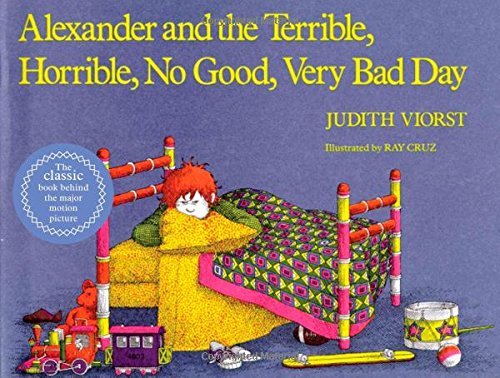
Alexander and the Terrible, Horrible, No Good, Very Bad Day
by Judith Viorst
Rating: 4.2 ⭐
• 2 recommendations ❤️
Alexander knew it was going to be a terrible day when he woke up with gum in this hair.And it got worse...His best friend deserted him. There was no dessert in his lunch bag. And, on top of all that, there were lima beans for dinner and kissing on TV!
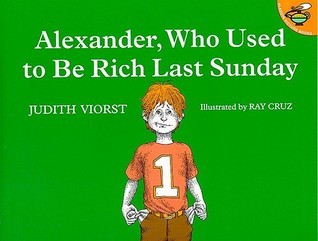
Last Sunday, Alexander's grandparents gave him a dollar -- and he was rich. There were so many things that he could do with all of that money! He could buy as much gum as he wanted, or even a walkie-talkie, if he saved enough. But somehow the money began to disappear... Readers of all ages will be delighted by this attractive new edition of Judith Viorst's beloved picture book.

An illustrated chapter book from industry legends Judith Viorst and Lane Smith! "I'm gonna, I'm gonna, I'm gonna, gonna, get a bronto-bronto-bronto-bronto-saurus for a pet!"Lulu is so accustomed to getting what she wants that when her parents deny her birthday request for a brontosaurus, she throws a four-day temper tantrum and then storms off into the forest in search of the dinosaur she clearly deserves. Lulu isn't particularly impressed with the snake, tiger, and bear she encounters, but then she finds him--a beautiful, long-necked, graceful brontosaurus. Mr. B completely agrees with Lulu that having a pet would be a wonderful thing, and Lulu thinks she's gotten her birthday wish at last. Until she realizes that Mr. Brontosaurus thinks that "she" would make an ideal pet for "him!"How will Lulu ever get out of this sticky situation without throwing a fit (Mr. B does not respond well to those), or using force (Mr. B is much too tall to bonk on the head with her suitcase), or smushing her pickle sandwich? Beloved children's author Judith Viorst and Caldecott-winning illustrator Lane Smith offer a fresh and funny tale with several surprise endings!

Necessary Losses: The Loves, Illusions, Dependencies, and Impossible Expectations That All of Us Have to Give Up in Order to Grow
by Judith Viorst
Rating: 4.1 ⭐
From grief and mourning to aging and relationships, poet and Redbook contributor Judith Viorst presents a thoughtful and researched study in this examination of love, loss, and letting go.Drawing on psychoanalysis, literature, and personal experience, Necessary Losses is a philosophy for understanding and accepting life’s inevitabilities.In Necessary Losses , Judith Viorst turns her considerable talents to a serious and far-reaching subject: how we grow and change through the losses that are a certain and necessary part of life. She argues persuasively that through the loss of our mothers’ protection, the loss of the impossible expectations we bring to relationships, the loss of our younger selves, and the loss of our loved ones through separation and death, we gain deeper perspective, true maturity, and fuller wisdom about life. She has written a book that is both life affirming and life changing.
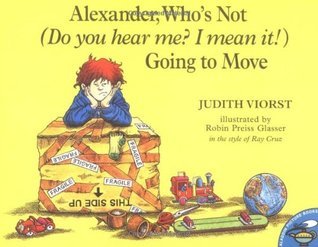
Alexander is not going to leave his best friend Paul. Or Rachel, the best babysitter in the world. Or the Baldwins, who have a terrific dog named Swoozie. Or Mr. and Mrs. Oberdorfer, who always give great treats on Halloween. Who cares if his father has a new job a thousand miles away? Alexander is not -- Do you hear him? He Means it! -- going to move.Alexander's back, facing another of childhood's trials and tribulations with Judith Viorst's trademark humor and keen sense of what's important to kids.

In this stand-alone sequel to "Lulu and the Brontosaurus," industry legends Viorst and Smith once again prove that even the loudest, rudest, and most obstinate of girls can win readers over.

My cat Barney died this Friday. I was very sad. My mother said we could have a funeral for him, and I should think of ten good things about Barney so I could tell them...But the small boy who loved Barney can only think of nine. Later, while talking with his father, he discovers the tenth—and he begins to understand.

This irresistible third illustrated chapter book starring Judith Viorst’s Lulu is full of hilarious hijinks, delightful twists, and a top-secret mission!Eeny meeny miney mo,That babysitter’s got to go.Lulu has put her tantrum-throwing days behind her. That is, until her parents announce that they are going on vacation—WITHOUT LULU. Not only that, but they are leaving her with the formidable Ms. Sonia Sofia Solinsky, who says hello by bellowing, “The Eagle has landed,” and smiles at you with the kind of smile that an alligator might give you before eating you for dinner.The second her parents are out of the house, Lulu tries out several elaborate schemes to bring them straight back. But just when she seems to finally be making some headway, her babysitter reveals an astonishing secret…one that has Lulu crossing her fingers that her parents will go on vacation all the time —without her!

Forty-one poems reveal a variety of secret thoughts, worries, and wishes.

Making the Best of What's Left: When We're Too Old to Get the Chairs Reupholstered
by Judith Viorst
Rating: 3.9 ⭐
From the bestselling author Judith Viorst comes a witty and poignant exploration of the joys and sorrows of life’s twilight years—one that leaves us laughing, pondering, and grateful for the moments we have left.In a career that has spanned more than fifty years, Judith Viorst has captivated readers with her bestselling children’s books and collections of poetry reflecting on each decade of life. Now in her nineties, Viorst writes about life’s “Final Fifth,” those who are eighty to one hundred years old. Her signature blend of humor and vulnerability infuses personal anecdotes and observations, drawing you into her world of memories and candid conversations. She confesses, “I never ever send a text while driving, and not just because I don’t know how to text.” She discusses the afterlife (She doesn’t believe in it, but if it exists, she hopes her sister-in-law isn’t there). She complains to her dead husband (“I need you fixing our damn circuit breakers. I need you! Could you please stop being dead?”). And she explores the late-life meanings of wisdom and happiness and second chances and home. With a wit that defies age, Viorst navigates the terrain of loss. It’s a poignant dance between grief and levity that will resonate with those in their Final Fifth as well as anyone who has parents, relatives, or friends in their eighties and beyond. This is Judith Viorst at her best.
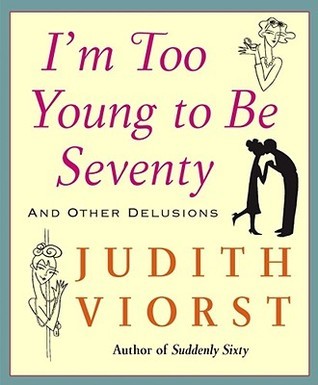
The beloved bestselling author of Forever Fifty and Suddenly Sixty now tackles the ins and outs of becoming a septuagenarian with her usual wry good humor. Fans of Judith Viorst's funny, touching, and wise poems about turning thirty, forty, fifty, and sixty will love this new volume for the woman who deeply believes she is too young to be seventy, "too young in my heart and my soul, if not in my thighs." Viorst explores, among the many other issues of this stage of life, the state of our sex lives and teeth, how we can stay married though thermostatically incompatible, and the joys of grandparenthood and shopping. Readers will nod with rueful recognition when she asks, "Am I required to think of myself as a basically shallow woman because I feel better when my hair looks good?," when she presses a few helpful suggestions on her kids because "they may be middle aged, but they're still my children," and when she graciously -- but not too graciously -- selects her husband's next mate in a poem deliciously subtitled "If I Should Die Before I Wake, Here's the Wife You Next Should Take." Though Viorst acknowledges she is definitely not a good sport about the fact that she is mortal, her poems are full of the pleasures of life right now, helping us come to terms with the passage of time, encouraging us to keep trying to fix the world, and inviting us to consider "drinking wine, making love, laughing hard, caring hard, and learning a new trick or two as part of our job description at seventy." I'm Too Young to Be Seventy is a joy to read and makes a heartwarming gift for anyone who has reached or is soon to reach that -- it's not so bad after all -- seventh decade.

My Mama Says There Aren't Any Zombies, Ghosts, Vampires, Creatures, Demons, Monsters, Fiends, Goblins, or Things
by Judith Viorst
Rating: 4.0 ⭐
MY MAMA SAYS...Maybe there isn't any mean-eyed monster with long slimy hair and pointy claws going scritchyscratch, scritchy-scritchy-scratch outside his window. And maybe there isn't a Thing in his yard, coming to swallow him up. His Mama says there positively aren't. But...sometimes even Mamas make mistakes.Yes, once she said there wasn't any cream cheese for his sandwich, and then he found it underneath the lettuce. And once she said his tooth would fall out Thursday, and then it stayed till Sunday after lunch. And once he told her chocolate nut and she brought back rum raisin. Yes...sometimes even Mamas make mistakes.And so, when his Mama says that no creature is reaching out its hand, to pinch him or squinch him or push him or squush him or worse, can he believe her?For lots of times a Mama makes mistakes.But when it comes to demons and fiends and other bedtime terrors, sometimes even Mamas can be trusted.

From the bestselling author of Forever Fifty comes a new collection of poems that tickle, console, and offer the pleasure of instant recognition -- the perfect book for any woman anywhere in the vicinity of sixty. Judith Viorst's "decade" books of verse -- including It's Hard to Be Hip Over Thirty, How Did I Get to Be Forty, and Forever Fifty -- have delighted millions of readers worldwide who relish her wit, warmth, and wisdom. Now here she is with Suddenly Sixty, a funny and touching book that speaks directly to the sixty-ish woman, inviting her to laugh about, sigh over, and come to hopeful terms with the complex issues of this decade of life. Among the poems in this charmingly illustrated collection are those exploring the joys -- and strains -- of children and grandchildren, and the intimacy of old friends who've "known each other so long/We knew each other back when we were virgins." There are poems that tip their hat to mortality, wrestle with a husband's retirement -- "He's coming with me when I shop at the supermarket/So I won't have to shop alone. I like alone." -- and acknowledge the fact that at this stage of life we'd "give up a night of wild rapture with Denzel Washington for a nice report on my next bone density test." Offering plenty of laughs, a few tears, and cover-to-cover truths, these are poems for everyone who would "rather say never say die than enough is enough." Every woman who has reached this decade will -- rueful and smiling -- find herself in the pages of this book.

Alexander and the Wonderful, Marvelous, Excellent, Terrific Ninety Days: An Almost Completely Honest Account of What Happened to Our Family When Our ... Came to Live with Us for Three Months
by Judith Viorst
Rating: 3.5 ⭐
A whimsical account of the multi-generational frenzy that ensued when the author's son's family temporarily moved into her home describes how her compulsively ordered environment was thrown into turmoil by a whirlwind of young grandchild dynamics. 75,000 first printing.

She wants them. She needs them. She loves them. Earrings! What won’t a girl do to finally get her ears pierced? Find out in this delightful tale that perfectly captures the yearnings of a young girl in desperate need of beautiful, glorious earrings!
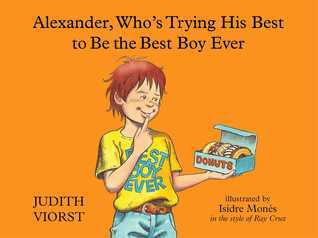
Alexander tries his hand at behaving in this hilarious companion to the bestselling classic Alexander and the Terrible, Horrible, No Good, Very Bad Day .Last night somebody ate a whole box of jelly donuts. That somebody woke up with a terrible bellyache, and that somebody’s mom found the empty box and told that somebody that there are going to be consequences.That somebody is Alexander, and Alexander really hates consequences.So from now on, he is going to try his best to be the Best Boy Ever. For the complete and entire rest of his life. Starting right this very minute.But there are all sorts of things that you can’t do when you’re being the Best Boy Ever. Fun things. Very important things. Things that Alexander might— just might—like a little bit more than he hates consequences.

Lulu is getting the sister she never asked for in this hilarious illustrated chapter book filled with hilarious hijinks and fiesty twists from Judith Viorst.Lulu has received the worst. News. EVER. She’s getting…a baby sister. No one ever asked HER opinion on this debacle. But she’ll tell you anyway, because she no how, no way, no thank you wants a sibling.Undeterred, and to prepare Lulu for big sisterhood, her parents bribe—AHEM, ask —Lulu to attend Camp Sisterhood, a.k.a. big sister training camp. As a Sister-in-Training (SIT), Lulu is assigned a variety of temporary little “siblings” who are supposed to be so much fun Lulu will become excited to have a permanent sibling of her own. Well, no one ever said Camp Sisterhood was supposed to teach Lulu how to be a good big sister, so Lulu resolves to be a bad big sister. She insults her little siblings. She taunts them with secrets. She even tricks one of them into carrying both of their backpacks up a mountain! But no matter what Lulu does, she can’t shake the little terrors.Then some BITs (brothers-in-training) from the neighboring Camp Brotherhood start picking on Lulu’s siblings, and Lulu responds by doing her red-faced, steam-coming-out-of-her-ears thing and showing those BITs who’s boss! After all, Lulu’s siblings may be duds, but they’re her duds, and sisters have to stick together. Besides, in the end, Lulu figures that having a little sister probably won’t be as bad as a getting a tooth pulled. Probably.

It's Hard to Be Hip Over Thirty and Other Tragedies of Married Life / People and Other Aggravations
by Judith Viorst
Rating: 3.7 ⭐
The honeymoon is overAnd he has left for workWhistling something obvious from La BohemeAnd carrying a brown calfskin attache caseI never dreamed he was capable of owning,Having started the dayWith ten pushups and a cold showerFollowed by a hearty breakfast.(What do we actually have in common?)The honeymoon is overAnd I am dry-mopping the floorIn a green Dacron dry-mopping outfit from Saks,Wondering why I'm not dancing in the dark,Or rejecting princes,Or hearing people gasp at my one-man show,My god, so beautiful and so gifted!(The trouble is I never knew a prince.)

The newest illustrated poetry collection in beloved author Judith Viorst’s “decade” series (from It’s Hard to Be Hip Over Thirty to Unexpectedly Eighty ), exploring, with her signature savvy and humor, what it means to be an impending nonagenarian.In Nearing Ninety , bestselling author Judith Viorst candidly shares the complicated joys and everyday tribulations that await us at the age of ninety, all with a large dose of humor and an understanding that nothing—well, almost nothing—in life should be taken too seriously. While she struggles to make it to midnight on New Year's Eve, while she’s starting to hear more eulogies than symphonies, while she’ll forever be disheartened by what she weighs (and forever unable to stop weighing herself), there is plenty to cherish at hanging out with the people she loves. Playing a relentless game of Scrabble. And still sleeping tush-to-tush with the same man to whom she’s been married for sixty years.Accompanied by Laura Gibson’s whimsical illustrations, Nearing Ninety’s amusing and touching reflections make this collection relatable to readers of all ages. With the wisdom and spunk of someone who’s seen it all, Viorst gently reminds us that everybody gets old, and that the best medicine at any age is laughter.

On the day of the talent show, a boy is ready to sing his song, and he isn't one bit scared because he has practiced a billion times, plus he's wearing his lucky blue boots and his pants with all ten pockets. But as all of the other kids perform before him, he gets more and more nervous. How the boy overcomes his fear of performing in front of the class makes a charming and funny read-aloud, complete with ten novelty flaps to lift. A Margaret Ferguson Book

Mother says deep down in his heart. Anthony loves me. Anthony says deep down in his heart he thinks I stink. Anthony's younger brother puts up with a lot. Every time he wants to play with Anthony and his friends, or even go into the playroom, Anthony starts to clobber him. There's nothing he can do now...but just wait until he's six! Judith Viorst's fine, funny story, now available in a handsome new edition, will charm readers of all ages.

According to Olivia—who is practically perfect—her younger sister Sophie isn’t very neat. But she’s not just messy, either…. She’s Super-Completely and Totally the Messiest! Olivia’s family tries to show her that Sophie is plenty of things besides a slob, but Olivia is unconvinced. Pictures from Robin Preiss Glasser, illustrator of Fancy Nancy, make this book super-completely and totally fun!

Rosie likes Michael when he's dopey and not just when he's smart. Michael likes Rosie when she's grouchy and not just when she's nice. That's how friends are. When Michael's parakeet died, he called Rosie. When Rosie's dog ran away, she called Michael. That's what friends do. Michael once sprayed Kool Whip into Rosie's sneakers. Rosie once put a worm in Michael's sandwich. They're still friends. And Michael says he would never have his tonsils out without Rosie. And Rosie says she would never move to China without Michael. And the reason they wouldn't is -- because they're friends.
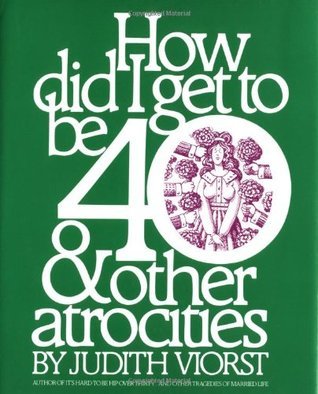
And so you’ve reached that time in life when you’re stating to pick investments over adventure, clean over scenic, comfortable over intense; when, even though in your heart of hearts you’re only seventeen, the rest of you is (how did it happen?) forty.The wise and witty lady of It’s Hard to Be Hip Over Thirty is here to get you through these forty-ish years with poems that reflect our common shared experience. So let her help you take a look at that decade of sagging kneecaps and college reunions and fantasies of love in the afternoon: at Maoist kids, cholesterol counts, adult-education courses and other atrocities—which somehow just don’t hurt so much when you laugh.

Her bestselling verse has unerringly captured our follies and our foibles over the decades. Now Judith Viorst, in a witty and beautifuUy illustrated book of poems, looks at what it's like to be (gulp) fifty. Judith Viorst's poetry collections, which include When Did I Stop Being Twenty..., It's Hard to Be Hip Over Thirty..., and How Did I Get to Be Forty..., have articulated our growing pains from single life to midlife, and have continued to delight millions of readers worldwide. Writing with the warmth and authenticity that have become her trademarks, Viorst once again demonstrates her uncanny ability to transform our daily realities into poems that make us laugh with recognition. Whether her subject is the decline of the body ("It's hard to be devil-may-care/When there are pleats in your derrière") or future aspirations ("Before I go, I'd like to have high cheekbones./I'd like to talk less like New Jersey, and more like Claire Bloom"), she always speaks directly to our condition. Her funny, compassionate poems shed a reassuring light on the fine art of aging, and will delight anyone who is now (or forever) fifty.
What does it mean to be eighty? In her wise and playful poems, Judith Viorst discusses marriage, friendship, grand parenthood, and all the particular marvels— and otherwise—of this extraordinary decade. She describes the wonder of seeing the world with new eyes—not because of revelation but because of a successful cataract operation. She promises not to gently fade away, and not to drive after daylight’s faded away either. She explains how she’s gotten to be a "three-desserts" grandmother ("Just don’t tell your mom!"), shares how memory failure can keep you married, and enumerates her hopes for the afterlife (which she doesn’t believe in, but if it does exist, her sister-in-law better not be there with her). As Viorst gleefully attests, eighty is not too old to dream, to flirt, to drink, and to dance. It’s also not too late to give up being cheap or to take up with a younger man of seventy-eight. Zesty, hopeful, and full of the pleasures of living, Viorst’s poems speak to her legions of readers, who recognize themselves in her knowing observations, in her touching reflections, and in her joyful affirmations. Funny, moving, inspirational, and true—the newest in Judith Viorst’s beloved "decades" series extols the virtues, victories, frustrations, and joys of life.

Grown-Up Marriage: What We Know, Wish We Had Known, and Still Need to Know About Being Married
by Judith Viorst
Rating: 3.8 ⭐
Although marriage is for grown-ups, very few of us are grown up when we marry. Here, the bestselling author of Suddenly Sixty and Necessary Losses presents her life-affirming perspective on the joys, heartaches, difficulties, and possibilities of a grown-up marriage -- and no, that's not an oxymoron!Featuring interviews with married women and men, the findings of couples therapists, the truths offered by literature and movies, and a bemused exploration of her own marriage, Judith Viorst illuminates the issues couples struggle with from "I do" through "till death do us part." Examining marital rivalry, marital manners, marital sex (extramarital, too), marital fighting and apologies, what kids do for (and to) marriage, and the boredom and bliss of everyday married life, Viorst leaves no marital stone unturned. From the early years when we wonder "Who is this person?" and "What am I doing here?" to the realities of divorce, remarriage, and growing older (and old) together, Viorst offers insights and advice with honesty, humanity, and humor -- all the while recognizing how tough it is to be married and, when it works, how very precious it can be.
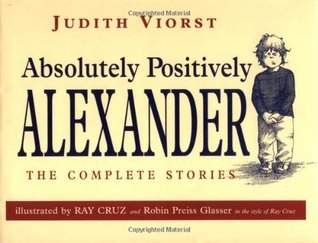
First published in 1972, Alexander and the Terrible, Horrible, No Good, Very Bad Day introduced to the world a feisty young hero who soon captured the hearts of a generation. Since then Alexander has returned in Alexander, Who Used to Be Rich Last Sunday and Alexander, Who's Not (Do you hear me? I mean it!) Going to move, and his position as a classic character in children's literature is assured. Alexander is everyone's favorite boy, struggling against those obstacles that seem to get in the way of growing up, with the most formidable ones being his siblings. Here, all three Alexander stories are combined in one book -- a perfect way for Alexander to be introduced to a whole new generation of certain fans.

"HIGHLY ENTERTAINING...SIT BACK IN THE BUBBLES AND ENJOY."--The Philadelphia InquirerBrenda Kovner, a Washington columnist, advice dispenser, and amateur psychologist, doesn't consider herself intrusive, just extremely interested in helping. If she knows the answer, she can't shut up--even if no one's listening.Since Brenda knows what's best--for everyone--she secretly decides she must murder her son Wally's prospective father-in-law, before he can get to Wally. She has a foolproof plan. In fact, she has a million of them. But first she's got a few kinky desires of her own to satisfy (."Viorst keeps us laughing....A serious look at family and cultural issues while still a farce, narrated by a needling Machiavellian who keeps winning us over."--San Francisco Chronicle"A wry look at the follies of superficial urbanites...Enjoy."--The Washington Post Book World"Acerbic and extremely funny...Done with the arch, sardonic flavor familiar to readers of Ms. Viorst."--The Baltimore Sun

What Are You Glad About? What Are You Mad About?: Poems for When a Person Needs a Poem
by Judith Viorst
Rating: 3.9 ⭐
From the beloved and internationally bestselling author of Alexander and the Terrible, Horrible, No Good, Very Bad Day, Judith Viorst comes a brand-new collection of clever, hilarious, and poignant poems that touch on every aspect of the roller-coaster ride that is childhood.Did you wake up this morning all smiley inside? Does life taste like ice cream and cake? Or does it seem more like your goldfish just died And your insides are one great big ache?From school to family to friends, from Grrrr to Hooray!, Judith Viorst takes us on a tour of feelings of all kinds in this thoughtful, funny, and charming collection of poetry that’s perfect for young readers just learning to sort out their own emotions.