
Joseph Smith Jr.
Joseph Smith, Jr. was the founder of the Latter Day Saint movement, also known as Mormonism, and an important religious and political figure during the 1830s and 1840s. In 1827, Smith began to gather a religious following after announcing that an angel had shown him a set of golden plates describing a visit of Jesus to the indigenous peoples of the Americas. In 1830, Smith published what he said was a translation of these plates as the Book of Mormon, and the same year he organized the Church of Jesus Christ of Latter Day Saints. For most of the 1830s, Smith lived in Kirtland, Ohio, which remained the headquarters of the church until Smith began encouraging members to gather the church to a Latter Day Saint settlement in Missouri. There, tensions between Mormons and non-Mormons resulted in the expelling of the Mormons. Smith and his people then settled in Nauvoo, Illinois where they began building a new temple aided by new converts from Europe. He was assassinated by a mob of non-Mormons at the age of 38. Smith's followers consider him a prophet and have canonized some of his revelations as sacred texts on par with the Bible. His legacy as a leader of The Church of Jesus Christ of Latter-day Saints has been recognized by millions of adherents.
25 Books Written

The spiritual text that forms the basis of Mormonism—in the last edition edited by its founder, Joseph Smith, Jr.THE BOOK OF MORMON is one of the most influential— as well as controversial—religious documents in American history, and is regarded as sacred scripture by followers around the world, including members of the Church of Jesus Christ of Latter-Day Saints, the fourth-largest religious body in the United States. According to Mormon belief, The Book of Mormon was inscribed on golden plates by ancient prophets. I t contains stories of ancient peoples migrating from the Near East to the Americas, and also explains that Jesus Christ appeared to the New World after his resurrection. The golden plates were discovered in upstate New York and translated by Joseph Smith, Jr., under the guidance of an angel, Moroni. From this divine revelation, Smith founded the Mormon sect, which is now comprised of more than 12.5 million members worldwide.
Prepared under the direction of the Prophet Joseph Smith, these seven lectures on faith helped early Church leaders and missionaries incorporate the most fundamental principle of the Gospel with greater understanding than ever before. Lectures on Faith occupies a station of respect as part of original literature produced by the Prophet of the Restoration and the bright minds associated with him. With a new compilation of commentary from modern-day prophets and apostles, this edition of Lectures on Faith keeps these doctrinal diamonds accessible. This seminal volume is a precious reminder to Latter-day Saints of their unique doctrinal heritage. It is an essential resource for those seeking the blessings inherent in a careful study of faith in the Lord Jesus Christ.

Sermons and writings of Joseph Smith, the Prophet, as compiled by Joseph Fielding Smith.

This book was converted from its physical edition to the digital format by a community of volunteers. You may find it for free on the web. Purchase of the Kindle edition includes wireless delivery.


Joseph Smith's New Translation of the Bible
Scriptural Teachings of the Prophet Joseph Smith will assist those who treasure the teachings of Joseph Smith to better understand the scriptural foundations of his understanding and inspiration.

The problem of understanding who Joseph Smith was, what his personality was like, is not so hopeless, but nevertheless real. For while the Mormon prophet produced a sizable collection of papers, the question remains as to how clearly they reflect his own thoughts and personality. The answer lies in the documents themselves and becomes particularly clear when we note that the sources are not the past but only the raw materials whence we form our conception of the past, and in using them we inherit the limitations that produced themâ the lack of personal writing, the wide use of clerks taking dictation or even being assigned to write for him, and the editorial reworking of reports of what he did and said. For example, Howard Coray, employed with E. D. Woolley in 1840 to work on the Prophet's History, relates that Joseph furnished all the material and that "our business, was not only to combine, and arrange in chronological order, but to spread out or amplify not a little, in as good historical style as may be." 5 When Joseph Smith began his record-keeping career in the early 1830s, he tenaciously sought to preserve records of personal and public value and to hand down to posterity an accurate picture of his life and the work in which he was engaged. The history he produced is of monumental importance. But limitations inherent in record keeping and history writing have had a screening effect upon our understanding of the Prophet. The very sources that inform also tend to obscure.
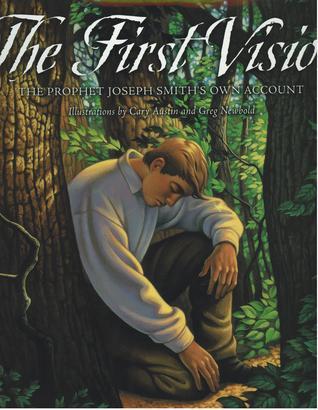
Book by Smith, Joseph, Austin, Cary, Newbold, Greg

The King Follett discourse : the being and kind of being God is; the immortality of the intelligence of man
by Joseph Smith Jr.
Rating: 3.9 ⭐
The King Follett The being and kind of being God is; the immortality of the intelligence of man by Joseph Smith (Author)

An American Prophet's Record: The Diaries and Journals of Joseph Smith
by Joseph Smith Jr.
Rating: 4.2 ⭐
In his personal diaries Joseph Smith, the Mormon prophet, emerges as a believable and human religious leader, willing to allow both descendants and followers a complete look at his innovative beliefs and complex personality. “I enjoyed myself by my own fireside with many friends around me,” he recalled of a quiet moment at home. “I drank a glass of beer at Moisser’s,” he dictated with equal frankness. An enthusiast for winter activities, Smith would often close his office whenever it snowed to go sledding with his son Frederick or to take his wife Emma sleighing. Occasionally short-tempered, Smith once told detractors to “hide their heads in a hollow pumpkin and never take it out.” He could lose patience with people who left meetings before the benediction and with young men who sneaked onto the women’s side of the congregation. People asked him why he used “such flat and vulgar expressions,” but on occasion he could transcend his frontier parlance and speak in eloquent metaphor, such as when he described the “It is pleasing for friends to lie down together locked in the arms of love, to sleep, and [awake] locked in each others’ embrace [to] renew their conversation.” Throughout these diaries significant events are recorded, such as the first ritualistic washings, perfumings, anointings, and washing of feet; early sealings and polygamous marriages (often recorded in shorthand); meetings of the Council of Fifty; and other important episodes in the history of the development of the Restoration church. Published for the first time in their entirety, the personal diaries of Mormon founder Joseph Smith (1805-44) provide an unequaled view of this controversial American religious leader. Previous compilations of carefully selected and sometimes rewritten passages of Smith’s diaries and journals do not capture the intensity of the present, unexpurgated edition.

PREFACE TO FIRST EDITION. The lectures herewith presented have been prepared in accordance with the request and appointment of the First Presidency of the Church. The greater number of the addresses were delivered before the Theology Class of the Church University; and, after the close of the class sessions, the lectures were continued before other Church organizations engaged in the study of theology. To meet the desire expressed by the Church authorities,—that the lectures be published for use in the various educational institutions of the Church,—the matter has been revised, and is now presented in this form. In anticipation of probable question or criticism regarding the disparity of length of the several lectures, it may be stated that each of the addresses occupied two or more class sessions, and that the present arrangement of the matter in separate lectures is rather one of compilation than of original presentation. The author's thanks are due and are heartily rendered to the members of the committee appointed by the First Presidency, whose painstaking and efficient examination of the manuscript prior to the delivery of the lectures, has inspired some approach to confidence in the prospective value of the book among members of the Church. The committee here referred to consisted of Elders Francis M. Lyman, Abraham H. Cannon, and Anthon H. Lund, of the Quorum of the Twelve Apostles; Elder George Reynolds, one of the Presidents of the Presiding Quorum of Seventy; Elder John Nicholson, and Dr. Karl G. Maeser. The lectures are now published by the Church, and with them goes the hope of the author that they may prove of some service to the many students of the scriptures among our people, and to other earnest inquirers into the doctrines and practices of the Church of Jesus Christ of Latter-day Saints. JAMES E. TALMAGE.


Nothing is more powerful and eloquent that the words of a prophet of God. Gain a clearer picture of Brother Joseph in this fascinating collection of over 400 profound remarks covering 91 topics.

Blood Atonement and the Origin of Plural Marriage: Church of Jesus Christ of Latter Day Saints
by Joseph Smith Jr.
Rating: 3.2 ⭐
Blood Atonement and the Origin of Plural Church of Jesus Christ of Latter Day Saints is a book written by Elder Joseph F. Smith Jr. that explores the controversial practices of the Mormon church, specifically the practice of plural marriage and the concept of blood atonement. The book delves into the history of the church and the beliefs and teachings that led to the adoption of these practices. It also examines the social and cultural context in which these practices emerged and the impact they had on the church and its members. The book provides a detailed analysis of the theological and doctrinal justifications for these practices and their role in the development of the church. It is a comprehensive and scholarly work that sheds light on a complex and often misunderstood aspect of Mormon history and theology.1905. This pamphlet contains a discussion from correspondence between Elder Joseph F. Smith of the Church of Jesus Christ of Latter-day Saints and Mr. Richard C. Evans, second counselor in the Presidency of the Reorganized Church. A conclusive refutation of the false charges persistently made by ministers of the Reorganized Church against the Latter-day Saints and their belief. Also a supplement containing a number of affidavits and other matters bearing on the subjects. See other titles by this author available from Kessinger Publishing.This scarce antiquarian book is a facsimile reprint of the old original and may contain some imperfections such as library marks and notations. Because we believe this work is culturally important, we have made it available as part of our commitment for protecting, preserving, and promoting the world's literature in affordable, high quality, modern editions, that are true to their original work.

Hardcover book

On April 7, 1844, Joseph Smith gave a sermon in Nauvoo, Illinois, at a general conference of the Church. In attendance were nearly 20,000 Church members. A few weeks earlier, on March 9, a Church member and close friend of Joseph named King Follett was killed in an accident. This well-known event in Nauvoo led Joseph Smith to comment specifically on Follett’s death and to address what Joseph called “the subject of the dead.” For this reason, Joseph’s sermon has often been referred to as the King Follett sermon or discourse.The King Follett discourse is recorded along with two other sermons given by Joseph Smith in the Journal of Discourses. Each of the three discourses have been compiled together to form the present work, and additional commentary and insights have been added so that the modern reader may better understand the principles taught therein, and thus feel an increase in their faith.

The book is a compiation on the Holy Ghost compiled by N B Lundwall and authored by various apostles of the Church of jesus Christ of Latter Day Saints icluding James Talmage, Orson Pratt, Bruce R. McConkie, and Prophrts Joseph Smith Jr , Brgham Young, Joseph F. Smith, and Joseph Fielding Smith. The compilation containing the Lectures on Faith were authored and delivered by Joseph Smith jr at thr School of the Prophets at Kirkland Ohio

The Book of Mormon and The Wentworth Letter: Two Writings on Mormonism
by Joseph Smith Jr.
Rating: 4.0 ⭐
ILLUSTRATED more than 10 illustrations depicting key events, prophets, witnesses and monuments of the Church including* Joseph Smith, Jr.* Three Witnesses* Angel Moroni* Mormon Hill* The Golden Plates (Reconstruction) important collection brings together two critically important writings by Joseph Smith, The Book of Mormon and his Wentworth Letter. Taken together, these two works represent the foundation of the Latter Day Saints movement and the Mormon "On the evening of the...twenty-first of September [1823]...I betook myself to prayer and supplication to Almighty God.... "While I was thus in the act of calling upon God, I discovered a light appearing in my room, which continued to increase until the room was lighter than at noonday, when immediately a personage appeared at my bedside, standing in the air, for his feet did not touch the floor. "He had on a loose robe of most exquisite whiteness. It was a whiteness beyond anything earthly I had ever seen; nor do I believe that any earthly thing could be made to appear so exceedingly white and brilliant. His hands were naked, and his arms also, a little above the wrists; so, also, were his feet naked, as were his legs, a little above the ankles. His head and neck were also bare. I could discover that he had no other clothing on but this robe, as it was open, so that I could see into his bosom. "Not only was his robe exceedingly white, but his whole person was glorious beyond description, and his countenance truly like lightning. The room was exceedingly light, but not so very bright as immediately around his person. When I first looked upon him, I was afraid; but the fear soon left me. "He called me by name, and said unto me that he was a messenger sent from the presence of God to me, and that his name was Moroni; that God had a work for me to do; and that my name should be had for good and evil among all nations, kindreds, and tongues, or that it should be both good and evil spoken of among all people. "He said there was a book deposited, written upon gold plates, giving an account of the former inhabitants of this continent, and the source from whence they sprang. He also said that the fulness of the everlasting Gospel was contained in it, as delivered by the Savior to the ancient inhabitants; "Also, that there were two stones in silver bows—and these stones, fastened to a breastplate, constituted what is called the Urim and Thummim—deposited with the plates; and the possession and use of these stones were what constituted Seers in ancient or former times; and that God had prepared them for the purpose of translating the book…"SPECIAL KINDLE ENABLED edition contains special Kindle enabled features, including interactive table of contents, text-to-speech capabilities which enable audiobook features, as well as words linked to the Kindle supplied built in dictionary

The King Follett Discourse and The Sermon in the Grove - Pocket Edition
by Joseph Smith Jr.
Rating: 4.4 ⭐
The Complete and Unabridged "The King Follett Discourse" and "The Sermon in the Grove" . Both originally given in 1844 by the Prophet Joseph Smith. No changes to the text have been made.

The Book of Mormon was published in March 1830 in Palmyra, New York, under the direction of printer Egbert B. Grandin. The typesetting, printing, and calf-leather binding of 5,000 copies—nearly 3 million total pages—began in August 1829 at a cost of $3,000, paid for through the sale of part of Martin Harris’s farm. Copies of the book were read by converts, shared with families, and carried by missionaries to neighboring settlements and states, American Indian communities, and the British Isles. It is estimated that around 700 copies of the first original edition remain today. A second edition was printed in 1837.1830 original text set in same format as the 1st edition.Careful attention has been used to keep the text original to that 1830 publication including spelling errors and typos. In a few places spelling errors have been corrected when the meaning was difficult to understand. An old style font has been used to help the reader experience what it would be like to read the original copy.The paperback and hardcover replicas are larger than the original, so there are less pages, 508, but they come with a larger font size making them easier to read. This edition was not printed using photocopies or facsimiles.
![The [Condensed] Book of Mormon: A 20% Shorter Testament of Jesus Christ](https://m.media-amazon.com/images/S/compressed.photo.goodreads.com/books/1496427676i/35288217.jpg)
The [Condensed] Book of Mormon: A 20% Shorter Testament of Jesus Christ
by Joseph Smith Jr.
Rating: 4.3 ⭐
Whether reading The Book of Mormon for the first time or the fifty-first, this 18% shorter version eliminates much of the poetic, repetitive words and allows you to move through story and doctrine more quickly. Only purely repetitive words which added no additional meaning were removed and certain words and verb forms shortened. Based on the public-domain, copyright-free version. Sample verse 1 Nephi 2:16 And it came to pass that I, Nephi, being exceedingly young, nevertheless being large in stature, and also having great desires to know of the mysteries of God, wherefore, I did cry unto the Lord; and behold he did visit me, and did soften my heart that I did believe all the words which had been spoken by my father; wherefore, I did not rebel against him like unto my brothers. Being exceedingly young, nevertheless large in stature, and having great desires to know the mysteries of God, I cried to the Lord; and he visited me, and softened my heart that I believed all the words spoken by my father; wherefore, I did not rebel against him. A Note from the Condenser As I read through the Book of Mosiah for nearly the fiftieth time, I noted how much repetition exists and wished I could read the stories and doctrine more quickly without so many words to slow me down. Mark Twain’s reaction came to mind that quipped that if all the “and it came to pass”es were removed, The Book of Mormon would only be The Pamphlet of Mormon [paraphrased]. That’s when it occurred to me to condense the book myself, at least for my own use, and possibly share this briefer version with the world. I downloaded the copyright-free text from Gutenberg.org and began, doing my best to only eliminate repetitive phrases and words that contributed no additional meaning. I only removed (or shortened) words, and never added anything except in the case of changing verb tenses from constructs like “did deliver” to “delivered” and “did go” to “went,” and fixing a few typos. Thus what you read here is the original, just 20% less of it. Some repetition was impossible to remove without eliminating entire verses or rendering the grammar incomplete and confusing, so I left it in place. Though I often felt the presence of the Holy Ghost as I worked (a common experience to any sincere reader of this book), I do not in any way claim my reduction to be inspired or to have removed the perfect amount of words. Perhaps I was prepared for the task by teaching university writing for fifteen years and publishing ten books of my own, and was left to use my best judgment in the endeavor. This version reads less poetically than the original, and many sentence transitions may seem more abrupt, but others read more smoothly. I hope readers will appreciate the faster pacing and that they’ll find, as I do, that the book’s messages stand out more clearly and cogently when stated more directly with fewer words to distract the mind. If you enjoy this version - whether reading the Book of Mormon for the first time or the fifty-first - then I’m happy to have been of service. If you prefer the original for whatever reason, then please continue to read it and reap its several benefits. I simply wish to make reading this book of scripture more efficient and accessible, and I like to think of the words of Paul in First Corinthians, who writes, “To the weak became I as weak, that I might gain the I am made all things to all men, that I might by all means save some.” If you sometimes find it difficult to focus on the original text, perhaps this version will make it easier.

The Book of Commandments is the earliest published volume containing the revelations of Joseph Smith Jr. and the basis of what would later become the Doctrine and Covenants. On July 20, 1833 an anti-Mormon destroyed the press being used to print The Book of Commandments. At that point, 65 revelations of the Book of Commandments, about two thirds the total, were already printed. Totaling 160 pages, most of the uncut and unbound sheets were destroyed in the ensuing fire. However, some neighbors including teenage sisters Caroline and Mary Elizabeth Rollins saved remnants of nearly 100 copies. Fewer than 30 are known to exist today, including incomplete versions. Chapter 65 was incomplete when the press was destroyed. This Reader's Digital Edition is based on a public domain text. Great effort has been taken to respect the integrity of the original text while increasing readability for the modern reader. To this end, small corrections to errors in spelling and punctuation have been made, but only to the extent that these changes were needed to improve readability. The formatting has also been altered to provide a cleaner, more readable experience on ebook readers, tablets, and other electronic devices. Introductions and footnotes not native to the text have been removed to avoid interruptions to and distractions from the text. Many people find that this allows them a greater ability to focus on the text itself. It is our hope that this Reader's Digital Edition will provide you with the best possible reading experience of this classic text. Our mission is to breathe new life into the pages of the past by removing barriers between the reader and the text.

The Prophet Joseph Smith was the greatest doctrinal teacher since Jesus Christ. "It is my duty to teach the doctrine," he said, and he preached, wrote, and explained in informal and formal settings what the Lord had revealed to him. Much of his teaching focused on passages from the Bible. In a typical doctrinal sermon or letter he would deal with as many as a dozen passages, citing some merely to demonstrate a point, but discussing others in enlightening detail. This unique book compiles excerpts from newspapers, journals, diaries, and transcripts of sermons, offering the illumination of the Prophet's perspective to increase our understanding of the Bible.