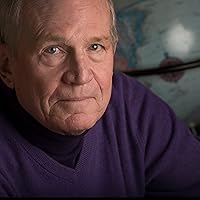
Jonathan Yardley
Jonathan Yardley is a book critic, journalist, and biographer, and the recipient of the 1981 Pulitzer Prize for Criticism. From 1981 to 2014, he was chief book critic for the Washington Post, where he combined scathingly frank reviews with an appreciation for new talent. He championed the early careers of Michael Chabon, Edward P. Jones, and Anne Tyler, among others. In addition to biographies of Ring Lardner and Frederick Exley, Yardley published Our Kind of People: The Story of an American Family , a wry memoir about his WASP parents. Second Reading , his most recent book, collects the series of Post columns in which he reconsidered notable or neglected books from the past.
9 Books Written

Sportswriter, storyteller, humorist--Ring Lardner was an American original, and in this affectionate, entertaining, and authoritative biography, Pulitzer Prize winning critic Jonathan Yardley gives us a new look at Lardner's all too short life and career.

For seven years, beginning in 2003, the Washington Post ran a series of articles by Jonathan Yardley, the subtitle of which included, "the Post's book critic reconsiders notable and/or neglected books from the past." Yardley's criteria for his selections were admirably informal: "books I remember with affection and admiration but have not read in many years, books I would like to encourage others to discover." His choices, as one might expect, were eclectic: Titles by Hemingway, Steinbeck, Dickens, Carson McCullers, and Anne Tyler rubbed shoulders with books on baseball, football, jazz, and film comedy. This trade paperback collects these gems and it arrives with the best possible endorsement: It is reading that will inspire you to seek out some of these classics.

Frederick Exley was at once unique and prototypical. He inhabited his own bizarre universe and obeyed no rules except his own, yet he was a familiar and characteristic American literary type: an author whose reputation rests on a single book. His life, which he described, and disguised, and distorted in all three of his books, rivaled his "fiction." Everything he did involved a struggle, and the most important struggle of his life was his writing; out of that strife came A Fan's Notes, which Jonathan Yardley believes is one of the best books of our time. Exley was an alcoholic who drank in copious amounts, yet he always sobered up when he was ready to write. In his younger days he did time in a couple of mental institutions, which imposed involuntary discipline on him and helped him start to write. He was personally and financially irresponsible - he had no credit cards, no permanent address, and ambiguous relationships with everyone he knew - yet people loved him and took care of him. No matter where he was, in the dark of night he phoned friends and subjected them to interminable monologues. To many, these were a nuisance and an imposition, but later, in the light of day, they were remembered with affection and gratitude. In Misfit, the Pulitzer Prize-winning book critic of The Washington Post portrays in full one of the most tormented, distinctive, and talented writers of the post-war years. Exley's story, which in Yardley's telling reads as if it were a novel, reveals a singular personality: raunchy, vulgar, self-centered, and even infantile, yet also loyal, self-deprecating, and unfailingly humorous.' to 's Lockridge, and even Ralph Ellison--is profiled by the Pulitzer Prize-winning book critic of "The Washington Post". Exley was an alcoholic who quit drinking when he wrote, and a man who spent time in a mental hospital. He was indeed a misfit, but one who left an indelible impression on those who knew him or read his works.

A Pulitzer Prize-winning critic details his personal odyssey through Pennsylvania, New Jersey, Delaware, Maryland, Virginia, West Virginia, North Carolina, and Washington, D.C, discovering his roots and observing life in the Mid-Atlantic states.

The author looks back on the lives of his parents, recreates the world in which they grew up, and examines the changes brought about during the twentieth century

Reassesses ten years of American cultural life, in a collection of articles and essays that includes such sections as "The Lit'ry Scene," "The American Scene," and "My Scene"

Nothing is sacred to Jonathan Yardley, and nobody is safe from his penetrating insights. In Monday Morning Quarterback , Washington, D.C.'s best known columnist offers his wit and wisdom on America in the 1990s, from politics and culture to sports and literature. Whatever his target, Yardley's observations are always controversial, outrageous, uncompromising, eye-opening, and hilarious.
Christmas Critics.(The Death of the Heart)(Elizabeth Bowen)(Book Review): An article from: Commonweal
by Jonathan Yardley
Our Kind Of People
by Jonathan Yardley