
Jonathan Sacks
Rabbi Lord Jonathan Henry Sacks was the Chief Rabbi of the United Hebrew Congregations of the Commonwealth. His Hebrew name was Yaakov Zvi. Serving as the chief rabbi in the United Kingdom from 1991 to 2013, Sacks gained fame both in the secular world and in Jewish circles. He was a sought-after voice on issues of war and peace, religious fundamentalism, ethics, and the relationship between science and religion, among other topics. Sacks wrote more than 20 books. Rabbi Sacks died November 2020 after a short bout with cancer. He was 72.
30 Books Written

Morality: Restoring the Common Good in Divided Times
by Jonathan Sacks
Rating: 4.3 ⭐
• 2 recommendations ❤️
A distinguished religious leader's stirring case for reconstructing a shared framework of virtues and values.With liberal democracy embattled, public discourse grown toxic, family life breaking down, and drug abuse and depression on the rise, many fear what the future holds.In Morality , respected faith leader and public intellectual Jonathan Sacks traces today's crisis to our loss of a strong, shared moral code and our elevation of self-interest over the common good. We have outsourced morality to the market and the state, but neither is capable of showing us how to live. Sacks leads readers from ancient Greece to the Enlightenment to the present day to show that there is no liberty without morality and no freedom without responsibility, arguing that we all must play our part in rebuilding a common moral foundation.A major work of moral philosophy, Morality is an inspiring vision of a world in which we can all find our place and face the future without fear.
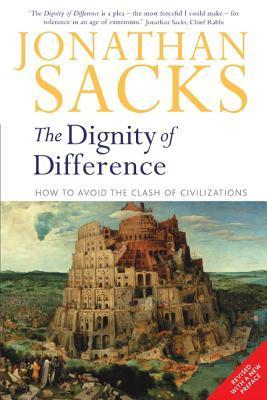
The year 2001 began as the United Nations Year of Dialogue between Civilizations. By its end, the phrase that came most readily to mind was 'the clash of civilizations.' The tragedy of September 11 intensified the danger caused by religious differences around the world. As the politics of identity begin to replace the politics of ideology, can religion become a force for peace?The Dignity of Difference is Rabbi Jonathan Sacks's radical proposal for reconciling hatreds. The first major statement by a Jewish leader on the ethics of globalization, it also marks a paradigm shift in the approach to religious coexistence. Sacks argues that we must do more than search for values common to all faiths; we must also reframe the way we see our differences.

One of the most respected religious thinkers of our time makes an impassioned plea for the return of religion to its true purpose—as a partnership with God in the work of ethical and moral living.What are our duties to others, to society, and to humanity? How do we live a meaningful life in an age of global uncertainty and instability? In To Heal a Fractured World, Rabbi Jonathan Sacks offers answers to these questions by looking at the ethics of responsibility. In his signature plainspoken, accessible style, Rabbi Sacks shares with us traditional interpretations of the Bible, Jewish law, and theology, as well as the works of philosophers and ethicists from other cultures, to examine what constitutes morality and moral behavior. “We are here to make a difference,” he writes, “a day at a time, an act at a time, for as long as it takes to make the world a place of justice and compassion.” He argues that in today’s religious and political climate, it is more important than ever to return to the essential understanding that “it is by our deeds that we express our faith and make it real in the lives of others and the world.”To Heal a Fractured World—inspirational and instructive, timely and timeless—will resonate with people of all faiths.

The Jewish Bible is an encounter between past and present, moment and eternity. This collection of biblical commentaries explores these intersections as they relate to universal concerns of freedom, love, responsibility, identity and destiny.

In this companion volume to his celebrated series Covenant & Conversation, Rabbi Jonathan Sacks mines the weekly Torah portions for insights into the nature of power, authority, and leadership. Based on the understanding that no man is born a leader, the book explores the principles, and perils, of becoming one. Profound, eloquent, and deeply inspiring, Lessons in Leadership reveals the biblical secrets of influence, as relevant now as they were three thousand years ago.

The Jewish People in its very being constitutes a living protest against a world of hatred, violence and war. Radical Then, Radical Now is a powerful testimony to the amazing resilience of the Jewish people who have, through their endurance of four thousand years of persecution and exile, earned a unique place in history. Without land or power, they created an identity for themselves through their shared dreams of freedom, justice, dignity and human rights. Yet far more than Jewish history is contained within the pages of this book. Jonathan Sacks reminds us all of the legacy of those dreams and of our responsibility to our fellow man. He challenges us to build a better world.

Rabbi Jonathan Sacks's Haggadah: Hebrew And English Text With New Essays And Commentary
by Jonathan Sacks
Rating: 4.5 ⭐
In this update of the 2003 edition, the chief rabbi of the United Hebrew Congregations of Britain and the Commonwealth presents the text of the Passover seder service in a bilingual English- Hebrew version with explanatory notes. While not as attractive as slick color versions, this Haggadeh is arranged to be readily read at the seder table to retell the story of the Exodus of the Jewish people from bondage plus Rabbi Sacks provides valuable introductory commentary on its historical/theological context. Annotation ©2006 Book News, Inc., Portland, OR (booknews.com)

Koren Sacks Yom Kippur Mahzor: Hebrew/English Prayerbook with Commentary by Rabbi Jonathan Sacks
by Jonathan Sacks
Rating: 4.9 ⭐
The Koren Sacks Yom Kippur Mahzor, is a new Hebrew/English prayer book with translation and commentary by Chief Rabbi Lord Jonathan Sacks. It is a companion to the Koren Sacks Rosh Hashana Mahzor, and one volume among a growing body of work produced by the celebrated Koren Publishers-Chief Rabbi Sacks partnership. The Koren Sacks Yom Kippur Mahzor marries the sophisticated graphic approach for which Koren Publishers Jerusalem is renowned with the insight and eloquence of Chief Rabbi Sacks. The Koren Sacks Yom Kippur Mahzor brings out the inner meaning of the Yom Kippur prayers by aligning the Hebrew and English texts, highlighting key words, distinguishing poetry from prose, and using beautiful fonts designed by master typographer Eliyahu Koren. Chief Rabbi Sacks' translation brings readers closer to the authentic meaning of the Hebrew text, while his introduction and commentary provide new ways of understanding and experiencing the Yom Kippur service.

One People? is a full-lenth study of the major problem confronting the Jewish future: the availability or otherwise of a way of mending the schisms between Reform and Orthodox Judaism, between religious and secular Jews in Israel and between Israel itself and the diaspora - all of which have been deepended by the continuing controversy over the question 'who is a Jew?'. This text is a study of the background to this and related controversies. It traces the fragmentation of Jewry in the wake of emancipation and enlightenment, the development of heterodox religious denominations and secular Zionism, the variety of Orthodox responses to these challenges and the resources of Jewish tradition for handling diversity. It sets out the intractability of the problem and ends by examining strands in both Orthodox Jewish thought that might make for convergence and conciliation. The analysis employs a variety of disciplines - history, sociology, theology and halakhic jurisprudence - to comment on a subject in which these dimensions are inextricably interwoven.It also explores key issues such as the underlying philosophy of Jewish law and the nature of the collision between tradition and modern consciousness in the clash of perceptions between Orthodox and Reform. Written for general readers as well as the academic, this book aims to present a thought-provoking presentation of the dilemmas of Jewish Orthodoxy in modernity.

***2015 National Jewish Book Award Winner***In this powerful and timely book, one of the most admired and authoritative religious leaders of our time tackles the phenomenon of religious extremism and violence committed in the name of God. If religion is perceived as being part of the problem, Rabbi Sacks argues, then it must also form part of the solution. When religion becomes a zero-sum conceit—that is, my religion is the only right path to God, therefore your religion is by definition wrong—and individuals are motivated by what Rabbi Sacks calls “altruistic evil,” violence between peoples of different beliefs appears to be the only natural outcome. But through an exploration of the roots of violence and its relationship to religion, and employing groundbreaking biblical analysis and interpretation, Rabbi Sacks shows that religiously inspired violence has as its source misreadings of biblical texts at the heart of all three Abrahamic faiths. By looking anew at the book of Genesis, with its foundational stories of Judaism, Christianity, and Islam, Rabbi Sacks offers a radical rereading of many of the Bible’s seminal stories of sibling Cain and Abel, Isaac and Ishmael, Jacob and Esau, Joseph and his brothers, Rachel and Leah. “Abraham himself,” writes Rabbi Sacks, “sought to be a blessing to others regardless of their faith. That idea, ignored for many of the intervening centuries, remains the simplest definition of Abrahamic faith. It is not our task to conquer or convert the world or enforce uniformity of belief. It is our task to be a blessing to the world. The use of religion for political ends is not righteousness but idolatry . . . To invoke God to justify violence against the innocent is not an act of sanctity but of sacrilege.” Here is an eloquent call for people of goodwill from all faiths and none to stand together, confront the religious extremism that threatens to destroy us, and Not in God’s Name.

An impassioned, erudite, thoroughly researched, and beautifully reasoned book from one of the most admired religious thinkers of our time that argues not only that science and religion are compatible, but that they complement each other—and that the world needs both.Religion and science, argues Rabbi Sacks, are the two essential perspectives that allow us to see the universe in its three-dimensional depth. Science teaches us where we come from. Religion explains to us why we are here. Science is the search for explanation. Religion is the search for meaning. We need scientific explanation to understand nature. We need meaning to understand human behavior. There have been times when religion tried to dominate science. And there have been times, including our own, when it is believed that we can learn all we need to know about meaning and relationships through biochemistry, neuroscience, and evolutionary psychology. In this fascinating look at the interdependence of religion and science, Rabbi Sacks explains why both views are tragically wrong.

A Letter in the Scroll: Understanding Our Jewish Identity and Exploring the Legacy of the World's Oldest Religion
by Jonathan Sacks
Rating: 4.4 ⭐
For too long, Jews have defined themselves in light of the bad things that have happened to them. And it is true that, many times in the course of history, they have been nearly when the First and Second Temples were destroyed, when the Jews were expelled from Spain, when Hitler proposed his Final Solution. Astoundingly, the Jewish people have survived catastrophe after catastrophe and remained a thriving and vibrant community. The question Rabbi Jonathan Sacks asks is, quite How? How, in the face of such adversity, has Judaism remained and flourished, making a mark on human history out of all proportion to its numbers?Written originally as a wedding gift to his son and daughter-in-law, A Letter in the Scroll is Rabbi Sacks's personal answer to that question, a testimony to the enduring strength of his religion. Tracing the revolutionary series of philosophical and theological ideas that Judaism created -- from covenant to sabbath to formal education -- and showing us how they remain compellingly relevant in our time, Sacks portrays Jewish identity as an honor as well as a duty.The Ba'al Shem Tov, an eighteenth-century rabbi and founder of the Hasidic movement, famously noted that the Jewish people are like a living Torah scroll, and every individual Jew is a letter within it. If a single letter is damaged or missing or incorrectly drawn, a Torah scroll is considered invalid. So too, in Judaism, each individual is considered a crucial part of the people, without whom the entire religion would suffer. Rabbi Sacks uses this metaphor to make a passionate argument in favor of affiliation and practice in our secular times, and invites us to engage in our dynamic and inclusive tradition. Never has a book more eloquently expressed the joys of being a Jew.This is the story of one man's hope for the future -- a future in which the next generation, his children and ours, will happily embrace the beauty of the world's oldest religion.

The Torah is an encounter between past and present, momentand eternity, which frames Jewish consciousness. In this second volume of a five-volume collection of parashat hashavua commentaries, Rabbi Sir Jonathan Sacks explores these intersections as they relate to universal concerns of freedom, love, responsibility, identity, and destiny. Chief Rabbi Sacks fuses Jewish tradition, Western philosophy, and literature to present a highly developed understanding of the human condition under God’s sovereignty. Erudite and eloquent, Covenant & Conversation allows us to experience Chief Rabbi Sacks’ sophisticated approach to life lived in an ongoing dialogue with the Torah.

Jonathan Sacks takes a timely look at the ambiguous position of Judaism in the world today.

This collection makes Rabbi Jonathan Sacks' brilliant essays on the weekly Torah portion available in book form for the first time. Rabbi Sacks fuses Jewish tradition, Western philosophy and literature to present a highly developed understanding of the human condition under God's sovereignty.

'I have tried to say what happiness is, how we make it, how we lose it, and how we sometimes walk past it without recognising it. Happiness isn't somewhere else, it's where we are. It isn't something we don't have, we do. It isn't fantasy, it's reality experienced in a certain way. Happiness is a close relative of faith'Following the painful loss of his father, Chief Rabbi Sacks began to learn how to celebrate life in a new way. He discovered where happiness lives, often in unexpected places, through family, community, friendship and responsibilities. He also found it through a renewed relationship with God who spoke to his deepest needs.Based, in part, on his columns in the UK's Times newspaper, Celebrating Life is for people of all faiths and none. It shows us how to be human and, in becoming so, how we can touch the divine.

"Why was Abraham ordered to sacrifice his son? Was Jacob right in stealing the blessings? Why were we commanded to destroy Amalek? What was Moses’ sin in hitting the rock? And how did the Ten Commandments change the Jewish people, and humankind, for good? Essays on Ethics is the second companion volume to Rabbi Jonathan Sacks's celebrated series Covenant & Conversation. Believing the Hebrew Bible to be the ultimate blueprint for Western morality, Rabbi Sacks embarks upon an ethical exploration of the weekly Torah portion, uncovering its message of truth and justice, dignity and compassion, forgiveness and love. "
This collection makes Rabbi Jonathan Sacks' brilliant essays on the weekly Torah portion available in book form for the first time. Rabbi Sacks fuses Jewish tradition, Western philosophy and literature to present a highly developed understanding of the human condition under God's sovereignty.

Arguing that global communications have fragmented national cultures and that multiculturalism, intended to reduce social friction, is today reinforcing it, Sacks calls for a new approach to national identity. He envisions a responsibility-based rather than rights-based model of citizenship that connects the ideas of giving and belonging. We should see society as "the home we build together", bringing the distinctive gifts of different groups to the common good. Sacks warns of the hazards free and open societies face in the 21st century, and offers an unusual religious defence of liberal democracy and the nation state.This logical sequel to Sacks' award-winning The Dignity of Difference (Continuum), The Home We Build Together makes a compelling case for "integrated diversity" within a framework of shared political values.

What is Judaism? A religion? A faith? A way of life? A set of beliefs? A collection of commands? A culture? A civilization? It is all these, but it is emphatically something more. It is a way of thinking about life, a constellation of ideas. One might think that the ideas Judaism introduced into the world have become part of the common intellectual heritage of humankind, at least of the West. Yet this is not the case. Some of them have been lost over time; others the West never fully understood. Yet these ideas remain as important as ever before, and perhaps even more so. In this inspiring work, Rabbi Sacks introduces his readers to one Life-Changing Idea from each of the weekly parashot.
Chief Rabbi Jonathan Sacks writes a new series of Letters to the Next Generation. Originally written for Yom Kippur 5772 as letters to two students, each letter is a reflection on Jewish life and contains wisdom and guidance all year round.

In the final volume of his long-anticipated five-volume collection of parashat hashavua commentaries, Rabbi Sir Jonathan Sacks explores these intersections as they relate to universal concerns of freedom, love, responsibility, identity, and destiny. Chief Rabbi Sacks fuses Jewish tradition, Western philosophy, and literature to present a highly developed understanding of the human condition under Gods sovereignty. Erudite and eloquent, Covenant & Conversation allows us to experience Chief Rabbi Sacks sophisticated approach to life lived in an ongoing dialogue with the Torah.

‘One of the world's great voices for moral, spiritual, and historical awareness and for global peace' – The John Templeton Foundation ‘One of the great moral thinkers of our time’ – Robert D. Putnam, author of Bowling AloneWith a foreword by HRH The Prince of Wales Following his death in November 2020, voices from around the world celebrated Rabbi Lord Jonathan Sacks’ incalculable contribution to the religious life of the Jewish community, as well as the global conversation on issues of ethics and morality. This volume brings together the most compelling selection of Jonathan Sacks’ BBC Radio broadcasts, columns from The Times , and a range of articles published in the world’s most respected newspapers, along with his House of Lords speeches and keynote lectures. First heard and read in many different contexts, these pieces demonstrate with striking coherence the developing power of Sacks’ ideas, on faith and philosophy alike. In each instance he brings to bear deep insights into the immediate situation at the time – and yet it is as if we hear him speaking to us afresh, giving us new strength to face the challenges and complexities of today’s world. His words of faith and wisdom shine as a beacon of enduring light in an increasingly conflicted cultural climate, and prove the timeless nature and continued relevance of his thought and teachings. The choice with which humankind is faced is between the idea of power and power of ideas.

When did Rosh HaShana, the anniversary of creation, become a day of judgement? How does Yom Kippur unite the priest's atonement with the prophet's repentance? What makes Kohelet, read on Sukkot, the most joyful book in the Bible? Why is the remembrance of the Pesah story so central to Jewish morality? And which does Shavuot really celebrate the law or the land?Bringing together Rabbi Sacks's acclaimed introductions to the Koren Sacks Mahzorim, Ceremony & Celebration reveals the stunning interplay of biblical laws, rabbinic edicts, liturgical themes, communal rituals and profound religious meaning of each of the five central Jewish holidays.

Rabbi Jonathan Sacks on spirituality in the parasha, the final book in the Covenant & Conversation series.WITH A FOREWORD BY SIVAN RAHAV MEIR“I hope the very personal nature of these essays helps you find yourown way to the Divine Presence, which is always the musicbeneath the noise, the call beneath the clamour, the voice of Godwithin the human soul.”– Rabbi Jonathan SacksRabbi Lord Jonathan Sacks, of blessed memory, was an internationally respected religious leader, prolific writer, and the Emeritus Chief Rabbi of the United Hebrew Congregations of the Commonwealth. In this work Rabbi Sacks reminds us that while there is an authoritative code of Jewish law, when it comes to the spiritual dimension, we each have our own path to God. There is the way of the priest and the way of the prophet, the way of the Levite and the way of the pilgrim farmer bringing his first fruits to the Temple. Throughout history and today, Judaism has had its poets, its philosophers, its rationalists, and its mystics.Studies in Spirituality is the final volume to be published of Rabbi Sacks’ Covenant & Conversation essays on the weekly Torah portion. In these pages, we find Rabbi Sacks reading the biblical narrative with profound sensitivity to the depths of the human condition. He inspires us to see models of courage, innovation, faith, fear, the challenges and beauty of family dynamics, healing, the art of listening, hope, personal transformation, and more. His poignant reflections on spirituality return to us the sense of closeness with God that resonated so powerfully with our ancestors – that intimacy which gave them a sense of hope and courage and singularity. Studies in Spirituality aspires to bring the covenant between God and humanity closer to each of us, today and always.

This collection makes Rabbi Jonathan Sacks' brilliant essays on the weekly Torah portion available in book form for the first time. Rabbi Sacks fuses Jewish tradition, Western philosophy and literature to present a highly developed understanding of the human condition under God's sovereignty.

Rabbi Lord Jonathan Sacks offers a refreshing and insightful commentary to the Koren Haggada, together with illuminating essays on the themes and motifs of the Festival of Freedom. Rabbi Sacks' essays explore the foundational concepts of the Passover holiday and ritual, his style is engaging, intelligent – at times daring in its innovation – and always inspiring.

Physical description; xvi, 288 p. ; 22 cm. Notes; Includes bibliographical references (p. 270-279) and index. Summary; A treatment of politics and society. Sacks argues for a system beyond collectivist and individualist politics which are inadequate to the social problems facing post-industrial democracies. He is positive in his conclusions, intending this book to be an antidote to the prevailing mood of pessimism. Subjects;Political ethics. Civilization, Modern — 20th century — Moral and ethical aspects. Social values. Social ethics. Community life. Common good. Civil society. Moral conditions. Liberty. Libertarianism — Moral and ethical aspects. Social change — Cross-cultural studies. Libertarianism. Great Britain — Politics and government — 20th century — Social aspects. Political science & theory ; Political democracy. United Kingdom, Great Britain ; USA. Political Science / General. Political sociology ; Religion and politics. Genre; Bibliography.

The Persistence of Faith: Religion, Morality and Society in a Secular Age (Reith Lectures
by Jonathan Sacks
Rating: 3.9 ⭐
Sacks argues that faiths must remain open to criticism, keep alive their separate communities and still contribute far more to national debates on moral issues. they m,ust also learn to get along better. His thesis is that we still live under a Biblical canopy and that a cohesive morality needs the uniting bonds of faith. Confidence in a faith is a subtle quality and lack of it shows in many ways, some contradictory. Dr Sacks has that confidence and the quiet charisma to communicate it. The subject of this book - religions and ethics- is good ground for him to build The Jewish contribution to ethics is distinctly rational and has a long and illustrious tradition. Moral philosophy is after all a Jewish preoccupation. In recent years, he writes, religion has taken us unawares. The rise of the Moral Majority in the USA, the Islamic Revolution, the growth of religious parties in Israel, the power of Catholicism in Poland and the African continent all run contrary to the basic thesis that modernity and secularization went hand in hand and could almost be regarded as synonyms. Instead and against all prediction religion has resurfaced in the public domain. In this book Sacks argues the case for a broadly based return to tradition within the context of religious pluralism and tolerance. Religious values remain a strong force within our culture to be renewed. For our society to be viable indeed they must be renewed.

Rabbi Jonathan Sacks speaks to the world's leading thinkers about morality today.In this fascinating series, Rabbi Lord Jonathan Sacks explores what morality means, speaking with globally renowned thinkers, as well as voices from the next generation.From Steven Pinker and Robert Putnam to Melinda Gates and Jordan Peterson, the guests discuss the free market and the financial crash, selfies and social media, individuals and tribalism, artificial intelligence, role models, and rediscovering politics of the common good.With each topic, Rabbi Sacks also talks with teenagers from Manchester, London and Hertfordshire about how they engage with moral questions, and what they see as the greatest moral struggles that Generation Z will face.Production Presented by Rabbi Jonathan Sacks Dan TierneySeries Christine MorganFirst broadcast on BBC Radio 4, 3-7 September 2018Episode 1: ResponsibilityHow can we pursue our own interests without feeling vulnerable and isolated? With Jordan Peterson, Noreena Hertz, and Michael Sandel.Episode 2: Jordan PetersonRabbi Jonathan Sacks speaks to Jordan Peterson, professor of Psychology at the University of Toronto, and discusses how moral codes are formed.Episode 3: Noreena HertzNoreena Hertz, economist, author and broadcaster, gives her verdict on the current state of capitalism and explores the failure of markets to deliver moral outcomes.Episode 4: The Selfie GenerationHow does a culture of selfies impact the way we live our lives? With Jean Twenge, Professor of psychology at San Diego State University, and David Brooks, political and social commentator and author.Episode 5: Jean TwengeRabbi Sacks meets with Jean Twenge to explore why children with higher internet usage seem to have the lowest outcomes for happiness, resilience and tolerance.Episode 6: David BrooksDavid Brooks, the New York Times columnist, shares with Rabbi Sacks his thoughts on how individualism has gone too far.Episode 7: Is Society a Myth?What happens when we move from "we're all in this together" to "I'm free to be myself"? With Jonathan Haidt, Professor of Ethical Leadership at New York University, and Robert Putnam, Professor of Public Policy at Harvard University.Episode 8: Jonathan HaidtRabbi Sacks talks to Jonathan Haidt, who is concerned about the destructive forms of tribalism in society today.Episode 9: Robert PutnamWhy have social bonds collapsed in America, and what does that mean for the rest of the world? Rabbi Sacks and Robert Putnam discuss the importance of social capital.Episode 10: Artificial IntelligenceHow can humans continue to choose our fate in a world of AI? With Mustafa Suleyman, Co-founder and Head of Applied AI at DeepMind, and Nick Bostrom, Philosophy Professor at the University of Oxford.Episode 11: Mustafa SuleymanRabbi Jonathan Sacks speaks to Mustafa Suleyman at one of the world's leading innovators in Artificial Intelligence, and explores the biggest moral questions around AI.Episode 12: Nick BostromIn a further examination of the moral challenges of AI, Rabbi Sacks talks again with Nick Bostrom, who was one of the first to warn of the dangers of 'superintelligence'.Episode 13: Moral HeroesWho are the role models of the next generation, and do they provide hope for a better, more ethical and more responsible world? With Steven Pinker, Melinda Gates, Michael Sandel, and Jordan Peterson.Episode 14: Steven Pinker and Melinda GatesRabbi Sacks meets with Steven Pinker to hear his reasons for hope for a better world, and with Melinda Gates to explore the motivations for her philanthropy.Episode 15: Michael SandelIn the final episode, Rabbi Sacks and the world-renowned political philosopher Michael Sandel discuss how we can return to a politics of the common good.