
John Updike
John Hoyer Updike was an American writer. Updike's most famous work is his Rabbit series (Rabbit, Run; Rabbit Redux; Rabbit Is Rich; Rabbit At Rest; and Rabbit Remembered). Rabbit is Rich and Rabbit at Rest both won Pulitzer Prizes for Updike. Describing his subject as "the American small town, Protestant middle class," Updike is well known for his careful craftsmanship and prolific writing, having published 22 novels and more than a dozen short story collections as well as poetry, literary criticism and children's books. Hundreds of his stories, reviews, and poems have appeared in The New Yorker since the 1950s. His works often explore sex, faith, and death, and their inter-relationships. He died of lung cancer at age 76.
30 Books Written

John Updike: The Collected Stories: A Library of America Boxed Set
by John Updike
Rating: 4.4 ⭐
• 2 recommendations ❤️
From his first collection, The Same Door, released in 1959, to his last, My Father’s Tears, published fifty years later, John Updike was America’s reigning master of the short story, "our second Hawthorne,” as Philip Roth described him. His evocations of small-town Pennsylvania life, and of his own religious, artistic, and sexual awakening, transfixed readers of The New Yorker and of the early collections Pigeon Feathers (1962) and The Music School (1966). In these and the works that followed—the formal experiments and wickedly tart tales of suburban adultery in Museums and Women (1972) and Problems (1979), the portraits of middle-aged couples in love and at war with aging parents and rebellious children in Trust Me (1987) and The Afterlife (1994), and the fugue-like stories of memory, desire, travel, and unquenched thirst for life in Licks of Love (2000) and My Father’s Tears (2009)—Updike displayed the virtuosic command of character, dialogue, and sensual description that was his signature. Here, in two career-spanning volumes, are 186 unforgettable stories, from "Ace in the Hole” (1953), a sketch of a Rabbit-like ex-basketball player written when Updike was a Harvard senior, to "The Full Glass” (2008), the author’s toast to the visible world, his own impending disappearance from it be damned.” Based on new archival research, each story is presented in its final definitive form and in order of composition, established here for the first time. This unprecedented collection of American masterpieces is not just the publishing event of the season, it is a national literary treasure.
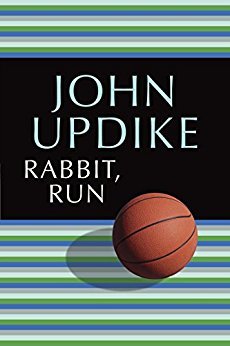
Rabbit, Run is the book that established John Updike as one of the major American novelists of his—or any other—generation. Its hero is Harry “Rabbit” Angstrom, a onetime high-school basketball star who on an impulse deserts his wife and son. He is twenty-six years old, a man-child caught in a struggle between instinct and thought, self and society, sexual gratification and family duty—even, in a sense, human hard-heartedness and divine Grace. Though his flight from home traces a zigzag of evasion, he holds to the faith that he is on the right path, an invisible line toward his own salvation as straight as a ruler’s edge.
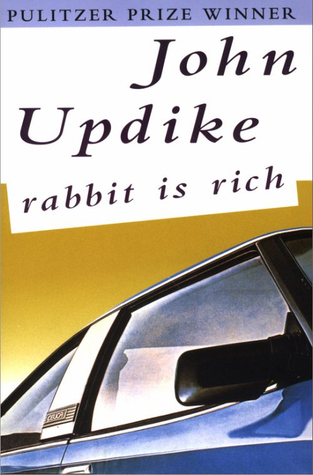
Winner of the 1982 Pulitzer Prize for Fiction.Ten years after Rabbit Redux, Harry Angstrom has come to enjoy prosperity as the Chief Sales Representative of Springer Motors. The rest of the world may be falling to pieces, but Harry's doing all right. That is, until his son returns from the West, and the image of an old love pays a visit to his lot....
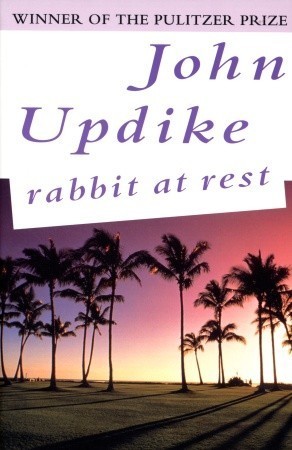
Winner of the 1991 Pulitzer Prize for Fiction. In John Updike's fourth and final novel about ex-basketball player Harry "Rabbit" Angstrom, the hero has acquired heart trouble, a Florida condo, and a second grandchild. His son and daughter-in-law are acting erratically, his wife Janice wants to work, and Rabbit is searching his soul, looking for reasons to live.
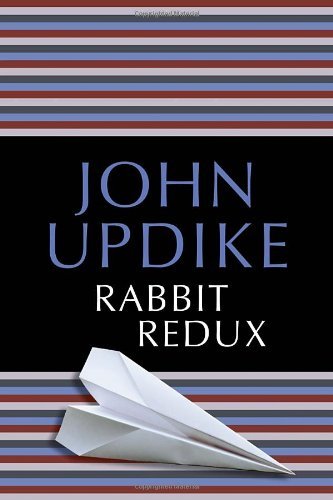
In this sequel to Rabbit, Run, John Updike resumes the spiritual quest of his anxious Everyman, Harry “Rabbit” Angstrom. Ten years have passed; the impulsive former athlete has become a paunchy thirty-six-year-old conservative, and Eisenhower’s becalmed America has become 1969’s lurid turmoil of technology, fantasy, drugs, and violence. Rabbit is abandoned by his family, his home invaded by a runaway and a radical, his past reduced to a ruined inner landscape; still he clings to semblances of decency and responsibility, and yearns to belong and to believe.

Toward the end of the Vietnam era, in a snug little Rhode Island seacoast town, wonderful powers have descended upon Alexandra, Jane, and Sukie, bewitching divorcées with sudden access to all that is female, fecund, and mysterious. Alexandra, a sculptor, summons thunderstorms; Jane, a cellist, floats on the air; and Sukie, the local gossip columnist, turns milk into cream. Their happy little coven takes on new, malignant life when a dark and moneyed stranger, Darryl Van Horne, refurbishes the long-derelict Lenox mansion and invites them in to play. Thenceforth scandal flits through the darkening, crooked streets of Eastwick and through the even darker fantasies of the town’s collective psyche.

Couples is the book that has been assailed for its complete frankness & praised as an artful, seductive, savagely graphic portrait of love, marriage & adultery in America. But be it damned or hailed, Couples drew back the curtain forever on sex in suburbia in the late 20th century. A classic, it's one of those books that will be read & remembered for a long time to come.

WINNER OF THE NATIONAL BOOK AWARD AND THE PRIX DU MEILLEUR LIVRE ÉTRANGER The Centaur is a modern retelling of the legend of Chiron, the noblest and wisest of the centaurs, who, painfully wounded yet unable to die, gave up his immortality on behalf of Prometheus. In the retelling, Olympus becomes small-town Olinger High School; Chiron is George Caldwell, a science teacher there; and Prometheus is Caldwell’s fifteen-year-old son, Peter. Brilliantly conflating the author’s remembered past with tales from Greek mythology, John Updike translates Chiron’s agonized search for relief into the incidents and accidents of three winter days spent in rural Pennsylvania in 1947. The result, said the judges of the National Book Award, is “a courageous and brilliant account of a conflict in gifts between an inarticulate American father and his highly articulate son.”

The son of an Irish-American mother and an Egyptian father who disappeared when he was three, Ahmad turned to Islam at the age of eleven. He feels his faith threatened by the materialistic, hedonistic society he sees around him in the slumping factory town of New Prospect, in northern New Jersey. Neither the world-weary, depressed guidance counselor at Central High School, Jack Levy, nor Ahmad’s mischievously seductive black classmate, Joryleen Grant, succeeds in diverting the boy from what his religion calls the Straight Path. When he finds employment in a furniture store owned by a family of recently immigrated Lebanese, the threads of a plot gather around him, with reverberations that rouse the Department of Homeland Security.But to quote the Qur’an: Of those who plot, God is the best.

Edward Gorey's off-kilter depictions of Yuletide mayhem and John Updike's wryly jaundiced text examine a dozen Christmas traditions with a decidedly wheezy ho-ho-ho. This long out-of-print classic is the perfect stocking-stuffer for any bah humbug.

The richest and most sensual novel in years from the Pulitzer Prize-winning author of the Rabbit series. Two young, beautiful lovers, a black child of the Rio slums and a pampered upper-class white girl, endure privation, violence, and captivity to be together.

This novel tells the story of Claudius and Gertrude, King and Queen of Denmark, before the action of Shakespeare's "Hamlet" begins. Employing the nomenclature and certain details of the ancient Scandinavian legends that first describe the prince who feigns madness to achieve revenge upon his father's slayer, Updike brings to life Gertrude's girlhood as the daughter of King Rorik, her arranged marriage to the man who becomes King Hamlet, and her middle-aged affair with her husband's younger brother, a dark-eyed dreamer with a taste for foreign adventure, who for decades has sought to quell his love for Gertrude, and at last returns to an Elsinore whose prince is generally elsewhere.Gaps and inconsistencies within the immortal play are to an extent filled and explained in this prequel; the figure of Polonius, especially, takes on a larger significance. Beginning in the aura of pagan barbarism, and anticipating Renaissance humanism and empiricism, this modern retelling of a medieval tale presents the case for its royal couple that Shakespeare only hinted at. Gertrude and Claudius are seen afresh against a background of fond intentions and familial dysfunction, on a stage darkened by the ominous shadow of a sullen, disaffected prince.

One hot afternoon in 1910, the Reverend Clarence Wilmot, standing in the rectory of the Fourth Presbyterian Church, experiences the last vestiges of his faith departing. True to this revelation, Clarence abandons the pulpit and becomes an encyclopedia salesman. What follows is the saga of the Wilmot family, one wandering tapestry thread within the American century. This is the story of Clarence's postman son, of his granddaughter, Esther, whose prayers are always answered and who becomes a twentieth century goddess, and of her son, in whom the passion that has long simmered, hidden in the corners of American life, comes to a boil.

"A & P" is a comic short story written by John Updike in 1961 in which the hero and first person narrator takes a stand for what is right and therefore has hope for a better future

Gathering together almost all the short fiction that John Updike published between 1953 and 1975, this collection opens with Updike's autobiographical stories about a young boy growing up during the Depression in a small Pennsylvania town. There follows tales of life away from home, student days, early marriage and young families, and finally Updike's experimental stories on The Single Life'. Here, then, is a rich and satisfying feast of Updike his wit, his easy mastery of language, his genius for recalling the subtleties of ordinary life and the excitements, and perils, of the pursuit of happiness.
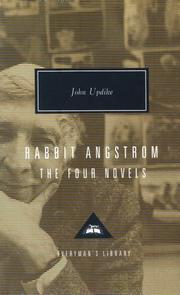
When we first met him in Rabbit, Run (1960), the book that established John Updike as a major novelist, Harry (Rabbit) Angstrom is playing basketball with some boys in an alley in Pennsylvania during the tail end of the Eisenhower era, reliving for a moment his past as a star high school athlete. Athleticism of a different sort is on display throughout these four magnificent novels—the athleticism of an imagination possessed of the ability to lay bare, with a seemingly effortless animal grace, the enchantments and disenchantments of life.Updike revisited his hero toward the end of each of the following decades in the second half of this American century; and in each of the subsequent novels, as Rabbit, his wife, Janice, his son, Nelson, and the people around them grow, these characters take on the lineaments of our common existence. In prose that is one of the glories of contemporary literature, Updike has chronicled the frustrations and ambiguous triumphs, the longuers, the loves and frenzies, the betrayals and reconciliations of our era. He has given us our representative American story.This Rabbit Angstrom volume is composed of the following novels: Rabbit, Run; Rabbit Redux; Rabbit is Rich; and Rabbit at Rest.

A deftly satirical portrait of life and love in a suburban town as only Updike can paint it.Updike's eighth novel, subtitled "A Romance" because, he says, "People don't act like that any more," centers on the love affair of a married couple in the Connecticut of 1962. Unfortunately, this is a couple whose members are married to other people. Suburban infidelity is familiar territory by now, but nobody knows it as well as Updike, and the book is written with the author's characteristic poetic sensibility and sly wit.

More than three decades have passed since the events described in John Updike’s The Witches of Eastwick. The three divorcées—Alexandra, Jane, and Sukie—have left town, remarried, and become widows. They cope with their grief and solitude as widows do: they travel the world, to such foreign lands as Canada, Egypt, and China, and renew old acquaintance. Why not, Sukie and Jane ask Alexandra, go back to Eastwick for the summer? The old Rhode Island seaside town, where they indulged in wicked mischief under the influence of the diabolical Darryl Van Horne, is still magical for them. Now Darryl is gone, and their lovers of the time have aged or died, but enchantment remains in the familiar streets and scenery of the village, where they enjoyed their lusty primes as free and empowered women. And, among the local citizenry, there are still those who remember them, and wish them ill. How they cope with the lingering traces of their evil deeds, the shocks of a mysterious counterspell, and the advancing inroads of old age, form the burden of Updike’s delightful, ominous sequel.

The triumphant collection of short stories by America's most acclaimed novelist.

A sensational collection of stories of the American experience from the Depression to the aftermath of 9/11, by one of the most gifted American writers of the twentieth century and the author of the acclaimed Rabbit series.John Updike mingles narratives of Pennsylvania with stories of New England suburbia and of foreign “Personal Archaeology” considers life as a sequence of half-buried layers, and “The Full Glass” distills a lifetime’s happiness into one brimming moment of an old man’s bedtime routine. High-school class reunions, in “The Walk with Elizanne” and “The Road Home,” restore their hero to youth’s commonwealth where, as the narrator of the title story confides, “the self I value is stored, however infrequently I check on its condition.” Exotic locales encountered in the journeys of adulthood include Morocco, Florida, Spain, Italy, and India. The territory of childhood, with its fundamental, formative mysteries, is explored in “The Guardians,” “The Laughter of the Gods,” and “Kinderszenen.” Love’s fumblings among the bourgeoisie yield the tart comedy of “Free,” “Delicate Wives,” “The Apparition,” and “Outage.”

In this brilliant late-career collection, John Updike revisits many of the locales of his early fiction: the small-town Pennsylvania of Olinger Stories, the sandstone farmhouse of Of the Farm, the exurban New England of Couples and Marry Me, and Henry Bech’s Manhattan of artistic ambition and taunting glamour. To a dozen short stories spanning the American Century, the author has added a novella-length coda to his quartet of novels about Harry “Rabbit” Angstrom. Several strands of the Rabbit saga come together here as, during the fall and winter holidays of 1999, Harry’s survivors fitfully entertain his memory while pursuing their own happiness up to the edge of a new millennium. Love makes Updike’s fictional world go round—married love, filial love, feathery licks of erotic love, and love for the domestic particulars of Middle American life.

An antic riff on Hawthorne’s Scarlet Letter, in which a latter-day Arthur Dimmesdale is sent west from his Midwestern parish in sexual disgrace—from one of the most gifted American writers of the twentieth century and the author of the acclaimed Rabbit series.“Updike may be America’s finest novelist and [this] is quintessential Updike.”— The Washington PostAt a desert retreat dedicated to rest, recreation, and spiritual renewal, this fortyish serial fornicator is required to keep a journal whose thirty-one weekly entries constitute the book you now hold in your hand. In his wonderfully overwrought style he lays bare his soul and his past—his marriage to the daughter of his ethics professor, his affair with his organist, his antipathetic conversations with his senile father and his bisexual curate, his golf scores, his poker hands, his Biblical exegeses, and his smoldering desire for the directress of the retreat, the impregnable Ms. Prynne. A testament for our times.

One of the first major award-winning titles to feature an interracial family, A Child's Calendar combines the star power of John Updike and Trina Schart Hyman.Celebrate the little moments that make each month special in this Caldecott Honor book, featuring twelve poems about a family and the turn of the seasons. From the short, frozen days of January, through the light of summer, to the first snowflakes of December, Updike's poems rejoices in the familiar, wondrous qualities that make each part of the year unique.Hyman's award-winning paintings--modeled after her own daughter, son-in-law and grandchildren--depict an interracial family going about the business of their lives throughout the sledding in January, watching fireworks in July, and playing in the autumn leaves.A perfect read-aloud for the family, throughout the whole year.

“A small masterpiece . . . With Of the Farm , John Updike has achieved a sureness of touch, a suppleness of style, and a subtlety of vision that is gained by few writers of fi ction.”— The New York TimesIn this short novel, Joey Robinson, a thirty-five-year-old New Yorker, describes a visit he makes, with his second wife and eleven-year-old stepson, to the Pennsylvania farm where he grew up and where his aging mother now lives alone. For three days, a quartet of voices explores the air, making confessions, seeking alignments, quarreling, pleading, and pardoning. They are not entirely alone: ghosts (fathers, lovers, children) press upon them, as do phantoms from the near future (nurses, lawyers, land developers). Of the Farm concerns the places people choose to live their lives, and the strategies they use to stand their ground.

As Roger Lambert tells it, he, a middle-aged professor of divinity, is buttonholed in his office by Dale Kohler, an earnest young computer scientist who believes that quantifiable evidence of God’s existence is irresistibly accumulating. The theological-scientific debate that ensues, and the wicked strategies that Roger employs to disembarrass Dale of his faith, form the substance of this novel—these and the current of erotic attraction that pulls Esther, Roger’s much younger wife, away from him and into Dale’s bed. The novel, a majestic allegory of faith and reason, ends also as a black comedy of revenge, for this is Roger’s version—Roger Chillingworth’s side of the triangle described by Hawthorne’s Scarlet Letter—made new for a disbelieving age.

Collected together for the first time in hardcover, these eighteen classic stories from across John Updike’s career form a luminous chronicle of the life and times of one marriage in all its rich emotional complexity.In 1956, Updike published a story, “Snowing in Greenwich Village,” about a young couple, Joan and Richard Maple, at the beginning of their marriage. Over the next two decades, he returned to these characters again and again, tracing their years together raising children, finding moments of intermittent happiness, and facing the heartbreak of infidelity and estrangement. Seventeen Maples stories were collected in 1979 in a paperback edition titled Too Far to Go, prompted by a television adaptation. Now those stories appear in hardcover for the first time, with the addition of a later story, “Grandparenting,” which returns us to the Maples’s lives long after their wrenching divorce.

S. is the story of Sarah P. Worth, a thoroughly modern spiritual seeker who has become enamored of a Hindu mystic called the Arhat. A native New Englander, she goes west to join his ashram in Arizona, and there struggles alongside fellow sannyasins (pilgrims) in the difficult attempt to subdue ego and achieve moksha (salvation, release from illusion). “S.” details her adventures in letters and tapes dispatched to her husband, her daughter, her brother, her dentist, her hairdresser, and her psychiatrist—messages cleverly designed to keep her old world in order while she is creating for herself a new one. This is Hester Prynne’s side of the triangle described by Hawthorne’s Scarlet Letter; it is also a burlesque of the quest for enlightenment, and an affectionate meditation on American womanhood.
The first and second novels in John Updike's acclaimed quartet of Rabbit books -- now in one marvelous volume. RABBIT, RUN"Brilliant and poignant . . . By his compassion, clarity of insight, and crystal-bright prose, [Updike] makes Rabbit's sorrow his and out own.The Washington Post"Precise, graceful, stunning, he is an athlete of words and images. He is also an impeccable observer of thoughts and feelings."The Village VoiceRABBIT REDUX"Great in love, in art, boldness, freedom, wisdom, kindness, exceedingly rich in intelligence, wit, imagination, and feeling -- a great and beautiful thing . . . these hyperboles (quoted from a letter written long ago by Thomas Mann) come to mind after reading John Updike's Rabbit Redux.The New York Times Book Review "Updike owns a rare verbal genius, a gifted intelligence and a sense of tragedy made bearable by wit. . . . A masterpiece.Time

John Updike’s twenty-first novel, a bildungsroman, follows its hero, Owen Mackenzie, from his birth in the semi-rural Pennsylvania town of Willow to his retirement in the rather geriatric community of Haskells Crossing, Massachusetts. In between these two settlements comes Middle Falls, Connecticut, where Owen, an early computer programmer, founds with a partner, Ed Mervine, the successful firm of E-O Data, which is housed in an old gun factory on the Chunkaunkabaug River. Owen’s education (Bildung) is not merely technical but liberal, as the humanity of his three villages, especially that of their female citizens, works to disengage him from his youthful innocence. As a child he early felt an abyss of calamity beneath the sunny surface quotidian, yet also had a dreamlike sense of leading a charmed existence. The women of his life, including his wives, Phyllis and Julia, shed what light they can. At one juncture he reflects, “How lovely she is, naked in the dark! How little men deserve the beauty and mercy of women!” His life as a sexual being merges with the communal shelter of villages: “A village is woven of secrets, of truths better left unstated, of houses with less window than opaque wall.”This delightful, witty, passionate novel runs from the Depression era to the early twenty-first century.From the Hardcover edition.

A critically acclaimed New York Times best-seller introduces Henry Bech, a Jewish author more famous for his writer's block than his work, drifting from one adventure to the next with an infectious wit and sense of wonder. Reprint.