
John Ruskin
Librarian Note: There is more than one author by this name in the Goodreads database. John Ruskin was an English writer, philosopher, art historian, art critic and polymath of the Victorian era. He wrote on subjects as varied as geology, architecture, myth, ornithology, literature, education, botany and political economy. Ruskin was heavily engaged by the work of Eugène-Emmanuel Viollet-le-Duc which he taught to all his pupils including William Morris, notably Viollet-le-Duc's Dictionary, which he considered as "the only book of any value on architecture". Ruskin's writing styles and literary forms were equally varied. He wrote essays and treatises, poetry and lectures, travel guides and manuals, letters and even a fairy tale. He also made detailed sketches and paintings of rocks, plants, birds, landscapes, architectural structures and ornamentation. The elaborate style that characterised his earliest writing on art gave way in time to plainer language designed to communicate his ideas more effectively. In all of his writing, he emphasised the connections between nature, art and society. Ruskin was hugely influential in the latter half of the 19th century and up to the First World War. After a period of relative decline, his reputation has steadily improved since the 1960s with the publication of numerous academic studies of his work. Today, his ideas and concerns are widely recognised as having anticipated interest in environmentalism, sustainability and craft. Ruskin first came to widespread attention with the first volume of Modern Painters (1843), an extended essay in defence of the work of J.M.W. Turner in which he argued that the principal role of the artist is "truth to nature". From the 1850s, he championed the Pre-Raphaelites, who were influenced by his ideas. His work increasingly focused on social and political issues. Unto This Last (1860, 1862) marked the shift in emphasis. In 1869, Ruskin became the first Slade Professor of Fine Art at the University of Oxford, where he established the Ruskin School of Drawing. In 1871, he began his monthly "letters to the workmen and labourers of Great Britain", published under the title Fors Clavigera (1871–1884). In the course of this complex and deeply personal work, he developed the principles underlying his ideal society. As a result, he founded the Guild of St George, an organisation that endures today.
30 Books Written

Unto This Last is an essay and book on economy by John Ruskin, first published in December 1860 in the monthly journal Cornhill Magazine in four articles. Ruskin says himself that these articles were "very violently criticized", forcing the publisher to stop the publication after four months. Subscribers sent protest letters. But Ruskin countered the attack and published the four articles in a book in May 1862. The book greatly influenced the nonviolent activist Mohandas Gandhi.

A fairy tale of what happened to two men who tried to get rich in evil ways and of how the fortune they sought came to their younger brother, whose kind and loving heart prompted him to right action. Widely regarded as a masterpiece of 19th century stories for children. Includes four black and white illustrations by Maria L. Kirk. Suitable for ages 8 and up.

Two of Ruskin's famous essays: "The Nature of the Gothic" and "The Work of Iron" from his book The Stones of Venice.

"I believe architecture must be the beginning of arts, and that the others must follow her in their time and order; and I think the prosperity of our schools of painting and sculpture, in which no one will deny the life, though many the health, depends upon that of our architecture." — John Ruskin.In August of 1848, John Ruskin and his new bride visited northern France, for the gifted young critic wished to write a work that would examine the essence of Gothic architecture. By the following April, the book was finished. Titled The Seven Lamps of Architecture, it was far more than a treatise on the Gothic style; instead, it elaborated Ruskin's deepest convictions of the nature and role of architecture and its aesthetics. The book was published to immediate acclaim and has since become an acknowledged classic.The "seven lamps" are Sacrifice, Truth, Power, Beauty, Life, Memory, and Obedience. In delineating the relationship of these terms to architecture, Ruskin distinguishes between architecture and mere building. Architecture is an exalting discipline that must dignify and ennoble public life. It must preserve the purity of the materials it uses; and it must serve as a source of power and renewal for the society that produces it. The author expounds these and many other ideas with exceptional passion and knowledge, expressed in a masterly prose style.Today, Ruskin's timeless observations are as relevant as they were in Victorian times, making The Seven Lamps of Architecture required reading for architects, students, and other lovers of architecture, who will find in these pages a thoughtful and inspiring approach to one of man's noblest endeavors.This authoritative edition includes excellent reproductions of the 14 original plates of Ruskin's superb drawings of architectural details from such structures as the Doge's Palace in Venice, Giotto's Campanile in Florence, and the Cathedral of Rouen.

‘You shall have thousands of gold pieces;—thousands of thousands—millions—mountains of gold: where will you keep them?’Two of Ruskin’s most powerful essays: Traffic and The Roots of Honour. The radical Victorian art critic’s excoriating defence of dignity and creativity in a world obsessed by money.[ John Ruskin (1819–1900) ]Little Black Classics celebrates Penguin’s 80th birthday, introducing 80 works from the classics.

"It is in Venice, and in Venice only, that effectual blows can be struck at this pestilent art of the Renaissance. Destroy its claims to admiration there, and it can assert them nowhere else." This was Ruskin's war cry as he entered the now almost forgotten Battle of the Styles on the side against "the school which has conducted men's inventive and constructional faculties from the Grand Canal to Gower Street."But first the reader must know the difference between right and wrong; he must find out for himself the best way of doing everything. "I shall give him stones, and bricks and straw, chisels and trowels and the ground, and then ask him to build, only helping him if I find him puzzled."Unhappily, both these exciting objectives were attained only after the expenditure of nearly half-a-million words; glorious words, but too many. For fifty years, The Stones of Venice was read by all who went there and thousands who could not; the sightseers whom the city captivates today seldom have its greatest guidebook with them.It is the aim of this new edition to put a fascinating book within reach of travelers--active or armchair--with limited resources of time. Much that was superfluous has been omitted; what remains is the essence of a now very readable and portable book. It is a book for the lover of architecture, the lover of Venice, the lover of lost causes, and, perhaps above all, for the lover of fine writing.
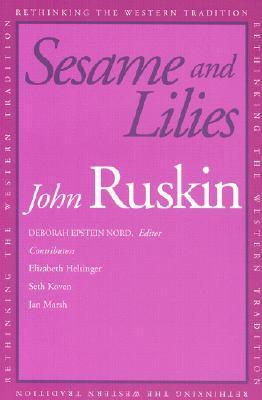
John Ruskin’s Sesame and Lilies, first published in 1865, stands as a classic nineteenth-century statement on the natures and duties of men and women. Although widely popular in its time, the work in its entirety has been out of print since the early twentieth century. This volume returns Sesame and Lilies to easy availability and reunites the two halves of the work: Of Kings’ Treasuries, in which Ruskin critiques Victorian manhood, and Of Queens’ Gardens, in which he counsels women to take their places as the moral guides of men and urges the parents of girls to educate them to this end. Feminist critics of the 1960s and 1970s regarded Of Queens’ Gardens as an exemplary expression of repressive Victorian ideas about femininity, and they paired it with John Stuart Mill’s more progressive Subjection of Women. This volume, by including the often ignored Of Kings’ Treasuries, offers readers full access to Ruskin’s complex and sometimes contradictory views on men and women. The accompanying essays place Sesame and Lilies within historical debates on men, women, culture, and the family. Elizabeth Helsinger examines the text as a meditation on the pleasures of reading, Seth Koven gives a wide-ranging account of how Victorians read Sesame and Lilies, and Jan Marsh situates the work within controversies over educational reform. Deborah Epstein Nord is professor of English and director of the Program in the Study of Women and Gender at Princeton University.

The most influential art theorist and critic of his age, an outstanding man of letters, a sensitive painter and draughtsman, Ruskin's social criticism shocked and angered the establishment and many of his admirers. First and foremost an outcry against injustice and inhumanity, Unto this Last is also a closely argued assault on the science of political economy, which dominated the Victorian period. Ruskin was a profoundly conservative man who looked back to the Middle Ages as a Utopia, yet his ideas had a considerable influence on the British socialist movement. And in making his powerful moral and aesthetic case against the dangers of unhindered industrialization he was strangely prophetic. This volume shows the astounding range and depth of Ruskin's work, and in an illuminating introduction the editor reveals the consistency of Ruskin's philosophy and his adamant belief that questions of economics, art and science could not be separated from questions of morality. In Ruskin's words, 'There is no Wealth but Life.'For more than seventy years, Penguin has been the leading publisher of classic literature in the English-speaking world. With more than 1,700 titles, Penguin Classics represents a global bookshelf of the best works throughout history and across genres and disciplines. Readers trust the series to provide authoritative texts enhanced by introductions and notes by distinguished scholars and contemporary authors, as well as up-to-date translations by award-winning translators.

Can drawing — sound, honest representation of the world as the eye sees it, not tricks with the pencil or a few "effects" — be learned from a book? One of the most gifted draftsmen, who is also one of the greatest art critics and theorists of all time, answers that question with a decided "Yes." He is John Ruskin, the author of this book, a classic in art education as well as a highly effective text for the student and amateur today.The work is in three parts, cast in the form of letters to a student, successively covering "First Practice," "Sketching from Nature," and "Colour and Composition." Starting with the bare fundamentals (what kind of drawing pen to buy; shading a square evenly), and using the extremely practical method of exercises which the student performs from the very first, Ruskin instructs, advises, guides, counsels, and anticipates problems with sensitivity. The exercises become more difficult, developing greater and greater skills until Ruskin feels his reader is ready for watercolors and finally composition, which he treats in detail as to the laws of principality, repetition, continuity, curvature, radiation, contrast, interchange, consistency, and harmony. All along the way, Ruskin explains, in plain, clear language, the artistic and craftsmanlike reasons behind his practical advice — underlying which, of course, is Ruskin's brilliant philosophy of honest, naturally observed art which has so much affected our aesthetic.Three full-page plates and 48 woodcuts and diagrams (the latter from drawings by the author) show the student what the text describes. An appendix devotes many pages to the art works which may be studied with profit.

John Ruskin was the most powerful and influential art critic and social commentator of the Victorian nineteenth century. A true polymath, he wrote about nature, art, architecture, politics, history, myth and much more. All of his work is characterized by a clarity of vision as unsettling and intense now as it was for his first readers.This new selection includes wide-ranging extracts of Ruskin's texts, from the early 1840s to the late 1880s, as well as representative material from each of his major works. Modern Painters, The Stones of Venice, and Sesame and Lilies are juxtaposed with less familiar writing on science and myth. An authoritative introduction outlines Ruskin's life and thought, making it clear why his writing is still relevant today. This new edition also includes a selection of Ruskin's own illustrations.

John Ruskin overturned Victorian society’s ideas about art and architecture, arguing that ancient buildings must be conserved for their deep, mystical links with the past and that creative design is essential – not for financial gain, but to communicate eternal human truths.Throughout history, some books have changed the world. They have transformed the way we see ourselves – and each other. They have inspired debate, dissent, war and revolution. They have enlightened, outraged, provoked and comforted. They have enriched lives – and destroyed them. Now Penguin brings you the works of the great thinkers, pioneers, radicals and visionaries whose ideas shook civilization and helped make us who we are.

This scarce antiquarian book is a facsimile reprint of the original. Due to its age, it may contain imperfections such as marks, notations, marginalia and flawed pages. Because we believe this work is culturally important, we have made it available as part of our commitment for protecting, preserving, and promoting the world's literature in affordable, high quality, modern editions that are true to the original work.

Praeterita is one of the most remarkable autobiographies of the 19th century. Written by Ruskin in the 1880s between attacks of brain fever, it gives a fascinating account of his upbringing in a severely respectable Victorian household, his Continental travels, his friends and relations, andthe development and refinement of his aesthetic tastes.

Mornings in Florence: Being Simple Studies of Christian Art for English Travellers
by John Ruskin
Rating: 4.2 ⭐
Originally published in 1881. Details the author's travels in Italy to view Christian art and architecture. Contents Include: Santa Croce The Golden Gate Before The Soldan The Vaulted Book The Strait Gate The Shepherd's Tower
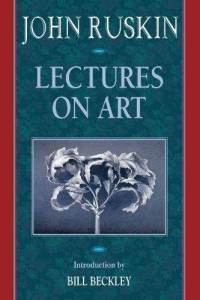
Reflecting Ruskin's belief that art is not an isolated pursuit, but one intimately connected with all aspects of human life, Lectures on Art explores the relation of art to religion, morals, and practicality as well as the significance of line, light, and color. This edition includes a new introduction by Bill Beckley, a widely exhibited artist who teaches semiotics at the School of Visual Arts in New York City.

The Ethics Of The Dust: Ten Lectures To Little Housewives On The Elements Of Crystallization
by John Ruskin
Rating: 3.5 ⭐
This scarce antiquarian book is a facsimile reprint of the original. Due to its age, it may contain imperfections such as marks, notations, marginalia and flawed pages. Because we believe this work is culturally important, we have made it available as part of our commitment for protecting, preserving, and promoting the world's literature in affordable, high quality, modern editions that are true to the original work.
John Ruskin (1819-1900) is best known for his work as an art critic and social critic, but is remembered as an author, poet and artist as well. Ruskin's essays on art and architecture were extremely influential in the Victorian and Edwardian eras. Ruskin's range was vast. He wrote over 250 works which started from art history, but expanded to cover topics ranging over science, geology, ornithology, literary criticism, the environmental effects of pollution, and mythology. In 1848, he married Effie Gray, for whom he wrote the early fantasy novel The King of the Golden River. After his death Ruskin's works were collected together in a massive "library edition," completed in 1912 by his friends Edward Cook and Alexander Wedderburn. Its index is famously elaborate, attempting to articulate the complex interconnectedness of his thought. His other works include: Giotto and his works in Padua (1854), The Harbours of England (1856), "A Joy for Ever" (1857), The Ethics of the Dust (1866) and Hortus Inclusus.

1-2 Albany J.B. Lyon Painting Aesthetics This is an OCR reprint. There may be numerous typos or missing text. There are no illustrations or indexes. When you buy the General Books edition of this book you get free trial access to Million-Books.com where you can select from more than a million books for free. You can also preview the book there.

This book was converted from its physical edition to the digital format by a community of volunteers. You may find it for free on the web. Purchase of the Kindle edition includes wireless delivery.
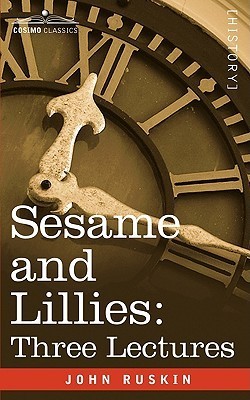
As a vocal critic of art on the whole, British writer JOHN RUSKIN (1819-1900) was a profoundly influential voice upon European painting, architecture, aesthetics of the 19th and 20th centuries. This 1865 collection of three lectures-"Of Kings' Treasures," "Of Queens' Gardens," and "Of the Mysteries of Life"-offers an intimate look at his thoughts on culture and humanity's nurturing of its own education. He discusses: . the importance of "valuable books" . the nature of "a civilized country" . the necessity of educating women . advice for living a plain but noble life . and more. Students of art history will in particular find this an enlightening read.

More than 150 years after its first publication in 1851–53, this monumental work by a great Victorian writer, critic, and artist remains among the most influential books on art and architecture ever written. In The Stones of Venice, a survey of the principal buildings in the "Paradise of Cities," John Ruskin developed an aesthetic and intellectual argument that lingers at the heart of the debate over the meaning of architecture and craftsmanship.This work applies the general principles enunciated in Ruskin's The Seven Lamps of Architecture to Venetian architecture. The first volume, The Foundations, presents a short history of the city and discusses architecture's functional and ornamental aspects. Volume II, The Sea-Stories, examines the Byzantine era and the brilliant architectural developments of Venice's Gothic period. The third volume, The Fall, consists of a trenchant examination of the Venetian spiritual and architectural decline during the Renaissance.Ruskin believed that an understanding of architecture (and painting, and nature) requires a well-informed respect for history and truth. Readers will find no better guide to the spiritual content and aesthetic pleasures of architecture than this eminent teacher and scholar. Featuring all of Ruskin's original drawings, this is the only unabridged edition of The Stones of Venice currently available.

The Queen of the Air - Being a Study of the Greek Myths of Cloud and Storm
by John Ruskin
Rating: 3.6 ⭐
Many of the earliest books, particularly those dating back to the 1900s and before, are now extremely scarce and increasingly expensive. We are republishing these classic works in affordable, high quality, modern editions, using the original text and artwork.

Unto this Last; The Political Economy of Art; Essays on Political Economy
by John Ruskin
Rating: 3.7 ⭐
This book was converted from its physical edition to the digital format by a community of volunteers. You may find it for free on the web. Purchase of the Kindle edition includes wireless delivery.

John Ruskin was born in England in 1819. He was a critic of art, architecture and society. He was a Victorian sage and gifted painter. He goal with his writings was to cause widespread cultural and social change. This combination of the religious intensity of the Evangelical Revival and the artistic excitement of English Romantic painting laid the foundations of Ruskin's later views.The Encyclopedia Britannica sums up Ruskin as follows. "Ruskin has gradually been rediscovered. His formative importance as a thinker about ecology, about the conservation of buildings and environments, about Romantic painting, about art education, and about the human cost of the mechanization of work became steadily more obvious. The outstanding quality of his own drawings and watercolors (modestly treated in his lifetime as working notes or amateur sketches) was increasingly acknowledged, as was his role as a stimulus to the flowering of British painting, architecture, and decorative art in the second half of the 19th century."Giotto was a 13th century Italian painter and architect. He is generally considered the first of the great artists who contributed to the Italian Renaissance. Giotto's masterwork is the decoration of the Scrovegni Chapel commonly called the Arena Chapel, completed around 1305. His frescos depict the life of the Virgin and the life of Christ. They are some of the greatest artistic works of the Renaissance.

Two Lectures delivered at the London Institution February 4th and 11th, 1884

This work has been selected by scholars as being culturally important, and is part of the knowledge base of civilization as we know it. This work was reproduced from the original artifact, and remains as true to the original work as possible. Therefore, you will see the original copyright references, library stamps (as most of these works have been housed in our most important libraries around the world), and other notations in the work.This work is in the public domain in the United States of America, and possibly other nations. Within the United States, you may freely copy and distribute this work, as no entity (individual or corporate) has a copyright on the body of the work.As a reproduction of a historical artifact, this work may contain missing or blurred pages, poor pictures, errant marks, etc. Scholars believe, and we concur, that this work is important enough to be preserved, reproduced, and made generally available to the public. We appreciate your support of the preservation process, and thank you for being an important part of keeping this knowledge alive and relevant.
This 1866 collection of essays on "Work," "Traffic," and "War," begins with a preface condemning the human depletion of nature for what Ruskin saw as valueless gains. In this way, mining the ground for metals, water, and other resources parallels the work of the three lecture topics--all is done for the money. But what Ruskin wants to know is what the ultimate effect and product of their work is?Excerpt from The Crown of Wild Three Lectures on Work, Traffic, and War Maremma, - not by Campagna tomb. - not by the sand-isles of the Torcellan shore, - as the slow stealing of aspects of reckless, indolent, animal neglect, over the delicate sweetness of that English nor is any blasphemy or impiety, any frantic saying or godless thought, more appalling to me, using the best power of judgment I have to discern its sense and scope, than the insolent defiling of those springs by the human herds that drink of them. Just where the welling of stainless water, trembling and pure, like a body of light, enters the pool of Carshalton, cutting itself a radiant channel down to the gravel, through warp of feathery weeds, all waving, which it traverses with its deep threads of clearness, like the chalcedony in moss-agate, starred here and there with white grenouillette; just in the very rush and murmur of the first spreading currents, the human wretches of the place cast their street and house foulness; heaps of dust and slime, and broken shreds of old metal, and rags of putrid clothes; which, having neither energy to cart away, nor decency enough to dig into the ground, they thus shed into the stream, to diffuse what venom of it will float and melt, far away, in all places where God meant those waters to bring joy and health.

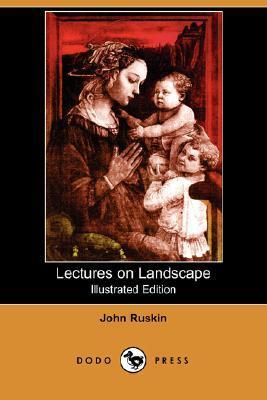
Purchase of this book includes free trial access to www.million-books.com where you can read more than a million books for free. This is an OCR edition with typos. Excerpt from book: LECTURE III. TURNER, AND HIS WORK?. My olject this evening is not so much to gVe you ai.y account of the works or the genius of the great paintei whom we have so lately lost (which it would require rathet a year than an hour to do), as to give you some idea of the position which his works hold with respect to the landscape of other periods, and of the general condition and prospects of the landscape art of the present day. I will not lose time in prefatory remarks, as I have little enough at any rate, but will enter abruptly on my subject. You are all of you well aware that landscape seems hardly to have exercised any strong influence, as such, on any pagan nation, or pagan artist. I have no time to enter into any details on this, of course, most intricate and difficult subject; but I will only ask you to observe, that wherever natural scenery is alluded to by the ancients, it is either agriculturally, with the kind of feeling that a good Scotch farmer has; sensually, in the enjoyment of sun or shade, cool winds or sweet scents; fearfully, in Imere vulgar dread of rocks and desolale places, as compared with the comfort of cities; or, finally, superstitiously in the personification or deification of natural powers generally with much degradation of their impressiveness, as in the paltry fables of Ulysses receiving the winds in bags from Eolus, and of the Cyclops hammering lightning sharp at the ends, on an anvil. Of course you will here and there find feeble evidences of a higher sensibility, chiefly, I think, in Plato, Eschylus, Aristophanes, and Virgil. Homer, though in the epithets he applies to land scape always thoroughly graphic, uses the same epithet fot rocks, seas, and trees, from one end of his poem to the other, evidently without the smallest interest in anythi...

This book was converted from its physical edition to the digital format by a community of volunteers. You may find it for free on the web. Purchase of the Kindle edition includes wireless delivery.

More than 150 years after its first publication in 1851–53, this monumental work by a great Victorian writer, critic, and artist remains among the most influential books on art and architecture ever written. In The Stones of Venice, a survey of the principal buildings in the "Paradise of Cities," John Ruskin developed an aesthetic and intellectual argument that lingers at the heart of the debate over the meaning of architecture and craftsmanship.This work applies the general principles enunciated in Ruskin's The Seven Lamps of Architecture to Venetian architecture. The first volume, The Foundations, presents a short history of the city and discusses architecture's functional and ornamental aspects. Volume II, The Sea-Stories, examines the Byzantine era and the brilliant architectural developments of Venice's Gothic period. The third volume, The Fall, consists of a trenchant examination of the Venetian spiritual and architectural decline during the Renaissance.Ruskin believed that an understanding of architecture (and painting, and nature) requires a well-informed respect for history and truth. Readers will find no better guide to the spiritual content and aesthetic pleasures of architecture than this eminent teacher and scholar. Featuring all of Ruskin's original drawings, this is the only unabridged edition of The Stones of Venice currently available.