
John R.W. Stott
John R. W. Stott is known worldwide as a preacher, evangelist, and communicator of Scripture. For many years he served as rector of All Souls Church in London, where he carried out an effective urban pastoral ministry. A leader among evangelicals in Britain, the United States and around the world, Stott was a principal framer of the landmark Lausanne Covenant (1974). His many books, including Why I Am a Christian and The Cross of Christ, have sold millions of copies around the world and in dozens of languages. Whether in the West or in the Two-Thirds World, a hallmark of Stott's ministry has been expository preaching that addresses the hearts and minds of contemporary men and women. Stott was honored by Time magazine in 2005 as one of the "100 Most Influential People in the World."
31 Books Written

A modern classic for a new generation of Bible readers The writings of internationally respected preacher and teacher John Stott continue to speak to millions of readers around the world. This book—originally published in 1954 as Men with a Message—introduces readers to the message of the New Testament writers, including Mark, Matthew, Luke, John, Paul, and more. This trim new edition presents the text of the book's 1994 edition, which was updated and expanded by Stephen Motyer at John Stott's invitation. It bears the vintage Stott hallmarks—comprehensive knowledge of his subject, acute intellectual rigor, and powerful analysis—while Motyer's updating work makes the book accessible to today's audiences by lightening the language and referring to more recent biblical scholarship.
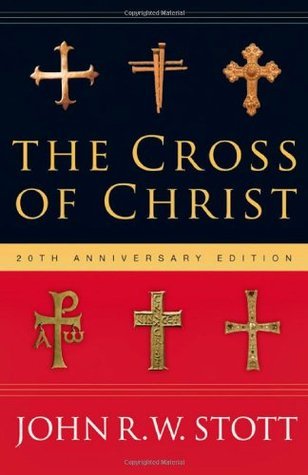
The work of a lifetime, from one of the world's most influential thinkers, about the heart of the Christian faith. "I could never myself believe in God, if it were not for the cross. . . . In the real world of pain, how could one worship a God who was immune to it?" With compelling honesty John Stott confronts this generation with the centrality of the cross in God's redemption of the world -- a world now haunted by the memories of Auschwitz, the pain of oppression and the specter of nuclear war. Can we see triumph in tragedy, victory in shame? Why should an object of Roman distaste and Jewish disgust be the emblem of our worship and the axiom of our faith? And what does it mean for us today? Now from one of the foremost preachers and Christian leaders of our day comes theology at its readable best, a contemporary restatement of the meaning of the cross. At the cross Stott finds the majesty and love of God disclosed, the sin and bondage of the world exposed. More than a study of the atonement, this book brings Scripture into living dialogue with Christian theology and the twentieth century. What emerges is a pattern for Christian life and worship, hope and mission. Destined to be a classic study of the center of our faith, Stott's work is the product of a uniquely gifted pastor, scholar and Christian statesman. His penetrating insight, charitable scholarship and pastoral warmth are guaranteed to feed both heart and mind.

In 2006, Christianity Today voted this title to be one of the top 50 books that have shaped evangelicals! Who is Jesus? "If Jesus was not God in human flesh, Christianity is exploded," writes John Stott. "We are left with just another religion with some beautiful ideas and noble ethics; its unique distinction has gone." If Jesus is not who he said he was, and if he did not do what he said he had come to do, the whole superstructure of Christianity crumbles in ruins to the ground. Is it plausible that Jesus was truly divine? And what might this mean for us? John Stott's clear, classic statement examines the historical facts on which Christianity stands. Here is a sound, sensible guide for all who seek an intellectually satisfying explanation of the Christian faith.

Stott's modern classic, Between Two Worlds, argues that there is a chasm between the biblical world and the modern world. This chasm is bridged through the preaching and proclamation of the Word of God. It is the preacher, empowered through the Spirit, who stands in the gap between these two worlds. It is through preaching whereby the world of the Bible is brought into the world of modern hearers and modern culture is confronted with the Bible.

What is a life of radical discipleship? At the root, it means we let Jesus set the agenda of our lives. We aren't selective. We don't pick and choose what is congenial and stay away from what is costly. No. He is Lord of all of life. In the last book by the leading evangelical churchman of the twentieth century, John Stott opens up what it means to truly be a follower of Jesus. In a refreshing and accesible style, he explores eight aspects of Christian discipleship which are too often neglected and yet deserve to be taken seriously: non-conformity, Christ-likeness, maturity, creation-care, simplicity, balance, dependence and death. Here, including the last public sermon he ever preached, Stott offers wisdom gained from a lifetime of consistent Christian commitment. In addition, he poignantly reflects on his last years of life and ministry. The message is simple, classic and personal: Jesus is Lord. He calls. We follow.

"The followers of Jesus are to different," writes John Stott, "different from both the nominal church and the secular world, different from both the religious and the irreligious. The Sermon on the Mount is the most complete delineation anywhere in the New Testament of the Christian counter-culture. Here is a Christian value-system, ethical standard, religious devotion, attitude to money, ambition, lifestyle and network of relationships--all of which are totally at variance with those in the non-Christian world. And this Christian counter-culture is the life of the kingdom of God, a fully human life indeed but lived out under the divine rule." In this careful exposition of Jesus' Sermon on the Mount, John R. W. Stott accurately expounds the biblical text and relates it to life today. Above all, the author says, he wants to let Christ speak this sermon again, this time to the modern world.

Why Jesus? Perhaps you have had the funny feeling that God wants to get your attention. Or maybe you're intrigued with what you've heard about Jesus. Or maybe you're simply looking for meaning and direction in your life. John Stott has spent a lifetime wrestling with questions about Jesus both personally and in dialogue with skeptics and seekers around the globe. Now in Why I Am a Christian he provides a compelling, persuasive case for considering the Christian faith. If you take an honest look at Jesus, you will discover that following him gives you the purpose, identity and freedom you've been searching for--and far more than you have ever imagined.

"Knowledge is indispensable to Christian life and service," writes John Stott. "If we do not use the mind which God has given us, we condemn ourselves to spiritual superficiality." While Christians have had a long heritage of rigorous scholarship and careful thinking, some circles still view the intellect with suspicion or even as contradictory to Christian faith. And many non-Christians are quick to label Christians as anti-intellectual and obscurantist. But this need not be so. In this classic introduction to Christian thinking, John Stott makes a forceful appeal for Christian discipleship that engages the mind as well as the heart.

When Paul first penned his letter to the house churches of Rome, his purpose was to gain prayerful support for his coming mission to the western reaches of the Mediterranean world. Little did he know that for two millennia this tautly tuned exposition of the gospel would echo through church and academy, market and home. Or that it would leap great oceans to reverberate through lands and hearts beyond the farthest edges of his world. John Stott, in this new paperback edition previously released with the title Romans, joins a chorus of distinguished voices of the church who have pondered and lived the great themes of Romans, and who have tuned our ears to hear its rich harmonies and meditate on its broad vision. In the classic tradition of great Christian leaders who have commented on Romans, Stott expounds Paul's words, themes and arguments. The power of the gospel, the righteousness of God revealed from heaven, is clearly addressed to today's men and women who have answered its summons. Not only is Stott deeply acquainted with the text and context of Romans, he is also conversant with the most recent Pauline scholarship. Even more important, he views Romans from his own pastoral and missionary perspective, an outloook shaped in turn by the great vision of the apostle. Here is a commentary for those who live on the edge of the third millennium, a commentary spanning the two worlds of Romans--Paul's and ours.

The Spirit moves the church into the world. That is how it has always been since the day of Pentecost when the Spirit brought thousands from many countries into the body of Christ. With the breadth and scholarly care that have marked John Stott's years of ministry, this book opens to us the early days of the church as recorded by Luke in the book of Acts. The experiences of the early church have much to say about issues that concern Christians today. What can Acts tell us about tongues and other extraordinary manifestations of the Spirit? How should churches structure themselves--with elders, deacons, pastors or all three? What should a normal Christian conversion look like? And, of course, how should the church reach out into the world with the message of salvation? These and many other topics are handled with a pastoral heart and an unwavering commitment to the authority of God's Word in our lives. As Stott concludes, "The Acts of the Apostles have long ago finished; the acts of the followers of Jesus will continue until the end of the world."

"The Christian life is life in the Spirit," writes John Stott. "It would be impossible to be a Christian, let alone to live and grow as a Christian, without the ministry of the gracious Spirit of God. All we have and are as Christians we owe to him." The Holy Spirit continues to be at work around the world, as numerous renewal movements attest. Yet much confusion and controversy remain regarding the Holy Spirit's activity. In this classic study, John Stott provides clear biblical exposition on the promise, the fruit and the gifts of the Holy Spirit. He offers particular guidance on the nature of "the baptism of the Spirit" and whether certain spiritual gifts and experiences should be normative for all Christians. Always irenic and gracious, Stott points the way to both greater biblical understanding and deeper fullness of spiritual life.

Millions have caught Karl Marx's vision of a New Man and a New Society. "Paul presents a greater vision still," writes John Stott. In his letter to the Ephesians the apostle "sees the human predicament as something even deeper than the injustice of the economic structure and so propounds a yet more radical solution. He writes of nothing less than a 'new creation.'" John Stott expounds Paul's theme of uniting all things in Christ by uniting his church and breaking down all that separates us from God, one ethnic group from another, husband from wife, parent from child, master from slave. A book for all who want to build the church into the new society God has planned it to be.

John Stott's work on the Letters of John is part of the Tyndale New Testament Commentaries, designed to help the general Bible reader understand clearly what the text actually says and what it means. New Testament texts are interpreted without unduly going into scholarly technicalities.

To enclaves of young converts tucked away in the mountains of Asia Minor, Paul wrote what is perhaps the oldest document in the New Testament--the letter to the Galatians. What problems were they facing? Among a variety of religious authorities espousing different teachings, how were they to know who was right? How were men and women to be put right with God? How could Christians in the midst of a pagan culture live lives truly pleasing to God? 'Only one way--' answered Paul, 'through Jesus Christ.' His answer holds true for us as well. The details of our struggle have changed since Paul's day, but the principles he sets forth are as timeless as the Lord he exalts. In this book John Stott helps us to understand and apply the message of Galatians in the face of contemporary challenges to our faith.

At the 150th anniversary of the dedication of his church, John Stott gave voice to his dream for All Souls, London, and all souls "I have a dream of Reflecting on his more than sixty years of service at All Souls and a worldwide ministry that led Time magazine to acknowledge him as one of the "100 Most Influential People in the World," Stott alerts a church that is in transition to the marks of a church that is living. The Living Church is the full articulation of Stott's dream for the body of Christ in the world today. To the people of God who inherit the global church he has helped to build for the past sixty years, he bequeaths this There is such a thing as pursue it. The postmodern mood is unfriendly to all universal absolutes. Yet the apostle says there is such a thing as fight for it. And there is such a thing as lay hold of it. May God enable us to make an unabashed commitment . . . to what is true, what is good, and what is real.

In recent years, the mission of the church has been defined in two almost exclusive ways. On the one hand are those who say the church must focus on evangelism and discipleship alone. On the other hand are those who advocate concentrating almost solely on societal reform. In this classic book, John Stott shows that Christian mission must encompass both evangelism and social action. He begins with careful definitions of five key terms--mission, evangelism, dialogue, salvation and conversion. Then, through a thorough biblical exploration of these concepts, Stott provides a model for ministry to people's spiritual and physical needs alike. Ultimately, Stott points to the example of Jesus, who modeled both the Great Commission of proclamation and the Great Commandment of love and service. This balanced, holistic approach to mission points the way forward for the work of the church in the world.

Understanding the Bible will provide you with a foundational knowledge of the entirety of Scripture with a focus on broadening your vision of Jesus Christ. This book answers foundational By delving into the geographical, religious, and historical concerns that shaped the world of biblical times, you'll see Jesus as never both as a man of his times and culture, and as the culmination of a divine providence that prepared the way for the ministry of the Messiah. Written by renowned preacher, writer, and apologist John Stott, this new, expanded edition

A Logos Association Best Book award winner Everyone has something to say about Jesus. Sorting through the numerous books of recent years, you may find yourself lost in a thicket of viewpoints, some troubling to faith, some puzzling to the intellect. But John Stott, one of the outstanding evangelical voices of the last half century, offers in The Incomparable Christ an enriching vision of Jesus that defies measurement. In this newly Americanized, paperback edition Stott invites you to view Jesus from four perspectives: The Original Jesus: How the New Testament witnesses to Jesus in the Gospels, Acts and the Letters The Ecclesiastical Jesus: How the church has presented Jesus historically, from Justin Martyr, Benedict and Anselm, to Thomas à Kempis, Martin Luther and Thomas Jefferson, to Gustavo Guitiérrez, N. T. Wright, and the Edinburgh and Lausanne missionary confessions of the twentieth century The Influential Jesus: How people from St. Francis to Tolstoy, from Gandhi to Roland Allen, from Father Damien to William Wilberforce have taken inspiration from him The Eternal Jesus: How he continually challenges today's men and women through ten visions from the book of Revelation. This is the Jesus who is like no other--worthy of your worship, your confession and your obedience as you follow him into the future.

Christian leaders face challenges. But God works with us and through us to accomplish his purposes. Available here for the first time in English is John Stott's practical wisdom for younger leaders. Speaking personally from his own experience, Stott addresses issues of discouragement, self-discipline, relationships and youth.

Christians tend to polarize. Some have an intellectual faith, while others are more emotional. Some focus on structure while others focus on freedom. And some champion evangelism while others advocate for social action. John Stott's classic statement of balanced Christianity shows how we can hold these tensions together in biblical, faithful ways. Also includes an interview with John Stott with further reflections on the need for balance in contemporary evangelical Christianity.

THROUGH THE BIBLE, THROUGH THE YEAR: Daily Reflections From Genesis To Revelation
by John R.W. Stott
Rating: 4.4 ⭐
John Stott is without question one of the most beloved and significant pastors and authors of the last fifty years. Named by Time magazine in 2005 as one of the world's 100 most influential people and

Reading the Sermon on the Mount with John Stott: 8 Weeks for Individuals or Groups
by John R.W. Stott
Rating: 4.3 ⭐
The Sermon on the Mount is Jesus' most inspiring and challenging description of the Christian counterculture. John Stott's teaching on this timeless text shows how its value system, ethical standard, religious devotion and network of relationships clearly distinguish it from both the nominal church and the secular world. In this volume Stott's The Message of the Sermon on the Mount is offered in brief readings suitable for daily use which take us passage by passage through the Scripture text. Including eight weekly studies for individuals or groups, this book covering Matthew 5-7 allows readers to enjoy the riches of Stott's writings in a new, easy-to-use format. John Stott was one of the most beloved and masterful Bible teachers of the last fifty years. His books have sold in the millions. Christians on every continent have heard and read his instructive and inspiring expositions of Scripture. The books in the Reading the Bible with John Stott series offer the essential message of Stott's teaching, largely drawn from his Bible Speaks Today volumes, and present it in a format suitable for daily reading. Questions at the end of each section make these books even more useful for individuals or groups.

TerrorismSame-Sex MarriageDebt CancellationThe AIDS PandemicThese are just some of the critical contemporary issues addressed in this book. Issues Facing Christians Today helps thinking Christians sift through and respond to a sweeping array of complex and pressing topics.Thoroughly revised and updated by Roy McCloughry and fully endorsed by John Stott, this fourth edition continues a two-decades-plus legacy of bringing important current issues under the lens of biblically informed thinking. Combining a keen global awareness with a gift for penetrating analysis, the authors examine such vital topics asPluralism and Christian witnessCohabitationEnvironmentalism and ecological stewardshipWar and peaceAbortion and euthanasia … and much moreAn entirely new chapter on bio-engineering has been contributed by Professor John Wyatt of University College London.Including a study guide, Issues Facing Christians Today is essential reading for Christians who wish to engage our culture with insight, passion, and faith, knowing that the gospel is as relevant and deeply needed today as at any time in history. As the culture wars continue, this book will remain a critical contribution, helping to define Christian social and ethical thinking in the years ahead.

John Stott writes, 'During the gestation of this book I seem to have lived inside the second letter of Paul to Timothy. In imagination I have sat down beside Timothy and have tried myself to hear and heed this final charge from the ageing apostle ...'On each occasion I have been impressed afresh by the timeliness for today of what the apostle writes, especially for young Christian leaders. For our era is one of theological and moral confusion, even of apostasy. And the apostle summons us, as he summoned Timothy, to be strong, brave and steadfast.'

For our postmodern world the very notion of objective truth is open to question if not ridicule. So in our current cultural climate of soft footings and cracking walls, Paul's unambiguous commitment to the church as "the pillar and foundation of the truth" is a timely metaphor. The apostle calls us to reconsider the architecture of a truly Christian worldview and to reexamine the gospel and tradition we have inherited. In the letters to Timothy and Titus, Paul focuses on the idea of inheritance. The faithful, he writes, must guard and deliver the inheritance of gospel truth. Nearing the end of his life, Paul is intent on securing the heritage of gospel truth for the next generation. In this Bible Speaks Today volume (previously released as a hardcover book with the title Guard the Truth ), John Stott finds in 1 Timothy and Titus a dynamic truth that orders Christian life in the church, the family and the world. Here is the lucid commentary we have come to expect from Stott, ever faithful to the text and time of Paul's letters. But in a manner unique to Stott's role as a distinguished Christian statesman, this work's interpretive and pastoral voice remarkably echoes Paul for our own day. One generation speaks to another: "Guard the truth."

The Birds Our Teachers: Biblical Lessons from a Lifelong Bird Watcher
by John R.W. Stott
Rating: 4.0 ⭐
John Stott traces his lifelong love of bird-watching back to boyhood country walks with his father, who told him to shut his mouth and open his eyes and ears. Because of those lessons in observation, Stott now carries his binoculars and camera with him everywhere he travels. Of the 9,000 different bird species in the world, Stott estimates he has seen about 2,500! In this unique and intriguing book he takes seriously Jesus' exhortation in the Sermon on the Mount, "Behold the fowls of the air" (Matt. 6:26 KJV). He reveals lessons on faith from the feeding of ravens, on repentance from the migration of storks, on freedom from the flight of the eagle, on joy from the song of the lark, and more. The Birds Our Teachers is lavishly illustrated with full-color photographs taken by the author in his travels around the world. Stott humorously calls his work "an introduction to the science of orni-theology," for he combines information about birds with biblical truths and personal anecdotes in a way that will fascinate bird-lovers and Bible readers everywhere.

What does the Bible say about same-sex relationships? How should Christians think about this divisive and heartfelt issue? And what of those who are caught in the crossfire: the brothers and sisters who experience same-sex attraction, but are committed to being faithful to the teaching of scripture and resisting it? In this revised, updated and extended edition of the classic chapter from Issues Facing Christians Today, the late John Stott lays out the biblical position on same-sex relationships with care, wisdom and compassion. In addition to Dr Stott's timeless Biblical wisdom, there are forewords by Dr John Sentamu, (the Archbishop of York) and Dr Mark Labberton (President of Fuller Theological Seminary), a helpful preface by the editor, Sean Doherty, testimonies from same-sex attracted Christians and questions for reflection and discussion.

Replaces the book, The Gospel and the End of Time, which received a Christianity Today 1992 Readers' Choice Award Digging into Paul's letters to the Thessalonians, John R. W. Stott addresses issues of vital importance today:how the church spreads the gospel how Christians live according to the gospel how the gospel offers hope in the midst of trouble Originally published as The Gospel the End of Time, Stott's comments on 1 and 2 Thessalonians are now available in paperback as a new addition to the Bible Speaks Today series.

Christ The Controversialist: A Study in Some Essentials of Evangelical Religion
by John R.W. Stott
Rating: 4.3 ⭐
Librarian's this is an alternate cover edition - ISBN 10: 0851113060

People today reject Christianity not because they think it is false but because they believe it is irrelevant. John Stott knows otherwise. In this book he challenges all of us to move with the times while standing firmly on the truth of God's Word. "To be 'contemporary' is to live in the present," Stott writes. "To be a 'contemporary Christian,' however, is to ensure that our present is enriched both by our knowledge of the past and by our expectation of the future." The challenge, then, is to be both conservative and radical--conservative in guarding God's revelation and radical in applying that revelation to the realities of the contemporary space travel, homelessness, genetic engineering, pollution, war, health care, gang violence, education and more. Opening our eyes to the Word and the world, Stott shows how Christianity can speak effectively and relevantly to the contemporary world. He includes chapters on the human paradox, authentic freedom, mind and emotions, evangelism and social action, the pastoral ideal and dimensions of renewal. For those familiar with Stott, The Contemporary Christian is a "must-read" book. For those who have not yet benefited from his insight and passion, The Contemporary Christian affords the perfect opportunity to get acquainted with one of the most widely read and respected Christian thinkers at work today.

Study Scripture with John Stott! The beatitudes reveal to us eight qualities that bring God's blessing: meekness and mercy, poorness in spirit and purity of heart, mourning and hunger, peacemaking and persecution. Jesus highlighted these to offer both encouragement and instruction on living distinctly as his followers in a world with values much different from God's. As we study these qualities and integrate them into our lives, we will receive the blessing Jesus promised to his followers then and now. John Stott is one of the world's leading and most loved Bible teachers and preachers. In this guide you can explore Scripture under his guidance, enhancing your own in-depth study with insights gained from his years of immersion in God's Word.