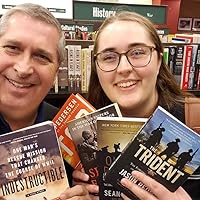
John R. Bruning
John Bruning is the author or coauthor of twenty-two non-fiction books, including four New York Times best sellers, and seven national best sellers, including the critically acclaimed "Race of Aces," "Indestructible," "Outlaw Platoon" (with Sean Parnell) and "House to House" (with David Bellavia). In 2011, he received a Thomas Jefferson Award for his photojournalism and reporting in Afghanistan during the surge in 2010. He lives in Oregon with his family and writes with an office staff that includes three dogs and two cats, one of whom identifies as canine and enjoys swimming, hiking and urban exploration. For further information on John, his office staff and his published words, please check out: johnbruning.com John R Bruning on Facebook and Sylvie_the_canine_cat on Instagram
14 Books Written

Outlaw Platoon: Heroes, Renegades, Infidels, and the Brotherhood of War in Afghanistan
by John R. Bruning
Rating: 4.5 ⭐
• 2 recommendations ❤️
A riveting story of American fighting men, Outlaw Platoon is Lieutenant Sean Parnell’s stunning personal account of the legendary U.S. Army’s 10th Mountain Division’s heroic stand in the mountains of Afghanistan.Acclaimed for its vivid, poignant, and honest recreation of sixteen brutal months of nearly continuous battle in the deadly Hindu Kesh, Outlaw Platoon is a Band of Brothers or We Were Soldiers Once and Young for the early 21st century—an action-packed, highly emotional true story of enormous sacrifice and bravery.A magnificent account of heroes, renegades, infidels, and brothers, it stands with Sebastian Junger’s War as one of the most important books to yet emerge from the heat, smoke, and fire of America’s War in Afghanistan.
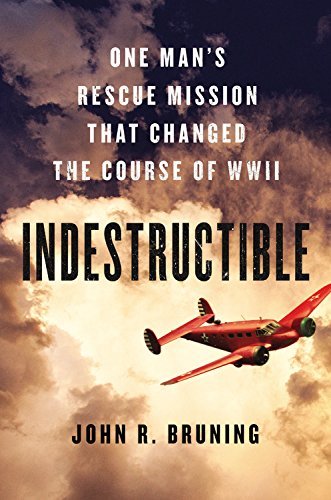
Indestructible: One Man's Rescue Mission That Changed the Course of WWII
by John R. Bruning
Rating: 4.3 ⭐
In this remarkable WWII story by New York Times bestselling author John R. Bruning, a renegade American pilot fights against all odds to rescue his family -- imprisoned by the Japanese--and revolutionizes modern warfare along the way.From the knife fights and smuggling runs of his youth to his fiery days as a pioneering naval aviator, Paul Irving "Pappy" Gunn played by his own set of rules and always survived on his wits and fists. But when he fell for a conservative Southern belle, her love transformed him from a wild and reckless airman to a cunning entrepreneur whose homespun engineering brilliance helped launch one of the first airlines in Asia.Pappy was drafted into MacArthur's air force when war came to the Philippines; and while he carried out a top-secret mission to Australia, the Japanese seized his family. Separated from his beloved wife, Polly, and their four children, Pappy reverted to his lawless ways. He carried out rescue missions with an almost suicidal desperation. Even after he was shot down twice and forced to withdraw to Australia, he waged a one-man war against his many enemies -- including the American high command and the Japanese--and fought to return to the Philippines to find his family.Without adequate planes, supplies, or tactics, the U.S. Army Air Force suffered crushing defeats by the Japanese in the Pacific. Over the course of his three-year quest to find his family, Pappy became the renegade who changed all that. With a brace of pistols and small band of loyal fol,lowers, he robbed supply dumps, stole aircraft, invented new weapons, and modified bombers to hit harder, fly farther, and deliver more destruction than anything yet seen in the air. When Pappy's modified planes were finally unleashed during the Battle of the Bismarck Sea, the United States scored one of the most decisive victories of World War II.Taking readers from the blistering skies of the Pacific to the jungles of New Guinea and the Philippines to one of the the war's most notorious prison camps, Indestructible traces one man's bare-knuckle journey to free the people he loved and the aerial revolution he sparked that continues to resonate across America's modern battlefields.

Race of Aces: WWII's Elite Airmen and the Epic Battle to Become the Masters of the Sky
by John R. Bruning
Rating: 4.3 ⭐
The astonishing untold story of the WWII airmen who risked it all in the deadly race to become the greatest American fighter pilot.In 1942, America's deadliest fighter pilot, or "ace of aces"-the legendary Eddie Rickenbacker-offered a bottle of bourbon to the first U.S. fighter pilot to break his record of twenty-six enemy planes shot down. Seizing on the challenge to motivate his men, General George Kenney promoted what they would come to call the "race of aces" as a way of boosting the spirits of his war-weary command. What developed was a wild three-year sprint for fame and glory, and the chance to be called America's greatest fighter pilot. The story has never been told until now. Based on new research and full of revelations, John Bruning's brilliant, original book tells the story of how five American pilots contended for personal glory in the Pacific while leading Kenney's resurgent air force against the most formidable enemy America ever faced.The pilots-Richard Bong, Tommy McGuire, Neel Kearby, Charles MacDonald and Gerald Johnson-riveted the nation as they contended for Rickenbacker's crown. As their scores mounted, they transformed themselves from farm boys and aspiring dentists into artists of the modern dogfight. But as the race reached its climax, some of the pilots began to see how the spotlight warped their sense of duty. They emerged as leaders, beloved by their men as they chose selfless devotion over national accolades. Teeming with action all across the vast Pacific theater, Race of Aces is a fascinating exploration of the boundary between honorable duty, personal glory, and the complex landscape of the human heart

Fifty-Three Days on Starvation Island: The World War II Battle That Saved Marine Corps Aviation
by John R. Bruning
Rating: 4.5 ⭐
The pivotal true story of the first fifty-three days of the standoff between Imperial Japanese and a handful of Marine aviators defending the Americans dug in at Guadalcanal, from the New York Times bestselling author of Indestructible and Race of Aces .On August 20, 1942, twelve Marine dive-bombers and nineteen Marine fighters landed at Guadalcanal. Their defeat the Japanese navy and prevent it from sending more men and supplies to "Starvation Island," as Guadalcanal was nicknamed. The Japanese were turning the remote, jungle-covered mountain in the south Solomon Islands into an air base from which they could attack the supply lines between the U.S. and Australia. The night after the Marines landed and captured the partially completed airfield, the Imperial Navy launched a surprise night attack on the Allied fleet offshore, resulting in the worst defeat the U.S. Navy suffered in the 20th century, which prompted the abandonment of the Marines on Guadalcanal.The Marines dug in, and waited for help, as those thirty-one pilots and twelve gunners flew against the Japanese, shooting down eighty-three planes in less than two months, while the dive bombers, carried out over thirty attacks on the Japanese fleet. Fifty-Three Days on Starvation Island follows Major John L. Smith, a magnetic leader who became America’s top fighter ace for the time; Captain Marion Carl, the Marine Corps’ first ace, and one of the few survivors of his squadron at the Battle of Midway. He would be shot down and forced to make his way back to base through twenty-five miles of Japanese-held jungle. And Major Richard Mangrum, the lawyer-turned-dive-bomber commander whose inexperienced men wrought havoc on the Japanese Navy. New York Times bestselling author John R. Bruning depicts the desperate effort to stop the Japanese long enough for America to muster reinforcements and turn the tide at Guadalcanal. Not just the story of an incredible stand on a distant jungle island, Fifty-Three Days on Starvation Island also explores the consequences of victory to the men who secured it at a time when America had been at war for less than a year and its public had yet to fully understand what that meant. The home front they returned to after their jungle ordeal was a surreal montage of football games, nightclubs, fine dining with America’s elites, and inside looks at dysfunctional defense industries more interested in fleecing the government than properly equipping the military. Bruning tells the story of how one battle reshaped the Marine Corps and propelled its veterans into the highest positions of power just in time to lead the service into a new war in Southeast Asia.

The Devil's Sandbox: With the 2nd Battalion, 162nd Infantry at War in Iraq
by John R. Bruning
Rating: 4.1 ⭐
Citizen soldiers have played a unique role in the wars in Iraq and Afghanistan - and their extended deployment and role in the war's battles have changed the towns, cities and states they hail from as well. The Devil’s Sandbox is the story of the 2nd Battalion of Oregon’s 162nd Infantry Regiment (2/162) and provides readers an intimate look at the reality of National Guardsmen at war. This book explores not only portraits of battle, but forward-looking civil affairs projects aimed at rebuilding the nation of Iraq and the American community coping without many of its people - its accountants, lawyers, and mechanics - as a result of extended combat.

Jungle Ace: The Story of One of the USAAF's Great Fighter Leaders, Col. Gerald R. Johnson
by John R. Bruning
Rating: 4.2 ⭐
Flying P-38s, Jerry Johnson shot down 24 aircraft in 265 combat missions in the Pacific theater. At the age of only twenty-four, he commanded the highest-scoring fighter group in the Pacific. Tragically, though Johnson had survived three combat tours, which included a mid-air collision with a Japanese aircraft and being shot down by friendly fire, the new father disappeared without a trace while flying a courier mission one month after the war’s end.

The Korean War was a crossroads in military history. It was the last hurrah for one generation of tactics and technology and the proving ground for the next. Crimson Sky examines in detail twenty of the most interesting aerial actions of the Korean War, including the first air rescue of a downed pilot, the Battle of Carlson's Canyon, and some of the most spectacular MiG Alley sorties flown by the F-86 aces. More than exciting accounts of military missions, Crimson Sky is about the people who flew them, about their experiences and emotions as they performed dangerous duty a half century ago.

The Battle of the Bulge: The Photographic History of an American Triumph
by John R. Bruning
Rating: 4.4 ⭐
Among the most famous battles that American forces fought in World War II, the Battle of the Bulge helped define the U.S. soldier in the “Good War.” The sheer scale of destruction--with almost as many American soldiers killed during the battle’s 39 days as in all 80 days of the D-day and the ensuing Normandy campaign--continues to occupy military historians and veterans with endless speculation about what happened and what might have. This photographic history recreates the triumph of American arms against the vaunted Nazi war machine's desperate "all in" attack--a victory that significantly shortened World War II in Europe and saved most of Western Europe from the Soviets.In harrowing images, the book revisits the only destruction of an American division in Europe in World War II--the 106th Infantry Division, which suffered almost all of its casualties in the first three days of the battle.It shows the air forces, armored forces, and infantry on both sides thrown into the Bulge—nearly a million men in a meat grinder of terrible ferocity.Included is the most famous atrocity committed against Americans in Europe during the the Malmedy Massacre in a grim photographic record. Battle of the Bulge is a brilliant pictorial account of one of the greatest battles of all time, this book is a lasting tribute and testament to American might in the fight against tyranny.

Battle for the North Atlantic: The Strategic Naval Campaign that Won World War II in Europe
by John R. Bruning
Rating: 3.4 ⭐
From 1939 to the defeat of Nazi Germany in 1945, Allied ships and planes fought U-boats and German warships to protect merchant shipping on the unforgiving North Atlantic. The Battle for the North Atlantic was the longest continuous military campaign of World War II, running from 1939 until the defeat of Nazi Germany in 1945, though it reached its peak from mid-1940 through the end of 1943. The Battle for the North Atlantic pitted German U-boats and other warships of the German navy against Allied merchant shipping. Initially, convoys of merchant ships were protected for the most part by the British and Canadian navies and air forces. Starting in the early fall of 1941, before Pearl Harbor, these forces were aided by ships and aircraft of the United States. The Battle for the North Atlantic began on the first day of the European war and lasted for six years, involving thousands of ships and stretching over hundreds of miles of the vast ocean and seas in a succession of more than ahundred convoy battles and as many as a thousand single-ship encounters. Tactical advantage switched back and forth over the six years as new weapons, tactics, and countermeasures were developed by both sides. The Allies gradually gained the upper hand, driving the German surface raiders from the ocean by the end of 1942 and decisively defeating the U-boats in a series of convoy battles between March and May 1943.

Bombs Away! covers strategic bombing in Europe during World War II, that is, all aerial bombardment of a strategic nature which took place between 1939 and 1945. In addition to American (U.S. Army Air Forces) and British (RAF Bomber Command) strategic aerial campaigns against Germany, this book covers German use of strategic bombing during the Nazi’s conquest of the Battle of Britain, Operation Barbarossa, and the V 1 and V 2, where the Luftwaffe targeted Warsaw and Rotterdam (known as the Rotterdam Blitz). In addition, the book covers the blitzes against London and the bombing of other British industrial and port cities, such as Birmingham, Liverpool, Southampton, Manchester, Bristol, Belfast, Cardiff, and Coventry bombed during the Battle of Britain.The twin Allied campaigns against Germany—the USAAF by day, the RAF by night—built up into massive bombing of German industrial areas, notably the Ruhr, followed by attacks directly on cities such as Hamburg, Kassel, Pforzheim, Mainz, Cologne, Bremen, Essen, Düsseldorf, Hanover, Dortmund, Frankfurt, and the still controversial fire-bombing of Hamburg and Dresden. In addition to obvious targets like aircraft and tank manufacturers, ball bearing factories and plants that manufactured abrasives and grinding wheels were high priority targets.Petroleum refineries were a key target with USAAF aircraft based in North Africa and later Italy, bombing the massive refinery complexes in and around Ploesti, Romania, until August 1944 when the Soviet Red Army captured the area. Other missions included industrial targets in southern Germany like Regensburg and Schweinfurt.Missions to the Nazi capital, Berlin, started in 1940 and continued through March 1945. Throughout the war there were 314 air raids on Berlin.All of this is covered in detail with authoritative text and hundreds of archival photographs, many rare or never before published.

During World War II, one of the most vital, dangerous and deadly operations in the war with Japan was the U.S. aerial campaign on Japanese ships. Courageous U.S. Navy, Army Air Corps and Marine crews struck at Japanese ships in an attempt to deplete supplies and sink firepower. All too often the men who risked their lives lost them on these missions in unfriendly skies. This breakthrough book contains many stunning photos that have never before been published. There are numerous superb, high-resolution photos of aircraft vs. ship combat and the aftermath of these battles. This is an important aspect of the war that has been largely ignored, but this book covers it in dramatic fashion that is sure to fascinate aviation and military history readers.

Profiles fifteen African American men who served the United States in the ground forces or air corps during World War II, including Ben Davis, Jr., a combat pilot with the Tuskegee Red Tails.
Level Zero Heroes: The Story of U.S. Marine Special Operations in Bala Murghab, Afghanistan by Michael Golembesky
by John R. Bruning
The Battle of the Bulge: A Photographic History of an American Triumph
by John R. Bruning