
John Maeda
John Maeda [MY-ay-da] is a world-renowned artist, graphic designer, computer scientist and educator whose career reflects his philosophy of humanizing technology. For more than a decade, he has worked to integrate technology, education and the arts into a 21st-century synthesis of creativity and innovation. Maeda's early work redefined the use of electronic media as a tool for expression by combining skilled computer programming with sensitivity to traditional artistic concerns. This work helped to develop the interactive motion graphics that are prevalent on the web today. A pioneering voice for simplicity in the digital age, he also initiated the Design by Numbers project, a global initiative to teach computer programming to visual artists through a freely available, custom software system he designed. As a digital artist, Maeda has exhibited in well-received one-man shows in London, New York and Paris. His work is in the permanent collections of the Museum of Modern Art, the San Francisco Museum of Modern Art and the Cartier Foundation in Paris. In the design realm, he is a trustee of the Smithsonian's Cooper-Hewitt National Design Museum and has developed advanced projects for major corporations such as Cartier, Google, Philips, Reebok and Samsung, among others. In 2008 Maeda was named one of the 75 most influential people of the 21st century by Esquire magazine. In 2001 he earned the National Design Award in the US; in 2002, the Mainichi Design Prize in Japan; and in 2005, the Raymond Loewy Foundation Prize in Germany. A former professor at the Massachusetts Institute of Technology, Maeda taught media arts and sciences there for 12 years and served as associate director of research at the MIT Media Lab. He has published four books, including his 480-page retrospective MAEDA@MEDIA and his most recent, The Laws of Simplicity, which has been translated into 14 languages. Maeda has lectured widely, including at Carnegie Mellon, Columbia, Harvard, Princeton, the Royal College of Art, Stanford and UCLA; at the Centre Pompidou, TED conferences and Walker Art Center; and for corporations such as Herman Miller, Sony, Steelcase, Toshiba and Yahoo!. A native of Seattle, Maeda earned bachelor's and master's degrees in Computer Science and Electrical Engineering from MIT, followed by a PhD in Design Science from the University of Tsukuba Institute of Art and Design in Japan and an MBA from Arizona State University.
6 Books Written

"John Maeda deconstructs the digital world with the earned authority of an M.I.T.-trained computer scientist and a card-carrying artist. Being ambidextrous with Eastern and Western cultures, he can see things most of us overlook. The result is a humor and expression that brings out the best in computers and art."--Nicholas NegroponteJohn Maeda is one of the world's leading experimental

Ten laws of simplicity for business, technology, and design that teach us how to need less but get more.Finally, we are learning that simplicity equals sanity. We're rebelling against technology that's too complicated, DVD players with too many menus, and software accompanied by 75-megabyte "read me" manuals. The iPod's clean gadgetry has made simplicity hip. But sometimes we fi
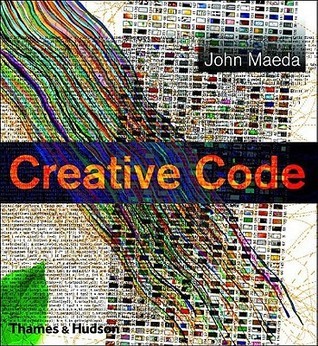
A rich compilation of work by some of the most inventive minds in the field of digital design. John Maeda, probably the most important digital designer, educator, and artist working today, created a sensation with maeda@media (2000), which documented his complete oeuvre and laid out his belief in the importance of designers understanding the computer as a medium, not just a tool.Maeda'

A pioneering graphic designer shows how to use the computer as an artistic medium in its own right. Most art and technology projects pair artists with engineers or the artist has the conception, and the technical person provides the know-how. John Maeda is an artist and a computer scientist, and he views the computer not as a substitute for brush and paint but as an artistic medium in its own righ
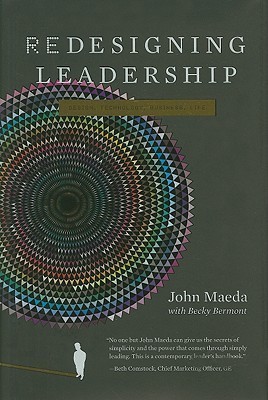
Lessons for a new generation of leaders on teamwork, meetings, conversations, free food, social media, apologizing, and other topics. When designer and computer scientist John Maeda was tapped to be president of the celebrated Rhode Island School of Design in 2008, he had to learn how to be a leader quickly. He had to transform himself from a tenured professor--with a love of argument for a
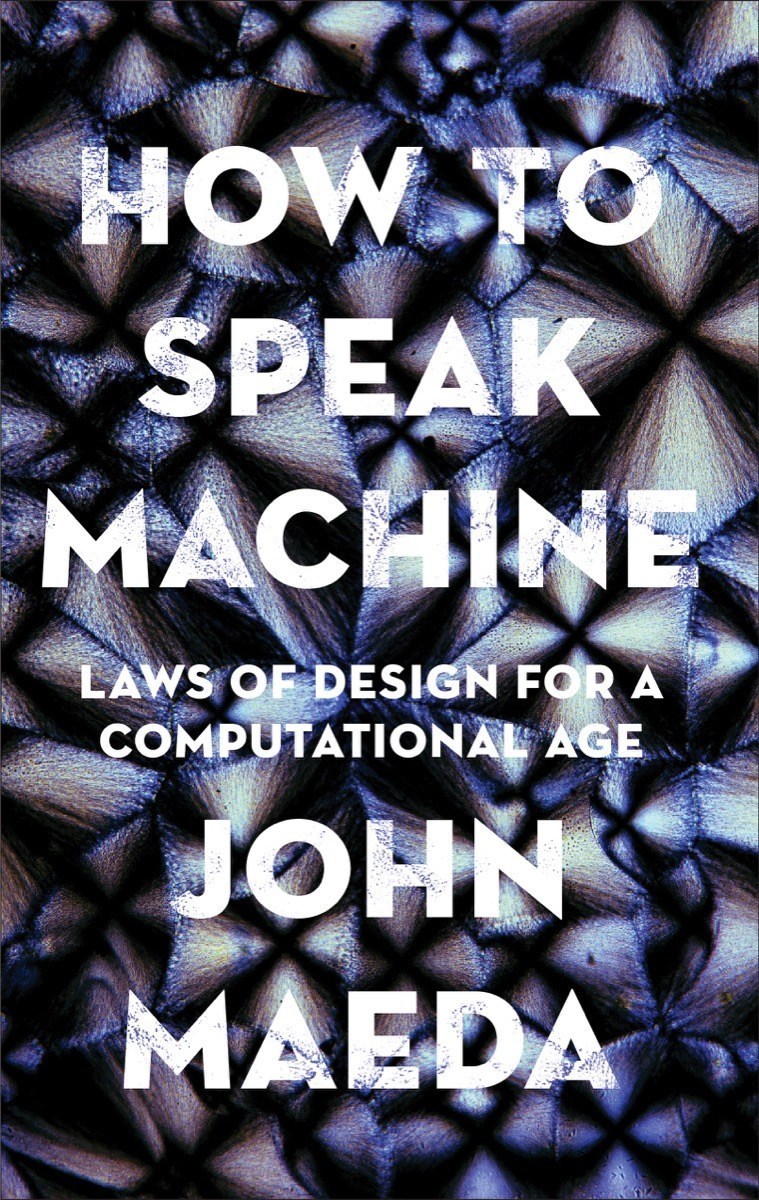
John Maeda is one of the world's preeminent thinkers on technology and design, and in How to Speak Machine , he offers a set of simple laws that govern not only the computers of today, but the unimaginable machines of the future. Machines are already more powerful than we can comprehend, and getting more powerful at an exponential pace. Once set in motion, algorithms never tire. And when a program