
John Edgar Wideman
A widely-celebrated writer and the winner of many literary awards, he is the first to win the International PEN/Faulkner Award twice: in 1984 for Sent for You Yesterday and in 1990 for Philadelphia Fire. In 2000 he won the O. Henry Award for his short story "Weight", published in The Callaloo Journal. In March, 2010, he self-published "Briefs," a new collection of microstories, on Lulu.com. Stories from the book have already been selected for the O Henry Prize for 2010 and the Best African-American Fiction 2010 award. His nonfiction book Brothers and Keepers received a National Book Award. He grew up in Pittsburgh, Pennsylvania, USA and much of his writing is set there, especially in the Homewood neighborhood of the East End. He graduated from Pittsburgh's Peabody High School, then attended the University of Pennsylvania, where he became an All-Ivy League forward on the basketball team. He was the second African-American to win a Rhodes Scholarship (New College, Oxford University, England), graduating in 1966. He also graduated from the University of Iowa Writers' Workshop. Critics Circle nomination, and his memoir Fatheralong was a finalist for the National Book Award. He is also the recipient of a MacArthur genius grant. Wideman was chosen as winner of the Rea Award for the Short Story in 1998, for outstanding achievement in that genre. In 1997, his novel The Cattle Killing won the James Fenimore Cooper Prize for Best Historical Fiction. He has taught at the University of Wyoming, University of Pennsylvania, where he founded and chaired the African American Studies Department, and the University of Massachusetts at Amherst's MFA Program for Poets & Writers. He currently teaches at Brown University, and he sits on the contributing editorial board of the literary journal Conjunctions.
27 Books Written

A multilayered memoir of basketball, family, home, love, and race, John Edgar Wideman’s Hoop Roots brings "a touch of Proust to the blacktop" (Time) as it tells of the author's love for a game he can no longer play. Beginning with the scruffy backlot playground he discovered in Pittsburgh some fifty years ago, Wideman works magical riffs that connect black music, language, culture, and sport. His voice modulates from nostalgic to outraged, from scholarly to streetwise, in describing the game that has sustained his passion throughout his life.

“A rare triumph” ( The New York Times Book Review ), this powerful memoir about the divergent paths taken by two brothers is a classic work from one of the greatest figures in American a reflection on John Edgar Wideman’s family and his brother’s incarceration—a classic that is as relevant now as when originally published in 1984.A “brave and brilliant” ( The Philadelphia Inquirer ) portrait of lives arriving at different destinies, the classic John Edgar Wideman memoir, Brothers and Keepers , is a haunting portrait of two brothers—one an award-winning writer, the other a fugitive wanted for a robbery that resulted in a murder. Wideman recalls the capture of his younger brother, Robby, details the subsequent trials that resulted in a sentence of life in prison, and provides vivid views of the American prison system.A gripping, unsettling account, Brothers and Keepers weighs the bonds of blood, affection, and guilt that connect Wideman and his brother and measures the distance that lies between them. “If you care at all about brotherhood and dignity…this is a must-read book” ( The Denver Post ). With a new afterword by his brother Robert Wideman, recently released after more than fifty years in prison.

From “one of America’s premier writers of fiction” (New York Times) comes this novel inspired by the 1985 police bombing of a West Philadelphia row house owned by the back-to-nature, Afrocentric cult known as Move. The bombing killed eleven people and started a fire that destroyed sixty other houses. At the center of the story is Cudjoe, a writer and exile who returns to his old neighborhood after spending a decade fleeing from his past, and his search for the lone survivor of the fire — a young boy who was seen running from the flames. An impassioned, brutally honest journey through the despair and horror of life in urban America, "Philadelphia Fire isn't a book you read so much as one you breathe" (San Francsisco Chronicle).

An award–winning writer traces the life of the father of iconic Civil Rights martyr Emmett Till—a man who was executed by the Army ten years before Emmett’s murder. An evocative and personal exploration of individual and collective memory in America by one of the most formidable Black intellectuals of our time.In 1955, Emmett Till, aged fourteen, traveled from his home in Chicago to visit family in Mississippi. Several weeks later he returned, dead; allegedly he whistled at a white woman. His mother, Mamie, wanted the world to see what had been done to her son. She chose to leave his casket open. Images of her brutalized boy were published widely. While Emmett’s story is known, there’s a dark side note that’s rarely mentioned. Ten years earlier, Emmett’s father was executed by the Army for rape and murder.In The Louis Till File, John Edgar Wideman searches for Louis Till, a silent victim of American injustice. Wideman's personal interaction with the story began when he learned of Emmett’s murder in 1955; Wideman was also fourteen years old. After reading decades later about Louis’s execution, he couldn’t escape the twin tragedies of father and son, and tells their stories together for the first time. Author of the award-winning Brothers and Keepers, Wideman brings extraordinary insight and a haunting intimacy to this devastating story.An amalgam of research, memoir, and imagination, The Louis Till File is completely original in its delivery—an engaging and enlightening conversation between generations, the living and the dead, fathers and sons. Wideman turns seventy-five this year, and he brings the force of his substantial intellect and experience to this beautiful, stirring book, his first nonfiction in fifteen years.

Reimagining the black neighborhood of his youth Homewood, Pittsburgh -Wideman creates a dazzling and evocative milieu. From the wild and uninhibited 1920s to the narcotized 1970s, "he establishes a mythological and symbolic link between character and landscape, language and plot, that in the hands of a less visionary writer might be little more than stale sociology" (New York Times Book Review).

This collection of interrelated stories spans the history of Homewood, a Pittsburgh community founded by a runaway slave. With stunning lyricism, Wideman sings of "dead children in garbage cans, of gospel and basketball, of lost gods and dead fathers" (John Leonard). It is a celebration of people who, in the face of crisis, uphold one another--with grace, courage, and dignity.

A fictional portrait based on the life of Frantz Fanon, a philosopher, psychiatrist, political activist, and author of The Wretched of the Earth, chronicles Fanon's life, from his Martinique upbringing through the publication of his influential work and his legacy in a post-9/11 world, as seen through the eyes of the African-American novelist writing his biography.

“A powerful assemblage of short stories exploring late-in-life angst through personal myth, cultural memory, and riffs on an empire scorched by its own hubris” ( O, The Oprah Magazine ) from award-winning author John Edgar Wideman—his first collection in more than a decade.“Race and its reverberations are at the core of this slim, powerful volume, a blend of fiction, memoir, and reimagined history, in which the boundaries between those forms are murky and ever shifting” ( The Boston Globe ). In this singular collection, John Edgar Wideman blends the personal, historical, and political to invent complex, charged stories about love, death, struggle, and what we owe each other. With characters ranging from everyday Americans to Jean-Michel Basquiat to Nat Turner, American Histories is a journey through time, experience, and the soul of our country.In “JB & FD,” Wideman reimagines conversations between John Brown, the antislavery crusader, and Frederick Douglass, the abolitionist and orator—conversations that produce a fantastical, rich correspondence that spans years and ideologies. “Maps and Ledgers” eavesdrops on a brother and sister today as they ponder their father’s killing of another man. “Williamsburg Bridge” sits inside a man sitting on a bridge who contemplates his life before he decides to jump. “My Dead” is a story about how the already-departed demand more time, more space in the lives of those who survive them.American Histories is “an important addition to Wideman’s body of writing and a remarkable demonstration of his ability to address social issues through a range of fictional forms and styles” ( Pittsburgh Post-Gazette ). An extended meditation on family, history, and loss, American Histories weaves together historical fact, philosophical wisdom, and deeply personal vignettes. This is Wideman at his best—emotionally precise and intellectually stimulating—an extraordinary collection by a master.

In plague-ridden eighteenth-century Philadelphia, a young itinerant black preacher searches for a mysterious, endangered African woman. His struggle to find her and save them both plummets them both into the nightmare of a society violently splitting itself into white and black. Spiraling outward from the core image of a cattle killing--the Xhosa people's ritual destruction of their herd in a vain attempt to resist European domination--the novel expands its narrator's search for meaning and love into the America, Europe and South Africa of yesterday and today.
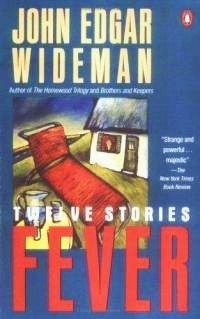
By turns subtle and intense, disturbing and elusive, the stories in this collection are ultimately connected by themes of memory and loss, reality and fabrication, and by a richless of language that rests lightly on its carefully foundation.

*A Wall Street Journal Top 10 Best Book of the Year*From John Edgar Wideman, a modern “master of language” ( The New York Times Book Review ), comes a stunning story collection that spans a range of topics from Michael Jordan to Emmett Till, from childhood memories to the final day in a prison cell.In Look For Me and I’ll Be Gone , his sixth collection of stories, John Edgar Wideman imbues with energy and life the concerns that have consistently infused his fiction and nonfiction. How does it feel to grow up in America, a nation that—despite knowing better, despite its own laws, despite experiencing for hundreds of years the deadly perils and heartbreak of racial division—encourages (sometimes unwittingly, but often on purpose) its citizens to see themselves as colored or white, as inferior or superior.Never content merely to tell a story , Wideman seeks once again to create language that delivers passages like jazz solos, and virtuosic manipulations of time to entangle past and present. The story “Separation” begins with a boy afraid to stand alone beside his grandfather’s coffin, then wends its way back and forth from Pittsburgh to ancient Sumer. “Atlanta Murders” starts with two chickens crossing a road and becomes a dark riff, contemplating “Evidence of Things Not Seen,” James Baldwin’s report on the 1979–1981 child murders in Atlanta, Georgia.Comprised of fictions of the highest caliber and relevancy by a writer whose imagination and intellect “prove his continued vitality...with vigor and soul” ( Entertainment Weekly ), Look For Me and I’ll Be Gone will entrance and surprise committed Wideman fans and newcomers alike.

A man lay dead in a parking lot. Tommy didn't kill him, but the police will shoot first and ask questions later. Mother Bess is kin, but she is a crazy, mean old lady hiding out high about the Homewood streets--streets that have taken away everything she ever loved. Together, Tommy and Mother Bess are hiding, in anger and fear. Will they find the courage to come out of hiding?

A collection of stories about African Americans from all walks of life who reside in Homewood, a black section of Pittsburgh - stories about ancestors, family and lovers caught up in American history and haunted by their particular demons.

A redemptive, healing novel, Two Cities brings to brilliant culmination the themes John Edgar Wideman has developed in fourteen previous acclaimed books. It is a story of bridges -- bridges spanning the rivers of Philadelphia and Pittsburgh, bridges arching over the rifts that have divided our communities, our country, our hearts. Narrated in the bluesy voices of its three main characters, Two Cities is a simple love story, but it is also about the survival of an endangered black urban community and the ways that people discover for redeeming themselves in a society that is failing them. With its indelible images of confrontation and outrage, matched in equal measure by lasting impressions of hope, Two Cities is a compassionate, lacerating, and nourishing novel.

In God's Gym, the celebrated author John Edgar Wideman offers stories that pulse with emotional electricity. The ten pieces here explore strength, both physical and spiritual. The collection opens with a man paying tribute to the quiet fortitude of his mother, a woman who "should wear a T-shirt: God's Gym." In the stories that follow, Wideman delivers powerful riffs on family and fate, basketball and belief. His mesmerizing prose features guest appearances by cultural luminaries as diverse as the Harlem Globetrotters, Frantz Fanon, Thelonious Monk, and Marilyn Monroe. As always, Wideman astounds with writing that moves from the intimate to the political, from shock to transcendence.

A powerful and “stunning” ( Publishers Weekly , starred review) selection of the best of John Edgar Wideman’s short stories over his fifty-year career, representing the wide range of his intellectual and artistic pursuits.When John Edgar Wideman won the PEN Malamud Award in 2019, he joined a list of esteemed writers—from Eudora Welty to George Saunders—all of whom are acknowledged masters of the short story. Wideman’s commitment to short fiction has been lifelong, and here he gathers a representative selection from throughout his career, stories that “have a wary, brooding spirit, a lonely intelligence…[and] air the problem of consciousness, including the fragile contingency of our existence” ( The New York Times ).Wideman’s stories are grounded in the streets and the people of Homewood, the Pittsburgh neighborhood of his childhood, but they range far beyond there, to the small western towns of Wyoming and historic Philadelphia, the contemporary world and the ancient past. He explores the interior lives of his characters, and the external pressures that shape them. These stories are as intellectually intricate as they are rich with the language and character. “Wideman has been compared to William Faulkner and James Baldwin…[these] prove that he is every bit as masterful a cartographer of the American spirit as his forebears" ( Esquire ).Comprised of thirty-five stories drawn from past collections ( American Histories , Briefs , God’s Gym , All Stories Are True , Fever , and Damballah ), and an introductory essay by the National Book Critics Circle board member and scholar Walton Muyumba, this volume of Wideman’s selected stories celebrates the lifelong significance of this major American writer’s essential contribution to a form—illuminating the ways that he has made it his own. “If there were any doubts Wideman belongs to the American canon, this puts them to bed” ( Publishers Weekly , starred review).

From “master of language” ( The New York Times ) John Edgar Wideman, a reissue of the revered trilogy that launched his career—two novels and story collection all set in Wideman’s own hometown.Damballah, Hiding Place , and Sent for You Yesterday provide a stunning introduction to the uncompromising work of John Edgar Wideman, whose literary achievements have inspired The New York Times to name him “one of America’s premier writers of fiction.”Damballah ’s narratives examine the vexed history of Homewood, a Pittsburgh, Pennsylvania neighborhood whose origins are rooted in a time when slavery was still legal in the United States of America. The novels Hiding Place and Sent for You Yesterday personalize and interrogate that history’s presence in the contemporary lives of Homewood people and all Americans.Deeply concerned that designations such as “economically oppressed” or “Black” continue to dismiss and marginalize rather than embrace communities like the one in which he was raised, John Edgar Wideman—employing words on the page as his weapon—has dedicated himself to recording the weight, beauty, complexity, and justice that he believes Homewood’s voices, stories, and lives have earned and deserve.In 1983, The Homewood Trilogy signaled the arrival of a major voice in American literature. Forty years later, this edition of the Trilogy celebrates Wideman’s ongoing contribution by offering these masterworks to a new generation of readers.

John Edgar Wideman’s “slaveroad” is a palimpsest of physical, social, and psychological terrain, the great expanse to which he writes in this groundbreaking work that unsettles the boundaries of memoir, history, and fiction. The slaveroad begins with the Atlantic Ocean, across which enslaved Africans were carried, but the term comes to encompass the journeys and experiences of Black Americans since then and the many insidious ways that slavery separates, wounds, and persists. In a section of “Slaveroad,” called “Sheppard”, William Henry Sheppard, a descendant of enslaved Virginians, travels back to Africa where he works as a missionary, converting Africans to Christianity alongside his Southern white colleague. Wideman imagines drinking afternoon tea with Lucy Gant Sheppard, William’s wife, who was on her own slaveroad, as she experienced her husband’s adultery with the African women he was trying to convert. In “Penn Station,” Wideman’s brother, after being confined forty-four years in prison, travels from Pittsburgh to New York. As Wideman awaits his brother, he asks, “How will I distinguish my brother from the dead. Dead passengers on the slaveroad.” An impassioned, searching work,?Slaveroad?is one man’s reckoning with a uniquely American lineage and the ways that the past haunts the “It’s here. Now. Where we are. What we are. A story compounded of stories told, retold, untold, not told.”

Almost 30 years before 9/11, John Edgar Wideman published his third novel, a revolutionary and controversial story about four African-American men who hatch a terrorist plot to shake a complacent America to its foundations. They see their plan to lynch a white cop as the ultimate symbolic act of protest in a racist, hypocritical society mired in fundamental inequalities that contradict its "Home of the Free" credo. Critic Saunders Redding raved, "It is all here...the history of Negro America raised to the grandeur of superb fiction, as Tolstoy did it for the history of the Russian people in the Napoleonic era in War and Peace. I think The Lynchers is far and away the truest, the most moving, and the most brilliantly crafted novel of Negro life in almost a quarter of a century--that is, since Ellison's Invisible Man, which in some ways it surpasses."

Provides a memoir that explores the roots of identity, the complexities of family relationships, and the struggle to heal in the face of familial estrangement and racial ideology

An aging, highly intelligent black lawyer who lives in a cluttered trailer is the go-between for the poor blacks of Homewood who must deal with the authorities downtown

BRIEFS is a groundbreaking new collection of “microstories” from celebrated author John Edgar Wideman, previous winner of both the Rea and O. Henry awards saluting mastery of the short story form. Here he has assembled a masterful collage that explodes our assumptions about the genre. Wideman unveils an utterly original voice and structure—hip-hop zen—where each story is a single breath, to be caught, held, shared and savored. A relief worker’s Sudan bulletin, a jogger’s bullet-dodging daydreams, your neighbor’s fears and fantasies, an absent mother’s regrets—Wideman’s storytellers are eavesdroppers and peeping Toms, diarists and haiku historians. The characters and compass points range from Darfur to Manhattan, from Pittsburgh to Paris, but the true coordinates these stories chart are the psychic and emotional fault lines beneath our common ground. BRIEFS is an unforgettable map of the lives we inherit, those we invent, and the worlds we wander between first and last loves.

A collection of stories by the author of A Glance Away, Hurry Home, Brothers and Keepers, Reuben, Fever, and Philadelphia Fire features tales of African Americans from all walks of life who reside in Homewood, a black section of Pittsburgh. 25,000 first printing.

In this compelling travel memoir, two-time PEN/Faulkner Award winner John Edgar Wideman explores Martinique's seductive natural beauty and culture, as well as its vexed history of colonial violence and racism. Attempting to decipher the strange, alluring mixture of African and European that is Creole, he and his French traveling companion develop a powerful attraction to one another which they find at once threatened and elevated by a third party—the island itself. A rich intersection of place, history, and the intricacies of human relations, Wideman's story gets deep into the Caribbean and close to the heart of the Creole experience.

On the night after his wedding a Black lawyer flees America and his wife, in search of the missing pieces which he hopes will heal his fragmented existence

Man's failure to understand others is dramatically depicted in the confrontation of a middle-aged professor and a former drug addict

Not been read or often handled. Does show a bit of aging, but clean book in really good condition.