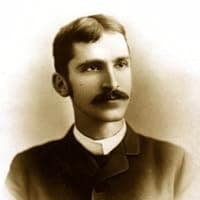
John Dewey
John Dewey was an American philosopher, psychologist and educational reformer whose ideas have been influential in education and social reform. Dewey, along with Charles Sanders Peirce and William James, is recognized as one of the founders of the philosophy of pragmatism and of functional psychology. He was a major representative of the progressive and progressive populist philosophies of schooling during the first half of the 20th century in the USA. In 1859, educator and philosopher John Dewey was born in Burlington, Vermont. He earned his doctorate at Johns Hopkins University in 1884. After teaching philosophy at the University of Michigan, he joined the University of Chicago as head of a department in philosophy, psychology and education, influenced by Darwin, Freud and a scientific outlook. He joined the faculty of Columbia University in 1904. Dewey's special concern was reform of education. He promoted learning by doing rather than learning by rote. Dewey conducted international research on education, winning many academic honors worldwide. Of more than 40 books, many of his most influential concerned education, including My Pedagogic Creed (1897), Democracy and Education (1902) and Experience and Education (1938). He was one of the founders of the philosophy of pragmatism. A humanitarian, he was a trustee of Jane Addams' Hull House, supported labor and racial equality, and was at one time active in campaigning for a third political party. He chaired a commission convened in Mexico City in 1937 inquiring into charges made against Leon Trotsky during the Moscow trials. Raised by an evangelical mother, Dewey had rejected faith by his 30s. Although he disavowed being a "militant" atheist, when his mother complained that he should be sending his children to Sunday school, he replied that he had gone to Sunday School enough to make up for any truancy by his children. As a pragmatist, he judged ideas by the results they produced. As a philosopher, he eschewed an allegiance to fixed and changeless dogma and superstition. He belonged to humanist societies, including the American Humanist Association. D. 1952.
28 Books Written

Experience and Education is the best concise statement on education ever published by John Dewey, the man acknowledged to be the pre-eminent educational theorist of the twentieth century. Written more than two decades after Democracy and Education (Dewey's most comprehensive statement of his position in educational philosophy), this book demonstrates how Dewey reformulated his ideas

This edition brings Dewey's educational theory into sharp focus, framing his two classic works by frank assessments, past and present, of the practical applications of Dewey's ideas. In addition to a substantial introduction in which Philip W. Jackson explains why more of Dewey's ideas haven't been put into practice, this edition restores a "lost" chapter, dropped from the book by Dewey in 1915.

In this collection, Reginald D. Archambault has assembled John Dewey's major writings on education. He has also included basic statements of Dewey's philosophic position that are relevant to understanding his educational views. These selections are useful not only for understanding Dewey's pedagogical principles, but for illustrating the important relation between his educational theory and the pr

In addition to being one of the greatest technical philosophers of the twentieth century, John Dewey (1859-1952) was an educational innovator, a Progressive Era reformer, and one of America's last great public intellectuals. Dewey's insights into the problems of public education, immigration, the prospects for democratic government, and the relation of religious faith to science are as fresh today

In this, one of Dewey's most accessible works, he surveys the history of liberal thought from John Locke to John Stuart Mill, in his search to find the core of liberalism for today's world. While liberals of all stripes have held to some very basic values-liberty, individuality, and the critical use of intelligence-earlier forms of liberalism restricted the state function to protecting its citizen

The 20th century has witnessed the blossoming of Western culture: new technology; communications & transportation systems; social, political, educational, agricultural & medical advances. But with these changes have come the strains & tensions of conflicting interests, desires & values within the community. John Dewey, one of America's most prolific writers of popular philosophy, b

A classic in social and political philosophy. In his characteristic and provocative dialectic style, John Dewey clarifies the meaning and implications of such concepts as “the public,” “the state,” “government,” and “political democracy”; distinguishes his a posteriori reasoning from a priori reasoning which, he argues, permeates less meaningful discussions of basic concepts; and repeatedly demons


The Philosophy of John Dewey: Volume 1. The Structure of Experience, Volume 2: The Lived Experience
by John Dewey
Rating: 4.1 ⭐
John J. McDermott's anthology, The Philosophy of John Dewey , provides the best general selection available of the writings of America's most distinguished philosopher and social critic. This comprehensive collection, ideal for use in the classroom and indispensable for anyone interested in the wide scope of Dewey's thought and works, affords great insight into his role in the history of ideas and

Preeminent American philosopher and educator John Dewey (1859-1952) rejected Hegelian idealism for the pragmatism of William James.In this collection of informal, highly readable essays, originally published between 1897 and 1909, Dewey articulates his now classic philosophical concepts of knowledge and truth and the nature of reality. Here Dewey introduces his scientific method and uses critical

This volume is produced from digital images created through the University of Michigan University Library's preservation reformatting program.

This scarce antiquarian book is a facsimile reprint of the original. Due to its age, it may contain imperfections such as marks, notations, marginalia and flawed pages. Because we believe this work is culturally important, we have made it available as part of our commitment for protecting, preserving, and promoting the world's literature in affordable, high quality, modern editions that are true t

The scope of John Dewey's writings — ranging from aesthetics and education to legal and political theory — and his role in the development of twentieth-century philosophy have helped make him a continuing influence on contemporary thought. One of his most significant contributions to the theory of knowledge lay in his application of the principles of instrumentalism to traditional approaches to lo

Mr. Dewey believes that the method of empirical naturalism presented in this volume provides the way, and the only way by which one can freely accept the standpoint and conclusions of modern science. Contents: experience and philosophic method; existence as precarious and as stable; nature, ends and histories; nature, means and knowledge; nature, communication and as meaning; nature, mind, and the

One of America’s foremost philosophers, John Dewey (1859-1952) fought for civil and academic freedom, founded the Progressive School movement, and steadfastly promoted a scientific approach to intellectual development.In How We Think, Dewey shares his views on the educator’s role in training students to think well. Basing his assertions on the belief that knowledge is strictly relative to hu

America's most renowned social philosopher John Dewey shines his powerful intellect on the serious public and cultural issues surrounding the place of the individual in a technologically advanced society. In this penetrating study, he addresses the fear that personal creative potential will be trampled by assembly-line monotony, political bureaucracy, and an industrialized culture of uniformity. A

"In this compelling work of philosophy, John Dewey explores the development of personal character and how one interacts with society. Relying on human physiology and psychology as evidence, he investigates how we make moral choices, cope with our surroundings, and act resourcefully. He explains that these social functions spring from natural, moral foundations, as he describes his views on social

In this book, written in 1916, Dewey tries to criticize and expand on the educational philosophies of Rousseau and Plato. Dewey's ideas were seldom adopted in America's public schools, although a number of his prescriptions have been continually advocated by those who have had to teach in them.
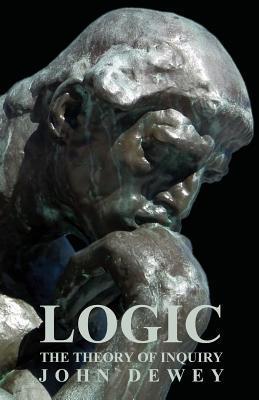
Heralded as the “crowning work of a great career,” Logic: The Theory of Inquiry was widely reviewed. To Evander Bradley McGilvary, the work "assured Dewey a place among the world’s great logicians.”William Gruen thought “No treatise on logic ever written has had as direct and vital an impact on social life as Dewey’s will have.”Paul Weiss called it the “source and inspirat

This work has been selected by scholars as being culturally important, and is part of the knowledge base of civilization as we know it. This work was reproduced from the original artifact, and remains as true to the original work as possible. Therefore, you will see the original copyright references, library stamps (as most of these works have been housed in our most important libraries aro
An Unabridged, Digitally Enlarged Edition With Updated Layout And Typeface. Chapters Include, Though Are Not Limited To: The Moral Purpose Of The School - The Moral Training Given By The School Community - The Moral Training From Methods Of Instruction - The Social Nature Of Course Study - The Psychological Aspect Of Moral Education

Includes notes on sources and editions and an editor's introduction.

"A modern classic. Dewey's lectures have lost none of their vigor … The historical approach, which underlay the central argument, is beautifully exemplified in his treatments of the origin of philosophy." — Philosophy and Phenomenological Research ."It was with this book that Dewey fully launched his campaign for experimental philosophy." — The New Republic.Written shortly after the sh

This book was converted from its physical edition to the digital format by a community of volunteers. You may find it for free on the web. Purchase of the Kindle edition includes wireless delivery.

John Dewey (October 20, 1859 – June 1, 1952) was an American psychologist, educational reformer, and professor of the philosophy. The Essential John Dewey Collection, contains 14 books, •The Child and the Curriculum•Creative Intelligence•Democracy and Education•Essays in Experimental Logic•Ethics•How We Think•Human Nature and Conduct•Leibniz’s New Essays Concerning the Human Understanding•Moral Pr

This book was converted from its physical edition to the digital format by a community of volunteers. You may find it for free on the web. Purchase of the Kindle edition includes wireless delivery.

Leibniz's New Essays Concerning the Human Understanding A Critical Exposition
by John Dewey
Rating: 4.0 ⭐
This book was converted from its physical edition to the digital format by a community of volunteers. You may find it for free on the web. Purchase of the Kindle edition includes wireless delivery.

This comprehensive eBook presents the complete works or all the significant works - the Œuvre - of this famous and brilliant writer in one ebook - 5870 pages easy-to-read and • Democracy and An Introduction to the Philosophy of Education• How We Think• Moral Principles in Education• The Child and the Curriculum• Human Nature and Conduct• Creative Essays in the Pragmatic Attitude, James Hayden Tuft