
18 Books Written
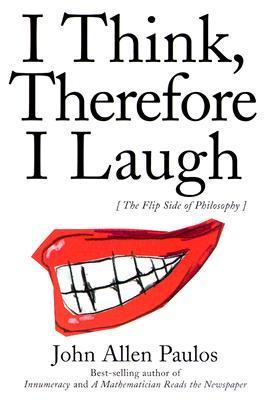
The preeminent explicator of mathematical logic to non-mathematicians, John Allen Paulos is familiar to general readers not only from his bestselling books but also from his media appearances, including The David Letterman Show and National Public Radio's "Talk of the Nation" and "Science Friday," as well as articles in Newsweek, Nature, Discover, Business Week, the New York Times Book Review, The Nation, New York Review of Books, and The London Review of Books.Paulos originally wrote this charming little book on analytic logic, its mathematics, and its puzzles in 1985. And as in his later books, he uses jokes, stories, parables, and anecdotes to elucidate difficult concepts, in this case, some of the fundamental problems in modern philosophy.

Dozens of examples in innumeracy show us how it affects not only personal economics and travel plans, but explains mis-chosen mates, inappropriate drug-testing, and the allure of pseudo-science.

Irreligion: A Mathematician Explains Why the Arguments for God Just Don't Add Up
by John Allen Paulos
Rating: 3.7 ⭐
A Lifelong Unbeliever Finds No Reason to Change His MindAre there any logical reasons to believe in God? Mathematician and bestselling author John Allen Paulos thinks not. In Irreligion he presents the case for his own worldview, organizing his book into twelve chapters that refute the twelve arguments most often put forward for believing in God's existence. The latter arguments, Paulos relates in his characteristically lighthearted style, "range from what might be called golden oldies to those with a more contemporary beat. On the playlist are the firstcause argument, the argument from design, the ontological argument, arguments from faith and biblical codes, the argument from the anthropic principle, the moral universality argument, and others." Interspersed among his twelve counterarguments are remarks on a variety of irreligious themes, ranging from the nature of miracles and creationist probability to cognitive illusions and prudential wagers. Special attention is paid to topics, arguments, and questions that spring from his incredulity "not only about religion but also about others' credulity." Despite the strong influence of his day job, Paulos says, there isn't a single mathematical formula in the book.


Can a renowned mathematician successfully outwit the stock market? Not when his biggest investment is WorldCom. In A Mathematician Plays the Stock Market , best-selling author John Allen Paulos employs his trademark stories, vignettes, paradoxes, and puzzles to address every thinking reader's curiosity about the market -- Is it efficient? Is it random? Is there anything to technical analysis, fundamental analysis, and other supposedly time-tested methods of picking stocks? How can one quantify risk? What are the most common scams? Are there any approaches to investing that truly outperform the major indexes? But Paulos's tour through the irrational exuberance of market mathematics doesn't end there. An unrequited (and financially disastrous) love affair with WorldCom leads Paulos to question some cherished ideas of personal finance. He explains why "data mining" is a self-fulfilling belief, why "momentum investing" is nothing more than herd behavior with a lot of mathematical jargon added, why the ever-popular Elliot Wave Theory cannot be correct, and why you should take Warren Buffet's "fundamental analysis" with a grain of salt. Like Burton Malkiel's A Random Walk Down Wall Street , this clever and illuminating book is for anyone, investor or not, who follows the markets -- or knows someone who does.

From the author of the national bestseller Innumeracy, a delightful exploration and explanation of mathematical concepts from algebra to zero in easily accessible alphabetical entries. "Paulos . . . does for mathematics what The Joy of Sex did for the boudoir. . . ."--Washington Post Book World. First time in paperback.

What two things could be more different than numbers and stories? Numbers are abstract, certain, and eternal, but to most of us somewhat dry and bloodless. Good stories are full of they engage our emotions and have subtlety and nuance, but they lack rigor and the truths they tell are elusive and subject to debate. As ways of understanding the world around us, numbers and stories seem almost completely incompatible. Once Upon a Number shows that stories and numbers aren't as different as you might imagine, and in fact they have surprising and fascinating connections. The concepts of logic and probability both grew out of intuitive ideas about how certain situations would play out. Now, logicians are inventing ways to deal with real world situations by mathematical means -- by acknowledging, for instance, that items that are mathematically interchangeable may not be interchangeable in a story. And complexity theory looks at both number strings and narrative strings in remarkably similar terms. Throughout, renowned author John Paulos mixes numbers and narratives in his own delightful style. Along with lucid accounts of cutting-edge information theory we get hilarious anecdotes and jokes; instructions for running a truly impressive pyramid scam; a freewheeling conversation between Groucho Marx and Bertrand Russell (while they're stuck in an elevator together); explanations of why the statistical evidence against OJ Simpson was overwhelming beyond doubt and how the Unabomber's thinking shows signs of mathematical training; and dozens of other treats. This is another winner from America's favorite mathematician.

Numerate Life: A Mathematician Explores the Vagaries of Life, His Own and Probably Yours
by John Allen Paulos
Rating: 3.5 ⭐
Employing intuitive ideas from mathematics, this quirky "meta-memoir" raises questions about our lives that most of us don't think to ask, but arguably What part of memory is reliable fact, what part creative embellishment? Which favorite presuppositions are unfounded, which statistically biased? By conjoining two opposing mindsets—the suspension of disbelief required in storytelling and the skepticism inherent in the scientific method—bestselling mathematician John Allen Paulos has created an unusual hybrid, a composite of personal memories and mathematical approaches to re-evaluating them.Entertaining vignettes from Paulos's biography abound—ranging from a bullying math teacher and a fabulous collection of baseball cards to romantic crushes, a grandmother's petty larceny, and his quite unintended role in getting George Bush elected president in 2000. These vignettes serve as springboards to many telling simple arithmetic puts life-long habits in a dubious new light; higher dimensional geometry helps us see that we're all rather peculiar; nonlinear dynamics explains the narcissism of small differences cascading into very different siblings; logarithms and exponentials yield insight on why we tend to become bored and jaded as we age; and there are tricks and jokes, probability and coincidences, and much more.For fans of Paulos or newcomers to his work, this witty commentary on his life—and yours—is fascinating reading.
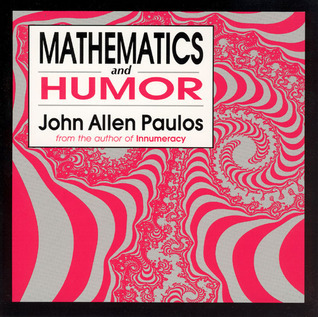
John Allen Paulos cleverly scrutinizes the mathematical structures of jokes, puns, paradoxes, spoonerisms, riddles, and other forms of humor, drawing examples from such sources as Rabelais, Shakespeare, James Beattie, René Thom, Lewis Carroll, Arthur Koestler, W. C. Fields, and Woody Allen."Jokes, paradoxes, riddles, and the art of non-sequitur are revealed with great perception and insight in this illuminating account of the relationship between humor and mathematics."—Joseph Williams, New York Times"'Leave your mind alone,' said a Thurber cartoon, and a really complete and convincing analysis of what humour is might spoil all jokes forever. This book avoids that danger. What it does. . .is describe broadly several kinds of mathematical theory and apply them to throw sidelights on how many kinds of jokes work."— New Scientist"Many scholars nowadays write seriously about the ludicrous. Some merely manage to be dull. A few—like Paulos—are brilliant in an odd endeavor."— Los Angeles Times Book Review

Who's Counting?: Uniting Numbers and Narratives with Stories from Pop Culture, Puzzles, Politics, and More
by John Allen Paulos
Rating: 3.9 ⭐
For decades, New York Times best-selling author John Allen Paulos has enlightened readers by showing how to make sense of the numbers and probabilities behind real-world events, political calculations, and everyday personal decisions. Who’s Counting? features dozens of his insightful essays—original writings on contemporary issues like the COVID-19 pandemic, online conspiracy theories, “fake news,” and climate change, as well as a selection of enduring columns from his popular ABC News column of the same name. With an abiding respect for reason, a penchant for puzzles with societal implications, and a disarming sense of humor, Paulos does in this collection what he’s famous clarifies mathematical ideas for everyone and shows how they play a role in government, media, popular culture, and life. He argues that if we can’t critically interpret numbers and statistics, we lose one of our most basic and reliable guides to reality.

Yetersiz matematik eğitimi, matematikle ilgili psikolojik engeller ve hayali algılar insanların çoğunu sayı cahili yapmaktadır. Eğer reklamcıların yanlış iddialarına, şarlatan doktorlara ve sahte bilimadamlarına direneceksek, içimizde istatistik konusunda sağlıklı bir kuşkuculuk geliştirmeliyiz. Bu canlı ve espirili kitabında John Allen Paulos matematiğin gücünü gösteren birçok ilginç örneği biraraya getiriyor. Birçok insan sayılarının matematikçilerin uğraşı alanına girdiği kanısındadır. Oysa günlük yaşamında matematiği kullanan her insan, bunun yararını görecektir. Borsa stratejileri, eş seçimi, fal, diyet ve tıbbi iddialar, terörizm riski, astroloji, spor rekorları, seçimler, cins ayrımcılığı, UFO’lar, parapsikoloji, piyangolar ve ilaç testleri gibi güncel konulara matematik açıdan bakmak onları algılayışımızı değiştirecektir. Herkes İçin Matematik’i okumak matematik ve sayılardan hoşlanmayanlar için olduğu kadar matematik meraklıları için de ufuk açıcı olacaktır.


数で考えるアタマになる! ― 数字オンチの治しかた
by John Allen Paulos
Innumeracy: Mathematical Illiteracy and its Consequences❓ Is there someone in your town who has the same number of hairs as you?❓ If you were to remove one dump truck's worth of soil from Mt. Fuji every 15 minutes, how long would it take for Mt. Fuji to disappear?❓ How many ways can you layer 3 of 31 flavors of ice cream onto a cone?❓ During Noah's Flood, rain continued to fall for 40 days, covering almost all the high mountains with water. How many millimeters of rain fell per hour?❓ What is the probability that you have just inhaled the same molecules contained in Caesar's final breath, when he is said to have said, "Et tu, Brute?"❓ You want to know how many fish are in a pond. First you catch 100 fish, mark them, and then put them back in the pond. When you catch 100 fish again, 8 of them are marked. How many fish are in the pond?Read this book and you'll find the answer!Addition, subtraction, multiplication, division. By simply combining these, the amazing facts of the world will appear before you as numbers. Using familiar topics such as "the probability of rain this weekend" and "consecutive hit records" as examples, this book introduces the incredible power that can be created by a little mathematical knowledge. This book will make you want to try calculating everything.Table of Contents1. Examples of numerical deficiency (large numbers and low probability; the total amount of blood in the human race, etc.)2. Probability and coincidences (the general and the specific; coincidences are common, etc.)3. Pseudoscience (Freud was also numerically deficiency; psychic abilities, etc.)4. Why do people become numerically deficiency (poor primary school mathematics education; secondary, university, and graduate education, etc.)5. To what extent can statistics be trusted ("individual choice" vs. "societal choice"; the prisoner's dilemma, etc.)🈴🈴🈴🈴🈴🈴🈴🈴🈴🈴🈴🈴🈴🈴🈴🈴🈴🈴🈴🈴🈴🈴🈴🈴🈴🈴「数で考えるアタマになる! 数字オンチの治しかた」ジョン・アレン・パウロス / 野本陽代英語タイトルの日本語訳: 「Innumeracy: Mathematical Illiteracy and its Consequences」 「数的処理能力の欠如と:数学的非識字とその結果」❓ あなたの街に、髪の本数が同じ人は存在する?❓ 富士山の土を15分ごとに、 ダンプカー1台分ずつ取り去っていくとする。 富士山がなくなるまでにどのくらいの時間かかる?❓ 31 種類のフレーヴァーのアイスクリームから3 種選んで、 コーンの上に重ねるやり方は何通りある?❓「ノアの洪水」では雨は 40 日間降り続き、 ほぼすべての高い山は水に覆われた。 その雨は1時間に何ミリの割合で降ったことになる?❓ 死の直前「ブルータスお前もか」と言ったというシーザーの、 最期の吐息にふくまれていた分子を、 いま、あなたが吸った確率は?❓ 池の魚の数を調べたい。まず 100 匹捕まえて印をつけ、 池に戻した。再度 100 匹捕まえたら 8 匹に印がついていた。 池に魚は何匹?本書を読めば、答えがわかる!足し算、引き算、かけ算、割り算。これらの組み合わせだけで、この世界の驚くべき事実が、数字となってあなたの前に現れる。「週末の降水確率」や「連続安打記録」などの身近な話題を例に、ささやかな数学の知識が生み出すとてつもない力を紹介。なんでも計算してみたくなる本。目次1 数字オンチの実例(大きな数と低い確率;全人類の血液の量 ほか)2 確率と偶然の一致(一般的なことと特定のこと;偶然の一致はよく起こる ほか)3 エセ科学(フロイトも数字オンチだった;超能力 ほか)4 なぜ数字オンチになるのか(お粗末な初等数学教育;中等教育、大学教育、大学院教育 ほか)5 統計はどこまで信用できるか(「個人の選択」対「社会の選択」;囚人のジレンマ ほか)

Circo da Matemática, O
by John Allen Paulos
Once Upon a Number: The Hidden Mathematical Logic of Stories (Allen Lane Science) by John Allen Paulos
by John Allen Paulos
Innumeracy: Mathematical Illiteracy And Its Consequencse
by John Allen Paulos

Numerate Life: A Mathematician Explores the Vagaries of Life, His Own and Probably Yours
by John Allen Paulos
Employing intuitive ideas from mathematics, this quirky "meta-memoir" raises questions about our lives that most of us don't think to ask, but arguably What part of memory is reliable fact, what part creative embellishment? Which favorite presuppositions are unfounded, which statistically biased? By conjoining two opposing mindsets—the suspension of disbelief required in storytelling and the skepticism inherent in the scientific method—bestselling mathematician John Allen Paulos has created an unusual hybrid, a composite of personal memories and mathematical approaches to re-evaluating them. Entertaining vignettes from Paulos's biography abound—ranging from a bullying math teacher and a fabulous collection of baseball cards to romantic crushes, a grandmother's petty larceny, and his quite unintended role in getting George Bush elected president in 2000. These vignettes serve as springboards to many telling simple arithmetic puts life-long habits in a dubious new light; higher dimensional geometry helps us see that we're all rather peculiar; nonlinear dynamics explains the narcissism of small differences cascading into very different siblings; logarithms and exponentials yield insight on why we tend to become bored and jaded as we age; and there are tricks and jokes, probability and coincidences, and much more. For fans of Paulos or newcomers to his work, this witty commentary on his life—and yours—is fascinating reading.

Who's Counting?: Uniting Numbers and Narratives with Stories from Pop Culture, Puzzles, Politics, and More
by John Allen Paulos
For decades, New York Times best-selling author John Allen Paulos has enlightened readers by showing how to make sense of the numbers and probabilities behind real-world events, political calculations, and everyday personal decisions. Who’s Counting? features dozens of his insightful essays—original writings on contemporary issues like the COVID-19 pandemic, online conspiracy theories, “fake news,” and climate change, as well as a selection of enduring columns from his popular ABC News column of the same name.With an abiding respect for reason, a penchant for puzzles with societal implications, and a disarming sense of humor, Paulos does in this collection what he’s famous clarifies mathematical ideas for everyone and shows how they play a role in government, media, popular culture, and life. He argues that if we can’t critically interpret numbers and statistics, we lose one of our most basic and reliable guides to reality.