
26 Books Written
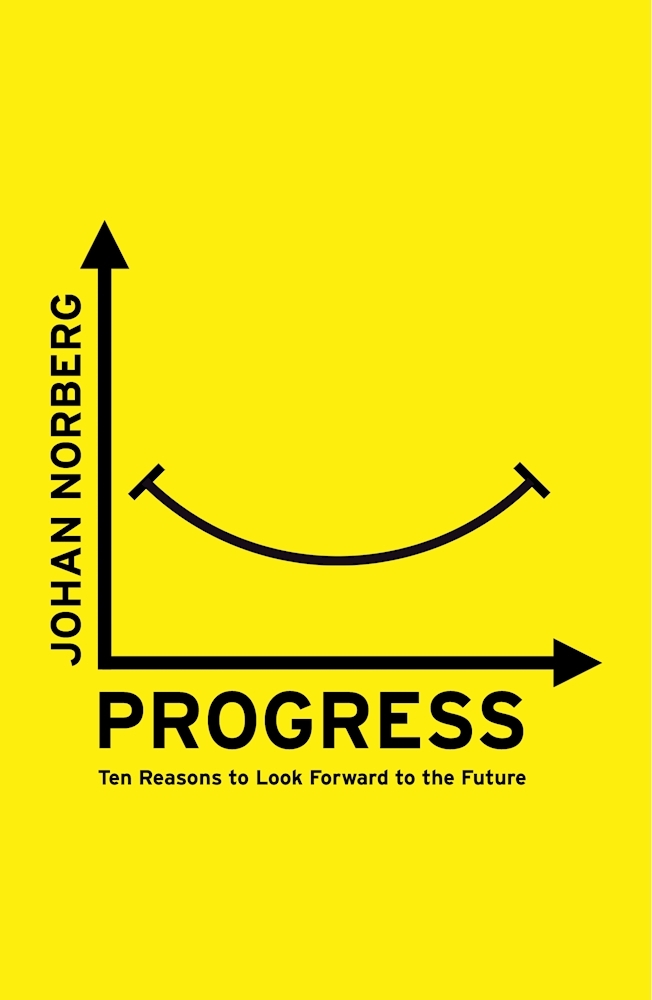
Progress: Ten Reasons to Look Forward to the Future
by Johan Norberg
Rating: 4.1 ⭐
• 2 recommendations ❤️
It’s all over our televisions, newspapers and the internet. Every day we’re bludgeoned by news of how bad everything is — Brexit, financial collapse, unemployment, poverty, environmental disasters, disease, hunger, war. Indeed, our world now seems to be on the brink of collapse, and yet we’ve made more progress over the last 100 years than in the first 100,000. 285,000 more people have gained access to safe water every day for the last 25 years, and in the last 50 years world poverty has fallen more than it did in the preceding 500.Contrary to what most of us believe, our progress over the past few decades has been unprecedented. By almost any index you care to identify, things are markedly better now than they have ever been for almost everyone alive.Examining official data from the United Nations, the World Bank and the World Health Organization, Johan Norberg traces just how far we have come in tackling the issues facing our species. While it’s true that not every problem has been solved, we do now have a good idea of the solutions and we know what it will take to see this progress continue. Counter-intuitive, dramatic and uplifting, Progress is a call for renewed hope in defiance of the doom-mongering of politicians and the media.

The Capitalist Manifesto: Why the Global Free Market Will Save the World
by Johan Norberg
Rating: 4.3 ⭐
A vital exploration of capitalism and the benefits it brings to global society.Marx and Engels were right when they observed in The Communist Manifesto that free markets had in a short time created greater prosperity and more technological innovation than all previous generations combined. A century and a half later, all the evidence shows that capitalism has lifted millions from hunger and poverty.Nonetheless, today's story about global capitalism, shared by right-wing and left-wing populists - and by large sections of the political and economic establishment - accepts that prosperity has been created, but says it ended up in far too few hands. This in turn has made it popular to talk about the global economy as a geopolitical zero-sum game, where we must fight to control new innovations, introduce trade barriers and renationalize supply chains. More generally, capitalism is also accused of fuelling glaring inequality, populist revolts, climate change and China's global conquest.In this incisive and passionate investigation, Johan Norberg instead restates the case for capitalism and the vital role played by the free market in today's uncertain world. Ultimately, he argues that a move away from global capitalism would not only squeeze the growth out of the economy but also deepen an already large social exclusion for the vulnerable - for the world's poor, it would be a killing blow.

Marshalling facts and the latest research findings, the author systematically refutes the adversaries of globalization, markets, and progress. This book will change the debate on globalization in this country and make believers of skeptics.

Humanity's embrace of openness is the key to our success. The freedom to explore and exchange - whether it's goods, ideas or people - has led to stunning achievements in science, technology and culture. As a result, we live at a time of unprecedented wealth and opportunity. So why are we so intent on ruining it? From Stone Age hunter-gatherers to contemporary Chinese-American relations, Open explores how across time and cultures, we have struggled with a constant tension between our yearning for co-operation and our profound need for belonging. Providing a bold new framework for understanding human history, bestselling author and thinker Johan Norberg examines why we're often uncomfortable with openness - but also why it is essential for progress. Part sweeping history and part polemic, this urgent book makes a compelling case for why an open world with an open economy is worth fighting for more than ever.

'The best book I have read this year' Jeremy Hunt'Deftly punctures popular misconceptions... Could a history book be more timely?' The Economist'Engaging and persuasive' New Statesman'A compelling and timely study of what drove history's most influential civilisations... the book comes with impeccable timing... An entertaining and informative read for anyone interested in the forces that shape how civilisations progress' Financial TimesGolden ages are marked by periods of spectacular cultural flourishing, scientific exploration, technological achievement and economic Ancient Greece gave us democracy and the rule of the law; out of Abbasid Baghdad came algebra and modern medicine, and the Dutch Republic furnished us with Europe's greatest artistic movements. As such, each has unique lessons to teach us about the world we live in today. But, all previous golden ages have proven finite, whether through external pressures or internal fracturing.In Peak Human, acclaimed historian Johan Norberg examines seven of humanity's greatest civilizations - ancient Athens, the Roman Republic, Abbasid Baghdad, Song China, Renaissance Italy, the Dutch Republic and the Anglosphere - and how do we ensure that our current golden age doesn't end?

Vår utrolige hjerne: En nervepirrende fortelling om vår dynamiske og formbare hjerne
by Johan Norberg
Rating: 3.6 ⭐
Denne boken kommer til å forandre ditt liv. Bokstavelig talt. Mens du leser og reflekterer over innholdet, forandres hjernen din. Nye forbindelser oppstår mellom ulike hjerneceller, andre forsterkes og atter andre svekkes. Din intelligens påvirker alt du gjør, men alt du gjør, påvirker også din intelligens. Alt du tenker og alt du opplever, påvirker hjernen og dine evner.Senere tids forskning har gitt oss et helt nytt bilde av hjernen. Tidligere trodde vi at den var statisk, og at hjernecellene ikke fornyet seg. Nå vet vi at den er et levende og fleksibelt system som, i likhet med en muskel, kan trenes opp.Johan Norberg presenterer forskernes nye viten på en lett tilgjengelig og medrivende måte. Du får vite hvordan kultur, utdannelse og internett påvirker vår måte å tenke på, og hvordan vi kan dra nytte av vår kunnskap om hjernen i livets ulike faser: barndom, skole og studietid, yrkesliv og alderdom.

Financial Fiasco: How America's Infatuation with Home Ownership and Easy Money Created the Economic Crisis
by Johan Norberg
Rating: 4.3 ⭐
Financial Fiasco digs deep into the foundation of the economic meltdown, revealing how it was the product of conscious actions by decision makers in companies, government agencies, political institutions, and consumers. An easily accessible work written for general readers, Financial Fiasco tells the compelling story of how rate cutting by the Federal Reserve inflated the real estate market and fueled increased risk-taking in the financial markets; how new government policies to promote home ownership blasted air into the credit bubble; how new financial instruments, credit-rating requirements, and accounting rules intended to prevent cheating backfired; and much more. Financial Fiasco guides readers through a world of irresponsible behavior, warns that many of the solutions being implemented are repeating the mistakes that caused the crisis, and offers guidance on how to move forward.

Välstånd, teknik, kunskap och möjligheter som vi tar för givna kunde våra förfäder inte ens drömma om. För 200 år sedan inleddes en oblodig revolution som frigjorde mänsklig skaparkraft och kreativitet. När innovatörer och entreprenörer fick frihet att skapa byggde de en helt ny värld som ökat både välståndet och livslängden mer än under de föregående 200 000 åren.Detta är historien om det äventyret, och en kampskrift mot kontrolliver, missunnsamhet och rädsla som hotar det. Johan Norberg tar oss med genom århundraden av mänsklig historia och landar mitt i dagens heta debatter om kapitalism, outsourcing, företagsetik, miljö, konsumtionshets och lycka.

Storskaliga epidemier har genom historien gång på gång förändrat samhällen och skakat om civilisationer. I sin nya originalljudbok jämför Johan Norberg coronavirusets utbredning med tidigare pandemier och hur de har förändrat världen.Han gör det med ett brett historiskt svep och med hjälp av såväl Ingmar Bergmans arbetsbok från inspelningen av ”Det sjunde inseglet” som Albert Camus ”Pesten”. Och inte minst genom en högst aktuell politisk utblick.Han pekar på risker, men framför allt undersöker han frågan om vi nu ser ett slut på globaliseringen? Är öppenheten i sig ett hot som riskerar att utsätta oss för svåra sjukdomar?Tanken på denna nya korta bok, som ges ut som ljudbok och e-bok, väcktes då Johan Norberg nyligen fastnade i USA. Donald Trump utlyste karantänstillstånd för USA just som Johan Norberg hade landat där för att arbeta med en serie dokumentärfilmer han gör för amerikansk tv.


Leva och låta dö: Varför bjässarna i politik, näringsliv och kultur är döende eller redan döda
by Johan Norberg
Rating: 3.7 ⭐
Vi lever i en värld där en författare kan finansiera sin nya bok med hjälp av främlingar på nätet. Det säger något om vilken märklig och underbar värld vi är på väg mot. En ny global medelklass och en vanvördig digital generation träder fram med individuell frihet, smarta maskiner och vild disparitet i smak och idéer. Alla kommer att prata med, lära sig av och utmana varandra. I en sådan värld kan allt bli möjligt.Men när allt plötsligt kan bli möjligt kan också vad som helst plötsligt bli omöjligt. De gamla partierna, storföretagen, fackföreningarna, medierna, universiteten, kyrkorna allt faller just nu. De bjässar som brukade diktera idéerna, utbudet, den goda smaken, allt det du är uppvuxen med, allt det tar slut nu. I "Leva och låta dö - Varför bjässarna i politik, näringsliv och kultur är döende eller redan döda" reder idéhistorikern och författaren Johan Norberg ut vad det är som kommer att resa sig ur dammet när de stora institutionerna har brakat ihop för gott.

Europrojektet skulle ge Europa välstånd och fred. Men när vi tittar omkring oss i dag ser vi i stället en djup ekonomisk kris, massarbetslöshet och politiska spänningar som håller på att söndra kontinenten. EU tvingas gå till Kina med mössan i hand och be om ett bidrag. Hur hamnade vi här? Hur kunde fredsvalutan bli en potentiell helvetesmaskin?


En av förra årets mest hyllade böcker på de svenska kultursidorna var Naomi Kleins "Chockdoktrinen". En del kritiker utnämnde den till ett mästerverk, som så många som möjligt borde läsa. Men hur lätt är det egentligen att vilseleda svenska skribenter? Som Johan Norbergs och Boris Benulics kritiska genomgång visar är "Chockdoktrinen" fylld av faktafel, förvanskningar och förfalskningar som sammantaget ger en helt falsk bild av det som skett i de länder Klein diskuterar. "Allt om Naomi Kleins nakenchock" är helt nödvändig läsning för den som självständigt vill orientera sig i samhällsdebatten.

Much of what the outside world thinks it knows about the Swedish model is wrong. When American politicians like Senator Bernie Sanders and Representative Alexandra Ocasio-Cortez are asked to name an example of a successful socialist economy, they often point to Sweden.But Sweden only began to experiment with socialist ideas after it was already one of the world’s most successful societies. Its success was based on a free market model developed after an episode of radical liberalization between 1840 and 1870 and the rapid growth it unleashed. As early as 1950 Sweden was the fourth richest economy in the world, and it was also one of the freest, with public spending below 20 percent of GDP. Government was smaller than in other Western European countries and taxes were slightly lower than in the United States.Only in the 1970s and 1980s did Sweden expand government dramatically with more spending, taxation, and regulation. It is reasonable to say that during this time Sweden was moving towards socialism. But that was an aberration in Sweden’s history, an aberration that was not associated with success. On the contrary, this was the one period in modern economic history when Sweden lagged behind other industrialized countries.
Sverige är ett rikt land. Trots det växer klyftorna i samhället. Varför? I Ett annat Sverige är möjligt presenteras två alternativa förklaringar till vad som krävs för att Sverige ska bli ett bättre samhälle att leva i för alla. Från ena hållet ger America Vera-Zavala sin syn på saken, ur ett socialistiskt perspektiv. Från andra hållet beskriver Johan Norberg sin syn, utifrån ett liberalt perspektiv. Ett annat Sverige är möjligt är en fristående fortsättning på Global rättvisa är möjlig från år 2001, där författarna har tittat närmare på världsfattigdomen.

The thirst for energy in developing countries will only grow as economic freedom spreads. People there see how we in the west live and refuse to be left behind. In "Power to the People" Swedish economist and author Johan Norberg explores the incredible challenge this demand presents to man- and woman-kind. As costs rise and concern for climate change increases, these questions loom How are we going to maintain our standard of living?How do we reduce our impact on the planet? And how will we get power to ALL the people? Based on Norberg's travels for the television documentary “Power to the People,” his investigation peels back the layers of this global challenge, often questioning the conventional wisdom on what works and what doesn’t. His journey starts in the Moroccan bazaars of Marrakech, which functioned fine for eons without modern conveniences, but where electric lights, computers, cell phones and credit card readers are now everywhere. Even more telling is Norberg’s journey to a remote Berber village in the Sahara Desert. More than half the world still cooks its food over open flames but this is rapidly changing, including here, where women now cook on gas stoves, and some even have refrigerators.

En värld i rörelse 1990-2015 : Utveckling och ojämlikhet under globaliseringens epok
by Johan Norberg
I rapporten undersöks konsekvenserna av globalisering på mänsklig levnadsstandard under åren 1990-2015. I rapporten visas statistik över levnadsstandard vad gäller ekonomi, hälsa, säkerhet och frihet såväl som en kartläggning av olika sätt att bedöma globaliseringens betydelse för utvecklingen. Författaren har även kartlagt baksidorna med globaliseringen och redogör för hur den materiella jämlikheten har förändrats under globaliseringens epok, mellan länder och mellan individer samt diskuterar vad vi kan förvänta oss av framtiden.
När kapitalet tar till vapen - om imperialism i vår tid
by Johan Norberg

Auf dem Spielplatz.
by Johan Norberg

I Wish It Was Christmas
by Johan Norberg

O Manifesto Capitalista (Os Livros Não Se Rendem Livro 1)
by Johan Norberg
Decisivo, The EconomistMagistral, Daily MailUm lembrete certeiro dos benefícios do comércio livre e aberto, Financial TimesJohan Norberg, neste O Manifesto Capitalista, afirma que Marx e Engels tinham razão quando observaram, no Manifesto Comunista, que os mercados livres haviam criado, num curto espaço de tempo, mais prosperidade e mais inovação tecnológica do que todas as gerações anteriores juntas. Um século e meio depois, as estatísticas mostram que o capitalismo tirou muitos milhões de pessoas da fome e da pobreza.As críticas ao capitalismo global, partilhadas por populistas de direita e de esquerda, mas também por grandes sectores do establishment político e económico, não negam que foi criada prosperidade, mas afirmam que esta acabou por ficar em muito poucas mãos. De um modo mais geral, o capitalismo é acusado de alimentar a gritante desigualdade social, as revoltas populistas, as alterações climáticas e a conquista global por parte da China.Nesta investigação incisiva e apaixonada, Johan Norberg sustenta e prova exactamente o contrá sem o capitalismo a economia retrair-se-ia, o que aprofundaria ainda mais a já grande exclusão social dos grupos vulneráveis.Abandonar o capitalismo global seria um golpe mortal para os pobres de todo o mundo.

Momentos cumbre de la humanidad: Qué podemos aprender de las grandes civilizaciones de la historia
by Johan Norberg