
Joan C. Williams
Professor Joan C. Williams is Distinguished Professor of Law, 1066 Foundation Chair, founding Director of the Center for WorkLife Law at University of California, Hastings College of the Law, and Co-Director of the Project on Attorney Retention (PAR).
10 Books Written
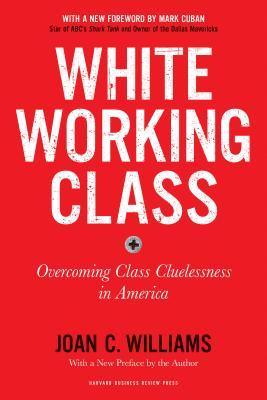
White Working Class, With a New Foreword by Mark Cuban and a New Preface by the Author: Overcoming Class Cluelessness in America
by Joan C. Williams
Rating: 3.5 ⭐
• 2 recommendations ❤️
"It is really worth a read…" -- Former Vice President Joe Biden, interviewed on Pod Save America Now in paperback with a new Foreword by Mark Cuban and a new Preface by the author, White Working Class explains why so much of the elite's analysis of the white working class is misguided, rooted in class cluelessness.Joan C. Williams, described as having "something approaching rock star status" by the New York Times, explains that many people have conflated "working class" with "poor"--but the working class is, in fact, the elusive, purportedly disappearing middle class. They often resent the poor and the professionals alike. But they don't resent the truly rich, nor are they particularly bothered by income inequality. Their dream is not to join the upper middle class, with its different culture, but to stay true to their own values in their own communities--just with more money. While white working-class motivations are often dismissed as racist or xenophobic, Williams shows that they have their own class consciousness.White Working Class is a blunt, bracing narrative that sketches a nuanced portrait of millions of people who have proven to be a potent political force. For anyone stunned by the rise of populist, nationalist movements, wondering why so many would seemingly vote against their own economic interests, or simply feeling like a stranger in their own country, White Working Class will be a convincing primer on how to connect with a crucial set of workers--and voters.

What Works for Women at Work: Four Patterns Working Women Need to Know
by Joan C. Williams
Rating: 3.9 ⭐
An essential resource for any working woman, What Works for Women at Work is a comprehensive and insightful guide for mastering office politics as a woman. Authored by Joan C. Williams, one of the nation's most-cited experts on women and work, and her daughter, writer Rachel Dempsey, this unique book offers a multi-generational perspective into the realities of today's workplace. Often women receive messages that they have only themselves to blame for failing to get ahead--Negotiate more! Stop being such a wimp! Stop being such a witch! What Works for Women at Work tells women it's not their fault. The simple fact is that office politics often benefits men over women. Based on interviews with 127 successful working women, over half of them women of color, What Works for Women at Work presents a toolkit for getting ahead in today's workplace. Distilling over 35 years of research, Williams and Dempsey offer four crisp patterns that affect working women: Prove-It-Again!, the Tightrope, the Maternal Wall, and the Tug of War. Each represents different challenges and requires different strategies--which is why women need to be savvier than men to survive and thrive in high-powered careers. Williams and Dempsey's analysis of working women is nuanced and in-depth, going far beyond the traditional cookie-cutter, one-size-fits-all approaches of most career guides for women. Throughout the book, they weave real-life anecdotes from the women they interviewed, along with quick kernels of advice like a "New Girl Action Plan," ways to "Take Care of Yourself," and even "Comeback Lines" for dealing with sexual harassment and other difficult situations. Up-beat, pragmatic, and chock full of advice, What Works for Women at Work is an indispensable guide for working women.

Outclassed: How the Left Lost the Working Class and How to Win Them Back
by Joan C. Williams
Rating: 4.1 ⭐
An eye-opening, urgent call to mend the broken relationship between college and non-college grads of all races that is driving politics to the far right in the US.Is there a single change that could simultaneously protect democracy, spur progress on climate change, enact sane gun policies, and improve our response to the next pandemic? changing the class dynamics driving American politics. The far right manipulates class anger to undercut progressive goals and liberals often inadvertently play into their hands. In Outclassed, Joan C. Williams explains how to reverse that process by bridging the “diploma divide”, while maintaining core progressive values. She offers college-educated Americans insights into how their values reflect their lives and their lives reflect their privilege. With illuminating stories —from the Portuguese admiral who led that country’s COVID response to the lawyer who led the ACLU’s gay marriage response (and more)— Williams demonstrates how working-class values reflect working-class lives. Then she explains how the far right connects culturally with the working-class, deftly manipulating racism and masculine anxieties to deflect attention from the ways far-right policies produce the economic conditions disadvantaging the working-class. Whether you are a concerned citizen committed to saving democracy or a politician or social justice warrior in need of messaging advice, Outclassed offers concrete guidance on how liberals can forge a multi-racial cross-class coalition capable of delivering on progressive goals.

In Unbending Gender , Joan Williams takes a hard look at the state of feminism in America. Concerned by what she finds--young women who flatly refuse to identify themselves as feminists and working-class and minority women who feel the movement hasn't addressed the issues that dominate their daily lives--she outlines a new vision of feminism that calls for workplaces focused on the needs of families and, in divorce cases, recognition of the value of family work and its impact on women's earning power.Williams shows that workplaces are designed around men's bodies and life patterns in ways that discriminate against women, and that the work/family system that results is terrible for men, worse for women, and worst of all for children. She proposes a set of practical policies and legal initiatives to reorganize the two realms of work in employment and households--so that men and women can lead healthier and more productive personal and work lives. Williams introduces a new 'reconstructive' feminism that places class, race, and gender conflicts among women at center stage. Her solution is an inclusive, family-friendly feminism that supports both mothers and fathers as caregivers and as workers.
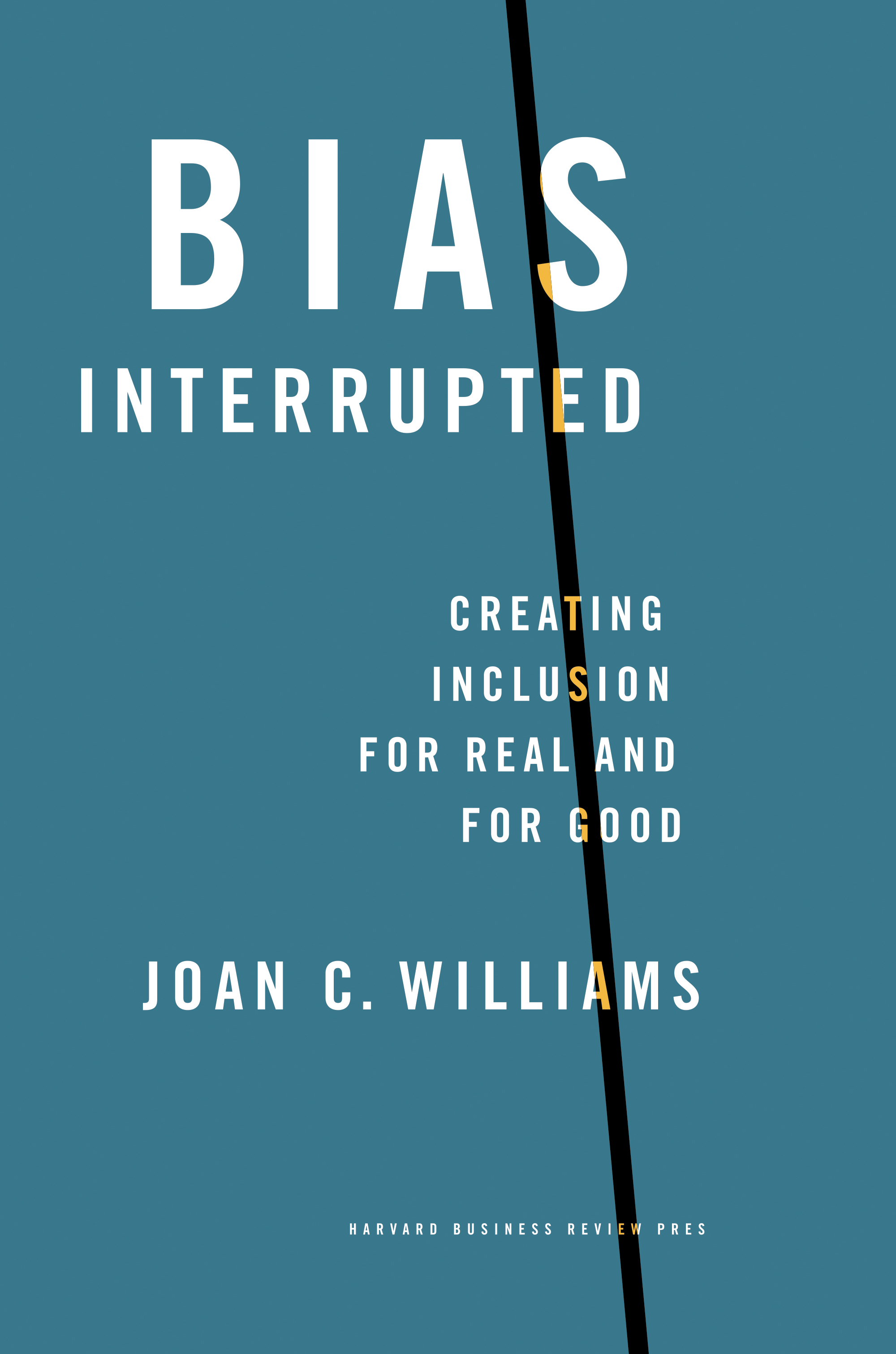
Companies spend billions of dollars annually on diversity efforts, with remarkably few results. Too often diversity efforts rest on the assumption that all that's needed is an earnest conversation about privilege. That's not enough. To truly make progress with diversity, equity and inclusion, we must focus less on documenting the problem and more on just stopping the transmission of it.In Bias Interrupted, Joan C. Williams shows how it's done, and reassuringly, how easy it is to get started. Leaders just need to use standard business systems and standard business tools—data and metrics—to interrupt the bias that is constantly transmitted through formal systems like performance appraisals and the informal systems that control access to opportunities, like mentoring programs. The book presents fresh evidence based on Williams's research and work with companies, in that interrupting bias helps every group—including white men.Comprehensive, though compact and straightforward, Bias Interrupted delivers real, practical value in as efficient and accessible manner as possible to an audience that has never needed it more. It's possible to interrupt bias. Here's where you start.

The United States has the most family-hostile public policy in the developed world. Despite what is often reported, new mothers don’t “opt out” of work. They are pushed out by discriminating and inflexible workplaces. Today’s workplaces continue to idealize the worker who has someone other than parents caring for their children. Conventional wisdom attributes women’s decision to leave work to their maternal traits and desires. In this thought-provoking book, Joan Williams shows why that view is misguided and how workplace practice disadvantages men―both those who seek to avoid the breadwinner role and those who embrace it―as well as women. Faced with masculine norms that define the workplace, women must play the tomboy or the femme. Both paths result in a gender bias that is exacerbated when the two groups end up pitted against each other. And although work-family issues long have been seen strictly through a gender lens, we ignore class at our peril. The dysfunctional relationship between the professional-managerial class and the white working class must be addressed before real reform can take root. Contesting the idea that women need to negotiate better within the family, and redefining the notion of success in the workplace, Williams reinvigorates the work-family debate and offers the first steps to making life manageable for all American families.

A workbook for women with practical tips, tricks, and strategies for succeeding in the workplace. A companion to the highly successful What Works for Women at Work, this workbook offers women a hands-on guide filled with interactive exercises, self-diagnostic quizzes, and action-oriented strategies for building successful careers. The workbook helps women understand their work environments and experiences and move up the professional ladder. Readers will discover the four patterns of gender bias--Prove-It-Again, the Tightrope, the Maternal Wall, and the Tug of War--and they can use the toolkit to learn how to navigate the ways these patterns affect their careers. Williams and her co-authors also introduce the new concept of "Gender Judo," which involves doing a masculine thing in a feminine way, in order to avoid a backlash. This interactive Workbook can help any working woman make better choices and offers specific advice on: - - How to write a winning resume - How to succeed on job interviews - How to negotiate salary - How to create a social media network - How to create work-life balance - How to cut through office politics In addition, the best-selling What Works for Women at Work is also now available in paperback. This book has already helped thousands of working women successfully navigate gender bias in the workplace. Praised by numerous publications for offering an innovative, practical, and down-to-earth approach, What Works for Women at Work is still the go-to guide for working women. Chock full of insights, What Works for Women at Work The Workbook will be an indispensable handbook for working women, providing the tools, the tips, and the tactics to get ahead.

Solving the Part-Time Puzzle: The Law Firm's Guide to Balanced Hours
by Joan C. Williams
Rating: 3.7 ⭐
Dissatisfaction with work/life balance has been documented as a major reason lawyers leave their firms, and many lawyers cite the lack of viable, non-stigmatized balanced hours options as a significant factor. This book -- addressed primarily to law firm managers, administrators, and human resources professionals -- presents the business case for balanced hours programs; describes methods of analyzing the effectiveness of current part-time programs; and provides clear advice on implementation of a balanced hours program. Appendices include a model balanced hours policy, an attrition cost worksheet, and a checklist for attorneys considering a balanced hours schedule.

Reshaping the Work-Family Debate: Why Men and Class Matter
by Joan C. Williams
The United States has the most family-hostile public policy in the developed world. Despite what is often reported, new mothers don’t “opt out” of work. They are pushed out by discriminating and inflexible workplaces. Today’s workplaces continue to idealize the worker who has someone other than parents caring for their children.Conventional wisdom attributes women’s decision to leave work to their maternal traits and desires. In this thought-provoking book, Joan Williams shows why that view is misguided and how workplace practice disadvantages men—both those who seek to avoid the breadwinner role and those who embrace it—as well as women. Faced with masculine norms that define the workplace, women must play the tomboy or the femme. Both paths result in a gender bias that is exacerbated when the two groups end up pitted against each other. And although work-family issues long have been seen strictly through a gender lens, we ignore class at our peril. The dysfunctional relationship between the professional-managerial class and the white working class must be addressed before real reform can take root.Contesting the idea that women need to negotiate better within the family, and redefining the notion of success in the workplace, Williams reinvigorates the work-family debate and offers the first steps to making life manageable for all American families.

Breaking the Barrier
by Joan C. Williams