
Jerome Bruner
Jerome Seymour Bruner is an American psychologist predominately in the fields of developmental, educational, and legal psychology, and is one of the pioneers of the cognitive psychology movement in the United States. He is a senior research fellow at the New York University School of Law. He received his B.A. in 1937 from Duke University and his Ph.D. from Harvard University in 1941. During World War II, Bruner served on the Psychological Warfare Division of the Supreme Headquarters of the Allied Expeditionary Force Europe committee under Eisenhower, researching social psychological phenomena.
29 Books Written
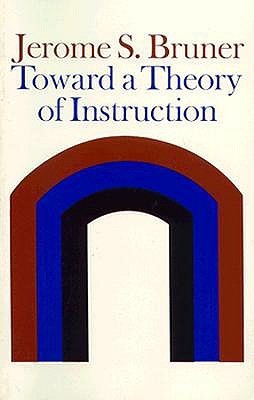
This country’s most challenging writer on education presents here a distillation, for the general reader, of half a decade’s research and reflection. His theme is how children learn, and how they can best be helped to learn―how they can be brought to the fullest realization of their capacities.Jerome Bruner, Harper’s reports, has “stirred up more excitement than any educator since John Dewey.” His explorations into the nature of intellectual growth and its relation to theories of learning and methods of teaching have had a catalytic effect upon educational theory. In this new volume the subjects dealt with in The Process of Education are pursued further, probed more deeply, given concrete illustration and a broader context.“One is struck by the absence of a theory of instruction as a guide to pedagogy,” Mr. Bruner observes; “in its place there is principally a body of maxims.” The eight essays in this volume, as varied in topic as they are unified in theme, are contributions toward the construction of such a theory. What is needed in that enterprise is, inter alia , “the daring and freshness of hypotheses that do not take for granted as true what has merely become habitual,” and these are amply evidenced here.At the conceptual core of the book is an illuminating examination of how mental growth proceeds, and of the ways in which teaching can profitably adapt itself to that progression and can also help it along. Closely related to this is Mr. Bruner’s “evolutionary instrumentalism,” his conception of instruction as the means of transmitting the tools and skills of a culture, the acquired characteristics that express and amplify man’s powers―especially the crucial symbolic tools of language, number, and logic. Revealing insights are given into the manner in which language functions as an instrument of thought.The theories presented are anchored in practice, in the empirical research from which they derive and in the practical applications to which they can be put. The latter are exemplified incidentally throughout and extensively in detailed descriptions of two courses Mr. Bruner has helped to construct and to teach―an experimental mathematics course and a multifaceted course in social studies. In both, the students’ encounters with the material to be mastered are structured and sequenced in such a way as to work with, and to reinforce, the developmental process.Written with all the style and élan that readers have come to expect of Mr. Bruner, Toward a Theory of Instruction is charged with the provocative suggestions and inquiries of one of the great innovators in the field of education.

Jerome Bruner argues that the cognitive revolution, with its current fixation on mind as “information processor,” has led psychology away from the deeper objective of understanding mind as a creator of meanings. Only by breaking out of the limitations imposed by a computational model of mind can we grasp the special interaction through which mind both constitutes and is constituted by culture.

In this classic argument for curriculum reform in early education, Jerome Bruner shows that the basic concepts of science and the humanities can be grasped intuitively at a very early age. He argues persuasively that curricula should he designed to foster such early intuitions and then build on them in increasingly formal and abstract ways as education progresses. Bruner's foundational case for the spiral curriculum has influenced a generation of educators and will continue to be a source of insight into the goals and methods of the educational process.

The left hand has traditionally represented the powers of intuition, feeling, and spontaneity. In this classic book, Jerome Bruner inquires into the part these qualities play in determining how we know what we do know; how we can help others to know―that is, to teach; and how our conception of reality affects our actions and is modified by them.The striking and subtle discussions contained in On Knowing take on the core issues concerning man’s sense of creativity, the search for identity, the nature of aesthetic knowledge, myth, the learning process, and modern-day attitudes toward social controls, Freud, and fate. In this revised, expanded edition, Bruner comments on his personal efforts to maintain an intuitively and rationally balanced understanding of human nature, taking into account the odd historical circumstances which have hindered academic psychology’s attempts in the past to know man.Writing with wit, imagination, and deep sympathy for the human condition, Jerome Bruner speaks here to the part of man’s mind that can never be completely satisfied by the right-handed virtues of order, rationality, and discipline.

How does a child acquire language, and what may facilitate this learning? In this book, renowned psychologist Jerome Bruner explores the child's most remarkable achievement. To carry out his investigations, Bruner went to "the clutter of life at home," the child's own setting for learning, rather than observing children in a "contrived video laboratory." For Bruner, language is learned by using it. An central to its use are what he calls "formats," scriptlike interactions between mother and child―in short, play and games. What goes on in games as rudimentary as peekaboo or hide-and-seek can tell us much about language acquisition. But what aids the aspirant speaker in his attempt to use language? To answer this, the author postulates the existence of a Language Acquisition Support System that frames the interactions between adult and child in such a way as to allow the child to proceed from learning how to refer to objects to learning to make a request of another human being. And, according to Bruner, the Language Acquisition Support System not only helps the child learn "how to say it" but also helps him to learn "what is canonical, obligatory, and valued among those to whom he says it." In short, it is a vehicle for the transmission of our culture.

The eminent psychologist reflects on the course of his work, examines the development of the study of psychology and his substantial contributions to its growth, and provides a glimpse of himself as thinker, teacher, and student of the mind

"Education is in a state of crisis. It has failed to respond to changing social needs-lagging behind rather than leading." The crisis that Jerome Bruner identifies in this volume admits of no easy solutions. But the noted American psychologist makes clear that educational reform must begin with the understanding of how a child acquires information and converts knowledge into action. Drawing on his current work on infant development, Bruner underscores the importance of formulating educational strategies that expand rather than constrict the skills of the young learner.Since education takes place under conditions imposed by a technological society, Professor Bruner maintains that it is not enough to attempt reform through minor curriculum revisions. The program that fails to set knowledge within the context of action must be replaced. And to be truly relevant to our social needs, the scope of education must be extended toward overcoming the severe handicaps faced by children from impoverished areas.

In this book, four articles present the outcome of an important and fruitful meeting between Danish and American scientists. During the conference, "Culture, Narrative and Mind", held at Copenhagen Business School in June 2005, nearly 350 participants experienced the unequalled psychologist, Jerome Bruner, the grand old man who has worked out a sovereign overview of the developments in psychology since the 1940s. The articles are written on the basis of lectures from the conference.

In Search of Pedagogy Volume I: The Selected Works of Jerome Bruner, 1957-1978
by Jerome Bruner
Rating: 4.0 ⭐
Jerome Bruner is one of the best-known and most influential psychologists of the twentieth century. His theories about cognitive development dominate psychology around the world today, but it is in the field of education where his influence has been especially felt. In this two volume set, Bruner has selected and assembled his most important writings about education. Volume I spans the twenty years from 1957 to 1978 and Volume II covers 1979 to 2006. Volume I starts with a specially written introduction by Bruner, in which he gives an overview of the 1957-1978 years and contextualises his selection of papers. The articles and chapters then reveal the thinking, the concepts and the empirical research of that time that have made Bruner one of the most respected and cited educational authorities of our time.

In this book are gathered together Jerome Bruner's major papers on the psychology of knowing. Spanning virtually the entire range of knowledge acquired from infancy onwards, they present the complete spectrum of his research, theories, and ideas concerning perception, thought, skills (of the eye, hand, ear, tongue and mind) developed in childhood, mental representation and cognition, the process of discovery and the nature and techniques of education. This will be invaluable not only for students of psychology, but also for a wider readership including teachers, doctors, biologists, sociologists and all who are interested in child development.

Pourquoi le récit est-il à ce point important dans nos vies ? Ardent défenseur de la notion d'intelligence narrative, Jérôme Bruner montre à quel point les histoires que nous racontons permettent de nous construire. Il n'est donc pas ici question du récit comme création littéraire et artistique, mais d'un processus d'invention permettant de mettre en forme l'expérience humaine et de la transmettre. Qu'il s'agisse de récits littéraires, des affaires de droit ou de la vie quotidienne, le récit permet de donner du sens à nos actions et de les valoriser. Raconter des histoires, c'est finalement jeter un pont entre ce qui est, ce qui fût et ce qui est possible. L'objet des récits que nous racontons sur nous-mêmes est précisément de permettre au passé et au possible de co-exister. C'est pourquoi, nous créons toujours plusieurs histoires possibles nous concernant, cherchant toujours ce que nous aurions pu devenir.

In Search of Pedagogy Volume II: The Selected Works of Jerome Bruner, 1979-2006
by Jerome Bruner
Rating: 4.0 ⭐
Jerome Bruner is one of the best-known and most influential psychologists of the twentieth century. His theories about cognitive development dominate psychology around the world today, but it is in the field of education where his influence has been especially felt. In this two volume set, Bruner has selected and assembled his most important writings about education. Volume I spans the twenty years from 1957 to 1978 and Volume II covers 1979 to 2006. Volume II starts with a specially written introduction by Bruner, in which he gives an overview of the 1979-2006 years and contextualises his selection of papers. The articles and chapters then reveal the thinking, the concepts and the empirical research of that time that have made Bruner one of the most respected and cited educational authorities of our time.

Il libro che presentiamo svela apertamente il sottofondo culturale dei lavori specialistici di Bruner. Qui è in primo piano l'immagine dell'uomo e del mondo. Il lettore può intendere non solo le cose che Bruner conosce ma anche quelle in cui crede.

Bruner ha contribuido de forma decisiva a renovar los estudios e investigaciones en el campo de la psicología mediante la inclusión de los procesos evolutivos y de las determinaciones sociales en las teorías explicativas. Esta compilación, que se compone en su totalidad de artículos no traducidos hasta el momento al castellano, se articula en tres grandes la acción, el pensamiento y el lenguaje.



Car la culture donne forme à l'esprit: De la révolution cognitive à la psychologie culturelle (Forum éducation culture)
by Jerome Bruner
Rating: 2.5 ⭐
Paru en 1990 sous le titre Acts of meaning , ce classique de la psychologie culturelle marque un tournant dans la pensée deJerome Bruner, mondialement connu jusqu'alors pour ses travaux pionniers de psychologie cognitive sur les interactions mère-nourrisson dans les apprentissages du langage.Il est ici proposé dans sa version numérique.Dans cet ouvrage,Brunerprend nettement ses distances avec ce qu'il estime être une dérive de la "révolution cognitive ", en plein essor depuis le milieu du XXe siècle. Il y déplore la prétention de l'hypothèse biologique à expliquer à elle seule le fonctionnement de la pensée.En comparant le cerveau et l'ordinateur, la psychologie a été isolée des autres sciences humaines au risque d'oublier que les êtres humains sont situés socialement, historiquement et culturellement . Depuis les années 1990, les neurosciences se sont à leur tour engouffrées dans cette hypothèse biologique, donnant pleine actualité à l'alerte deBruner.Fort de son constat,Brunera favorisé le développement de la psychologie culturelle , dont l'objectif n'est pas de rejeter la biologie mais de montrer que l'esprit et l'existence sont des reflets de la culture et de l'histoire tout autant que de la biologie et des capacités physiques.Pour lui, la psychologie doit rejoindre le courant qui anime les sciences humaines. Elle doit notamment s'intéresser à toutes les formes de " récits " (littéraires, juridiques, ou ceux de la"psychologie populaire ") grâce auxquels les êtres humains créent de la signification.Une façon de comprendre comment la culture façonne les croyances, les désirs, les valeurs et ainsi " donne forme à l'esprit ", à nos pensées.

Bruner analiza las implicaciones de la psicología cultural en la educación. Este enfoque de la psicología parte del supuesto de que la actividad mental humana no se produce en solitario. «No se puede entender la actividad mental a no ser que se tenga en cuenta el contexto cultural y sus recursos, que le dan a la mente su forma y amplitud.» El autor señala que los grandes cambios tecnológicos del mundo actual afectan a la vida humana en todos sus terrenos (trabajo, familia, comunidades y relaciones interpersonales). Ante esto las nuevas generaciones tienen que aprender no solo a manejar grandes cantidades de información e interaccionar con un mundo tecnológico cambiante, sino también a desarrollar un concepto de sí mismos como ciudadanos del mundo al mismo tiempo que conservar su identidad local. Esto supone un desafío para las escuelas y la educación en general, en la medida en que estas deben dejar de ser vehículos de transmisión de conocimientos y habilidades teniendo en cuenta el contexto cultural. La escuela es el primer y más importante contacto que el niño tiene con su cultura, en la cual trata de comprender sus complejidades y contradicciones. Por ello el objetivo de la educación es ayudarle a encontrar su camino en su cultura ayudándole no solo a dominar unas determinadas habilidades técnicas, sino a conocer y tomar conciencia del mundo en el que va a vivir.

Realidad mental y mundos posibles: Los actos de la imaginación que dan sentido a la experiencia
by Jerome Bruner
¿Qué entendemos por «construcción de la realidad»? Sostenía Jerome Bruner, uno de los principales artífices de la revolución cognitiva, que la realidad no reside en la cosa, ni en la cabeza, sino en el acto de discutir y negociar sobre el significado de esos conceptos. De modo que las «realidades» de la sociedad y de la vida social son productos del uso lingüístico. A partir de estas premisas y basándose en trabajos sobre teoría literaria, lingüística, antropología simbólica, psicología cognitiva y del desarrollo, Bruner elaboró un nuevo enfoque para el estudio de la mente y realizó sus exploraciones en torno a lo que él llamó el «pensamiento narrativo».Hasta los años 1980, la ciencia cognitiva se había centrado demasiado en los aspectos sistemáticos y lógicos de la actividad mental, dejando al margen los mecanismos decisivos para los actos humanos de la imaginación, que nos permite dar sentido a la experiencia. En este ensayo de culto, Bruner argumenta que existen dos modalidades de funcionamiento cognitivo, la paradigmática o lógico-científica y la «modalidad narrativa» (a la que se debe la existencia de buenos relatos, obras dramáticas imperecederas, mitos y crónicas históricas), y se centra en ésta última para desarrollar su concepto de la mente como instrumento para crear mundos posibles.

Under Five in Britain
by Jerome Bruner

In questo libro Bruner riordina, rielabora ed amplia il dibattito e le conclusioni di un incontro tra matematici, psicologi, biologi, fisici, studiosi di medicina, esperti di cinematografia, storici, umanisti e pedagogisti delle maggiori Università Americane e dei più importanti istituti scientifici. Egli affronta un ben noto problema, il processo educativo, ma da angolo visuale assolutamente nuovo per noi.

What have the social sciences to show for decades of systematic investigation of the problems of economic development? What basic problems have they solved and what remains to be done in the development of viable theoretical approaches to this area of research and policy? In an unusually open discussion, thirty-three experts from the fields of anthropology, economics, political science, geography, sociology, and agriculture here present a stimulating re-examination of their accomplishments and mutual problems, of the progress the disciplines have made, and that which remains. The increased interest of social scientists in their sister disciplines has not been stimulated solely by intellectual exploration into the problems that they share and the particular insights each provides. Much of the interest stems from the groping and searching concern of field workers who find themselves investigating problems and systems which cannot be understood adequately in terms of a single kind of analysis, be it political, social, cultural, historical, or psychological. Fieldwork thrusts upon them the realization that their professional areas of concern overlap and converge upon aspects of life which traditionally (or academically) lie in the domains of other disciplines. A Reappraisal of Economic Development is distinguished by the vitality and spark of scholars of different disciplines interacting with each other. The book's formal essays are deliberately short, leaving the bulk of the volume to intensive, cross-disciplinary investigation of the positions, accomplishments, and proposals of the speakers and their critics. The result is a fruitful re-evaluation of the political, social, and geographic forces affecting economic development in emerging nations and a useful handbook for anyone dealing with the varied problems of foreign aid, health and educational development, labor organization, and foreign business. Andrew H. Whiteford was George L. Collie Professor of Anthropology, Beloit College, and director, Logan Museum of Anthropology, Beloit. For a twenty-year period he also served as the chair of the department of anthropology at Beloit. After retiring, he became active in the Indian Arts Research Center at the School of American Research, the Wheelwright Museum of the American Indian, and the New Mexico Museum of Indian Arts and Culture.

Les articles rassemblés dans cet ouvrage traitent de la genèse de l’intelligence pratique, des fonctions de communication, de l’acquisition du langage chez les enfants d’âge préscolaire et des rapports entre la culture et le développement humain.Analysant les données apportées par la neurophysiologie, la sociologie et la linguistique contemporaines, J. S. Bruner brosse un tableau d’ensemble de la psychogenèse qui rompt avec les modèles de développement les plus connus, tels ceux qui dérivent des théories de l’apprentissage ou celui de J. Piaget.Considérant la solidarité entre l’immaturité de l’enfant et la fonction de médiation culturelle que remplit l’adulte, J. S. Bruner conçoit la psychogenèse comme un ensemble de processus transactionnels où les relations de tutelle adulte-enfant jouent un rôle prépondérant. Celles-ci permettent l’expression des schèmes de comportement issus des processus de sélection biologique et provoquent une transformation de l’enfant au sein d’une « zone proximale de développement ».Cette démarche conduit à une analyse critique des fonctions de l’école et du rôle des adultes porteurs de modèles.

What have the social sciences to show for decades of systematic investigation of the problems of economic development? What basic problems have they solved and what remains to be done in the development of viable theoretical approaches to this area of research and policy? In an unusually open discussion, thirty-three experts from the fields of anthropology, economics, political science, geography, sociology, and agriculture here present a stimulating re-examination of their accomplishments and mutual problems, of the progress the disciplines have made, and that which remains.The increased interest of social scientists in their sister disciplines has not been stimulated solely by intellectual exploration into the problems that they share and the particular insights each provides. Much of the interest stems from the groping and searching concern of field workers who find themselves investigating problems and systems which cannot be understood adequately in terms of a single kind of analysis, be it political, social, cultural, historical, or psychological. Fieldwork thrusts upon them the realization that their professional areas of concern overlap and converge upon aspects of life which traditionally (or academically) lie in the domains of other disciplines.A Reappraisal of Economic Development is distinguished by the vitality and spark of scholars of different disciplines interacting with each other. The book's formal essays are deliberately short, leaving the bulk of the volume to intensive, cross-disciplinary investigation of the positions, accomplishments, and proposals of the speakers and their critics. The result is a fruitful re-evaluation of the political, social, and geographic forces affecting economic development in emerging nations and a useful handbook for anyone dealing with the varied problems of foreign aid, health and educational development, labor organization, and foreign business.Andrew H. Whiteford was Geor

Il pensiero: Strategie e categorie
by Jerome Bruner
Le ricerche di Bruner, di cui questo volume è documento, si sono costantemente allineate alle indagini più avanzate della psicologia contemporanea, e costituiscono tuttora un contributo di primo ordine al rinnovamento della pedagogia su basi scientifiche. Il testo descrive accuratamente come si comporta un soggetto di fronte al compito di identificare un oggetto fra molti, attraverso una varietà di situazioni controllate dallo sperimentatore. All'interno del volume una sostanziosa appendice psicolinguistica a cura di Roger W. Brown
Patterns of growth;: An inaugural lecture delivered before the University of Oxford on 25 May 1973,
by Jerome Bruner