
Jeanette Winterson
Novelist Jeanette Winterson was born in Manchester, England in 1959. She was adopted and brought up in Accrington, Lancashire, in the north of England. Her strict Pentecostal Evangelist upbringing provides the background to her acclaimed first novel, Oranges Are Not the Only Fruit, published in 1985. She graduated from St Catherine's College, Oxford, and moved to London where she worked as an assistant editor at Pandora Press. One of the most original voices in British fiction to emerge during the 1980s, Winterson was named as one of the 20 "Best of Young British Writers" in a promotion run jointly between the literary magazine Granta and the Book Marketing Council. She adapted Oranges Are Not the Only Fruit for BBC television in 1990 and also wrote "Great Moments in Aviation," a television screenplay directed by Beeban Kidron for BBC2 in 1994. She is editor of a series of new editions of novels by Virginia Woolf published in the UK by Vintage. She is a regular contributor of reviews and articles to many newspapers and journals and has a regular column published in The Guardian. Her radio drama includes the play Text Message, broadcast by BBC Radio in November 2001. Winterson lives in Gloucestershire and London. Her work is published in 28 countries.
28 Books Written

"Winterson is a master of her material, a writer in whom great talent deeply abides." — Vanity Fair First published to great acclaim in 1987, this arresting, elegant novel from Jeanette Winterson uses Napolean’s Europe as the setting for a tantalizing surrealistic romance between an observer of history and a creature of fantasy. Jeanette Winterson’s novels have established her as one of the most important young writers in world literature. The Passion is perhaps her most highly acclaimed work, a modern classic that confirms her special claim on the novel. Set during the tumultuous years of the Napoleonic Wars, The Passion intertwines the destinies of two remarkable people: Henri, a simple French soldier, who follows Napoleon from glory to Russian ruin; and Villanelle, the red-haired, web-footed daughter of a Venetian boatman, whose husband has gambled away her heart. In Venice’s compound of carnival, chance, and darkness, the pair meet their singular destiny.In her unique and mesmerizing voice, Winterson blends reality with fantasy, dream, and imagination to weave a hypnotic tale with stunning effects.

橘子不是唯一的水果 珍妮特温特森著

In a fantastic world that is and is not seventeenth-century England, a baby is found floating in the Thames. The child, Jordan, is rescued by Dog Woman and grows up to travel the world like Gulliver, though he finds that the world’s most curious oddities come from his own mind. Winterson leads the reader from discussions on the nature of time to Jordan’s fascination with journeys concealed within other journeys, all with a dizzying speed that shoots the reader from epiphany to shimmering epiphany.
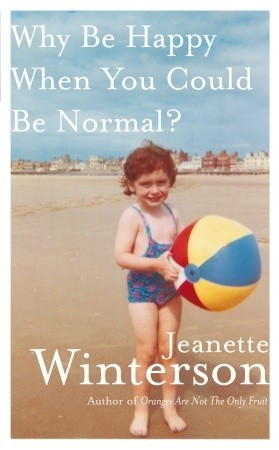
Witty, acute, fierce, and celebratory, Why Be Happy When You Could Be Normal? is a tough-minded search for belonging, for love, identity, home, and a mother.Jeanette Winterson's novels have established her as a major figure in world literature. She has written some of the most admired books of the past few decades, including her internationally bestselling first novel, Oranges Are Not the Only Fruit, the story of a young girl adopted by Pentecostal parents that is now often required reading in contemporary fiction. Why Be Happy When You Could Be Normal? is a memoir about a life's work to find happiness. It's a book full of stories: about a girl locked out of her home, sitting on the doorstep all night; about a religious zealot disguised as a mother who has two sets of false teeth and a revolver in the dresser, waiting for Armageddon; about growing up in an north England industrial town now changed beyond recognition; about the Universe as Cosmic Dustbin. It is the story of how a painful past that Jeanette thought she'd written over and repainted rose to haunt her, sending her on a journey into madness and out again, in search of her biological mother.

Written on the Body is a secret code only visible in certain lights: the accumulation of a lifetime gather there. In places the palimpsest is so heavily worked that the letters feel like braille. I like to keep my body rolled away from prying eyes, never unfold too much, tell the whole story. I didn't know that Louise would have reading hands. She has translated me into her own book.

In Brexit Britain, a young transgender doctor called Ry is falling in love – against their better judgement – with Victor Stein, a celebrated professor leading the public debate around AI.Meanwhile, Ron Lord, just divorced and living with Mum again, is set to make his fortune launching a new generation of sex dolls for lonely men everywhere.Across the Atlantic, in Phoenix, Arizona, a cryogenics facility houses dozens of bodies of men and women who are medically and legally dead… but waiting to return to life.But the scene is set in 1816, when nineteen-year-old Mary Shelley writes a story about creating a non-biological life-form. ‘Beware, for I am fearless and therefore powerful.'What will happen when homo sapiens is no longer the smartest being on the planet? Jeanette Winterson shows us how much closer we are to that future than we realise. Funny and furious, bold and clear-sighted, Frankissstein is a love story about life itself.

Lighthousekeeping tells the tale of Silver ("My mother called me Silver. I was born part precious metal, part pirate."), an orphaned girl who is taken in by blind Mr. Pew, the mysterious and miraculously old keeper of a lighthouse on the Scottish coast. Pew tells Silver stories of Babel Dark, a nineteenth-century clergyman. Dark lived two lives: a public one mired in darkness and deceit and a private one bathed in the light of passionate love. For Silver, Dark's life becomes a map through her own darkness, into her own story, and, finally, into love.One of the most original and extraordinary writers of her generation, Jeanette Winterson has created a modern fable about the transformative power of storytelling.

The Winter’s Tale is one of Shakespeare’s “late plays.” It tells the story of a king whose jealousy results in the banishment of his baby daughter and the death of his beautiful wife. His daughter is found and brought up by a shepherd on the Bohemian coast, but through a series of extraordinary events, father and daughter, and eventually mother too, are reunited.In The Gap of Time, Jeanette Winterson’s cover version of The Winter’s Tale, we move from London, a city reeling after the 2008 financial crisis, to a storm-ravaged American city called New Bohemia. Her story is one of childhood friendship, money, status, technology and the elliptical nature of time. Written with energy and wit, this is a story of the consuming power of jealousy on the one hand, and redemption and the enduring love of a lost child on the other.

“When I was asked to choose a myth to write about, I realized I had chosen already. The story of Atlas holding up the world was in my mind before the telephone call had ended. If the call had not come, perhaps I would never have written the story, but when the call did come, that story was waiting to be written. Rewritten. The recurring language motif of Weight is ‘I want to tell the story again.’ My work is full of cover versions. I like to take stories we think we know and record them differently. In the retelling comes a new emphasis or bias, and the new arrangement of the key elements demands that fresh material be injected into the existing text. Weight moves far away from the simple story of Atlas’s punishment and his temporary relief when Heracles takes the world off his shoulders. I wanted to explore loneliness, isolation, responsibility, burden, and freedom, too, because my version has a very particular end not found elsewhere.” -- from Jeanette Winterson’s Foreword to Weight

From the New York Times bestselling author of "Why Be Happy When You Could Be Normal?" comes an enchanting collection of stories for the holiday season.For years Jeanette Winterson has loved writing a new story at Christmas time and here she brings together twelve of her brilliantly imaginative, funny and bold tales. For the Twelve Days of Christmas—a time of celebration, sharing, and giving—she offers these twelve plus one: a personal story of her own Christmas memories. These tales give the reader a portal into the spirit of the season, where time slows down and magic starts to happen. From trees with mysterious powers to a tinsel baby that talks, philosophical fairies to flying dogs, a haunted house and a disappearing train, Winterson's innovative stories encompass the childlike and spooky wonder of Christmas. Perfect for reading by the fire with loved ones, or while traveling home for the holidays. Enjoy the season of peace and goodwill, mystery, and a little bit of magic courtesy of one of our most fearless and accomplished writers.

On the airwaves, all the talk is of the new blue planet - pristine and habitable, like our own 65 million years ago, before we took it to the edge of destruction. And off the air, Billie and Spike are falling in love. What will happen when their story combines with the world's story.

Good Friday, 1612. Pendle Hill, Lancashire.A mysterious gathering of thirteen people is interrupted by local magistrate, Roger Nowell. Is this a witches' Sabbat?Two notorious Lancashire witches are already in Lancaster Castle waiting trial. Why is the beautiful and wealthy Alice Nutter defending them? And why is she among the group of thirteen on Pendle Hill?Elsewhere, a starved, abused child lurks. And a Jesuit priest and former Gunpowder plotter, recently returned from France, is widely rumoured to be heading for Lancashire. But who will offer him sanctuary? And how quickly can he be caught?This is the reign of James I, a Protestant King with an obsession: to rid his realm of twin evils, witchcraft and Catholicism, at any price...

Hailed in the Washington Post as "one of our most important writers in English," Jeanette Winterson has firmly established her reputation as an extraordinarily daring and original novelist. In Gut Symmetries, lives and universes run parallel in a complex contemporary love story set in New York and Liverpool and aboard the QE2.

To avoid discovery I stay on the run. To discover things for myself, I stay on the run. "The PowerBook" is twenty-first century fiction that uses past, present and future as shifting dimensions of a multiple reality. The story is simple. An e-writer called Ali or Alix will write to order anything you like, provided that you are prepared to enter the story as yourself and take the risk of leaving it as someone else. You can be the hero of your own life. You can have freedom just for one night. But there is a price. Ali discovers that she too will have to pay it. Death can take the body but not the heart. Set in London, Paris, Capri and Cyberspace, this is a book that reinvents itself as it travels. Using cover-versions, fairy tales, contemporary myths and popular culture, "The PowerBook" works at the intersection between the real and the imagined. Its territory is you.

Handel is a failed priest but abiding Catholic with elitist tendencies whose work as a doctor forces him to consider social questions that he would probably rather avoid. Picasso, as she calls herself, is a young artist who has been sexually abused by her brother but whose family thinks she is at fault for her dark moods. Sappho is, indeed, Sappho, the lesbian poet of ancient Greece, who here proclaims herself a sensualist and then proceeds to dissect "the union of language and lust." The three converge in a place that may be England in a not-too-distant future made ugly by pollution and even uglier by greed. This is not a novel but an extended rift on art, sex, religion, social repression, the dangers of patriarchy, and everything that is wrong with the contemporary drift to the right. As such, it will be hard going for most readers, but those with some patience will discover exceptionally evocative writing and a vivifying review of some much-discussed contemporary issues.
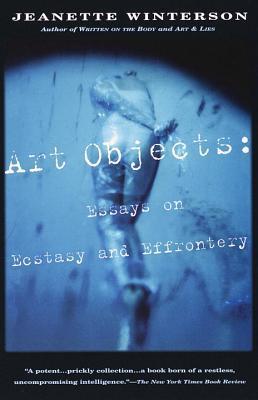
In these ten intertwined essays, one of our most provocative young novelists proves that she is just as stylish and outrageous an art critic. For when Jeanette Winterson looks at works as diverse as the Mona Lisa and Virginia Woolf's The Waves , she frees them from layers of preconception and restores their power to exalt and unnerve, shock and transform us." Art Objects is a book to be admired for its effort to speak exorbitantly, urgently and sometimes beautifully about art and about our individual and collective need for serious art."-- Los Angeles Times

Her first short story collection exhibits the multitude of talents that have made English novelist Jeanette Winterson not just admired but beloved by her many fans. There are the surprising, fresh little phrases minted expressly to convey the delicate realities of the made-up world. There's the humor, fierce and sly but always kind. There's the imagination that changes gender and historical epoch at whim, and does so convincingly; and the characters themselves, a sundry bunch of men and women not necessarily successful or commendable but always, somehow, likable. Best of all, by their very diversity, these stories reveal glimpses of the smart and enigmatic woman behind the work. In "Atlantic Crossing," Winterson becomes a middle-aged businessman of the mid-20th century, accidentally assigned to share his second-class cabin with a young black woman on a transatlantic crossing. In the realm of event, little happens, but in its depth of perception and what it tells of the nuances of regret, the story is as rich as a novel in another writer's hands. A few scant pages later, Winterson becomes a kind of lost female Homer, telling Orion's story from Artemis's point of view: "When she returned she saw this huge rag of a man eating her goat, raw.... His reputation hung about him like bad breath." In "The Poetics of Sex," she creates a lesbian love story that evokes her characters' personalities as explicitly as their erotic pleasures. "The 24-Hour Dog," the story of a woman writer returning a puppy she had thought to adopt, is remorseless as a psychological thriller in the squirmy depths it plumbs: "I had made every preparation, every calculation, except for those two essentials that could not be calculated: his heart and mine." Read The World and Other Places twice, once for instruction, once for joy. --Joyce Thompson

Something frightening is happening to time. Time tornadoes are ripping people from the present, never to return them, while a woolly mammoth inexplicably appears on banks of the River Thames. Eleven-year-old Silver and her guardian live in a house called Tanglewreck, which is somehow at the center of these mysterious time warps. A strange heirloom called the Timekeeper is hidden somewhere in the house, and Silver must find it and protect it . . . because whoever gets hold of the Timekeeper will have the power to control time-and life as we know it-forever.Reviews"The sheer exhilaration of the adventure and the many fascinating historical and scientific allusions will keep readers engrossed through to the satisfying conclusion." -Publishers Weekly "An appealing read for fantasy and science- fiction fans alike...Well-developed main characters add liveliness and suspense to the story, while secondary characters (a pair of inept thugs, the original Schrödinger's cat) add touches of humor to a basically sober story. The climax is chaotic and exciting; the resolution is realistic, bittersweet." -Kirkus Reviews "Winterson masterfully weaves together an imaginative array of settings and characters to bring the story to its exhilarating fulfillment. Silver's varied relationships add even more depth, encapsulating family, friendship, deceit, and abuse... "[T]his time-bending sci-fi adventure will be a fine addition to young adult collections." -School Library Journal "Winterson seamlessly combines rousing adventure with time warps, quantum physics, and a few wonderfully hapless flunkies. Her clever science will draw fans of Madeline L'Engle's A Wrinkle in Time, and her dastardly villains and resourceful youngsters will remind readers of the Lemony Snicket's books about the hapless Baudelaires." --Booklist "Silver is a plucky hero in the mold of Neil Gaiman's Coraline and Philip Pullman's Lyra, a creature of action not introspection.

A captivating collection of ghost stories from “one of the most gifted writers working today” ( New York Times ), The Night Side of the River is as ingeniously provocative as it is downright spooky. In this delightfully chilling collection, the iconic Jeanette Winterson turns her fearless gaze to the realm of ghosts, interspersing her own encounters with the supernatural alongside hair-raising fictions. Lifting the veil between the living and the dead, Winterson spirits us away to a haunted estate that ensnares a nomadic young couple in its own dark past, a staged immersive ghost tour gone awry, a West Village séance that threatens the bounds between AI and reality, and a vacation home in the metaverse where a widow visits an improved version of her deceased husband. Gloriously gothic and unnervingly contemporary, Winterson examines grief, revenge, and the myriad ways in which technology can disrupt the boundary between life and death.

Twelve eye-opening, mind-expanding, funny and provocative essays on the implications of artificial intelligence for the way we live and the way we love from New York Times bestselling author Jeanette Winterson"Talky, smart, anarchic and quite sexy," said Dwight Garner in the New York Times about Jeanette Winterson's latest novel, Frankissstein, which perfectly describes too this new collection of essays on the same subject of AI.In 12 Bytes, the New York Times bestselling author of Why Be Happy When You Can Be Normal? Jeanette Winterson, draws on her years of thinking and reading about artificial intelligence in all its bewildering manifestations. In her brilliant, laser focused, uniquely pointed and witty style of story-telling, Winterson looks to history, religion, myth, literature, the politics of race and gender, and computer science, to help us understand the radical changes to the way we live and love that are happening now.When we create non-biological life-forms, will we do so in our image? Or will we accept the once-in-a-species opportunity to remake ourselves in their image? What do love, caring, sex, and attachment look like when humans form connections with non-human helpers, teachers, sex-workers, and companions? And what will happen to our deep-rooted assumptions about gender? Will the physical body that is our home soon be enhanced by biological and neural implants, keeping us fitter, younger, and connected? Is it time to join Elon Musk and leave Planet Earth?With wit, compassion and curiosity, Winterson tackles AI's most fascinating talking points, from the algorithms that data-dossier your whole life to the weirdness of backing up your brain.
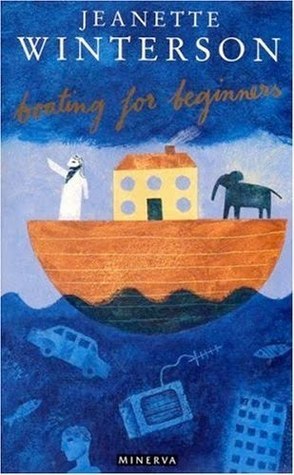
A pleasure boat company is transformed when the proprietor, Noah, is chosen by the "One True God" to put "sunny" faith back in the world and women back in the kitchen. The author has written "Oranges are Not the Only Fruit" (winner of the 1985 Whitbread award), and "Sexing the Cherry".

Love is a map, not a destination. That's why there is no such thing as "they all lived happily ever after"How do we love? With romance. With work. Through heartbreak. Throughout a lifetime. As a means, but not an end. Love in all its forms has been an abiding theme of Jeanette Winterson’s writing. Here are selections from her books about that impossible, essential force, stories and truths that search for the mythical creature we call Love.Selected from the books of Jeanette WintersonVINTAGE MINIS: GREAT MINDS. BIG IDEAS. LITTLE BOOKS.A series of short books by the world’s greatest writers on the experiences that make us human
Courage Calls to Courage Everywhere is a timely and inspiring call to arms by one of Britain's most acclaimed and important writers. Whilst recognising how far women have come in the hundred years since getting the vote, Jeanette Winterson also insists that we must all do much more if we are to achieve true gender equality.Examining recent women's rights movements, the worlds of politics, technology and social media and changes in the law, Winterson calls out all the ways in which women still face discrimination and disadvantage. Like the women who won the right to vote, we need to shout up, reach out, be courageous and finish the job.(This is adapted from Winterson's 2018 Richard Dimbleby Lecture.)Also included in this volume is Emmeline Pankhurst's landmark Suffragette speech, Freedom or Death, which she delivered in 1913.

Imagine a city made of gold, and each thing in it made of gold, and every person as golden as a precious statue. . . .A magus dreams of turning London into a city of gold, but he cannot do it alone and so he kidnaps a child called Jack, who he is sure will help him realise his ambition. But Jack is not a willing assistant and instead he embarks on a magical adventure to save the city, release a dragon and set free seven other boys kidnapped in the past.An enchanting novel filled with magic and mystery.

When a greedy king wakes up one morning, everything he owns has gone - blown across the bay to neighbouring Naples. When a poor and humble washerwoman wakes up that same morning her back yard is full of things that simply were not there the night before. Soon the king and the washerwoman meet for the first time and from that moment both their lives magically change.

In Jeanette Winterson's beautifully evocative retelling of the story of the very first Christmas, the humble donkey is chosen amongst all the other animals, including the kingly lion and the proud unicorn. As his journey unfolds, he is touched by the magic and mystery of the Nativity. Stunning illustrations by Rosalind Macurrach and twinkling gold detail make this the perfect Christmas book.

Jeanette Winterson retells 'Hansel and Gretel'. A Fairy Tale Revolution is here to remix and revive our favourite stories.'Deep in the wood'Greta lives with her brother Hansel on the edge of a great forest - a forest in danger of destruction.GreedyGuts, their aunt, doesn't appreciate Hansel and Greta's plans to replant trees and save the forest. In fact, she thinks they're horrible little vegetarians.GreedyGuts doesn't give two hoots about nature. She favours luxury and living it up: eating, shopping and partying hard. And so she hatches a plan to get rid of the meddling, do-gooder kids...deep in the wood.

Free online fiction.From Random House's Boldtype.