
Jane Hirshfield
Jane Hirshfield is the author of nine collections of poetry, including the forthcoming Ledger (Knopf, March 2020), The Beauty (Knopf, 2015), longlisted for the National Book Award, Come Thief (Knopf, August 23, 2011), After (HarperCollins, 2006), which was named a “Best Book of 2006” by The Washington Post, The San Francisco Chronicle, and England’s Financial Times and shortlisted for England’s T.S. Eliot Award; and Given Sugar, Given Salt (finalist for the 2001 National Book Critics Circle Award); as well as two now-classic books of essays, Nine Gates: Entering the Mind of Poetry and Ten Windows: How Great Poems Transform the World. She has also edited and co-translated three books collecting the work of women poets from the distant past, and one e-book on Basho and the development of haiku, The Heart of Haiku. Hirshfield’s other honors include The Poetry Center Book Award, the California Book Award, fellowships from the Guggenheim and Rockefeller foundations, the National Endowment for the Arts, and the 40th Annual Distinguished Achievement Fellowship from the Academy of American Poets, an honor previously received by Robert Frost, Elizabeth Bishop, and William Carlos Williams. Her work has been featured in ten editions of The Best American Poems and appears in The New Yorker, The Atlantic, The Times Literary Supplement/TLS, The American Poetry Review, Poetry, The New York Review of Books, Orion, McSweeney’s, and elsewhere. Hirshfield’s poems have also been featured many times on Garrison Keillor’s Writers Almanac as well as two Bill Moyers’ PBS television specials. She has presented her poems and taught at festivals and universities throughout the U.S., in China, Japan, the Middle East, the U.K., Poland, and Ireland. In 2019, she was elected into the American Academy of Arts & Sciences. Hirshfield's appearance schedule can be found at:
28 Books Written
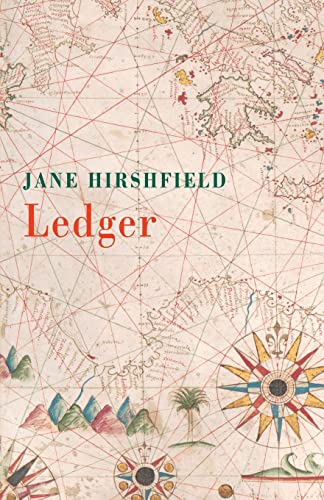
Jane Hirshfield's urgent new collection is a book of personal, ecological and political reckoning. Her poems inscribe a ledger personal and communal, a registry of our time's and lives' dilemmas as well as a call to action on climate change, social justice and the plight of refugees. The poems of Ledger record riches, both abiding and squandered, and mourn our failures. They confirm, too, the continually renewing gift of the present moment, summoning our responsibility as moral beings to sustain one another and the earth's continuance. Finally, it is the human spirit and the language of poetry - loyal instruments of recognition, humility and praise - that triumph in this stunned, stunning accounting, set forth by a master poet whose voice is tonic and essential, whose breadth of inclusion and fierce awareness rivet attention. Hers is a poetry of clarity and hybrid vigour, drawing deeply on English and American traditions but also those of world poetry. The poetries of modern and classical Greece, of Horace and Catullus, of classical China and Japan and Eastern Europe all resonate in Jane Hirshfield's structures of thought and in her sensibilities. Indelibly of our time yet seated in the lineage of poetic discovery, these poems are meant to endure.

In seventeenth-century Japan, the wandering poet Basho developed haiku, a seventeen-syllable poetic form now perhaps the most widely written type of poetry in the world. Haiku are practiced by poets, lovers, and schoolchildren, by “political haiku” twitterers, by anyone who has the desire to pin preception and experience into a few quick phrases. This essay offers readers unparalleled insight into the living heart of haiku—how haiku work and what they hold, and how to read through and into their images to find a full expression of human life and perceptions, sometimes profound, sometimes playful.

A Gate Enables passage between what is inside and what is outside, and the connection poetry forges between inner and outer lives is the fundamental theme of these nine essays.Nine Gates begins with a close examination of the roots of poetic craft in "the mind of concentration" and concludes by exploring the writer's role in creating a sense of community that is open, inclusive and able to bind the individual and the whole in a way that allows each full self-expression. in between, Nine Gates illumines the nature of originality, translation, the various strategies by which meaning unfolds itself in language, poetry's roots in oral memory and the importance of the shadow to good art.A person who enters completely into the experience of a poem is initiated into a deeper intimacy with life. Delving into the nature of poetry, Jane Hirshfield also writes on the nature of the human mind, perception and experience. Nine Gates is about the underpinnings of poetic craft, but it is also about a way of being alive in the world -- alertly, musically, intelligently, passionately, permeably.In part a primer for the general reader, Nine Gates is also a manual for the working writer, with each "gate" exploring particular strategies of language and thought that allow a poem to convey meaning and emotion with clarity and force. Above all, Nine Gates is an insightful guide to the way the mind of poetry awakens our fundamental consciousness of what can be known when a person is most fully alive.

The Beauty, an incandescent new collection from one of American poetry’s most distinctive and essential voices, opens with a series of dappled, ranging “My” poems—“My Skeleton,” “My Corkboard,” “My Species,” “My Weather”—using materials sometimes familiar, sometimes unexpected, to explore the magnitude, singularity, and permeability of our shared existence. With a pen faithful to the actual yet dipped at times in the ink of the surreal, Hirshfield considers the inner and outer worlds we live in yet are not confined by; reflecting on advice given her long ago—to avoid the word “or”—she concludes, “Now I too am sixty. / There was no other life.” Hirshfield’s lines cut, as always, directly to the heart of human experience. Her robust affirmation of choice even amid inevitability, her tender consciousness of the unjudging beauty of what exists, her abiding contemplation of our moral, societal, and biological intertwinings, sustain poems that tune and retune the keys of a life. For this poet, “Zero Plus Anything Is a World.” Hirshfield’s riddling recipes for that world (“add salt to hunger”; “add time to trees”) offer a profoundly altered understanding of our lives’ losses and additions, and of the small and larger beauties we so often miss.

In this luminous and authoritative new collection, Jane Hirshfield presents an ever-deepening and altering comprehension of human existence in poems utterly unique, as William Matthews once wrote of her work, in their "praise of ceaseless mutability as life's central splendor."In poems complex in meaning yet clear in statement and depiction, Hirshfield explores questions of identity, aging, death, and of time and the variegated gifts brought by its relentless passage. Whether meditating upon a button, the role of habit in our lives, or the elusive nature of our relationship to sleep, Hirshfield brings each subject into a surprising and magnified existence.

“Jane Hirshfield is one of our finest, most memorable contemporary poets.” —David Baker, The American Poet "Hirshfield's poems . . . send ripples across the reflecting pool of our collective consciousness.” — Booklist (starred review) A profound, generous, and masterful sixth collection by one of the preeminent American poets of her generation, After explores incarnation, transience, and our intimate connection with others and with all existence. Jane Hirshfield’s alert, incisive, and compassionate poems examine the human condition through subjects ranging from sparseness, possibility, judgment, and hidden grief to global warming, insomnia, the meanings to be found in generally overlooked parts of speech, and the metaphysics of sneezing. In respective series of “assays” (meditative imaginative accountings) and “pebbles” (each a “brief, easily pocketable perception that remains incomplete until the reader’s own response awakens inside it”), Hirshfield explores a poetry-making that looks simultaneously outward and inward, finding resonant and precise containers for the deepest currents of our inner life.

A revelatory, indispensable collection of poems from Jane Hirshfield that centers on beauty, time, and the full embrace of an existence that time cannot help but steal from our arms.Hirshfield is unsurpassed in her ability to sink into a moment’s essence and exchange something of herself with its finite music—and then, in seemingly simple, inevitable words, to deliver that exchange to us in poems that vibrate with form and expression perfectly united. Hirshfield’s poems of discovery, acknowledgment of the difficult, and praise turn always toward deepening comprehension. Here we encounter the stealth of feeling’s arrival (“as some strings, untouched, / sound when a near one is speaking. / So it was when love slipped inside us”), an anatomy of solitude (“wrong solitude vinegars the soul, / right solitude oils it”), a reflection on perishability and the sweetness its acceptance invites into our midst (“How suddenly then / the strange happiness took me, / like a man with strong hands and strong mouth”), and a muscular, unblindfolded awareness of our shared political and planetary fate.To read these startlingly true poems is to find our own feelings eloquently ensnared. Whether delving into intimately familiar moments or bringing forward some experience until now outside words, Hirshfield finds for each face of our lives its metamorphosing portrait, its particular, memorable, singing and singular name.Love in AugustWhite mothsagainst the screenin August darkness.Some clamorin envy.Some spread largeas two handsof a thiefwho wants to putback in your cupboardthe long-taken silver.

Women in Praise of the Sacred: 43 Centuries of Spiritual Poetry by Women
by Jane Hirshfield
Rating: 4.4 ⭐
"Hirshfield's current collection brings together . . . an astonishing array of women writers from the 22nd century BC poet Enheduanna to Nelly Sachs and Anna Akhmatova." — Library Journal "Destined to become a classic. . . . An anthology of women's spirituality on this scale has never been attempted before and I cannot imagine it being better done." — Andrew Harvey

A new volume of poems by the award-winning author of October Palace.

A dazzling collection of essays on how the best poems work, from the master poet and essayist “Poetry,” Jane Hirshfield has said, “is language that foments revolutions of being.” In ten eloquent and highly original explorations, she unfolds and explores some of the ways this is done—by the inclusion of hiddenness, paradox, and surprise; by a perennial awareness of the place of uncertainty in our lives; by language’s own acts of discovery; by the powers of image, statement, music, and feeling to enlarge in every direction. The lucid understandings presented here are gripping and transformative in themselves. Investigating the power of poetry to move and change us becomes in these pages an equal investigation into the inhabitance and navigation of our human lives.Closely reading poems by Dickinson, Bashō, Szymborska, Cavafy, Heaney, Bishop, and Komunyakaa, among many others, Hirshfield reveals how poetry’s world-making takes word by charged word. By expanding what is imaginable and sayable, Hirshfield proposes, poems expand what is possible. Ten Windows restores us at every turn to a more precise, sensuous, and deepened experience of our shared humanity and of the seemingly limitless means by which that knowledge is both summoned and forged.

'Jane Hirshfield's is a brave, new voice that, finding itself in its first volume, now goes on to ever more searching music. Brave in its nakedness, her work like a lucid stream enjoys itself as it keeps its surefooted course. Written with the precision only passion can ensure, the poems commend us to the gay gravity of angels. This is a collection to be indeed relished and prized.' - Theodore Weiss

"An exquisite accomplishment. These serene and painterly meditations quietly blossom into luminous and sensual lyric reckonings." — David St. John "A radiant and passionate collection." — New York Times Book Review Grounded in a series of mediations upon the life of the feeling heart in the world, Jane Hirshfield's long-awaited third collection of poetry explores the ways that radiance dwells most truly in the ordinary, the difficult, and the plain.

The long-awaited new and selected collection by the author of “some of the most important poetry in the world today” ( The New York Times Magazine ), assaying the ranges of our shared and borrowed our bonds of eros and responsibilities to the planet; the singing dictions and searchlight dimensions of perception; the willing plunge into an existence both perishing and beloved, dazzling “even now, even here”In an era of algorithm, assertion, silo, and induced distraction, Jane Hirshfield’s poems bring a much-needed awakening response, actively countering narrowness. The Asking takes its title from the close of one of its thirty-one new “don’t despair of this falling world, not yet / didn’t it give you the asking.” Interrogating language and life, pondering beauty amid bewilderment and transcendence amid transience, Hirshfield offers a signature investigation of the conditions, contradictions, uncertainties, and astonishments that shape our existence. A leading advocate for the biosphere and the alliance of science and imagination, she brings to both inner and outer quandaries an abiding the choice to embrace what is, to face with courage, curiosity, and a sense of kinship whatever comes.In poems that consider the smallest ant and the vastness of time, hunger and bounty, physics, war, and love in myriad forms, this collection—drawing from nine previous books and five decades of writing—brings the insights and slant-lights that come to us only through poetry’s arc, delve, and tact; through a vision both close and sweeping; through music-inflected thought and recombinant leap.With its quietly magnifying brushwork and numinous clarities, The Asking expands our awareness of both breakage’s grief and the possibility for repair.

Jane Hirshfield is a visionary American writer whose poems ask nothing less than what it is to be human. Both sensual meditations and passionate investigations, they reveal complex truths in language luminous and precise. Rooted in the living world, her poems celebrate and elucidate a hard-won affirmation of our human fate. Born of a rigorous questioning of heart, spirit and mind, they have become indispensible to many American readers in navigating their own lives. Hers is a poetry of clarity and hybrid vigour, drawing deeply on English and American traditions but also those of world poetry. The poetries of modern and classical Greece, of Horace and Catullus, of classical China and Japan and Eastern Europe all resonate in Jane Hirshfield's structures of thought and in her sensibilities. Indelibly of our time yet seated in the lineage of poetic discovery, these poems are meant to endure.

Hiddenness, Uncertainty, Surprise: Three Generative Energies of Poetry
by Jane Hirshfield
Rating: 4.6 ⭐
In this innovative series of public lectures at the University of Newcastle upon Tyne, leading contemporary poets speak about the craft and practice of poetry to audiences drawn from both the city and the university. The lectures are then published in book form by "Bloodaxe", giving readers everywhere the opportunity to learn what the poets themselves think about their own subject. Jane Hirshfield examines the roles of hiddenness, uncertainty and surprise as they appear in poetry and other works of literature, in the life and psyche of the writer, and in the broader life of the culture as a whole. "Poetry and Thoreau's Hound Explorations of Hiddenness" go back to the beginning of literature. There is no paradise, no place of true completion, that does not include within its walls the unknown. In this lecture, Hirshfield explores the centrality and necessity of hiddenness in our lives, and elucidates both the uses of hiddenness and hidden meanings in the work of writers ranging from Homer to Cavafy, from Auden to Jack Gilbert.Poetry and Uncertainty - To be human is to be unsure, and if the purpose of poetry is to deepen the humanness in us, poetry will be unsure as well. This lecture illuminates the ways uncertainty - in poems, and in life - allows both broadened feeling and enlarged knowledge. Translations are central to this talk, which includes poems by Izumi Shikibu, Anna Swir, Fernando Pessoa and Paul Celan. "Poetry and the Constellation of Surprise Poems" preserve their inaugural newness in part because they are like the emotions - not object, but experience, event. Poems that last are those that do not lose the power to astonish. This lecture examines surprise as a central, unrecognised fulcrum of great poems. Three poems are then looked at in detail by Hirshfield as "Ithaka" by C.P. Cavafy, "Oysters" by Seamus Heaney and "Nothing Gold Can Stay" by Robert Frost.



Å våkne i et dikt : utvalg, gjendiktning og etterord ved Camilla Groth
by Jane Hirshfield
Rating: 3.8 ⭐

Colectânea de poemas.Tradução de Francisco José Craveiro de Carvalho.


Jane Hirshfield jest autorką pięciu - cenionych i nagradzanych - tomów wierszy, zbioru esejów o poezji oraz dwu antologii poetyckich, m.in. księgi gromadzącej wiersze religijne pisane przez kobiety w ciągu 43 stuleci. Ukończyła prestiżowy Uniwersytet w Princeton, wykładała jako visiting professor na wielu amerykańskich uczelniach, popularyzując też poezję w audycjach radiowych i telewizyjnych. Kilka lat spędziła w klasztorze Zen w Kalifornii, gdzie została wyświęcona na ucznia w tradycji Soto. Buddyzm nie stał się nigdy w jej poezji tematem bezpośrednich deklaracji; przejawia się jedynie w szczególnej wrażliwości i sposobie widzenia świata: nacechowanym uważnością, czułością i współczuciem. Przenikliwe obserwacje codzienności przesycone są w jej wierszach poczuciem humoru, skłonnością do paradoksu i zmysłem absurdu.„Buddyzm jest dla mnie przede wszystkim wrażliwością na cierpienie wszelkich istot żywych i ogromnym współczuciem. To właśnie znajduję w poezji Jane Hirshfield i dlatego ją cenię (...) Bardzo sensualna, ta poezja uświetnia wielką buddyjską cnotę, mianowicie u w a ż n o ś ć.”(z Przedmowy Czesława Miłosza)

Výbor z básní: 1971 - 2023 Jane Hirshfield představuje jeden z ústředních hlasů americké poezie, jež hájí zájmy biosféry a vzájemného propojení živých organismů. Její dílo bylo přeloženo do sedmnácti jazyků. Jako někdejší kancléřka Akademie amerických básníků byla Jane Hirshfield zvolena v roce 2019 do Americké akademie umění a věd. Žije v severní Kalifornii. "Hluboká empatie vůči utrpení všech živých bytostí... přesně to v poezii Jane Hirshfield oceňuji. Předmětem její poezie je náš všední život mezi ostatními lidmi a naše neustálé setkávání se vším, co nám Země přináší: se stromy, květinami, zvířaty a ptáky... Ve smyslům lahodících detailech její poezie osvětluje buddhistickou ctnost plného vědomí." Czesław Miłosz.

Vieni, ruba è una raccolta di poesie sullo stupore di un’esistenza che il tempo inevitabilmente sottrae. I componimenti di Hirshfield, che siano di scoperta, di ineluttabilità della sofferenza o di gioia improvvisa, si rivolgono a una comprensione più profonda e implicano un’attenzione sempre più intensa verso ogni aspetto dell’esperienza umana, dall’apparente banale quotidianità ai momenti più alti e ineffabili. È così che s’incontrano la furtività dell’arrivo del sentimento “come certe corde che, senza toccarle, vibrano se sono vicine a una che canta”; un’anatomia della solitudine che “sbagliata inacetisce l’anima” ma “giusta la olia”; una riflessione sulla deperibilità e sulla dolcezza che da essa ne consegue: “Poi d’un tratto eccomi colta da una strana felicità, come un uomo dotato di mani e bocca robuste, dentro quell’ora abitata da profumi che deperiscono e urtano”. Tutto questo altro non è che la perspicace consapevolezza del nostro comune destino, umani su questo pianeta. Che si tratti di sviscerare momenti intimi e familiari o di narrare un’esperienza fino a un attimo prima aliena, Hirshfield trova per ogni lato della vita un giusto ritratto, il suo nome particolare e memorabile.


The Asking draws together a selection of previously published work along with new poems from one of American poetry's foremost environmental advocates.A visionary American writer whose poems ask nothing less than what it is to be human, Jane Hirshfield's poems are both sensual meditations and passionate investigations of our shared and borrowed lives, they reveal complex truths in language luminous and precise. In an era of algorithm, assertion and induced distraction, Jane Hirshfield's poems bring a much-needed awakening response, actively countering narrowness.The Asking includes work from her earlier retrospective, Each Happiness Ringed by Lions (2005), as well as drawing upon four later collections, After (2006), Come, Thief (2012), The Beauty (2015) and Ledger (2020), along with a selection of 31 new poems.
AQR: ALASKA QUARTERLY REVIEW, vol 21, No. 1 & 2, Fall & Winter 2003.
by Jane Hirshfield
Used Journal