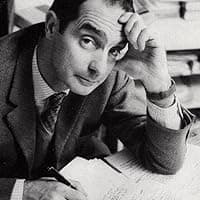
Italo Calvino
Italo Calvino was born in Cuba and grew up in Italy. He was a journalist and writer of short stories and novels. His best known works include the Our Ancestors trilogy (1952-1959), the Cosmicomics collection of short stories (1965), and the novels Invisible Cities (1972) and If On a Winter's Night a Traveler (1979). His style is not easy to classify; much of his writing has an air reminiscent to that of fantastical fairy tales (Our Ancestors, Cosmicomics), although sometimes his writing is more "realistic" and in the scenic mode of observation (Difficult Loves, for example). Some of his writing has been called postmodern, reflecting on literature and the act of reading, while some has been labeled magical realist, others fables, others simply "modern". He wrote: "My working method has more often than not involved the subtraction of weight. I have tried to remove weight, sometimes from people, sometimes from heavenly bodies, sometimes from cities; above all I have tried to remove weight from the structure of stories and from language."
23 Books Written

One of the New York Times ’s Ten Best Books of the These traditional stories of Italy, retold by a literary master, are “a treasure” ( Los Angeles Times ). Filled with kings and peasants, saints and ogres—as well as some quite extraordinary plants and animals—these two hundred tales bring to life Italy’s folklore, sometimes with earthy humor, sometimes with noble mystery, and sometime

A series of lectures which Italo Calvino wrote in the final year of his life. Drawing on the works of Lucretius, Ovid, Boccaccio, Flaubert, Kundera, Perec and many more, he pinpoints the universal laws and literary lightness, quickness, exactitude, visibility and multiplicity.

Italian novelist and short story writer Calvino has been accused of making protons, quarks and living cells talk as if they were people, but here he defends his approach as a kind of animism attuned to the way the universe works. His fascination with myth is evident in pieces on Ovid's Metamorphoses and the separate odysseys that make up Homer's Odyssey. Three intertwined essays on French utopian

A group of travellers chance to meet, first in a castle, then a tavern. Their powers of speech are magically taken from them and instead they have only tarot cards with which to tell their tales. What follows is an exquisite interlinking of narratives, and a fantastic, surreal, and chaotic history of all human consciousness.

"Kublai Khan does not necessarily believe everything Marco Polo says when he describes the cities visited on his expeditions, but the emperor of the Tartars does continue listening to the young Venetian with greater attention and curiosity than he shows any other messenger or explorer of his." So begins Italo Calvino's compilation of fragmentary urban images. As Marco tells the khan about Armilla,

These three stories, set during the summer of 1940, draw on Italo Calvino’s memories of his own adolescence during the Second World War, too young to be forced to fight in Mussolini’s army but old enough to be conscripted into the Italian youth brigades. The callow narrator of these tales observes the mounting unease of a city girding itself for war, the looting of an occupied French town, and nig

From one of modern literature’s most captivating and elusive masters comes a posthumous volume of thoughtful, elegant, and quick-witted autobiographical writings, all previously unpublished in English. Here is Italo Calvino paying homage to his literary influences and tracing the evolution of his signature style. Here are his reminiscences of Italy’s antifascist resistance and the frenzy of politi

A major testament by an essential 20th century writer composed of five strikingly elegant "memory exercises" about his life and work--now available in paperback. With visionary passion, the author traces pieces of his childhood and adolescence, his experiences during WWII, and more. "Storytelling at its best."--Chicago Tribune.

A landmark new translation of a Calvino classic, a whimsical, spirited novel that imagines a life lived entirely on its own termsCosimo di Rondó, a young Italian nobleman of the eighteenth century, rebels against his parents by climbing into the trees and remaining there for the rest of his life. He adapts efficiently to an existence in the forest canopy—he hunts, sows crops, plays gam

The last of Italo Calvino's works to appear during the author's lifetime, Collection of Sand is a group of essays never before published in English, discussing subjects ranging from cuneiform and antique maps to Mexican temples and Japanese gardens.

Italo Calvino's extraordinary imagination and intelligence combine here in an enchanting series of stories about the evolution of the universe. He makes his characters out of mathematical formulae and simple cellular structures. They disport themselves among galaxies, experience the solidification of planets, move from aquatic to terrestrial existence, play games with hydrogen atoms, and even have

“The thought . . . called up the flavors of an elaborate and bold cuisine, bent on making the flavors’ highest notes vibrate, juxtaposing them in modulations, in chords, and especially in dissonances that would assert themselves as an incomparable experience.” — From Under the Jaguar Sun These intoxicating stories delve down to the core of our senses. Taste, hearing, an

If on a Winter's Night a Traveler is a marvel of ingenuity, an experimental text that looks longingly back to the great age of narration—"when time no longer seemed stopped and did not yet seem to have exploded." Italo Calvino's novel is in one sense a comedy in which the two protagonists, the Reader and the Other Reader, ultimately end up married, having almost finished If on a Winter's

From the internationally acclaimed author of some of this century's most breathtakingly original novels comes this posthumous collection of thirty-six literary essays that will make any fortunate reader view the old classics in a dazzling new light.Learn why Lara, not Zhivago, is the center of Pasternak's masterpiece, Dr. Zhivago, and why Cyrano de Bergerac is the forerunner of

Contains 3 novellas originally published between 1952-1959: The Cloven Viscount, The Baron In the Trees, The Non-Existent Knight.
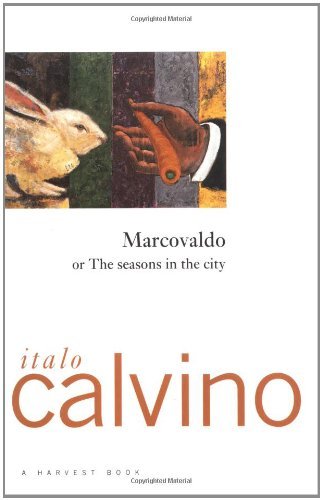
Marcovaldo is an unskilled worker in a drab industrial city in northern Italy. He is an irrepressible dreamer and an inveterate schemer. Much to the puzzlement of his wife, his children, his boss, and his neighbours, he chases his dreams - but the results are never the ones he had expected. Translated from the Italian by William Weaver.
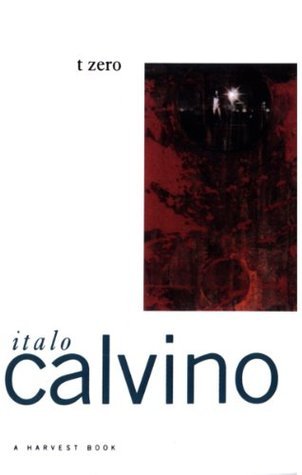
A collection of stories about time, space, and the evolution of the universe in which the author blends mathematics with poetic imagination. “Calvino does what very few other writers can do: he describes imaginary worlds with the most extraordinary precision and beauty” (Gore Vidal, New York Review of Books). Translated by William Weaver. A Helen and Kurt Wolff Book

For the first time in paperback--a volume of thirty-seven diabolically inventive stories, fables, and "impossible interviews" from one of the great fantasists of the 20th century, displaying the full breadth of his vision and wit. Written between 1943 and 1984 and masterfully translated by Tim Parks, the fictions in Numbers in the Dark display all of Calvino's dazzling whimsy and horror, exuberan

Mr Palomar is a delightful eccentric whose chief activity is looking at things. He is simply seeking knowledge; 'it is only after you have come to know the surface of things that you can venture to seek what is underneath'. Whether contemplating a fine cheese, a hungry gecko, a woman sunbathing topless or a flight of migrant starlings, Mr Palomar's observations render the world afresh.

Tales of love and loneliness in which the author blends reality and illusion. “The quirkiness and grace of the writing, the originality of the imagination at work,...and a certain lovable nuttiness make this collection well worth reading” (Margaret Atwood). Translated by William Weaver, Peggy Wright, and Archibald Colquhoun.

Two novellas: the first, a parody of medieval knighthood told by a nun; the second, a fantasy about a nobleman bisected into his good and evil halves. “Bravura pieces... executed with brilliance and brio”(Chicago Tribune). Translated by Archibald Colquhoun. A Helen and Kurt Wolff BookOriginally published as two distinct volumes: 'Il visconte dimezzato' (1952) and 'Il cavaliere inesiste

'Time is a catastrophe, perpetual and irreversible.'Science and fiction interweave delightfully in these playful Cosmicomic short stories.Penguin Modern: fifty new books celebrating the pioneering spirit of the iconic Penguin Modern Classics series, with each one offering a concentrated hit of its contemporary, international flavour. Here are authors ranging from Kat

The definitive edition of Calvino’s cosmicomics, bringing together all of these enchanting stories—including some never before translated—in one volume for the first timeIn Italo Calvino’s cosmicomics, primordial beings cavort on the nearby surface of the moon, play marbles with atoms, and bear ecstatic witness to Earth’s first dawn. Exploring natural phenomena and the origins of the u