
István Hargittai
Istvan Hargittai is a University Professor at the Institute of General and Analytical Chemistry, Budapest Technical University. He is also a Research Professor and Head of Department at the Structural Chemistry Research Group of the Hungarian Academy of Sciences at Eötvös University, and is a member of the Hungarian Academy of Sciences and the Academia Europaea (London).
28 Books Written

The Martians of Science: Five Physicists Who Changed the Twentieth Century
by István Hargittai
Rating: 3.7 ⭐
• 2 recommendations ❤️
If science has the equivalent of a Bloomsbury group, it is the five men born at the turn of the twentieth century in Theodore von Kármán, Leo Szilard, Eugene Wigner, John von Neumann, and Edward Teller. From Hungary to Germany to the United States, they remained friends and continued to work together and influence each other throughout their lives. As a result, their work was integral to some of the most important scientific and political developments of the twentieth century.They were an extraordinary group of Wigner won a Nobel Prize in theoretical physics; Szilard was the first to see that a chain reaction based on neutrons was possible, initiated the Manhattan Project, but left physics to try to restrict nuclear arms; von Neumann could solve difficult problems in his head and developed the modern computer for more complex problems; von Kármán became the first director of NASA's Jet Propulsion Laboratory, providing the scientific basis for the U.S. Air Force; and Teller was the father of the hydrogen bomb, whose name is now synonymous with the controversial "Star Wars" initiative of the 1980s. Each was fiercely opinionated, politically active, and fought against all forms of totalitarianism.István Hargittai, as a young Hungarian physical chemist, was able to get to know some of these great men in their later years, and the depth of information and human interest in The Martians of Science is the result of his personal relationships with the subjects, their families, and their contemporaries.

Many people know Edward Teller as the "Father of the H-Bomb." To his supporters he was a hero of the Cold War. To his detractors he was evil personified. Between these extremes was the life of the real man. In this definitive and comprehensive biography, a personal acquaintance of Teller's presents a balanced portrait of the multifaceted and enigmatic scientist against the backdrop of a turbulent period of history. Taking pains to avoid bias and preconceptions, thr author critically examines Teller's personality, family background, and the experiences that guided his actions-correcting many of the myths that others and Teller himself promulgated. Drawing for the first time on hitherto unknown archival material from Hungarian, American, and German sources, the author provides fresh insights that help the reader to understand Teller's motivations, his relationships with friends and foes, and his driven personality. In addition to this research and his own memories of Teller, Hargittai has interviewed such prominent figures as Richard Garwin, Freeman Dyson, George A. Keyworth, and Wendy Teller (Edward Teller's daughter), among others. The author reviews the significant facets of Teller's life: his Jewish-Hungarian origins, forced emigrations, brilliance in science, and devotion to the defense of the United States. He discusses Teller's ruthless Machiavellism in achieving his goals, which included his pivotal role in the creation of the hydrogen bomb and the second weapons laboratory at Livermore, as well as his damaging testimony against physicist J. Robert Oppenheimer. Teller's peers viewed this testimony as a betrayal and, in effect, sent him into internal exile, which Hargittai describes as more tormenting to him than his previous emigrations. The author notes that Teller was sometimes called "a monomaniac with many manias," such as his fierce opposition to nuclear test bans during the Cold War and, toward the end of his life, his role as propagandist for the Strategic Defense Initiative. Yet, his very excesses may have in fact contributed to the demise of the Soviet Union. Who was Edward Teller-the real "Dr. Strangelove," the driven crusader for the H-Bomb, the villain who destroyed Oppenheimer, or the devoted husband, loyal friend, patriot, and strongly idealistic scientist? This monumental work will reveal the contradictory nature of this complex man in all his strengths, flaws, and brilliance.

What motivates those few scientists who rise above their peers to achieve breakthrough discoveries? This book examines the careers of fifteen eminent scientists who achieved some of the most notable discoveries of the past century, providing an insider's perspective on the history of twentieth century science based on these engaging personality profiles. They · Dan Shechtman, the 2011 Nobel laureate and discoverer of quasicrystals;· James D. Watson, the Nobel laureate and codiscoverer of the double helix structure of DNA;· Linus Pauling, the Nobel laureate remembered most for his work on the structure of proteins;· Edward Teller, a giant of the 20th century who accomplished breakthroughs in understanding of nuclear fusion; · George Gamow, a pioneering scientist who devised the initially ridiculed and now accepted Big Bang.In each case, the author has uncovered a singular personality characteristic, motivational factor, or circumstance that, in addition to their extraordinary drive and curiosity, led these scientists to make outstanding contributions. For example, Gertrude B. Elion, who discovered drugs that saved millions of lives, was motivated to find new medications after the deaths of her grandfather and later her fiance. F. Sherwood Rowland, who stumbled upon the environmental harm caused by chlorofluorocarbons, eventually felt a moral imperative to become an environmental activist. Rosalyn Yalow, the codiscoverer of the radioimmunoassay always felt she had to prove herself in the face of prejudice against her as a woman. These and many more fascinating revelations make this a must-read for everyone who wants to know what traits and circumstances contribute to a person's becoming the scientist who makes the big breakthrough.

The Nobel Prize is by far the highest recognition a scientist may receive and the only one with which the general public is familiar. Its prestige has reached improbable heights. At the same time a lot of myth surrounds the Nobel Prize, and this is compounded by the fact that people tend toview scientists with some bewilderment.This book introduces the process of selection of the laureates, discusses the ingredients for scientific discovery and for getting recognition. It reviews the decisive moments of scientific careers en route to the Nobel Prize, points to characteristic features of the laureates, the importance ofmentors and venues in scientific careers and other components of success. It also covers some discoverers and discoveries for whom and for which the Nobel Prize never materialized.Whereas there is no general recipe for receiving the Nobel Prize, there are common features of successful scientific careers. The book reveals some information about the scientists' lives and careers that may guide other scientists in increasing their chances of becoming more effective and betterrecognized players--although it is not expected to help anyone to receive the Nobel Prize!For the general reader The Road to Stockholm reveals the human face of scientists and the human side of their endeavours. The Nobel Prize has served as inspiration for scientists and the general public for a hundred this book discusses its problems and celebrates its triumphs.

Moscow's Novodevichy Cemetery is the final resting place of some of Russia's most celebrated figures, from Khrushchev and Yeltsin to Anton Chekhov, Sergei Eisenstein, Nikolai Gogol, and Mikhail Bulgakov. Using this famed cemetery as symbolic starting point, Buried Glory profiles a dozen eminent Soviet scientists-nine of whom are buried at Novodevichy-men who illustrate both the glorious heights of Soviet research as well as the eclipse of science since the collapse of the USSR.Drawing on extensive archival research and his own personal memories, renowned chemist Istvan Hargittai bring these figures back to life, placing their remarkable scientific achievements against the tense political backdrop of the Cold War. Among the eminent scientists profiled here are Petr L. Kapitza, one of the most brilliant representatives of the great generation of Soviet physicists, a Nobel-Prize winner who risked his career-and his life-standing up for fellow scientists against Stalin. Yulii B. Khariton, who ran the highly secretive Soviet nuclear weapons laboratory, Arzamas-16, despite being Jewish and despite the fact that his father Boris had been sent to the labor camps. And Andrei D. Sakharov, the "father of the Soviet hydrogen bomb" and a brilliant fighter for human rights, for which he won the Nobel Peace Prize. Along the way, Hargittai shines a light on the harrowing conditions under which these brilliant researchers excelled. Indeed, in the post-war period, Stalin's anti-Semitism and ongoing anti-science measures devastated biology, damaged chemistry, and nearly destroyed physics. The latter was saved only because Stalin realized that without physics and physicists there could be no nuclear weapons.The extraordinary scientific talent nurtured by the Soviet regime belongs almost entirely to the past. Buried Glory is both a fitting tribute to these great scientists and a fascinating account of scientific work behind the Iron Curtain.

Explains the scientific concept of symmetry, looks at various types of symmetry, and shows examples in design, ornament, art, and nature

WISDOM OF THE MARTIANS OF SCIENCE: IN THEIR OWN WORDS WITH COMMENTARIES
by István Hargittai
Rating: 4.8 ⭐
Wisdom of the Martians of Science refers to five scientists whose brilliance contributed to shaping the modern world. John von Neumann was a pioneer of the modern computer; Theodore von Kármán was the scientist behind the US Air Force; Leo Szilard initiated the development of nuclear weapons; the Nobel laureate Eugene P Wigner was the world's first nuclear engineer; and Edward Teller was the father of the hydrogen bomb. They were born and raised in Budapest, were forced out of Hungary and then from Germany, they became Americans, and devoted themselves to the defense of the United States and the Free World. They contributed significant discoveries to fundamental science ranging from the properties of materials to the application of the symmetry principle in physics, to creating information theory, to game theory. The areas in which we can learn about their wisdom include applications of science to past, present and future real-world needs; defense; education; environment; human nature; humor; politics; religion; weather modification, and others. This book shows the wisdom of the Martians by presenting their thoughts and ideas in their own words and placing them into context. Their wisdom is intriguing, witty, provocative and thought provoking. It extended over many aspects of life and culture that impinge on our existence. While we cannot always agree with what they say, they are never boring. The power of their words and their philosophies will inspire the readers to pursue their own dreams.

It is gratifying to launch the third edition of our book. Its coming to life testi?es about the task it has ful?lled in the service of the com- nity of chemical research and learning. As we noted in the Prefaces to the ?rst and second editions, our book surveys chemistry from the point of view of symmetry. We present many examples from ch- istry as well as from other ?elds to emphasize the unifying nature of the symmetry concept. Our aim has been to provide aesthetic pl- sure in addition to learning experience. In our ?rst Preface we paid tribute to two books in particular from which we learned a great deal; they have in?uenced signi?cantly our approach to the subject matter of our book. They are Weyl’s classic, Symmetry, and Shubnikov and Koptsik’s Symmetry in Science and Art. The structure of our book has not changed. Following the Int- duction (Chapter 1), Chapter 2 presents the simplest symmetries using chemical and non-chemical examples. Molecular geometry is discussed in Chapter 3. The next four chapters present gro- theoretical methods (Chapter 4) and, based on them, discussions of molecular vibrations (Chapter 5), electronic structures (Chapter 6), and chemical reactions (Chapter 7). For the last two chapters we return to a qualitative treatment and introduce space-group sym- tries (Chapter 8), concluding with crystal structures (Chapter 9). For the third edition we have further revised and streamlined our text and renewed the illustrative material.
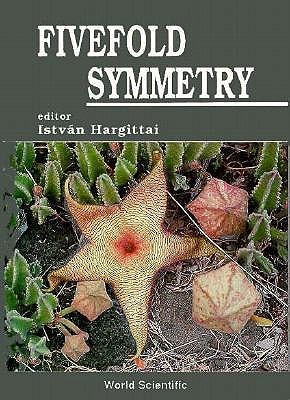
Fivefold symmetry is common in flowers, fruits, molecules, logos, and buildings, but it is a forbidden symmetry in the world of crystals. A few years ago, the so-called quasicrystals were discovered displaying fivefold symmetry, and it caused a minirevolution in crystallography. There has been increased awareness of fivefold symmetry in all domains of human interest ever since. The present book brings together authors and ideas on a common theme from mathematics, the sciences, design, and anthropology to history, literature, and the arts. Its 29 chapters are an offering by scientists and humanists from 13 countries to a broad readership of professionals and laypersons about fivefold symmetry and the areas that are being bridged by this unique concept.

Hargittai István tudománytörténész, számos interjúkönyv készítője 2020 elején életútinterjúba kezdett Komoróczy Gézával. „Úgy terveztük, hogy keddenként és péntekenként találkozunk Géza Trefort-kerti dolgozójában, és ez négy alkalommal meg is valósult – emlékszik az első beszélgetésekre a könyvhöz írt előszavában Hargittai István. – Aztán beütött a koronavírus, és már nem tudtunk az egyetemen találkozni. Nálunk otthon folytattuk, de két alkalom után jöttek a kijárási korlátozások, és akkor következett az e-mail.”„Ez a könyv, s ezt mindjárt az első mondatomban le akarom szögezni: ez a könyv Hargittai István könyve – teszi hozzá saját előszavában Komoróczy Géza. – Benne ötlött fel a – mint mondta –»hosszabb« interjú ötlete, ő tette fel sorra a kérdéseket, ő alakította ki a könyv szerkezetét, rendezte el olykor divergáló válaszaimat, gyűjtötte a fényképeket, adott címet a kötetnek. Ezzel a megjegyzéssel nem a felelősséget akarom őrá hárítani, mert hát a válaszok az én szavaim. A válaszokon István gyengéd szerkesztői munkát végzett, de érdemben nem változtatta meg őket. Valódi interjút adunk az olvasó kezébe: kérdéseket és válaszokat.”A könyvet olvasva képet kapunk Komoróczy Géza felvidéki gyerekkoráról, a háború után az anyaországba visszatoloncolt család keserves éveiről, egyetemi tanulmányairól, keleti és nyugati utazásairól, szerteágazó érdeklődéséről és kapcsolatairól. Feltárja önazonossága merőben egyedülálló alakulását (református nemesi család sarja, aki zsidó identitású lesz egy jórészt antiszemita közegben), és a rendszerváltás utáni évtizedek politikai, kulturális és tudományos életéről is kíméletlen pontossággal mondja el véleményét.Jeremiás nyomában – a könyvcím magyarázataként Komoróczy Gézát idézi Hargittai István: „Géza ezt mondja a prófétáról: »Nekem Jeremiás mindig is az igazi prófétai személyiségem volt, aki, ha lát egy falat, azonnal nekimegy. Én mindig ez szerettem volna lenni.« Az én olvasatomban a fal nem csak azt jelentette Géza számára, hogy ha van ott egy fal, annak neki kell menni. Azt is jelenthette, hogy hiába van ott a fal, azt semmibe kell venni.”

In this book, 36 famous chemists, including 18 Nobel laureates, tell about their lives in science, the beginnings of their careers, their aspirations, and their hardships and triumphs. The reader will learn about their seminal discoveries, and the conversations in the book bring out the humanity of these great scientists. NMR spectroscopy, computational chemistry, the drama of buckminsterfullerene, the story of the Pill, the politics of atmospheric chemistry and the resonance theory, the beginnings of molecular mechanics and modern stereochemistry are examples of the topics discussed first-hand by, in all likelihood, the most appropriate persons.

Kármán Tódor, Szilárd Leó, Wigner Jenő, Neumann János és Teller Ede különleges csoportot alkottak; nemcsak nagy tudósok voltak, hanem az Egyesült Államok és a szabad világ védelmében is tevékenyen részt vettek a II. világháborúban, majd a hidegháború idején. A tudományban Kármánt a modern aerodinamika, Neumannt pedig a modern számítógép atyjaként emlegetik, Szilárd ismerte fel a nukleáris láncreakció lehetőségét, a Nobel-díjas Wigner a szimmetriát építette be az atomfizikába, Tellernek molekulafizikai és magfizikai kutatásai voltak jelentősek. Fontosabb azonban, hogy Kármán szolgáltatta a modern amerikai légierő tudományos hátterét, Szilárd kezdeményezte az első atombomba megvalósítását, Wigner volt a világ első nukleáris mérnöke, Neumann újításaival döntő módon járult hozzá az atomfegyverek és az interkontinentális rakéták kifejlesztéséhez, Teller pedig elérte azt, hogy a szovjet fenyegetés árnyékában az Egyesült Államok megteremtse a hidrogénbombát, ami a két szuperhatalom között évtizedekre biztosította a békét. Hargittai István könyve nemcsak a marslakók teljesítményével ismerteti meg az olvasót, hanem zárkózott, sokszor ellentmondásos egyéniségüket is emberközelbe hozza. Nemcsak az öt tudósról rajzol árnyalt képet, hanem arról a korról is, amelyben éltek, és amelynek sok más szereplője is megjelenik a könyv lapjain.

Three in-depth conversations with the Nobel laureate co-discoverer of the double helix and the first director of the Human Genome Project cover a wide range of topics, including progress in science; the scientist's role in modern life; women in science; scientific ethics; terrorism; religion; multiculturalism; and how genetics may improve human lives. Reflections by further illustrious contributors to the scientific revolution and the author's commentaries provide a glimpse into the thinking of scientists who largely determine the progress of humankind in our time.

A 20. század egyik legnagyobb horderejű fejleménye a Szovjetunió kialakulása és világhatalmi státuszra való emelkedése. Ez utóbbiban döntő szerepet játszottak a szovjet tudósok. A Szovjetunió technológiai-katonai vetélkedése az Egyesült Államokkal, amellett hogy izgalmas, fordulatokban gazdag történet (a szovjet atombomba az amerikai hű mása a sikeres kémkedésnek köszönhetően), alapvetően határozta meg az emberiség közelmúltjának történelmét.Hargittai István tizennégy nagy szovjet tudóst kelt életre legújabb könyvében, személyes ismeretségeire, interjúkra, levéltári és egyéb anyagokra támaszkodva. A hátteret a szovjet történelem meghatározó korszakai nyújtják, a szovjet hatalmi rendszer kialakulása, a Nagy Honvédő Háború, a háború előtti és háború utáni sztálini terror, a hidegháború évtizedei, köztük az olvadás, majd a stagnálás kora.A könyv hősei között egyaránt ott vannak a nemzetközileg ismert és az eleddig jószerivel ismeretlen nagy tudósok. A Nobel-díjas Pjotr Kapica kockára tette nemcsak tudományos pályáját, de még az életét is, amikor Sztálinnal szemben fellépett tudóstársai megmentéséért. A zsidó Julij Hariton annyira nélkülözhetetlen volt, hogy Sztálin legvéresebb antiszemita kampánya közepette nevezték ki a szovjet atombomba-laboratórium tudományos vezetőjének. A Nobel-békedíjas Andrej Szaharov előbb a szovjet hidrogénbomba kifejlesztését vezette, majd a legismertebb szovjet emberjogi harcos lett.Hargittai István szemléletesen mutatja be azokat a szinte lehetetlen körülményeket, amelyek között ezek a tudósok és társaik kiválót alkottak. Sztálin antiszemitizmusa könyörtelen tudományellenességgel párosult, a szovjet vezetés évtizedekre tönkretette a szovjetunióbeli biológiát és kibernetikát, és óriási károkat okozott a kémiának. Már előkészítették a modern fizika szétrombolását is, amikor az utolsó pillanatban megértették, hogy modern fizika és fizikusok nélkül nem juthatnak atomfegyverekhez. Sztálin akkor kijelentette, hadd dolgozzanak, a kivégzésükre később is sort keríthetnek.A szovjet időkben elért tudományos sikerek mára már beépültek a történelembe, de a vasfüggöny mögötti tudomány és tudósok megismerése és megértése nélkül nem érthetjük meg mindazt, ami a viharos huszadik században történt.

In this invaluable book, 36 famous chemists, including 18 Nobel laureates, tell the reader about their lives in science, the beginnings of their careers, their aspirations, and their hardships and triumphs. The reader will learn about their seminal discoveries, and the conversations in the book bring out the humanity of these great scientists. Highlighted in the stories are the discovery of new elements and compounds, the VSEPR model, computational chemistry, organic synthesis, natural products, polysaccharides, supramolecular chemistry, peptide synthesis, combinatorial chemistry, X-ray crystallography, the reaction mechanism and kinetics, electron transfer in small and large systems, non-equilibrium systems, oscillating reactions, atmospheric chemistry, chirality, and the history of chemistry.

Candid Science VI concludes the series by narrating the conversations with famous scientists from the biomedical sciences, chemistry, and physics. There are 31 Nobel laureates and 11 other luminaries among them. The scientists are in the field of biomedical sciences, chemistry and physics.

This guidebook introduces the reader to the visible memorabilia of science and scientists in Budapest - statues, busts, plaques, buildings, and other artefacts. According to the Hungarian-American Nobel laureate Albert Szent-Gyorgyi, this metropolis at the crossroads of Europe has a special atmosphere of respect for science. It has been the venue of numerous scientific achievements and the cradle, literally, of many individuals who in Hungary, and even more beyond its borders, became world-renowned contributors to science and culture.Six of the eight chapters of the book cover the Hungarian Nobel laureates, the Hungarian Academy of Sciences, the university, the medical school, agricultural sciences, and technology and engineering. One chapter is about selected secondary schools from which seven Nobel laureates (Szent-Gyorgyi, de Hevesy, Wigner, Gabor, Harsanyi, Olah, and Kertesz) and the five "Martians of Science" (von Karman, Szilard, Wigner, von Neumann, and Teller) had graduated. The concluding chapter is devoted to scientist martyrs of the Holocaust.A special feature in surveying Hungarian science is the contributions of scientists that left their homeland before their careers blossomed and made their seminal discoveries elsewhere, especially in Great Britain and the United States. The book covers the memorabilia referring to both emigre scientists and those that remained in Hungary.The discussion is informative and entertaining. The coverage is based on the visible memorabilia, which are not necessarily proportional with achievements. Therefore, there is a caveat that one could not compile a history of science relying solely on the presence of the memorabilia.

From the tiny twisted biological molecules to the gargantuan curling arms of many galaxies, the physical world contains a startling repetition of spiral patterns. Today, researchers have a keen interest in identifying, measuring, and defining these patterns in scientific terms. Spirals play an important role in the growth processes of many biological forms and organisms. Also, through time, humans have imitated spiral motifs in their art forms, and invented new and unusual spirals which have no counterparts in the natural world. Therefore, one goal of this multiauthored book is to stress the conspicuous role that spirals play in science, and to show the reader how to create such spirals using a computer. Another goal is to show how simple mathematical formulas can reveal magnificent shapes and images. This interdisciplinary book revolves around a common theme, spiral symmetry, and is intended for scientists, humanists, and interested laypeople.

Candid Science IV: Conversations with Famous Physicists contains 36 interviews with well-known physicists, including 20 Nobel laureates, Templeton Prize winners, Wolf Prize winners, and other luminaries. Physics has been one of the determining fields of science in the past 100 years, playing a conspicuous role not only in science but also in world politics and economics. These in-depth conversations provide a glimpse into the greatest achievements of physics during the past few decades, featuring stories of the discoveries, and showing the human drama behind them. The greatest physicists are brought into close human proximity as if readers were having a conversation with them. The interviewees span a wide range of scientists, from such early giants as Eugene Wigner and Mark Oliphant to members of the youngest generation such as the 2001 Nobel laureate Wolfgang Ketterle. The list includes famous personalities of our time, such as Steven Weinberg, Leon Lederman, Norman Ramsey, Edward Teller, John Wheeler, Mildred Dresselhaus, Maurice Goldhaber, Benoit Mandelbrot, John Polkinghorne, and Freeman Dyson.

"Az emberi kultúrának a tudomány az alapja, ezért kell a legszélesebb körben terjeszteni." Bay ZoltánHargittai István Széchenyi-díjas akadémikus, a BMGE Általános és Analitikai Kémia Tanszékének egyetemi tanára, az ELTE-MTA Szerkezeti Kémiai Tanszéki Kutatócsoportjának vezetője, kutatóprofesszora.Hargittai Magdolna Széchenyi-díjas, a kémiai tudomány doktora, az ELTE-MTA Szerkezeti Kémiai Tanszéki Kutatócsoportjának tudományos tanácsadója.A szerzők eredeti hangvételű, lebilincselő műben tárják elénk a szimmetriának az életben, különösképp a tudományban játszott központi szerepét. Számos jelentős tudós példáján mutatják be azt az utat, amely a gondolattól rengeteg kísérleten át - sokszor tévedésekkel tűzdelve - a tudományos felfedezésekig vezet.

Brilliance in Exile: The Diaspora of Hungarian Scientists from John von Neumann to Katalin Karikó
by István Hargittai
Rating: 5.0 ⭐
By addressing the enigma of the exceptional success of Hungarian emigrant scientists and telling their life stories, Brilliance in Exile combines scholarly analysis with fascinating portrayals of uncommon personalities. István and Balazs Hargittai discuss the conditions that led to five different waves of emigration of scientists from the early twentieth century to the present. Although these exodes were driven by a broad variety of personal motivations, the attraction of an open society with inclusiveness, tolerance, and – needless to say – better circumstances for working and living, was the chief force drawing them abroad. While emigration from East to West is a general phenomenon, this book explains why and how the emigration of Hungarian scientists is distinctive. The high number of Nobel Prizes among this group is only one indicator. Multicultural tolerance, a quickly emerging, considerably Jewish, urban middle class, and a very effective secondary school system were positive legacies of the Austro-Hungarian Monarchy. Multiple generations, shaped by these conditions, suffered from the increasingly exclusionist, intolerant, antisemitic, and economically stagnating environment, and chose to go elsewhere. "I would rather have roots than wings, but if I cannot have roots, I shall use wings," explained Leo Szilard, one of the fathers of the Atom Bomb.

The title of our volume refers to what is well described by the following two quota "Godcreated man in his own image"l and "Man creates God in his own image."2 Our approach to symmetry is subjective, and the term "personal" symmetry reflects this approach in our discussion of selected scientific events. We have chosen six icons to symbolize six Kepler for modeling, Fuller for new molecules, Pauling for helical structures, Kitaigorodskii for packing, Bernal for quasicrystals, and Curie for dissymmetry. For the past three decades we have been involved in learning, thinking, speaking, and writing about symmetry. This involvement has augmented our principal activities in molecular structure research. Our interest in symmetry had started with a simple fascination and has evolved into a highly charged personal topic for us. At the start of this volume, we had had several authored and edited symmetry related books behind 3 us. We owe a debt of gratitude to the numerous people whose interviews are quoted 4 in this volume. We very much appreciate the kind and gracious cooperation of Edgar J. Applewhite (Washington, DC), Lawrence S. Bartell (University of Michigan), R.


This invaluable book contains 36 interviews, including 26 with Nobel laureates. It presents a cross-section of biomedical science, a field that has been dominant in science for the past half century. The in-depth conversations cover important research areas and discoveries, as well as the roads to these discoveries, including aspects of the scientists' work that never saw publication. They also bring out the humanness of the famous scientists - the reader learns about their backgrounds, aspirations, failings, and triumphs. The book is illustrated with snapshots of the conversations and photos provided by the interviewees. It is a follow-up to the critically acclaimed Candid Conversations with Famous Chemists, by the same author.


This book introduces the reader to the visible memorabilia of science and scientists in all the five boroughs of New York City - statues, busts, plaques, buildings, and other artifacts. In addition, it extends to some scientists and institutions currently operating in the city. New York has been known as a world center of commerce, finance, communications, transportation, and culture, but it also is a world center in science. The city is home to renowned universities and research laboratories, a museum of natural history and other museums related to science, a science academy, historical societies, botanical gardens and zoos, libraries, and a Hall of Science as well as a large number of world-renowned scientists. The book pays special attention to the role of this city in welcoming persecuted scientists and letting African-American and women scientists thrive. The book is presented in an informative and entertaining way, dotted with scientific gossip and anecdotes, and can beenjoyed even without the reader's actual presence in the city. Over eight hundred photographs illustrate the book. They may induce the reader to make their own discoveries in New York.

Moscow is the center of science and higher education of Russia and is also an international hub of science. There have been milestone achievements of science in Russia (and the Soviet Union), especially in the areas of physics, chemistry, mathematics, the conquest of space, various technologies and medicine. However, the scientists and inventors often created in isolation and have become less known than their discoveries would justify. At the same time, there is no other city in the world that has so many memorials honoring scientists as Moscow. There is a caveat in that political considerations have often influenced who was remembered and who was not. This book presents statues, memorial plaques, and historical buildings. Not only celebrated excellences are mentioned, but also some of the greats that perished during the years of terror. The book is full of human drama and 750 photos illustrate the narrative. Science in Moscow follows Budapest Scientific and New York Scientific and is the third in the series about memorials of scientists in great cities of the world.Readership: Intellectuals interested in 20th century history — both political and science Science historians; Students of Russia, Russian/Soviet history; International scientists, especially planning a visit to Moscow; Teachers, medical doctors, engineers with an international outlook.

Ez a könyv öt híres tudósról szól, akik hasonló pályát futottak be a huszadik század rögös körülményei között. Zsidó-magyarok lévén az Egyesült Államokba kellett emigrálniuk. Kiváló tudósként a modern fizika és számítástudomány vezető kutatói voltak. A demokrácia és az emberi szabadság híveként fontos szerepet vállaltak az ezekért az eszmékért folyó globális küzdelemben. Hargittai Balázs és Hargittai István könyve az öt tudós írásaiból vett idézeteken keresztül mutatja be nézeteiket, érzéseiket és bölcsességüket, amihez a szerzők megjegyzéseket is fűznek. Mindezek együtt magával ragadó, emlékezetes és időnként provokatív olvasmányt nyújtanak.Lovász László, a Magyar Tudományos Akadémia elnöke