
Ian Morris
29 Books Written
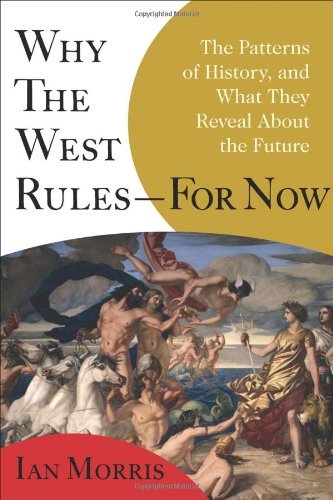
Why the West Rules-for Now: The Patterns of History & What They Reveal About the Future
by Ian Morris
Rating: 4.1 ⭐
• 2 recommendations ❤️
A New York Times Notable Book for 2011 Sometime around 1750, English entrepreneurs unleashed the astounding energies of steam and coal, and the world was forever changed. The emergence of factories, railroads, and gunboats propelled the West's rise to power in the nineteenth century, and the development of computers and nuclear weapons in the twentieth century secured its global supremacy. Now, at the beginning of the twenty-first century, many worry that the emerging economic power of China and India spells the end of the West as a superpower. In order to understand this possibility, we need to look back in time. Why has the West dominated the globe for the past two hundred years, and will its power last? Describing the patterns of human history, the archaeologist and historian Ian Morris offers surprising new answers to both questions. It is not, he reveals, differences of race or culture, or even the strivings of great individuals, that explain Western dominance. It is the effects of geography on the everyday efforts of ordinary people as they deal with crises of resources, disease, migration, and climate. As geography and human ingenuity continue to interact, the world will change in astonishing ways, transforming Western rule in the process. Deeply researched and brilliantly argued, Why the West Rules―for Now spans fifty thousand years of history and offers fresh insights on nearly every page. The book brings together the latest findings across disciplines―from ancient history to neuroscience―not only to explain why the West came to rule the world but also to predict what the future will bring in the next hundred years.

War! What Is It Good For?: Conflict and the Progress of Civilization from Primates to Robots
by Ian Morris
Rating: 3.9 ⭐
A powerful and provocative exploration of how war has changed our society―for the better"War! . . . . / What is it good for? / Absolutely nothing," says the famous song―but archaeology, history, and biology show that war in fact has been good for something. Surprising as it sounds, war has made humanity safer and richer. In War! What Is It Good For? , the renowned historian and archaeologist Ian Morris tells the gruesome, gripping story of fifteen thousand years of war, going beyond the battles and brutality to reveal what war has really done to and for the world. Stone Age people lived in small, feuding societies and stood a one-in-ten or even one-in-five chance of dying violently. In the twentieth century, by contrast―despite two world wars, Hiroshima, and the Holocaust―fewer than one person in a hundred died violently. The War, and war alone, has created bigger, more complex societies, ruled by governments that have stamped out internal violence. Strangely enough, killing has made the world safer, and the safety it has produced has allowed people to make the world richer too. War has been history's greatest paradox, but this searching study of fifteen thousand years of violence suggests that the next half century is going to be the most dangerous of all time. If we can survive it, the age-old dream of ending war may yet come to pass. But, Morris argues, only if we understand what war has been good for can we know where it will take us next.

In the wake of Brexit, Ian Morris chronicles the ten-thousand-year history of Britain's relationship to Europe as it has changed in the context of a globalizing world.When Britain voted to leave the European Union in 2016, the 48 percent who wanted to stay and the 52 percent who wanted to go each accused the other of stupidity, fraud, and treason. In reality, the Brexit debate merely reran a script written ten thousand years earlier, when the rising seas physically separated the British Isles from the European continent. Ever since, geography has been destiny―yet it is humans who get to decide what that destiny means.Ian Morris, the critically acclaimed author of Why the West Rules―for Now , describes how technology and organization have steadily enlarged Britain’s arena, and how its people have tried to turn this to their advantage. For the first seventy-five hundred years, the British were never more than bit players at the western edge of a European stage, struggling to find a role among bigger, richer, and more sophisticated continental rivals. By 1500 CE, however, new kinds of ships and governments had turned the European stage into an Atlantic one; with the English Channel now functioning as a barrier, England transformed the British Isles into a United Kingdom that created a worldwide empire. Since 1900, thanks to rapid globalization, Britain has been overshadowed by American, European, and―increasingly―Chinese actors.In trying to find its place in a global economy, Britain has been looking in all the wrong places. The ten-thousand-year story bracingly chronicled by Geography Is Destiny shows that the great question for the current century is not what to do about Brussels; it’s what to do about Beijing.
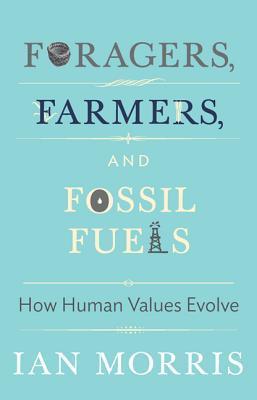
Most people in the world today think democracy and gender equality are good, and that violence and wealth inequality are bad. But most people who lived during the 10,000 years before the nineteenth century thought just the opposite. Drawing on archaeology, anthropology, biology, and history, Ian Morris explains why. Fundamental long-term changes in values, Morris argues, are driven by the most basic force of all: energy. Humans have found three main ways to get the energy they need--from foraging, farming, and fossil fuels. Each energy source sets strict limits on what kinds of societies can succeed, and each kind of society rewards specific values. But if our fossil-fuel world favors democratic, open societies, the ongoing revolution in energy capture means that our most cherished values are very likely to turn out not to be useful any more. Foragers, Farmers, and Fossil Fuels offers a compelling new argument about the evolution of human values, one that has far-reaching implications for how we understand the past--and for what might happen next. Originating as the Tanner Lectures delivered at Princeton University, the book includes challenging responses by classicist Richard Seaford, historian of China Jonathan Spence, philosopher Christine Korsgaard, and novelist Margaret Atwood.

Organized chronologically, this text presents a complete picture of Greek civilization as a history and features sections on the art, architecture, literature, and thought of each period.

The Measure of Civilization: How Social Development Decides the Fate of Nations
by Ian Morris
Rating: 3.7 ⭐
A groundbreaking look at Western and Eastern social development from the end of the ice age to todayIn the past thirty years, there have been fierce debates over how civilizations develop and why the West became so powerful. The Measure of Civilization presents a brand-new way of investigating these questions and provides new tools for assessing the long-term growth of societies. Using a groundbreaking numerical index of social development that compares societies in different times and places, award-winning author Ian Morris sets forth a sweeping examination of Eastern and Western development across 15,000 years since the end of the last ice age. He offers surprising conclusions about when and why the West came to dominate the world and fresh perspectives for thinking about the twenty-first century.Adapting the United Nations' approach for measuring human development, Morris's index breaks social development into four traits―energy capture per capita, organization, information technology, and war-making capacity―and he uses archaeological, historical, and current government data to quantify patterns. Morris reveals that for 90 percent of the time since the last ice age, the world's most advanced region has been at the western end of Eurasia, but contrary to what many historians once believed, there were roughly 1,200 years―from about 550 to 1750 CE―when an East Asian region was more advanced. Only in the late eighteenth century CE, when northwest Europeans tapped into the energy trapped in fossil fuels, did the West leap ahead.Resolving some of the biggest debates in global history, The Measure of Civilization puts forth innovative tools for determining past, present, and future economic and social trends.

There has recently been an explosion of interest in positive psychology and the teaching of well-being and ‘happiness' in the PSHE world in schools and many teachers are looking for clear information on how to implement these potentially life-changing ideas in the classroom. This book provides an introduction to the theory of positive psychology and a practical guide on how to implement the theory in (primarily secondary) schools. The American psychologist and writer Martin Seligman, well known for his work on the idea of ‘learned helplessness', has more recently been working in the field of positive psychology. He has led training in resilience in a number of UK local authorities. Wellington College, where Ian Morris is head of philosophy, religion and PSHE, is among the first UK schools to introduce a formal well-being and happiness curriculum developed by the author.
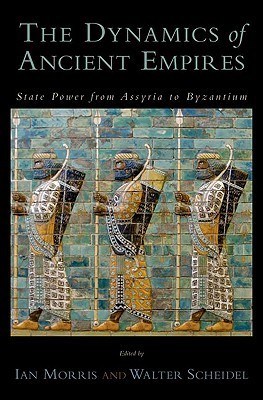
The world's first known empires took shape in Mesopotamia between the eastern shores of the Mediterranean Sea and the Persian Gulf, beginning around 2350 BCE. The next 2,500 years witnessed sustained imperial growth, bringing a growing share of humanity under the control of ever-fewer states. Two thousand years ago, just four major powers--the Roman, Parthian, Kushan, and Han empires--ruled perhaps two-thirds of the earth's entire population. Yet despite empires' prominence in the early history of civilization, there have been surprisingly few attempts to study the dynamics of ancient empires in the western Old World comparatively. Such grand comparisons were popular in the eighteenth century, but scholars then had only Greek and Latin literature and the Hebrew Bible as evidence, and necessarily framed the problem in different, more limited, terms. Near Eastern texts, and knowledge of their languages, only appeared in large amounts in the later nineteenth century. Neither KarlMarx nor Max Weber could make much use of this material, and not until the 1920s were there enough archaeological data to make syntheses of early European and west Asian history possible. But one consequence of the increase in empirical knowledge was that twentieth-century scholars generally defined the disciplinary and geographical boundaries of their specialties more narrowly than their Enlightenment predecessors had done, shying away from large questions and cross-cultural comparisons. As a result, Greek and Roman empires have largely been studied in isolation from those of the Near East. This volume is designed to address these deficits and encourage dialogue across disciplinary boundaries by examining the fundamental features of the successive and partly overlapping imperial states that dominated much of the Near East and the Mediterranean in the first millennia BCE and CE.A substantial introductory discussion of recent thought on the mechanisms of imperial state formation prefaces the five newly commissioned case studies of the Neo-Assyrian, Achaemenid Persian, Athenian, Roman, and Byzantine empires. A final chapter draws on the findings of evolutionary psychology to improve our understanding of ultimate causation in imperial predation and exploitation in a wide range of historical systems from all over the globe. Contributors include John Haldon, Jack Goldstone, Peter Bedford, Josef Wiesehöfer, Ian Morris, Walter Scheidel, and Keith Hopkins, whose essay on Roman political economy was completed just before his death in 2004.
The chief purpose of this book is to show how burials may be used as a uniquely informative source for Greek and Roman social history. Burials permit a far wider range of inference and insight than the literary texts produced by and for a narrow social elite, and by studying them in depth Dr. Morris is able to offer new interpretations of social change in Graeco-Roman antiquity. The major interdisciplinary importance of the book lies in its attempt to break down barriers between archaeologists and historians of different societies and cultures.

This volume is the first English-language survey of Homeric studies to appear for more than a generation, and the first such work to attempt to cover all fields comprehensively. Thirty leading scholars from Europe and America provide short, authoritative overviews of the state of knowledge and current controversies in the many specialist divisions in Homeric studies. The chapters pay equal attention to literary, mythological, linguistic, historical, and archaeological topics, ranging from such long-established problems as the "Homeric Question" to newer issues like the relevance of narratology and computer-assisted quantification. The collection, the third publication in Brill's handbook series, "The Classical Tradition," will be valuable at every level of study - from the general student of literature to the Homeric specialist seeking a general understanding of the latest developments across the whole range of Homeric scholarship.

This study of the changing relationships between burial rituals and social structure in Early Iron Age Greece will be required reading for all archaeologists working with burial evidence, in whatever period. This book differs from many topical studies of state formation in that unique and particular developments are given as much weight as those factors which are common to all early states. The ancient literary evidence and the relevant historical and anthropological comparisons are extensively drawn on in an attempt to explain the transition to the city-state, a development which was to have decisive effects for the subsequent development of European society.

This book shows the reader how much archaeologists can learn from recent developments in cultural history.


Game Plan: How Real Estate Professionals Can Thrive in an Uncertain Future
by Ian Morris
Rating: 3.5 ⭐
For most of the last 30 years, there s been a feeling of insecurity among real estate professionals. Will buyers and sellers forgo the use of our services and buy and sell without us? Will the Internet enable them to do so? Will some outside force intrude in our business, steal our relationships and cut into our incomes? Behind the scenes and in some cases, out in the open these discussions have been going on for the last 30 years. There s always another threat looming over the Some monstrous outside force, perhaps new forms of government regulation, a change in the mortgage interest deduction or some other change in the legal environment that will erode the business of brokerage. Big banks could wreak havoc or a technology behemoth might rip our customers away. While the types of threats and the level of them have changed over the years, the feeling that disaster is just around the corner has been a part of the DNA of the residential brokerage industry throughout the modern age. Perhaps it s the perception that the money is too good, the level of effort too low or the requirements too easy for real estate professionals to make a living. While paranoia is too strong a word, an underlying sense of unease permeates the profession.

The Motorcycle Hearse and Other Undertakings: Stories from the Life and Work of a Hospital Chaplain
by Ian Morris
Rating: 5.0 ⭐

Geografía y destino: La lucha por el poder entre Gran Bretaña, Europa y el mundo
by Ian Morris
Rating: 4.0 ⭐

Domesday Leicestershire

‘Voortreffelijke schrijver’ – Bas HeijneOorlog heeft z’n voordelen.Als er naar de grote lijn in de geschiedenis wordt gekeken, is de enig mogelijke conclusie dat oorlog het leven op aarde veiliger en vredelievender heeft gemaakt. De cijfers liegen niet. De twintigste eeuw kende twee gruwelijke wereldoorlogen met het hoogste aantal slachtoffers ooit. Maar in deze eeuw stierf het laagste percentage van de mensheid door een geweldsoorzaak.In Verwoesting & vooruitgang komt Morris met onthutsende conclusies over onze toekomst. Hij schrijft met lef en is niet bang om heilige huisjes aan te pakken.Grootse, prikkelende geschiedschrijving op haar best.Ian Morris (1953) is historicus en archeoloog. Hij is hoogleraar Klassieke Oudheid, hoogleraar Geschiedenis en directeur van het Archeology Centre aan Stanford University. Morris heeft al vele boeken geschreven, waaronder boeken over de Griekse geschiedenis en de economie in de oudheid.

War! What Is It Good For? Lib/E: Conflict and the Progress of Civilization from Primates to Robots
by Ian Morris
Rating: 5.0 ⭐

Palmers Hill
by Ian Morris
Worcestershire brothers, Mac and Barry Goodwin’s, true story told from a bedrock of fact but as living flesh.Their mastery of the air as teenagers and then as RAF pilots in 605 (The County of Warwick) Squadron and 609 (West Riding) Squadron in WW2 flying Hurricanes and Spitfires is set against a privileged family background. It includes Barry’s hard won fame at Shelsley Walsh, hill climbing in a supercharged Frazer-Nash with the best of the drivers of the pre-War era; be with Barry driving the Hill; be with them over Dunkirk and with Mac in the skies protecting England as the Battle of Britain unfolds. This is a two generation family story of triumph and tragedy; of love and loss which demonstrates the devastation wrought on those families who lose sons and daughters in war.This is fast moving historical fiction that will woo you and move you.

Een historische kijk op de rol van het Verenigd Koninkrijk in Europa en de wereld na de Brexit'Om de brexit écht te kunnen begrijpen moeten we ver teruggaan in de tijd, meent de Britse historicus Ian Morris. Het lot van een eilandenrijk is een knap in elkaar gevlochten snelcursus Britse geschiedenis.' FD Toen Groot-Brittannië in 2016 voor een vertrek uit de Europese Unie stemde, beschuldigden voor- en tegenstanders elkaar van onwetendheid, fraude en verraad. In werkelijkheid volgde het Brexit-debat slechts een script dat achtduizend jaar eerder was geschreven, toen de stijgende zeeën de Britse eilanden fysiek van het Europese continent scheidden. Sindsdien wordt het lot van de Britten onmiskenbaar bepaald door de geografie.In Het lot van een eilandenrijk toont historicus Ian Morris aan de hand van meer dan 50 kaarten hoe de veranderingen in de geografie, migratie, politiek en technologie de geschiedenis van de Britse eilanden hebben bepaald. Morris voert ons mee langs de grootscheepse geografische veranderingen in de laatste ijstijd, het Viking-tijdperk, de Romeinse overheersing, het Verenigd Koninkrijk tijdens de beide wereldoorlogen en de problematiek rondom de Brexit. Tijdens deze historische reis toont Morris de transformatie van Groot-Brittannië van een verdeeld, Eurocentrisch gebied tot een eilandenrijk in het centrum van de wereldmacht, handel en cultuur. Tot slot werpt Morris een blik op de toekomst, waarin de Britten hun plek op het wereldtoneel opnieuw zullen moeten ontdekken.Ian Morris is historicus en archeoloog. Hij is hoogleraar Klassieke Oudheid en Geschiedenis en directeur van het Archaeology Center aan Stanford University. Daarnaast heeft hij vele boeken op zijn naam staan, waaronder het veelgeprezen De val van het Westen.'Morris is een heldere denker en een bekwame schrijver.' The New York Times 'Voortreffelijke schrijver.' Bas Heijne, NRC


Geographie ist Schicksal: Machtkampf zwischen Großbritannien, Europa und der Welt - eine 10000-jährige Geschichte
by Ian Morris
Rating: 4.0 ⭐
Wer sind wir, wo leben wir, was haben wir, wie schützen wir uns und wer macht die Regeln? Diese Fragen treiben die Menschheit seit jeher um,und sie alle werden von der geographischen Lage bestimmt. Das zeigt Historiker, Archäologe und Bestsellerautor Ian Morris mit Blick auf Großbritannien, das einstige Imperium. Er erzählt die Geschichte seiner sich wandelnden Beziehungen zu Europa und der Welt, von der physischen Trennung am Ende der Eiszeit bis zu den ersten Anfängen des Vereinigten Königreichs, den Kämpfen um den Atlantik und dem Aufstieg der Pazifikregion.Anhand von Landkarten, Bildern und neuesten archäologischen Funden untersucht Morris, wie Geographie, Migration, Politik und neue Technologien zusammenwirkten und Ungleichheiten hervorbrachten, die bis in die Gegenwart prägend sind. Wo steht Großbritannien und wo steht Europa, wenn sich die Weltbühne in Zukunft weiter nach Osten neigt? Eine weltumspannende Herausforderung, gezeigt wie in einem Brennglas.»Ian Morris gilt als Vorreiter, wenn es darum geht, Weltgeschichte interessant und verständlich zu machen.«Jared Diamond
![The Measure of Civilization : How Social Development Decides the Fate of Nations (Hardcover)--by Ian Morris [2013 Edition] ISBN: 9780691155685](/placeholder.svg?height=400&width=300)
The Measure of Civilization : How Social Development Decides the Fate of Nations (Hardcover)--by Ian Morris [2013 Edition] ISBN: 9780691155685
by Ian Morris
Rating: 2.0 ⭐
The Archaeology of Democracy
by Ian Morris
New History of the Ancient World
by Ian Morris


Brown Envelopes
by Ian Morris
“Brown envelopes” is a fable of local residents, a developer, and the local Planning Authority. As a fable it is beyond belief unless, of course, you know otherwise.

Kakadu National Park Australia
by Ian Morris
Small crease to bottom corner of front cover.