
Ian Goodfellow
Ian J. Goodfellow is a researcher working in machine learning, currently employed at Apple Inc. as its director of machine learning in the Special Projects Group. He was previously employed as a research scientist at Google Brain.
2 Books Written
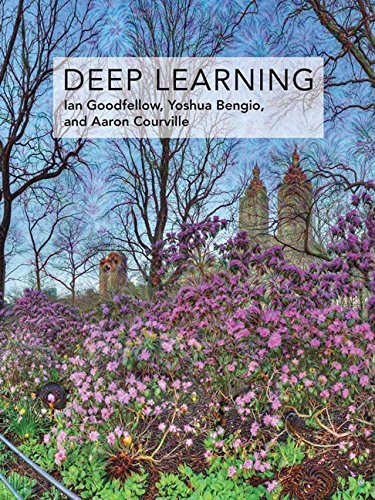
An introduction to a broad range of topics in deep learning, covering mathematical and conceptual background, deep learning techniques used in industry, and research perspectives.Deep learning is a form of machine learning that enables computers to learn from experience and understand the world in terms of a hierarchy of concepts. Because the computer gathers knowledge from experience, there is no need for a human computer operator to formally specify all the knowledge that the computer needs. The hierarchy of concepts allows the computer to learn complicated concepts by building them out of simpler ones; a graph of these hierarchies would be many layers deep. This book introduces a broad range of topics in deep learning.The text offers mathematical and conceptual background, covering relevant concepts in linear algebra, probability theory and information theory, numerical computation, and machine learning. It describes deep learning techniques used by practitioners in industry, including deep feedforward networks, regularization, optimization algorithms, convolutional networks, sequence modeling, and practical methodology; and it surveys such applications as natural language processing, speech recognition, computer vision, online recommendation systems, bioinformatics, and videogames. Finally, the book offers research perspectives, covering such theoretical topics as linear factor models, autoencoders, representation learning, structured probabilistic models, Monte Carlo methods, the partition function, approximate inference, and deep generative models.Deep Learning can be used by undergraduate or graduate students planning careers in either industry or research, and by software engineers who want to begin using deep learning in their products or platforms. A website offers supplementary material for both readers and instructors.

In-depth learningb A complete reference book and bible for in-depth study! b A book that introduces various topics of in-depth study. This course introduces several key concepts of linear algebra, probabilistic theory, information theory, numerical computation, and machine learning related to in-depth learning, and then introduces several concepts used by industry practitioners such as in-depth forward neural networks, regularization, optimization algorithms, It explains in-depth learning techniques and introduces realistic in-depth learning practice methodology. It also outlines methods for applying in-depth learning for natural language processing, speech recognition, computer vision, online recommendation systems, bioinformatics, and video games. Finally, we examine in-depth learning from the point of view of the research, such as the theory of linear factors, automatic encoders, expressive learning, structural probability models, and Monte Carlo methods.