
Hermann Simon
30 Books Written

Hidden Champions of the Twenty-First Century: The Success Strategies of Unknown World Market Leaders
by Hermann Simon
Rating: 3.8 ⭐
• 2 recommendations ❤️
Chapter 5: Customers, Products, Services . . . . . . . . . . . . . 129 Close Customer Relations . . . . . . . . . . . . . . . . . . . . . . . . . . . . . . . . . . 130 Customer Requirements. . . . . . . . . . . . . . . . . . . . . . . . . . . . . . . . . . . . 134 Dependence on the Customer and Risk Aspects . . . . . . . . . . . . . . . . . 135 Achieving Closeness to Customer . . . . . . . . . . . . . . . . . . . . . . . . . . . . 139 Product and Service Spectrum . . . . . . . . . . . . . . . . . . . . . . . . . . . . . . . 144 Summary. . . . . . . . . . . . . . . . . . . . . . . . . . . . . . . . . . . . . . . . . . . . . . . . 156 Chapter 6: Innovation . . . . . . . . . . . . . . . . . . . . . . . . . . . . . . . . . . 159 What Does Innovation Mean?. . . . . . . . . . . . . . . . . . . . . . . . . . . . . . . 159 High Level of Innovativeness . . . . . . . . . . . . . . . . . . . . . . . . . . . . . . . . 163 Driving Forces of Innovation . . . . . . . . . . . . . . . . . . . . . . . . . . . . . . . . 172 The Origin of Innovations. . . . . . . . . . . . . . . . . . . . . . . . . . . . . . . . . . 176 Leadership and Organizational Aspects of Innovation . . . . . . . . . . . . 179 Summary. . . . . . . . . . . . . . . . . . . . . . . . . . . . . . . . . . . . . . . . . . . . . . . . 187 Chapter 7: Competition . . . . . . . . . . . . . . . . . . . . . . . . . . . . . . . . 191 Competitive Structure and Conduct . . . . . . . . . . . . . . . . . . . . . . . . . . 191 The Hidden Champions in the Light of Porter’s “Five Forces” . . . . . 195 Competitive Advantages. . . . . . . . . . . . . . . . . . . . . . . . . . . . . . . . . . . . 197 Sustainability of Competitive Advantages . . . . . . . . . . . . . . . . . . . . . . 203 Demonstration of Competitive Superiority . . . . . . . . . . . . . . . . . . . . 205 Competitive Edge and Costs . . . . . . . . . . . . . . . . . . . . . . . . . . . . . . . . 207 Sparring Partners for Competitive Fitness . . . . . . . . . . . . . . . . . . . . . . 214 Excessive Competitive Orientation . . . . . . . . . . . . . . . . . . . . . . . . . . . 217 Summary. . . . . . . . . . . . . . . . . . . . . . . . . . . . . . . . . . . . . . . . . . . . . . . . 218 Chapter 8: Financing, Organization, and Business Environment . . . . . . . . . . . . . . . . . . . . . . . . . . . . . . . . . . . . . . . . . . . 223 Financing . . . . . . . . . . . . . . . . . . . . . . . . . . . . . . . . . . . . . . . . . . . . . . . 224 Organization . . . . . . . . . . . . . . . . . . . . . . . . . . . . . . . . . . . . . . . . . . . . . 228 Contents ix Organization of the Value Chain . . . . . . . . . . . . . . . . . . . . . . . . . . . . . 237 Business Environment . . . . . . . . . . . . . . . . . . . . . . . . . . . . . . . . . . . . . 249 Entrepreneurial Clusters. . . . . . . . . . . . . . . . . . . . . . . . . . . . . . . . . . . . 251 Summary. . . . . . . . . . . . . . . . . . . . . . . . . . . . . . . . . . . . . . . . . . . . . . . . 253 Chapter 9: Employees . . . . . . . . . . . . . . . . . . . . . . . . . . . . . . . . . 257 Job Creation . . . . . . . . . . . . . . . . . . . . . . . . . . . . . . . . . . . . . . . . . . . . . 257 Corporate Culture . . . . . . . . . . . . . . . . . . . . . . . . . . . . . . . . . . . . . . . . 260 Quali?cations and Learning . . . . . . . . . . . . . . . . . . . . . . . . . . . . . . . . . 274 Creativity of Employees . . . . . . . . . . . . . . . . . . . . . . . . . . . . . . . . . . . . 278 Recruiting . . . . . . . . . . . . . . . . . . . . . . . . . . . . . . . . . . . . . . . . . . . . . . . 279 Summary. . . . . . . . . . . . . . . . . . . . . . . . . . . . . . . . . . . . . . . . . . . . . . . . 282 Chapter 10: The Leaders . . . . . . . . . . . . . . . . . . . . . . . . . . . . . . . 285 Structures of Ownership and Leadership . . . . . . . . . . . . . . . . . . . . . . 286 How Crucial Is Leadership? . . . . . . . . . . . . . . . . . . . . . . . . . . . . . . . . . 289 Leadership Continuity . . . . . . . . . . . . . . . . . . . . . . . . . . . . . . . . . . . . . 289 Young to the Top . . . . . . . . . . . . . . . . . . . . . . . . . . . . . . . . . . . . . . . . . 293 Powerful Women . . . . . . . . . . . . . . . . . . . . . . . . . . . . . . . . . . . . . . . . . 294 Internationalization of Management . . . . . . . . . . . . . . . . . . . . . . . . . . 298 Personalities . . . . . . . . . . . . . . . . . . . . . . . . . . . . . . . . . . . . . . . . . . . . . 300 Leadership Styles . . . . . . . . . . . . . . . . . . . . . . . . . . . . . . . . . . . . . . . . . 305 Management Succession . . . . . . . . . . . . . . . . . . . . . . . . . . . . . . . . . . . . 306 Summary. . . . . . . . . . . . . . . . . . . . . . . . . . . . . . . . . . . . . . . . . . . . . . . . 310 Chapter 11: Hidden Audit and Strategy Development . . . . . . . . . . . . . . . . . . . . . . . . . . . . . . . . . . . . . . . . . . 315 What Is Strategy? . . . . . . . . . . . . . . . . . . . . . . . ....

Confessions of the Pricing Man: How Price Affects Everything
by Hermann Simon
Rating: 4.2 ⭐
• 2 recommendations ❤️
The world s foremost expert on pricing strategy shows how this mysterious process works and how to maximize value through pricing to company and customer.In all walks of life, we constantly make decisions about whether something is worth our money or our time, or try to convince others to part with their money or their time. Price is the place where value and money meet. From the global release of the latest electronic gadget to the bewildering gyrations of oil futures to markdowns at the bargain store, price is the most powerful and pervasive economic force in our day-to-day lives and one of the least understood.The recipe for successful pricing often sounds like an exotic cocktail, with equal parts psychology, economics, strategy, tools and incentives stirred up together, usually with just enough math to sour the taste. That leads managers to water down the drink with hunches and rules of thumb, or leave out the parts with which they don t feel comfortable. While this makes for a sweeter drink, it often lacks the punch to have an impact on the customer or on the business.It doesn t have to be that way, though, as Hermann Simon illustrates through dozens of stories collected over four decades in the trenches and behind the scenes. A world-renowned speaker on pricing and a trusted advisor to Fortune 500 executives, Simon s lifelong journey has taken him from rural farmers markets, to a distinguished academic career, to a long second career as an entrepreneur and management consultant to companies large and small throughout the world. Along the way, he has learned from Nobel Prize winners and leading management gurus, and helped countless managers and executives use pricing as a way to create new markets, grow their businesses and gain a sustained competitive advantage. He also learned some tough personal lessons about value, how people perceive it, and how people profit from it.In this engaging and practical narrative, Simon leaves nothing out of the pricing cocktail, but still makes it go down smoothly and leaves you wanting to learn more and do more as a consumer or as a business person. You will never look at pricing the same way again."

Der Preis ist das Herz der Wirtschaft. In ihm spiegeln sich Verlangen, Wert, Macht, strategische Intelligenz und unternehmerische Stärke. Er beeinflusst den Gewinn von Unternehmen wie kein anderer Faktor. Hermann Simon ist mit seinem Unternehmen Weltmarktführer in der Preisberatung. Simon erklärt, wie er den Preis als sein Lebensthema entdeckt hat und lässt den Leser Einblick nehmen in die Schatztruhe seines Preiswissens.„Ich lese mit einem großen Interesse auch Ihr neuestes Werk „Preisheiten“. Ich finde, dass diese Arbeit das erste in der Geschichte lesbare Buch zum Thema Preisbildung darstellt – Sie haben die natürliche Langweiligkeit dieses Themas glänzend überwunden.“Andrei Yudanov Professor of the Department of Microeconomics Finance Academy under the Government of the Russian Federation
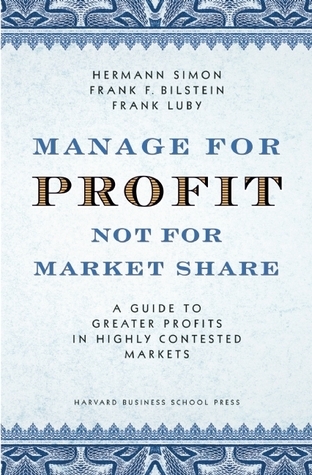
Manage for Profit, Not for Market Share: A Guide to Greater Profits in Highly Contested Markets
by Hermann Simon
Rating: 3.6 ⭐
How do companies in mature markets—where savings from cost-cutting have been exhausted and breakthrough innovations are hard to come by—achieve sustainable increases in profits? For decades, managers have been told the answer lies in pursuing high market share. But Hermann Simon, Frank F. Bilstein, and Frank Luby argue that this misguided advice has destroyed, rather than created, an additional profit potential.In Manage for Profit, Not for Share, the authors contend that companies can extract a profit potential of 1%-3 % of revenue by pursuing a profit, rather than a market share, orientation. Based on their extensive consulting work, the authors lay out a practical, proven program for making significantly more money by reconfiguring the marketing mix to sell existing products and services in different ways. The book offers practical strategies managers can use to differentiate mature products, raise prices effectively, time promotional activities properly, better understand consumer preferences, and more.A convincing counterargument to the reigning market share dogma, this book outlines the new mind-set and tools managers will need to bring their companies closer to peak profit performance.


Newspaper columns blare the news daily. There is no doubt that we are struggling through a worldwide economic and financial crisis of a magnitude not witnessed since the Great Depression. In this environment, fraught with danger, no company can afford to take a wait-and-see attitude. One hesitation or misstep can result in the rapid demise of a once stalwart enterprise. Even small miscalculations can topple mighty empires; consider the U.S. auto industry, for example. The severity of the crisis demands that your company understand its causes, diagnose carefully, implement decisively and monitor constantly. However, the crisis also creates chances for companies that learn to assess risk, recognize opportunity and take action quickly. This book is an antidote to the chorus of doom-and-gloom, a manual for business leaders and employees who are ready to fight. In Beat the Crisis, international strategy guru, Hermann Simon, offers 33 practical actions that any company can take immediately. Organized into broad categories―"Changing Customer Needs," "Sales and the Sales Force," "Managing Offers and Prices" and "Services"―Simon shows companies how to focus on the areas where emphatic action can have quick and maximum impact on corporate performance. Drawing from dozens of successful cases around the world, Simon helps readers learn to read the market signals, develop quick solutions, and stay a step ahead of their competitors, while avoiding the pitfalls looming in the crisis. A concluding chapter looks beyond the crisis and considers the longer-term socio-political and business consequences, in which Simon foresees a new era of restraint.

der Preis des Überlebens."Gewinnmaximierung ist das Gegenteil von Verschwendung", sagt Hermann Simon. Umso erstaunlicher ist es, dass mehr als 80 Prozent der Unternehmen, die derzeit in den USA an die Börse gehen, noch nie Gewinn gemacht haben. Auch in Deutschland gibt es nur wenige Gewinn-Stars, dabei ist der echte Gewinn nach Steuern die wichtigste Zielgröße im Management. Denn Gewinne, davon ist Simon überzeugt, sind die Kosten des Überlebens und schaffen neuen Wert. In seinem Buch bringt er Klarheit in den Dschungel der Gewinnbegriffe und Bilanzrechnungen.Er beleuchtet die Performance zahlreicher Unternehmen und Branchen im internationalen Vergleich und geht auf die wichtigsten Gewinntreiber Preis, Absatz und Kosten. Aus seiner scharfsinnigen Analyse leitet Simon praktische Konsequenzen ab und bietet den ersten Leitfaden für eine am Gewinn orientierte, nachhaltige Unternehmensführung!

Real profit after taxes is the most important management target. Profits are the cost of survival and the creators of new value. In this book, celebrated management thinker Hermann Simon brings clarity to the jungle of profit concepts and balance sheets. He sheds light on the performance of numerous companies and industries in international comparison and looks at the key profit price, sales and costs. Hermann Simon derives practical consequences from his astute analysis and offers a convincing guide to profit-oriented and sustainable corporate management! The book pleads for a reconsideration of profit as the guiding concept of management and entrepreneurship, and it showcases how profitability can ensure the long term health of a business. Questioning the fact/dilemma, why more than 80 percent of companies in the US are going public have never turned a profit, this book is invaluable inspiration and a powerful guide for responsible and resilient managers and entrepreneurs.

Is unabated inflation the new normal? Inflation is back and here to stay. For companies, this means that the world in which they do business has fundamentally changed. This book examines inflation from multiple perspectives and offers actions and strategies for companies to cope with and manage it to ensure their survival. For businesses and consumers, it is not a question of eliminating inflation, but how to cope with it in order to suffer as little damage as possible. This includes not just price management, but also sales, finance, purchasing, cost management along with digitalization and innovation activities in equal measure. It also requires corporate cultural change, which if managed fast and successfully, the prospects of defeating inflation and thus ensuring the survival of the company are good.

In this book, the world’s foremost experts on pricing integrate theoretical rigor and practical application to present a comprehensive resource that covers all areas of the field. This volume brings together quantitative and qualitative approaches and highlights the most current innovations in theory and practice. Going beyond the traditional constraints of “price theory” and “price policy,” the authors coined the term “price management” to represent a holistic approach to pricing strategy and tactical implementation. They remind us that the Ancient Romans used one word, pretium, to mean both price and value. This is the fundamental philosophy that drives successful price management where producer and customer meet. Featuring dozens of examples and case studies drawn from their extensive research, consulting, and teaching around the world, Simon and Fassnacht cover all aspects of pricing following the price management process with its four strategy, analysis, decision, and implementation. Thereby, the authors take into account the nuances across industry sectors, including consumer goods, industrial products, services, and trade/distribution. In particular, they address the implications of technological advancements, such as the Internet and new measurement and sensor technologies that have led to a wealth of price management innovations, such as flat rates, freemium, pay-per-use, or pay-what-you-want. They also address the emergence of new price metrics, Big Data applications, two-sided price systems, negative prices, and the sharing economy, as well as emerging payment systems such as bitcoin. The result is a “bible” for leaders who recognize that price is not only a means to drive profit in the short term, but a tool to generate sustained growth in shareholder value over the longer term, and a primer for researchers, instructors, and students alike.Praise for Price Management“This book is truly state of the art and the most comprehensive work in price management.”- Prof. Philip Kotler, Kellogg School of Management, Northwestern University “This very important book builds an outstanding bridge between science and practice.“- Kasper Rorsted, CEO, Adidas “This book provides practical guidelines on value creation, communication and management, which is an imperative for businesses to survive in the coming era of uncertainty.”- Dr. Chang-Gyu Hwang, Chairman and CEO, KT Corporation (Korea Telecom)

Jeden Baum detailliert kennen, aber den Wald nicht sehen? Managementdenker Hermann Simon plädiert für mehr Weitblick, für systematischen Überblick im Wirtschaftsleben. Denn: Agieren statt reagieren, ein Geschäft durchdenken statt geschäftig zu sein - darauf kommt es in der Wirtschaftswelt an. Simon beschreibt die Herausforderungen, die über die übliche Alltagsperspektive hinausgehen. Er zeigt auf, dass Strategie, Führung und Veränderung von Prinzipien getragen werden, die relativ zeitlos sind. Dabei dekliniert er wichtige strategische Bereiche durch, wie beispielsweise:o Personal-Strategieo Marketing-Strategieo Innovations-StrategieManagement-Guru Peter F. Drucker zu dem Buch: "Simon regt zum Denken und Nachdenken an, beides sollte bei Managern nie zu kurz kommen."

Hvad er det for mekanismer, der får os til at opfatte en pris som høj eller lav? Hvordan får virksomheder os til at købe deres produktet med så høj indtjening som muligt? Og hvordan kan den rigtige prissætning få os til at købe mere?Hvis danske virksomheder i højere grad forstod prissætningens mekanismer, ville disse spørgsmål være nemme at besvare. I udlandet har prissætning i mange år været en helt naturlig del af det at drive en succesfuld forretning. Men er det stadig helt almindeligt i Danmark, at virksomheder ikke prioriterer arbejdet med prissætning som strategisk disciplin – og det på trods af, at prissætning er den mest kraftfulde metode til forbedret indtjening. Sæt prisen rigtigt giver svar på alt, hvad man bør vide om priser og prissætning. Forfatterne Hermann Simon, Nicolai Broby Eckert og Søren Leth fra verdens førende pris- og marketingkonsulentfirma Simon-Kucher & Partners giver indsigt i de nyeste prissætningsstrategier, og bogen er lige relevant for virksomhedsledere, markedsføringseksperter og kunder.Med eksempler fra det danske marked beskriver forfatterne på en let tilgængelig måde, hvordan man med en gennemtænkt prisstrategi og adfærdsvidenskabelig indsigt kan øge konkurrenceevnen, nå kunderne mere effektivt – både digitalt og fysisk – og frem for alt få lønsomheden til at vokse.

Al di là del domani - Il pensiero strategico - Saggezza e scienza - La vita del nuovo - Lotta per i mercati, potere e soldi - I sogni del marketing - L'ombra del passato - Azioni - Nocciolo della questione - Dimensione politica - Il potere dei mezzi di comunicazione - Il cuore dell'azienda - Consigli pratici su come e quando citare - Tre passi per la memorizzazione.

Il volume Strategie di Pricing è la prima guida che tratta in maniera chiara e pragmatica una delle questioni basilari del mondo aziendale: come sfruttare la leva del prezzo per incrementare la redditività aziendale ed identificare nuove opportunità di crescita. Il pricing ha un impatto diretto sulla redditività aziendale, tuttavia le imprese non sfruttano pienamente le sue potenzialità. Spesso la definizione del prezzo si riduce all'applicazione di formule predefinite, all'orientamento alla concorrenza, all'aggiunta di un margine sul costo o al semplice istinto perdendo così reddito aziendale. Inoltre, visti i successi di molte imprese nella riduzione dei costi, la potenziale redditività aggiuntiva derivante dal cost cutting risulta limitata. Ecco perché anche in Italia il pricing sta vivendo una rinascita. Simon e Zatta, mettendo a frutto la loro esperienza di consulenti aziendali, docenti e referenti, chiariscono come affrontare le diverse sfide con le quali i responsabili del marketing e la direzione aziendale si confrontano quando intendono definire ed implementare strategie di pricing. Casi aziendali, esempi italiani ed esteri rendono ancora più facilmente comprensibile e applicabile la materia trattata.

Price management. I: Strategia, analisi e determinazione del prezzo (Management. I testbooks univ. e profess. Vol. 29)
by Hermann Simon
Rating: 5.0 ⭐
“Il miglior libro sul pricing che combina teoria e prassi per decisori che operano in contesti e settori industriali diversi” (Philip Kotler). Un manuale fondamentale per il professionista e per gli studenti dei vari corsi magistrali e master.

Hidden Champions – das sind die Weltmarktführer, die kaum jemand kennt. Die meisten von ihnen sitzen nicht etwa im Silicon Valley, sondern in Deutschland, in Österreich und in der Schweiz. Management-Vordenker Hermann Simon prägte den Begriff für die Top-Mittelständler in Nischenmärkten bereits vor 30 Jahren, doch vieles hat sich seither verändert. Nach dem Export-Boom in den Jahren 1990–2010 sehen die Unternehmen sich heute vor großen neuen Direktinvestitionen verdrängen den Export, die Warenströme weichen zunehmend digitalen Dienstleistungen, das Thema Nachhaltigkeit bietet Chancen, erfordert aber ein Umdenken. Wie steht es um die Zukunftsaussichten der »Heimlichen Gewinner«, und welche Strategien und neuen Spielregeln bringen sie weiter angesichts der wachsenden Wirtschaftsmacht Chinas?»Deutschlands bekanntester Managementberater« (Handelsblatt)»Einer der weltweit führenden Unternehmensberater« (Financial Times)


Naeh iibereinstimmender Meinung von Wissensehaft und Praxis hat die Bedeutung des Preises als Marketinginstrument in den letzten lahren sHindig zugenommen. Vrsa- chen fUr diese Entwicklung liegen u. a. in Marktsattigungserseheinungen, verstarkter Intemationalisierung des Wettbewerbs und strukturellen Veranderungen im Handel. Der angewaehsenen Bedeutung des Preises steht die Einschiitzung gegeniiber, daB es kaum einen anderen betrieblichen Entscheidungsbereich mit einer ahnlieh groBen Dis- krepanz zwischen dem Entwicklungsstand der Theorie und den Verfahrensweisen der Praxis gibt. Naeh meiner Meinung sind vor allem drei Griinde fUr diese Diskrepanz - Die preistheoretische Literatur besehrankt sieh weitgehend auf die Ableitung nor- mativer Aussagen; unter dem Aspekt der Implementation h6chst kritische Problem- kreise wie Informationsbeschaffung, Messung und praktisehe Durehsetzung werden kaum abgedeekt. - Die Mehrzahl der verwandten Modelle ist statisch und folglich nieht in der Lage, strategisehe Determinanten wie langfristige Gewinnmaximierung, Produktlebens- zyklus, Carryover und Erfahrungskurve zu erfassen. - In Fragestellungen und Ergebnissen dominieren die Interessen des Theoretikers und nieht die des Managers. 1m vorliegenden Bueh wird konsequent versucht, diese aus Managementsicht gravie- renden Schwachstellen zu tiberwinden. Informationsbeschaffung, Messung und Imple- mentation werden intensiv behandelt und an zahlreichen Beispielen aus der Praxis de- monstriert.

Unsere Art des Wirtschaftens verändert sich gegenwärtig grundlegend. Der Managementexperte Prof. Simon denkt über den Tag hinaus. Er macht die sechs wichtigsten Trends aus, die in der Businesswelt der Zukunft eine fundamentale Bedeutung haben. Hierzu zählen vor allem die beschleunigte Globalisierung, eine engere Verzahnung von Management und Kapital sowie die totale Vernetzung. Diese Trends haben sich durch die Wirtschaftskrise noch verstärkt und beschleunigt. In prägnanter Weise richtet sich Simon gegen zu kurz greifende Trendforschung und ruft zum Durchdenken der langfristigen Entwicklungen auf. Nur wenn die Trends unserer Wirtschaft ausreichend berücksichtigt werden, vermeiden Unternehmen eine Schieflage.

Sofortmaßnahmen gegen die Inflation!Nach Jahrzehnten der Stabilität erleben wir die höchsten Preissteigerungen seit den 1970er Jahren. Die Krise trifft Staat, Verbraucher und Unternehmen gleichermaßen. Für viele Firmen wird es künftig schwierig, die Gewinnlinie zu verteidigen. Deshalb ist es wichtig zu wissen, welche Effekte die Inflation auf den Gewinn hat, um dem drohenden Wertverlust gegenzusteuern. Sonst kann es schnell zu einer gefährlichen Schieflage kommen.Hermann Simon, der weltweit renommierte Experte für Preise, analysiert die entscheidenden Stellschrauben im Kampf gegen die Inflation und stellt konkrete Maßnahmen vor, die jedes Unternehmen sofort ergreifen kann. Zentral dabei ist ein kluges Preismanagement. Ebenso Die Unternehmensleitung muss selbst in den Ring und alle Geschäftsbereiche wie Vertrieb, Finanzen, Einkauf, Produktion, Innovation und Personal einbeziehen. Nur wer den Wettbewerb, das Verhalten seiner Kunden und seinen Platz im Markt kennt, kann den notwendigen (Kultur-)Wandel im Unternehmen vorantreiben und die Zukunft sichern. Agil, konkret, effektiv.»Seitdem ich Hermann Simon 1979 zum ersten Mal traf, habe ich aus jeder weiteren Begegnung mit ihm neuen Gewinn gezogen.« Philip Kotler»Deutschlands bekanntester Managementberater.« Handelsblatt»Einer der weltweit führenden Unternehmensberater.« Financial Times

Campeones ocultos del Siglo XXI: Estrategias de éxito de líderes desconocidos del mercado mundial
by Hermann Simon
Rating: 5.0 ⭐
?Campeones ocultos del siglo XXI? es una edición actualizada en 2009 del bestseller mundial del año 1996 ?Hidden Champions. Lessons from 500 of the world's best unknown companies?, traducido a más de 20 idiomas. En esta secuela Herman Simon, uno de los autores sobre management con mayor prestigio internacional, se dirige a las empresas para ayudarlas a destacar en estos momentos de crisis mundial. Este libro estudia empresas medianas ejemplares, exitosas y discretas ??campeones ocultos? según la denominación acuñada por el propio Simon?, con un análisis excelso, a la vez extremadamente comprensible, de enfoques, experiencias y mejores prácticas basadas en casos reales de estas empresas de éxito.

“Hidden Champions” are medium-sized, unknown companies with annual revenues under $5 billion that have quietly, under the radar, become world market leaders in their respective industries. In this new instalment to his worldwide bestselling Hidden Champions volumes, Hermann Simon takes readers on in-depth exploration of the ever changing operating conditions and the greater uncertainty and volatility that defines the global business sphere over the next ten years. In particular, in this book he focuses on China’s continued impact on the business world since its rise in the global business and economic sphere over recent decades. In this regard, Dr. Simon shows the reader how the current status evolved, and then offers concrete and actionable recommendations. New driving forces such as digitalization, business ecosystems and sustainability receive special attention. While the main focus is on companies in German-speaking countries as they comprise 56 percent of the world’s Hidden Champions, the success factors mentioned in this book can be applied globally to mid-sized companies in other regions as they strive to become global market leaders.Whether a company is a “Hidden Champion”, aspires to be one, or wants to emulate their success model, Dr. Simon’s new book provides essential food for thought as executives and managers chart their course into the future.

German

Many Worlds, One Life: A Remarkable Journey from Farmhouse to the Global Stage
by Hermann Simon
Rating: 5.0 ⭐
In this engaging, insightful, and inspiring narrative, Hermann Simon, the world-renowned management thinker, consultant, pricing expert, entrepreneur, and leading authority on the "hidden champions" business model, highlights the influences on his remarkable journey from humble origins on a German farm to advising and sharing the stage with global leaders in industry, academia, and politics.Born in 1947 in the rural Eifel region of Western Germany, Simon's coming of age parallels that of a country struggling to come to terms with the legacy of World War II and reinvent itself as a new world power. His colorful anecdotes of a youth spent in an agricultural community that in many ways operated as it had since the Middle Ages, reflect the establishment of core values, such as trust, focus, quality, and commitment that served as an anchor against the accelerating pace of technological, economic, political, social, and cultural change in the subsequent decades. Simon takes readers on a journey through time and space, as his--and our--world transformed from isolated to connected, local to global, revealing lessons learned from the extraordinary people (from Peter Drucker to Henry Kissinger) and places he has encountered along the way, through a career that has evolved from research and education to management consulting to leadership and strategy development on a broad scale. His particular interest in the Mittelstand, or "hidden champions," the small and medium-sized companies that exemplify the German business philosophy and served as the engine of its economic revival, becomes a powerful metaphor of his own experiences in blazing new trails while staying true to one's roots.For anyone familiar with Simon's work and contributions, Many Worlds, One Life reveals unique insights into the man himself and the origins of his ideas on successful leadership and business strategy. But more generally, readers in any field or discipline will recognize how their own stories reflect their ties to the past, their accomplishments in an increasingly complex environment, and, ultimately, their roads to the stars."Hermann Simon is one of the very few people who combine a truly global mindset with strong local roots. This rare combination makes him a superb bridge-builder at a time of increasing friction in our global trading system. World-renowned management scholar, successful entrepreneur, engaged citizen - this book tells his life's amazing story in a compelling way." U. Mark Schneider, CEO, Nestl�"From the moment I met Hermann Simon, through each successive encounter, I have enjoyed increasing returns which are rare in most relationships. Hermann, please continue to open further fields of inquiry in business theory and practice, always with an eye to aligning profit, high purpose, and passion." Philip Kotler, Professor Emeritus of Marketing, Kellogg School of Management, Northwestern University"Among the politicians, officials, scholars, and entrepreneurs that Hermann Simon has close acquaintance with, it is a great honor that I am writing a letter of recommendation for this book and Dr. Simon. As a worldly renowned business manager and scholar, his wise words have always inspired and awakened business leaders (and engineers) like me. I bought the book and finished it on the spot before I left the bookstore. This book is about his life rather than his studies. This book also proves that he is a good essayist as much as he is a scholar. As you navigate into his youth in a German farmhouse, you will notice that he has always captured the details of daily life and social surroundings. It is the encounter of such details and awakening of his senses that have led him to become the pride of modern Europe's business management studies. My favorite part in his book is the chapter, 'The School of Life'. He has listed the things he has learned throughout his life and said they are 'subjective and incomplete.' As I read through his book, it felt as if I were having a cup of tea with him over family, future, health, management, leadership, time management, and other lifetime subjects. His value and love for humanity is truly special. In this book, he acknowledges that his life is divided in two: one from his Eifel village and one from the globalized word. The division of the old and the present, or the division of time and space, which usually starts from village and ends in a city, was unavoidable to anyone our age who has gone through rapid urbanization and industrialization. Such sense of separation, however, does not always lead to enlightenment. The enlightenment that he is sharing with us is the fruit of his lifetime effort. When you read his stories from his childhood to recent research and studies, you will learn the never-changing truth that 'Great discernment is cultivated rather than is born.' I also think this book will be a milestone for the younger generations who still have more road to trave...

La stratégie prix - 3ème édition - Le pricing, levier indispensable pour augmenter votre rentabilité: Le pricing, levier indispensable pour augmenter votre rentabilité
by Hermann Simon
Rating: 4.0 ⭐
Domaine clé du marketing, le prix constitue un élément déterminant pour accroître les profits. Pourtant, c'est un facteur souvent négligé, laissé à la détermination de la concurrence, du marché ou des coûts de production. Cet ouvrage décrit l'ensemble des stratégies de prix et les outils pour les piloter. Cette nouvelle édition, enrichie de nouveaux exemples, de témoignages et de cas réels, introduit de nouveaux thèmes comme la problématique tarif/prix net, les guerres de prix et la valeur.

Description and history of the New Synagogue, Berlin

Sem Crise! 33 Acoes Para Sua Empresa Evitar Percalcos E Atingir Os Resultados Em Qualquer Cenario
by Hermann Simon
Rating: 3.0 ⭐
Nas crises, muitas das ações comumente adotadas nas empresas ou têm se mostrado falhas, ou não surtem os resultados esperados. a gravidade de uma crise exige um entendimento preciso das suas causas e um diagnóstico cuidadoso do seu impacto no mercado de atuação da organização para que se possa implementar medidas específicas de contenção. Durante e após a implementação de tais medidas, é necessário monitorar de perto os seus efeitos e a evolução geral dos negócios. Neste livro, hermann simon mostra a empresários, executivos e profissionais em geral como administrar com excelência as suas empresas em períodos turbulentos. Propõe 33 ações práticas, eficazes e de implantação rápida que ajudarão o leitor a superá-los. Contudo, as 33 ações não são essenciais apenas durante as crises, são também muito úteis e devem ser realizadas em quaisquer cenários.

Wszystko kręci się wokół cen, ale wiedza o nich jest nadal niewielka. Pora to zmienić! Odmień swoje spojrzenie na cenę i wraz z Hermannem Simonem, światowym autorytetem z obszaru pricingu, znajdź sposób na skuteczną politykę cenową! Jeśli cokolwiek sprzedajesz, po prostu musisz przeczytać tę książkę.To z jednej strony firmy chcą za wszelką cenę uniknąć wojny cenowej, a z drugiej wielu menedżerów uważa, że obniżka cen to najlepszy, najszybszy i najskuteczniejszy sposób na poprawę wyników sprzedaży. W efekcie – zamiast być wyjątkiem – wojny cenowe stają się regułą i druzgocąco wpływają na zyski firm.Odmień swoje spojrzenie na cenę i wraz z Hermannem Simonem, światowym autorytetem z obszaru pricingu, znajdź sposób na skuteczną politykę cenową!Autor poświęcił temu zagadnieniu aż 40 lat pracy. Zabierze cię w fascynującą podróż, podczas której nauczy cię, jak odnaleźć równowagę między wartością a ceną i dzięki temu zapewnić firmie sukces.
