
Heraclitus
Heraclitus of Ephesus (Greek: Ἡράκλειτος ὁ Ἐφέσιος,c.535 – c.475 BCE) was a pre-Socratic Greek philosopher, a native of the Greek city Ephesus, Ionia, on the coast of Asia Minor. He was of distinguished parentage. Little is known about his early life and education, but he regarded himself as self-taught and a pioneer of wisdom. From the lonely life he led, and still more from the apparently riddled and allegedly paradoxical nature of his philosophy and his stress upon the needless unconsciousness of humankind, he was called "The Obscure" and the "Weeping Philosopher". Heraclitus was famous for his insistence on ever-present change as being the fundamental essence of the universe, as stated in the famous saying, "No man ever steps in the same river twice". This position was complemented by his stark commitment to a unity of opposites in the world,stating that "the path up and down are one and the same". Through these doctrines Heraclitus characterized all existing entities by pairs of contrary properties, whereby no entity may ever occupy a single state at a single time. This, along with his cryptic utterance that "all entities come to be in accordance with this Logos" (literally, "word", "reason", or "account") has been the subject of numerous interpretations.
28 Books Written

Fragments of wisdom from the ancient worldIn the sixth century b.c.-twenty-five hundred years before Einstein--Heraclitus of Ephesus declared that energy is the essence of matter, that everything becomes energy in flux, in relativity. His great book, On Nature, the world's first coherent philosophical treatise and touchstone for Plato, Aristotle, and Marcus Aurelius, has long been lost to history--but its surviving fragments have for thousands of years tantalized our greatest thinkers, from Montaigne to Nietzsche, Heidegger to Jung. Now, acclaimed poet Brooks Haxton presents a powerful free-verse translation of all 130 surviving fragments of the teachings of Heraclitus, with the ancient Greek originals beautifully reproduced en face.For more than seventy years, Penguin has been the leading publisher of classic literature in the English-speaking world. With more than 1,700 titles, Penguin Classics represents a global bookshelf of the best works throughout history and across genres and disciplines. Readers trust the series to provide authoritative texts enhanced by introductions and notes by distinguished scholars and contemporary authors, as well as up-to-date translations by award-winning translators.

This work provides a text and an extended study of those fragments of Heraclitus' philosophical utterances whose subject is the world as a whole rather than man and his part in it. Professor Kirk discusses fully the fragments which he finds genuine and treats in passing others that were generally accepted as genuine but here considered paraphrased or spurious. In securing his text, Professor Kirk has taken into account all the ancient testimonies, and in his critical work he attached particular importance to the context in which each fragment is set. To each he gives a selective apparatus, a literal translation and and an extended commentary in which problems of textual and philosophical criticism are discussed. Ancient accounts of Heraclitus were inadequate and misleading, and as Kirk wrote, understanding was often hindered by excessive dogmatism and a selective use of the fragments. Professor Kirk's method is critical and objective, and his 1954 work marks a significant advance in the study of Presocratic thought.

All the extant fragments of Herakleitos & a collection of Diogenes' words from various sources. Herakleitos' words, 2500 years old, usually appear in English translated by philosophers as makeshift clusters of nouns & verbs which can then be inspected at length. Here they are translated into plain English & allowed to stand naked & unchaperoned in their native archaic Mediterranean light. The practical words of the Athenian street philosopher Diogenes have never before been extracted from the apochryphal anecdotes in which they have come down to us. They are addressed to humanity at large, & are as sharp & pertinent today as when they were admired by Alexander the Great & St Paul.
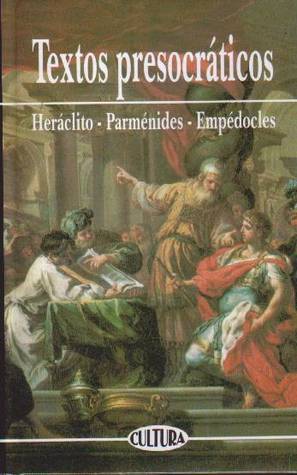
Textos presocráticos de Heráclito, Parménides y Empédocles.

لم يكتب فيلسوف اليونان العظيم هيرقليطس كتاباً بعنوان "جدل الحب والحرب" لكنه كتب مؤلفاً بعنوان "في الطبيعة" ثم ضاع الكتاب ولم تبق إلا شذرات جمعها الدارسون في 126 شذرة تضاف إليها 15 شذرة تحاط بالشك في صحة نسبتها إليه. وقد قام الكاتب بنوع من المونتاج لهذه الشذرات بحيث كوّن فيها حلقات متصلة محاولاً ملئ ما بينها من فجوات ضمن سياق يكشف عن طبيعة تفكير هيرقليطس وجعلها تحت عنوان "جدل الحب والحرب" حيث أن هاتين المقولتين تلعبان الدور الأساسي في تفكيره.

“İnsanların en bilgesi Tanrı karşısında maymundur. Maymunların en güzeli insan soyuyla karşılaştırıldığında çirkindir.”Antik Yunan’ın karanlık filozofu Herakleitos felsefe tarihine gizemli fragmanlarıyla damgasını vurmuştur. Yalnızlığı seven, asık suratlı, somurtkan Herakleitos’a sözleri anlaşılamadığından dolayı yurttaşları “Karanlık” adını takmıştır. Ona göre evrende var olan her şey ateşten oluşmuştur, ateş her şeyin ilkesidir ve yine onda çözülür. Şeylerin sürekli değişimi, karşıtların birliği, kozmik ateş, genesis, logos, nemli ve kuru ruhların hermeneutiği onun derinlikli felsefesinde değindiği başlıca konulardandır.

Diyalektik düşüncenin kökenleri açısından Hegel gibi Marx’a da esin veren Herakleitos’un Doğa Üzerine adlı yapıtından günümüze kalan “Parçalar”ı, şair Alova’nın şiir diliyle yaptığı çeviriyle sunuyoruz

فیلسوف تاریک: نگاهی به نگاشتهها و انگاشتههای هراکلیتوس


Heráclito de Éfeso, filósofo nacido hacia el año 530 antes de nuestra era en la región de Asia menor, pensaba la sociedad como un todo ordenado, en virud de un componente esencial de lo real, el lógos, presente en todas las cosas, desde el sol y los astros hasta el fondo del alma del ser humano.Esta comunidad podemos entenderla de un modo más concreto, en tanto es la relación que hay entre cada cosa. Se trata del reconocimiento de que no somos seres escindidos de ellas, sino que estamos intrínsecamente ligados al Todo.

It's a zoo out there: monkeys and donkeys, dogs, hogs, chickens and more. And of course, then there are lice, and lots of them.It's also a zoo within. Heraclitus is brutal about it. He compares us to all these animals (except the lice--and revealed in this book for the first time is why). We are called swine delighting in mire, cattle stuffing ourselves, asses preferring garbage over gold, and just as beasts we need to be "guided by blows."But it's not all good news. Heraclitus also calls us oblivious: we are sleepers, fools, drunkards, absent, deaf, and yes, dead. Once dead, Heraclitus instructs that our corpse should be thrown out faster than dung. He says we don't know how to listen and neither can we speak. We are deluded and believe our own opinions. We are absent while present. Almost certainly, like most people, we will forever fail to grasp what Heraclitus is talking about, as he concludes at the opening of his book.But then, Heraclitus did not try to teach most people. Not even those few who realize that in all these fragments this is not just colorful or poetic imagery, but Heraclitus is actually talking to us, about us. He only wrote for those even more rare individuals who are ready to do something about our devastating condition of oblivion, our state of sleep.If that is you, if that is me, then the remaining fragments of his book (all in this new edition) contain exhortations so incisive, so powerful that they--when actually used and lived--will "deeply dye our soul with a continuous stream of thought" as Marcus Aurelius said. Marcus Aurelius kept Heraclitus' sayings constantly in mind: In Marcus' words: "They [these exhortations, these commands] are brief and fundamental because they are thus more memorable, and because they should take effect at once." As we also read in his Meditations: "The work of philosophy is simple and modest; do not lead me astray with pompous pride." Heraclitus exhorts us to “Rise up and become wakeful watchers of living men and corpses" and to "douse hubris faster and more thoroughly than a raging fire." No matter the weariness that Heraclitus accepts as part of this struggle (and we must too), we have to start again, and again, an inner war: moment by moment to be beginners and answer the Delphic command "Know Thyself" by going in search of ourselves, to learn to re-cognite ourselves and then get to work: picking off our lice.Rising from sleep, this time choosing gold over garbage.

Toutes les œuvres d’Héraclite réunies en un seul ebookDécouvrez l'œuvre de d’Héraclite dans son ensemble et emmenez-la partout avec vous !À propos de la collection GrandsClassiques.com :La collection GrandsClassiques.com a pour objectif de mettre à disposition des lecteurs les œuvres complètes des incontournables de la littérature. Un soin tout particulier est apporté à ces versions afin de garantir une qualité de lecture optimale.Dans la même collection :• Ésope• Jean de la Fontaine• Guy de Maupassant• Jean Racine• Arthur Rimbaud• Virgile• Émile Zola• Guillaume Apollinaire• Henri Bergson• Honoré de Balzac• Charles Baudelaire• Homère• Pierre de Marivaux• Marcel Proust


Heraclitus of Ephesus was a pre-Socratic Greek philosopher, a native of the Greek city Ephesus, Ionia, on the coast of Asia Minor. He was of distinguished parentage.

»Heraklit ist und bleibt mir vom Abendland das Höchste und Tiefste.Siehe Nietzsche!« Wense»Bis ½ 3 nachts am Heraklit und von 8 durch bis 18 Uhr jetzt ohne Pause. Fertig! Ein großes Werk ist gelungen. Die Übertragung nur sprachlich geformter, aber ganz u. gar neu die Deutung und diese fast ohne Worte aus einer ganz neuen Anordnung sich ergebend – das ganz unmittelbar ein Teil meines Werks, wie er überhaupt der einzige Denker ist, der mich tief berührt hat.« WenseHans Jürgen von der Wense (1894–1966): Fragmentariker, Komponist, Übersetzer, Wanderer, Fotograf, Collagekünstler, Wetterkundler – ein Nomade zwischen den Wissenschaften, Kulturen und Literaturen der Erde. Wenses kommentierte Neu-Übertragung und -Anordnung der überlieferten Fragmente des Heraklit ist keine altphilologische Fingerübung, sondern ein lebenslanger Dialog mit einem seiner Säulenheiligen. Die Brüchigkeit der Überlieferung sichert die Unverbrüchlichkeit der Fortschreibung. Ein Kompendium der Gedankenfreundschaft als handliche Sprüchesammlung zum täglichen Gebrauch. Mit einer Auswahl weiterer Fragmente-Zusammenstellungen der Vorsokratiker Parmenides, Epicharmos und Xenophanes und einem bislang unpublizierten Brief aus dem Nachlass. Begleit-Essay von Sven Rücker.»Von Heraklit blieben 17 Seiten und die ganze Weltliteratur hat diese bisher nicht überboten.« Wense

Nuestra exposición del pensamiento de Heráclito se inicia con la cuestión de la crítica, porque es desde el comienzo uno de los más visibles signos de identidad de los filósofos, no ya solo de Heráclito. La crítica, a medida que avance a filosofía y la ciencia, no va a ser solamente un componente metodológico imprescindible, sino que llegará incluso a nombrar una de las áreas de la filosofía, la crítica o teoría del conocimiento, inspirará los muy célebres títulos de las obras de Kant y servirá para nombrar corrientes filosóficas, como la teoría crítica de la escuela de Frankfurt. A partir de la crítica, se descubre el universo filosófico de Heráclito, el tema de los contrarios, el “todo fluye”, la unidad y la cuestión del orden del universo. Tras este abanico temático emerge la relación como noción capital de la filosofía del efesio: no existe realidad alguna que este desconectada de todo lo demás, ni tan siquiera la divinidad. No existe un absoluto al margen del cosmos en perpetuo flujo. Tampoco existen compartimentos estancos que nos permitan, por ejemplo, hablar de dos grupos disjuntos de cosas, unas buenas, y otras malas. Lo malo en un sentido es bueno en otro. De lo dicho se deduce que Heráclito propone una visión del mundo que incluye un doble propósito: primero, defender la idea de la unidad expuesta por los filósofos vecinos de Mileto y, segundo, mostrar cómo la relación es el mecanismo lógico (en el ámbito del lenguaje) y ontológico (las relaciones como realidades o nexos entre las cosas) con que se construye esa unidad del mundo. Precisamente la tarea del filósofo será descubrir en lo profundo las relaciones más importantes, las que tienen mayor fuerza unitiva, que se ocultan a la mirada superficial de los mortales. JOSÉ SOLANA DUESO (Plan, Huesca) es catedrático emérito de filosofía en la Universidad de Zaragoza. Ha publicado numerosos trabajos de investigación sobre filosofía griega, entre ellos los siguientes libros: ASPASIA DE MILETO. TESTIMONIOS Y DISCURSOS (Anthropos, 1994), LOS SOFISTAS. TESTIMONIOS Y FRAGMENTOS (Alianza, 2013), MÁS ALLÁ DE LA CIUDAD. EL PENSAMIENTO POLÍTICO DE SÓCRATES (Zaragoza, 2013), LAS FILÓSOFAS PITAGÓRICAS (Amazon, 2014) y ASPASIA DE MILETO Y LA EMANCIPACIÓN DE LAS MUJERES (Amazon, 2014). Ha iniciado una serie titulada LA VOZ DE LOS MAESTROS, de la que ha publicado los libros dedicados a Heráclito y Parménides. En paralelo con sus investigaciones, ha publicado varias novelas: LA MALVA Y EL ASFÓDELO. CONFIDENCIAS Y VISIONES DE ASPASIA DE MILETO (Mira Editores, 2006), CIUDADANO SÓCRATES (Mira Editores, 2008), EL REGRESO DE IFIGENIA (Amazon, 2013) y PARMÉNIDES EL CANTO DEL FILÓSOFO (Edhasa, 2014). Su última novela es de este mismo año: LA CONJURA DE LOS EUNUCOS (Amazon, 2015).


Dos escritos de gran interés sobre materia mitológica, uno de carácter hermenéutico-interpretativo acerca de Homero y el otro una compilación de los más variados mitos relacionados con metamorfosis.Se ofrecen aquí dos escritos sobre materia mitológica, uno de carácter hermenéutico-interpretativo y el otro una compilación de los más variados mitos relacionados con metamorfosis.Con Alegorías de Homero, el autor se propone defender a Homero de sus detractores, y ve en la interpretación alegórica la mejor estrategia defensiva, que ya había tenido sus precursores en el siglo VI a.C., frente a los ataques de quienes censuran la creación de una serie de mitos sacrílegos e impíos. Este brumoso autor, llamado Heráclito el Homérico, vivió al parecer en el siglo I a.C.Desconocemos el motivo por el cual realizó Antonino Liberal (siglo II o III d.C.) su recopilación de metamorfosis, pues ni él mismo lo manifiesta ni poseemos otro tipo de fuentes que nos permita averiguarlo. En cualquier caso, nos ofrece una gran cantidad de datos sobre ritos y sacrificios, sobre motivos etiológicos tan del gusto helenístico, sobre extrañas leyendas, algunas incluso con pretensiones históricas, pero, sobre todo, un inmenso material mitográfico de difícil clasificación a veces.

Comprendre Héraclite (analyse complète de sa pensée)
by Heraclitus
La collection « Connaître un philosophe » vous offre la possibilité de tout savoir de Héraclite, grâce à une analyse complète de sa pensée. La rédaction, claire et accessible, a été confiée à un spécialiste universitaire. Cette fiche de lecture répond à une charte qualité mise en place par une équipe d'enseignants. Ce livre contient la biographie de Héraclite, l'analyse de sa pensée, la bibliographie de l'auteur et la citation de Nietzsche au sujet de Héraclite.

Heraclitus Christianus; Or, the Man of Sorrow a Reflection on All States and Conditions of Human Life
by Heraclitus
This historic book may have numerous typos and missing text. Purchasers can download a free scanned copy of the original book (without typos) from the publisher. Not indexed. Not illustrated.1677 ... OT' "thou approachest to death, the farther "thou removest thy self from thy Sal"vation, thou takest so much pains, and "art at so much cost to nourish and adorn "this body which is but a vessel of filth, u and a Sepulcher of worms and rotten"ness, and leavest thy poor soul, which "is the Image of God, and Idea of Eternal "Wisdom, altogether neglected. These are the complaints which this holy man made in his retirements against the Ingratitude and wickedness of this World, all which things deduced by him and others, tend to no other end, than to stir-up Man to the consideration and knowledg of himself, and to shew him how vile a Creature he is, that he may at all times learn to consider that he is in the hands of God, tu theclay and earthen vessel i) in the hands of the Potter; which he may make, unmake, form,-break, repair, and destroy «ven as it pleaseth him, without any injury,or suspicion of injustice '-, which needs but one push, and falls immed iately and is broken and yet let what misery soever light upon him, he knoweth not, nor humbleth himself under the Yoke of his Almighty Creator. B 5 CHAP C H A P. II. That Man in respeSt of many natural advantages, if inferior to the BcaUs and Inanimate Creatures. SO now, having consi'Jered Mans Estate universally, it's requisite to Discourse more largely or' this matter, and to contemplate and consider him It ore nearly. And because that amongst all Ethnics, Tliny hath best Philosophiz'd on our Subject, we shall produce his Testimony, That Christians to their great confusion and infamy, may receive their Instruction from a Pagan, without God, without Law, without any Ways being illuminated with the light "Let us con- sider, faith he, a little, how that man i$ ' forced to cover his body at the...
![Die heraklitischen Briefe Ein Beitrag zur philosophischen u. religionsgeschichtlichen Litteratur 1869 [Leather Bound]](https://m.media-amazon.com/images/S/compressed.photo.goodreads.com/books/1699847638i/152174493.jpg)
Die heraklitischen Briefe Ein Beitrag zur philosophischen u. religionsgeschichtlichen Litteratur 1869 [Leather Bound]
by Heraclitus
Leather Binding on Spine and Corners with Golden Leaf Printing on round Spine (extra customization on request like complete leather, Golden Screen printing in Front, Color Leather, Colored book etc.)

700 Quotations from Ancient Philosophy
by Heraclitus
Plato, Aristotle, Marcus Aurelius, and Cicero are some of the famous names whose wit and wisdom are included in this audiobook, ‘700 Quotations from Ancient Philosophy’.This group of Greek philosophers, Roman Statesmen and Emperors is responsible for some of the world's best-known quotes, including "It is the mark of an educated mind to be able to entertain a thought without accepting it." and "Be kind, for everyone you meet is fighting a harder battle."Their wit and wisdom continue to inspire, educate, and entertain to this day thus making this collection ideal for those needing some philosophical guidance.Plato, Aristotle, Marcus Aurelius, Epictetus, Cicero, Seneca the Younger, and Heraclitus are among histories most famous soldiers, politicians, poets, writers and philosophers.The Ancient Greek philosopher, Plato (c.428-347 B.C.) is one of the most influential figures in the entire history of Western thought.Aristotle (384–322 BC) was a Greek philosopher whose works shaped centuries of philosophy. He is widely regarded as one of the greatest philosophers of all time.Seneca the Younger (c. 4 BC – 65 AD), usually known as Seneca, was a philosopher, statesman, and dramatist from Ancient Rome.Marcus Aurelius Antoninus (121 – 180) was a philosopher and Emperor of the Roman empire.

Heraclitus van Efeze was een Griekse filosoof van het einde van de zesde eeuw voor Christus. BC, inwoner van de stad Efeze. Vervolgens wordt aangenomen de oude Heraclitus schreef een boek dat zijn we vertrokken een paar fragmenten (meer dan honderd).100 Deze citaten zijn bedoeld om de toegang tot zijn monumentale werk van een selectie van de belangrijkste gedachten in een formaat dat voor iedereen toegankelijk te bieden. Een citaat is een uittreksel van een manier, kan dit een verstand, een samenvatting van een complexe gedachte, een spreuk, een opening naar een diepere reflectie.

Peri physeos
by Heraclitus
I frammenti e le testimonianze
by Heraclitus
Heraclitus
by Heraclitus
Leather Binding on Spine and Corners with Golden leaf printing on spine. This book is printed in black & white, Sewing binding for longer life, where the book block is actually sewn (smythe sewn/section sewn) with thread before binding which results in a more durable type of binding. Reprinted in 2022 with the help of original edition published long back 1851. As this book is reprinted from a very old book, there could be some missing or flawed pages. If it is multi vo Resized as per current standards. We expect that you will understand our compulsion with such books. 191 Heracliti allegoriae Homericae, ed. E. Mehler 1851 Heraclitus (writer on allegories in Homer.)
Leather Binding on Spine and Corners with Golden leaf printing on spine. This book is printed in black & white, Sewing binding for longer life, where the book block is actually sewn (smythe sewn/section sewn) with thread before binding which results in a more durable type of binding. Reprinted in 2022 with the help of original edition published long back 1677. As this book is reprinted from a very old book, there could be some missing or flawed pages. If it is multi vo Resized as per current standards. We expect that you will understand our compulsion with such books. 201 Heraclitus or, The man of a reflection on all states and conditions of human life 1677 Heraclitus (Christianus.)