
Henry Petroski
Henry Petroski was an American engineer specializing in failure analysis. A professor both of civil engineering and history at Duke University, he was also a prolific author.
23 Books Written

From classical temples to twentieth century towers, engineers have learned more about design from failure than from success. The concept of error, according to the author of Design Paradigms, is central to the design process. As a way of explaining the enduring aspects of engineering design, Henry Petroski relates stories of some of the greatest engineering successes and failures of all time. Thes

Why has the durable paper shopping bag been largely replaced by its flimsy plastic counterpart? What circuitous chain of improvements led to such innovations as the automobile cup holder and the swiveling vegetable peeler? With the same relentless curiosity and lucid, witty prose he brought to his earlier books, Henry Petroski looks at some of our most familiar objects and reveals that they are, i
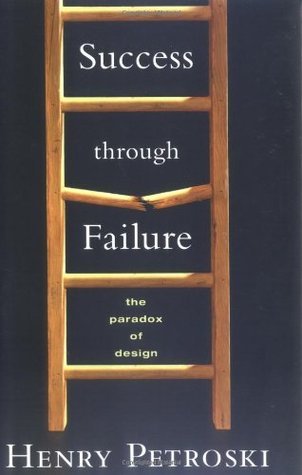
Design pervades our lives. Everything from drafting a PowerPoint presentation to planning a state-of-the-art bridge embodies this universal human activity. But what makes a great design? In this compelling and wide-ranging look at the essence of invention, distinguished engineer and author Henry Petroski argues that, time and again, we have built success on the back of failure--not through easy im

Science/Engineering"Petroski has an inquisitive mind, and he is a fine writer. . . . [He] takes us on a lively tour of engineers, their creations and their necessary turns of mind." --Los Angeles TimesFrom the Ferris wheel to the integrated circuit, feats of engineering have changed our environment in countless ways, big and small. In Remaking the Adventures in Engi

"Reading Petroski's fine book is not only a delight, it is a necessity." --Houston ChronicleHow did a simple design error cause one of the great disasters of the 1980s—the collapse of the walkways at the Kansas City Hyatt Regency Hotel? What made the graceful and innovative Tacoma Narrows Bridge twist apart in a mild wind in 1940? How did an oversized waterlily inspire the
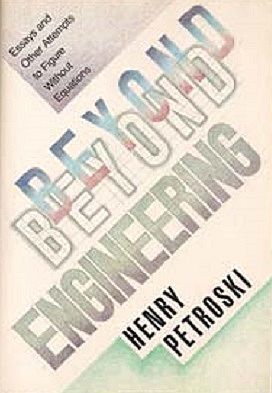
Beyond Engineering: Essays and Other Attempts to Figure Without Equations
by Henry Petroski
Rating: 3.2 ⭐
Essays discuss libraries, art, computers, engineering students, time, books, reading, baseball cards, the federal budget, Christmas, and the metric system

Anyone wondering what sort of experience prepares one for a future as an engineer may be surprised to learn that it includes delivering newspapers. But as Henry Petroski recounts his youth in 1950s Queens, New York–a borough of handball games and inexplicably numbered streets–he winningly shows how his after-school job amounted to a prep course in practical engineering.Petroksi’s paper

Like The Pencil, Henry Petroski’s The Toothpick is a celebration of a humble yet elegant device. As old as mankind and as universal as eating, this useful and ubiquitous tool finally gets its due in this wide-ranging and compulsively readable book. Here is the unexpected story of the simplest of implements—whether made of grass, gold, quill, or wood—a story of engineering and design, of culture an

"A fascinating history of two related common objects, impeccably documented and beautifully illustrated." —CivilizationHenry Petroski, "the poet laureate of technology" and author of the highly acclaimed The Pencil and The Evolution of Useful Things now sets his sights on perhaps the greatest technological advances of the last two thousand years: the making and sto

Henry Petroski traces the origins of the pencil back to ancient Greece and Rome, writes factually and charmingly about its development over the centuries and around the world, and shows what the pencil can teach us about engineering and technology today.

Engineers of Dreams: Great Bridge Builders and the Spanning of America
by Henry Petroski
Rating: 3.8 ⭐
Petroski reveals the science and engineering--not to mention the politics, egotism, and sheer magic--behind America's great bridges, particularly those constructed during the great bridge-building era starting in the 1870s and continuing through the 1930s. It is the story of the men and women who built the St. Louis, the George Washington, and the Golden Gate bridges, drawing not only on their mas

The Evolution of Useful Things: How Everyday Artifacts-From Forks and Pins to Paper Clips and Zippers-Came to be as They are
by Henry Petroski
Rating: 3.5 ⭐
How did the table fork acquire a fourth tine? What advantage does the Phillips-head screw have over its single-grooved predecessor? Why does the paper clip look the way it does? What makes Scotch tape Scotch? In this delightful book Henry, Petroski takes a microscopic look at artifacts that most of us count on but rarely contemplate, including such icons of the everyday as pins,

Here are two dozen tales in the grand adventure of engineering from the Henry Petroski, who has been called America’s poet laureate of technology. Pushing the Limits celebrates some of the largest things we have created–bridges, dams, buildings--and provides a startling new vision of engineering’s past, its present, and its future. Along the way it highlights our greatest successes, like London’s

The Essential Engineer: Why Science Alone Will Not Solve Our Global Problems
by Henry Petroski
Rating: 3.3 ⭐
From the acclaimed author of The Pencil and To Engineer Is Human , The Essential Engineer is an eye-opening exploration of the ways in which science and engineering must work together to address our world’s most pressing issues, from dealing with climate change and the prevention of natural disasters to the development of efficient automobiles and the search for renewable energy sources. While the

An Engineer's Alphabet: Gleanings from the Softer Side of a Profession
by Henry Petroski
Rating: 3.8 ⭐
Written by America's most famous engineering storyteller and educator, this abecedarium is one engineer's selection of thoughts, quotations, anecdotes, facts, trivia, and arcana relating to the practice, history, culture, and traditions of his profession. The entries reflect decades of reading, writing, talking, and thinking about engineers and engineering, and range from brief essays to lists of

When planes crash, bridges collapse, and automobile gas tanks explode, we are quick to blame poor design. But Henry Petroski says we must look beyond design for causes and corrections. Known for his masterly explanations of engineering successes and failures, Petroski here takes his analysis a step further, to consider the larger context in which accidents occur.In To Forgive

The House with Sixteen Handmade Doors: A Tale of Architectural Choice and Craftsmanship
by Henry Petroski
Rating: 3.4 ⭐
An architectural whodunit that unlocks the secrets of a hand-built home. When Henry Petroski and his wife Catherine bought a charming but modest six-decades-old island retreat in coastal Maine, Petroski couldn’t help but admire its unusual construction. An eminent expert on engineering, history, and design, he began wondering about the place’s origins and evolution: Who built it, and how? What nee

Renowned historian and engineer Henry Petroski explores the past, present, and future of America's crumbling infrastructure.Physical infrastructure in the United States is crumbling. The American Society of Civil Engineers has, in its latest report, given American roads and bridges a grade of D and C+, respectively, and has described roughly sixty-five thousand bridges in the United St

An eminent engineer and historian tackles one of the most elemental aspects of how we experience and utilize physical force “Another gem from a master of technology writing.”— Kirkus Reviews Force explores how humans interact with the material world in the course of their everyday activities. This book for the general reader also considers the significance of force in shapi

The Book on the Bookshelf (Vintage) by Henry Petroski
by Henry Petroski

H.D. Thoreau, engineer
by Henry Petroski
Introducing Engineering
by Henry Petroski

The Crayon Couverture Rigide Henry Petroski
by Henry Petroski