
24 Books Written
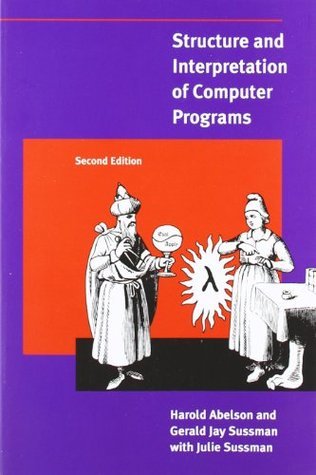
Structure and Interpretation of Computer Programs
by Harold Abelson
Rating: 4.5 ⭐
• 6 recommendations ❤️
Structure and Interpretation of Computer Programs has had a dramatic impact on computer science curricula over the past decade. This long-awaited revision contains changes throughout the text. There are new implementations of most of the major programming systems in the book, including the interpreters and compilers, and the authors have incorporated many small changes that reflect their experience teaching the course at MIT since the first edition was published. A new theme has been introduced that emphasizes the central role played by different approaches to dealing with time in computational models: objects with state, concurrent programming, functional programming and lazy evaluation, and nondeterministic programming. There are new example sections on higher-order procedures in graphics and on applications of stream processing in numerical programming, and many new exercises. In addition, all the programs have been reworked to run in any Scheme implementation that adheres to the IEEE standard.
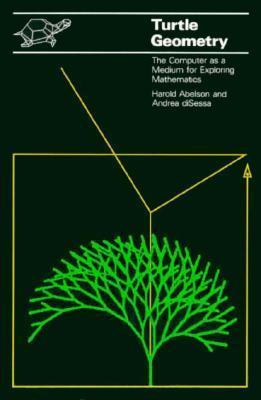
Turtle Geometry presents an innovative program of mathematical discovery that demonstrates how the effective use of personal computers can profoundly change the nature of a student's contact with mathematics. Using this book and a few simple computer programs, students can explore the properties of space by following an imaginary turtle across the screen. The concept of turtle geometry grew out of the Logo Group at MIT. Directed by Seymour Papert, author of Mindstorms, this group has done extensive work with preschool children, high school students and university undergraduates.
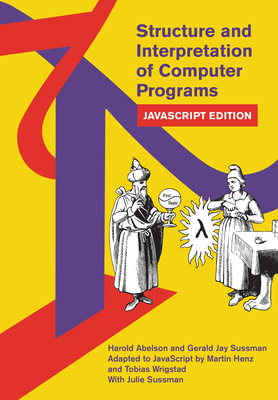
A new version of the classic and widely used text adapted for the JavaScript programming language.Since the publication of its first edition in 1984 and its second edition in 1996, Structure and Interpretation of Computer Programs ( SICP ) has influenced computer science curricula around the world. Widely adopted as a textbook, the book has its origins in a popular entry-level computer science course taught by Harold Abelson and Gerald Jay Sussman at MIT. SICP introduces the reader to central ideas of computation by establishing a series of mental models for computation. Earlier editions used the programming language Scheme in their program examples. This new version of the second edition has been adapted for JavaScript.The first three chapters of SICP cover programming concepts that are common to all modern high-level programming languages. Chapters four and five, which used Scheme to formulate language processors for Scheme, required significant revision. Chapter four offers new material, in particular an introduction to the notion of program parsing. The evaluator and compiler in chapter five introduce a subtle stack discipline to support return statements (a prominent feature of statement-oriented languages) without sacrificing tail recursion.The JavaScript programs included in the book run in any implementation of the language that complies with the ECMAScript 2020 specification, using the JavaScript package sicp provided by the MIT Press website.
![Revised [5] Report on the Algorithmic Language Scheme](/placeholder.svg?height=400&width=300)
R5RS - The report gives a defining description of the program- ming language Scheme. Scheme is a statically scoped and properly tail-recursive dialect of the Lisp programming language invented by Guy Lewis Steele Jr. and Gerald Jay Sussman. It was designed to have an exceptionally clear and simple semantics and few different ways to form expressions. A wide variety of programming paradigms, including imperative, functional, and message passing styles, find convenient expression in Scheme.

This classic guide teaches the art of programming to first time programmers. Logo for the Macintosh teaches the art of programming to first time programmers. It begins with Turtle Geometry, a series of exercises involving both Logo programming and geometric concepts. Later chapters illustrate more advanced topics, such as the famous DOCTOR program with its simulated psychotherapist and an INSTANT program that enables parents and teachers to create a programming environment for preschool children. A chapter is devoted to the topic of object-oriented programming, a key feature of the Object Logo implementation of Logo. Logo for the Macintosh is written primarily for use with Object Logo, a powerful implementation of the Logo language that greatly enhances its speed, capabilities, and overall usability in education and beyond. The book may also be used with other versions of Logo for the Macintosh.
Describes the fundamental concepts of the LOGO computer program language and discusses how to program the Apple II computer in LOGO

Amorphous and Cellular Computing
by Harold Abelson
Computer exercises: Structure and interpretation of computer programs ; version for Apple Macintosh computers
by Harold Abelson
The Bifurcation Interpreter: A Step towards the Automatic Analysis of Dynamical Systems
by Harold Abelson
The Supercomputer Toolkit and Its Applications
by Harold Abelson
LOGO manual
by Harold Abelson
Computational geometry of linear threshold functions
by Harold Abelson
Computer Exercises
by Harold Abelson
Computer exercises to accompany structure and interpretation of computer programs ;: Version for IBM PC compatible machines
by Harold Abelson

Logo―エーベルソンのLogo入門
by Harold Abelson
Computational Thinking Education
by Harold Abelson
This This book is open access under a CC BY 4.0 license. This book offers a comprehensive guide, covering every important aspect of computational thinking education. It provides an in-depth discussion of computational thinking, including the notion of perceiving computational thinking practices as ways of mapping models from the abstraction of data and process structures to natural phenomena. Further, it explores how computational thinking education is implemented in different regions, and how computational thinking is being integrated into subject learning in K-12 education. In closing, it discusses computational thinking from the perspective of STEM education, the use of video games to teach computational thinking, and how computational thinking is helping to transform the quality of the workforce in the textile and apparel industry. This work was published by Saint Philip Street Press pursuant to a Creative Commons license permitting commercial use. All rights not granted by the work's license are retained by the author or authors.
TI LOGO TI-99/4A
by Harold Abelson
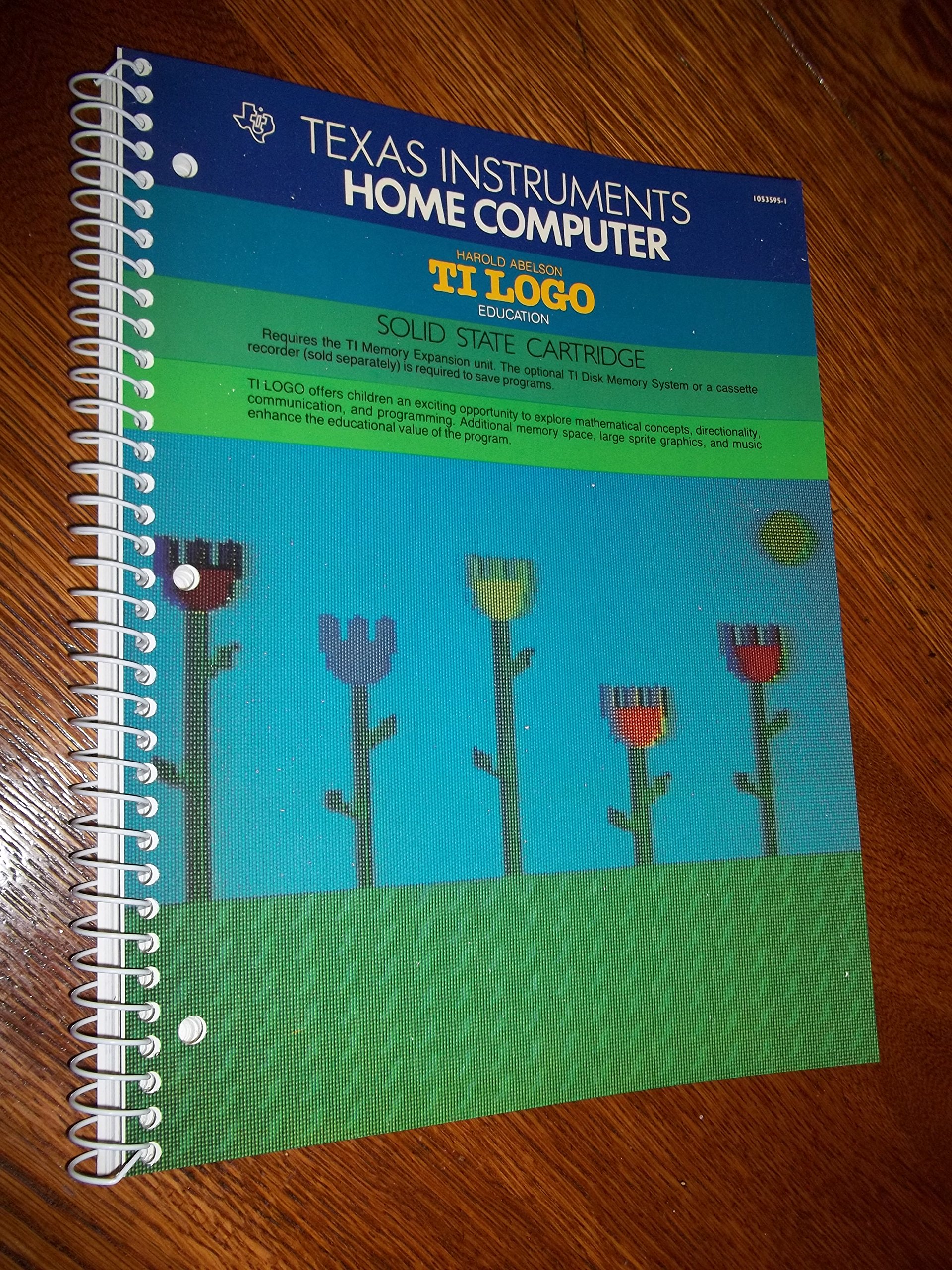
This is the original Texas Instruments instruction manual that was included in the TI-99/4A Software package PHM 3109.