Hans C. Ohanian
21 Books Written

Einstein's Mistakes: The Human Failings of Genius
by Hans C. Ohanian
Rating: 3.6 ⭐
• 1 recommendation ❤️
“A thought-provoking critique of Einstein’s tantalizing combination of brilliance and blunder.”―Andrew Robinson, New Scientist Never before translated into English, the Manimekhalai is one of the great classics of Indian culture. 25 illustrations
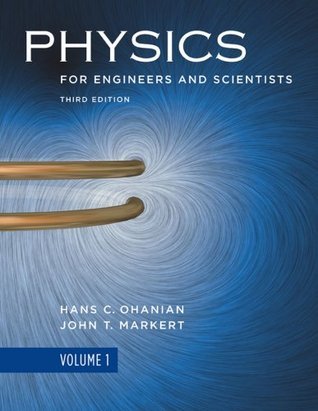
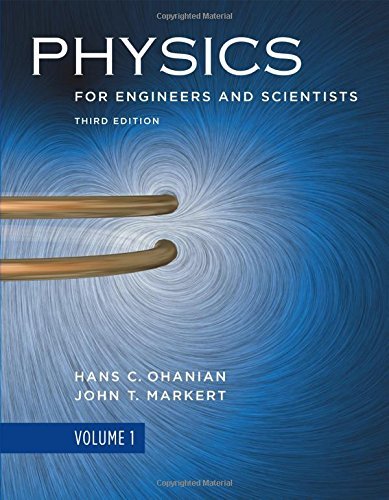
Designed for the introductory calculus-based physics course, Physics for Engineers and Scientists is distinguished by its lucid exposition and accessible coverage of fundamental physical concepts. The text presents a modern view of classical mechanics and electromagnetism for today's science and engineering students, including coverage of optics and quantum physics and emphasizing the relationship between macroscopic and microscopic phenomena.Organized to address specific concepts and then build on them, this highly readable text divides each chapter into short, focused sections followed by review questions. Using real-world examples, the authors offer a glimpse of the practical applications of physics in science and engineering, developing a solid conceptual foundation before introducing mathematical results and derivations (a basic knowledge of derivatives and integrals is assumed).

A remarkable book has just been made even better. Now more than ever, Gravitation and Spacetime , Second Edition, by Hans C. Ohanian and new coauthor Remo Ruffini, deserves John Wheeler’s praise as "the best book on the market today of 500 pages or less on gravitation and general relativity." Gravitation and Spacetime has been thoroughly updated with the most exciting finds and hottest theoretical topics in general relativity and cosmology. Highlights of the revision include the rise and fall of the fifth force, principles and applications of gravitational lensing, COBE’s spectacular confirmation of the blackbody spectrum of the cosmic thermal radiation, theories of dark matter and inflation, and the early universe as a testing ground for particle physicists’ unification theories, and much, much more.The ideal choice for a graduate-level introduction to general relativity, Gravitation and Spacetime is also suitable for an advanced undergaduate course.
Ideal for peer-learning environments, the Student Activity Workbook offers group workshop activities for all the core concepts in the text, with an emphasis on developing problem-solving skills.

This text provides a smooth transition from introductory into modern physics–the physics of the 20th century. The mathematics is kept simple, so students can better concentrate on the important physical concepts.
The text presents a modern view of classical mechanics and electromagnetism for today's science and engineering students, including coverage of optics and quantum physics and emphasizing the relationship between macroscopic and microscopic phenomena. Organized to address specific concepts and then build on them, this highly readable text divides each chapter into short, focused sections followed by review questions. Using real-world examples, the authors offer a glimpse of the practical applications of physics in science and engineering, developing a solid conceptual foundation before introducing mathematical results and derivations (a basic knowledge of derivatives and integrals is assumed).
One semester introduction to the major concepts of quantum mechanics. Emphasis is on abstract state vectors and on operators.

Ideal for peer-learning environments, the Student Activity Workbook offers group workshop activities for all the core concepts in the text, with an emphasis on developing problem-solving skills.

The Instructor's Solutions Manual contains worked solutions to all the end-of-chapter review problems.
Designed for the introductory calculus-based physics course, Physics for Engineers and Scientists is distinguished by its lucid exposition and accessible coverage of fundamental physical concepts. The text presents a modern view of classical mechanics and electromagnetism for today's science and engineering students, including coverage of optics and quantum physics and emphasizing the relationship between macroscopic and microscopic phenomena. Organized to address specific concepts and then build on them, this highly readable text divides each chapter into short, focused sections followed by review questions. Using real-world examples, the authors offer a glimpse of the practical applications of physics in science and engineering, developing a solid conceptual foundation before introducing mathematical results and derivations (a basic knowledge of derivatives and integrals is assumed).

The objectives of this book are: to present a contemporary, modern view of classical mechanics and electromagnetism, and to offer the student a glimpse of what is going on in physics today.

Worked out answers to all of the problems in the corresponding textbook.
The new edition of this classic work in electrodynamics has been completely revised and updated to reflect recent developments in experimental data and laser technology. It is suitable as a reference for practicing physicists and engineers and it provides a basis for further study in classical and quantum electrodynamics, telecommunications, radiation, antennas, astrophysics, etc. The book can be used in standard courses in electrodynamics, electromagnetic theory, and lasers. Paying close attention to the experimental evidence as the basis for the theoretical development, the book’s first five chapters follow the traditional introduction to vector calculus, electrostatic field and potential, BVPs, dielectrics, and electric energy. Chapters 6 and 7 provide an overview of the physical foundations of special relativity and of the four-dimensional tensor formalism. In Chapter 8, the union of Coulomb’s law with the laws of special relativity gives issue to the relativistic form of Maxwell’s equations. The book concludes with applications of Maxwell’s equations in Chapters 9 through 16: magnetostatics, induction, magnetic materials, electromagnetic waves, radiation, waveguides, and scattering and diffraction. Numerous examples and exercises are included. Features +Designed as a text/reference for students, practicing physicists, and engineers +Updated in the second edition, including a discussion of the concept of negative oscillator strengths and a new section dealing with lasers and the threshold condition for lasing;revised experimental data (especially in the chapter dealing with relativity); expanded explanations, additional examples and exercises +Explores areas of contact between classical electrodynamics and quantum physics, such as electrostatic energy of nuclei, image charges as confinement mechanism for free electrons, magnetic monopoles, angular momentum in electromagnetic waves, radiation by atoms and nuclei, and lasers. BRIEF TABLE OF CONTENTS 1. Vector Calculus. 2. Electrostatics. 3. The Boundary Value Problem. 4. Dielectrics. 5. Electric Energy. 6. The Theory of Special Relativity. 7.Vector Calculus in Spacetime. 8. Relativistic Electrodynamics. 9. Magnetostatics. 10. Electromagnetic Induction. 11. Magnetic Dipoles and Magnetic Materials. 12. Electromagnetic Waves. 13. Radiation by a Point Charge. 14.Radiation by a System of Charges. 15. Resonant Cavities and Waveguides. 16. Scattering and Diffraction. Appendixes. Bibliography. Answers to Even-Numbered Problems. Index.

Physics
by Hans C. Ohanian
Ideal for peer-learning environments, the Student Activity Workbook offers group workshop activities for all the core concepts in the text, with an emphasis on developing problem-solving skills.

Initiates the reader into Einstein's theory of Special Relativity.
The Principles of Physics: Answer Pamphlet
by Hans C. Ohanian
Principles of Physics
by Hans C. Ohanian
Physics for Engineers: Extended Chapters 1-41
by Hans C. Ohanian
Designed for the introductory calculus-based physics course, Physics for Engineers and Scientists is distinguished by its lucid exposition and accessible coverage of fundamental physical concepts. Presenting a modern view of classical mechanics and electromagnetism for today's science and engineering students, it includes coverage of optics and quantum physics, emphasising the relationship between macroscopic and microscopic phenomena. Organised to address specific concepts and then build on them, this highly readable textbook divides each chapter into short, focused sections followed by review questions. Using real-world examples, the authors offer a glimpse of the practical applications of physics in science and engineering, developing a solid conceptual foundation before introducing mathematical results and derivations (a basic knowledge of derivatives and integrals is assumed).
Principles of Physics, Purdue Ed
by Hans C. Ohanian
Since for many students this is their first encounter with physics, I introduce new concepts by qualitative and intuitive discussions whenever possible. And to motivate students and to maintain their enthusiasm, I have drawn on examples from sports, biology, medicine, and everyday life, chosen to match the background and special interests of the students.
By Hans C. Ohanian Physics for Engineers and Scientists, Volume 2, Third Edition (Chapters 22-36 v. 2)
by Hans C. Ohanian