
Georges Simenon
Georges Joseph Christian Simenon (1903 – 1989) was a Belgian writer. A prolific author who published nearly 500 novels and numerous short works, Simenon is best known as the creator of the fictional detective Jules Maigret. Although he never resided in Belgium after 1922, he remained a Belgian citizen throughout his life. Simenon was one of the most prolific writers of the twentieth century, capable of writing 60 to 80 pages per day. His oeuvre includes nearly 200 novels, over 150 novellas, several autobiographical works, numerous articles, and scores of pulp novels written under more than two dozen pseudonyms. Altogether, about 550 million copies of his works have been printed. He is best known, however, for his 75 novels and 28 short stories featuring Commissaire Maigret. The first novel in the series, Pietr-le-Letton, appeared in 1931; the last one, Maigret et M. Charles, was published in 1972. The Maigret novels were translated into all major languages and several of them were turned into films and radio plays. Two television series (1960-63 and 1992-93) have been made in Great Britain. During his "American" period, Simenon reached the height of his creative powers, and several novels of those years were inspired by the context in which they were written (Trois chambres à Manhattan (1946), Maigret à New York (1947), Maigret se fâche (1947)). Simenon also wrote a large number of "psychological novels", such as La neige était sale (1948) or Le fils (1957), as well as several autobiographical works, in particular Je me souviens (1945), Pedigree (1948), Mémoires intimes (1981). In 1966, Simenon was given the MWA's highest honor, the Grand Master Award. In 2005 he was nominated for the title of De Grootste Belg (The Greatest Belgian). In the Flemish version he ended 77th place. In the Walloon version he ended 10th place.
32 Books Written

Mes apprentissages constituent un témoignage irremplaçable et une photographie du monde de l'époque saisi par un regard et une sensibilité d'exeption, celui d'un Simenon grand reporter. Une édition présentée par Francis Lacassin. De 1928 à 1946, Simenon a parcouru d'abord la France, puis l'Europe et enfin le reste du monde, pour le seul plaisir de les découvrir. Il finança ses curiosités en faisant de chacun de ses voyages l'objet de reportages pour différants journaux.Ces reportages ont aujourd'hui une valeur de témoignage irremplaçable et constituent une photographie du monde de l'époque saisi par un regard et une sensibilité d'exception. En même temps, ils fournissent un formidable observatoire quant à l'évolution de la pensée et les sources d'inspiration de l'écrivain. Ce sont bien les "apprentissages" d'un grand romancier qui sont réunis ici, dans une édition nouvelle et définitive établie par Francis Lacassin.

Newly translated for this edition.A young Frenchman, Joseph Timar, travels to Gabon carrying a letter of introduction from an influential uncle. He wants work experience; he wants to see the world. But in the oppressive heat and glare of the equator, Timar doesn't know what to do with himself, and no one seems inclined to help except Adèle, the hotel owner's wife, who takes him to bed one day and rebuffs him the next, leaving him sick with desire. But then, in the course of a single night, Adèle's husband dies and a black servant is shot, and Timar is sure that Adèle is involved. He'll cover for the crime if she'll do what he wants. The fix is in. But Timar can't even begin to imagine how deep.In Tropic Moon , Simenon, the master of the psychological novel, offers an incomparable picture of degeneracy and corruption in a colonial outpost.

"Sei così bello" gli aveva detto un giorno Andrée "che mi piacerebbe fare l'amore con te davanti a tutti...". Quella volta Tony aveva avuto un sorriso da maschio soddisfatto: perché era ancora soltanto un gioco, perché mai nessuna donna gli aveva dato più piacere di lei. Solo quando il marito di Andrée era morto in circostanze non del tutto chiare, e Tony aveva ricevuto da lei il primo di quei brevi, sinistri biglietti anonimi, solo allora aveva capito, e aveva cominciato ad avere paura. Ancora una volta, nel suo stile asciutto e rapido Simenon racconta la storia di una passione divorante e assoluta, che non indietreggia nemmeno di fronte al crimine. Anzi, lo ripete.
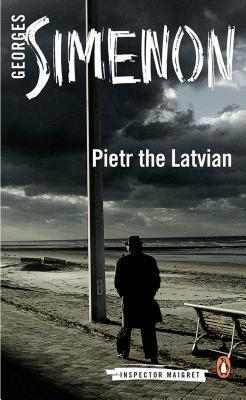
The first novel in the famous Inspector Maigret series.What Maigret sought, and what he waited and watched out for, was the crack in the wall. In other words, the instant when the human being comes out from behind the opponent.Who is Pietr the Latvian? Is he a gentleman thief? A Russian drinking absinthe in a grimy bar? A married Norwegian sea captain? A twisted corpse in a train bathroom? Or is he all of these men? Inspector Maigret, tracking a mysterious adversary and a trail of bodies, must bide his time before the answer can come into focus.This one's a gripping translation. This Penguin Simenon series features brilliant renderings by some of today's best translators from French to English. "Pietr the Latvian," and the ones which follow, introduce the intrepid Inspector to a brand new audience.

Kees Popinga is an average man, a solid citizen who might enjoy a game of chess in the evening. But one night, this model husband and devoted father discovers his boss is bankrupt and that his own carefully tended life is in ruins. Before, he had watched impassively as the trains swept by; now he catches the first one out of town, and soon commits murder before the night is out. How reliable is even the most reliable man's identity? Georges Simenon (1903-1989) was born in Liege, Belgium. He went to work as a reporter at the age of fifteen and in 1923 moved to Paris, where under various pseudonyms he became a highly successful and prolific author of pulp fiction while leading a dazzling social life. In the early 1930s, Simenon emerged as a writer under his own name, gaining renown for his detective stories featuring Inspector Maigret. He also began to write his psychological novels, or romans durs - books in which he displays a sympathetic awareness of the emotional and spiritual pain underlying the routines of daily life. Having written nearly two hundred books under his own name and become the best-selling author in the world, Simenon retired as a novelist in 1973, devoting himself instead to dictating memoirs that filled thousands of pages.

The fifth book in the new Penguin Maigret series: Georges Simenon's gripping tale of small town suspicion and revenge, in Linda Asher's timeless translation.There was an exaggerated humility about her. Her cowed eyes, her way of gliding noiselessly about without bumping into things, of quivering nervously at the slightest word, were the very image of a scullery maid accustomed to hardship. And yet he sensed, beneath that image, glints of pride held firmly in check. She was anaemic. Her flat chest was not formed to rouse desire. Nevertheless, she was strangely appealing, perhaps because she seemed troubled, despondent, sickly.In the windswept seaside town of Concarneau, a local wine merchant is shot. In fact, someone is out to kill all the influential men and the entire town is soon sent into a state of panic. For Maigret, the answers lie with the pale, downtrodden waitress Emma, and a strange yellow dog lurking in the shadows...

Nineteen-year-old Frank Friedmaier lives in a country under occupation. Most people struggle to get by; Frank takes it easy in his mother's whorehouse, which caters to members of the occupying forces. But Frank is restless. He is a pimp, a thug, a petty thief, and, as Dirty Snow opens, he has just killed his first man. Through the unrelenting darkness and cold of an endless winter, Frank will pursue abjection until finally there is nowhere to go.Hans Koning has described Dirty Snow as "one of the very few novels to come out of German-occupied France that gets it exactly right." In a study of the criminal mind that is comparable to Jim Thompson's The Killer Inside Me, Simenon maps a no man's land of the spirit in which human nature is driven to destruction—and redemption, perhaps, as well—by forces beyond its control.

A new translation of a haunting tale about the lengths to which people will go to escape from guilt and book four of the Inspector Maigret series On a trip to Brussels, Maigret unwittingly causes a man's suicide, but his own remorse is overshadowed by the discovery of the sordid events that drove the desperate man to shoot himself.Collect this and other novels in the Inspector Maigret series, now available in thrilling new English translations.

A devastating tale of misfortune, betrayal, and the weakness of family ties, newly translated for the Inspector Maigret series.In the third Maigret mystery, the circumstances of Monsieur Gallet's death all seem fake: the name he was traveling under, his presumed profession, and, more worryingly, his family's grief. Their haughtiness seems to hide ambiguous feelings about the hapless man. Eventually, Maigret discovers the appalling truth and the real crime hidden beneath a surface of lies.Librarian's note: you can collect this and other novels in the Inspector Maigret series, now available in thrilling new English translations.

New York, notte. Un uomo e una donna camminano lungo la Quinta Strada. Entrano in un bar. Ne escono. Un altro bar. E riprendono a camminare, instancabili, come se non potessero fare altro che camminare: «come se avessero sempre camminato così, per le strade di New York, alle cinque del mattino». Come se la notte non dovesse mai finire. Lui non sa niente di lei, lei non sa niente di lui. Lei traballa un po’ sui tacchi troppo alti, e ha una voce roca, una voce che fa pensare a una pena oscura; su una delle sue calze chiare spicca una smagliatura sottile – come una cicatrice. Non è né giovanissima né prepotentemente bella; sul suo viso, i segni di una stanchezza, di una ferita remota: ma è proprio questo a renderla seducente. Si sono incontrati solo poche ore prima, in una caffetteria nei pressi di Washington Square, come due naufraghi, e ora «sono così tenacemente avvinti l’uno all’altro che la sola idea della separazione risulta loro intollerabile». Ma come si può rimanere in quel territorio privilegiato, fuori del tempo e dello spazio, che è l’amour fou? Con Tre camere a Manhattan (di cui disse: «È uno dei pochissimi romanzi che abbia scritto a caldo – e questo mi faceva paura») Simenon si impone come un grande romanziere della passione. Tre camere a Manhattan fu scritto negli Stati Uniti nel 1946.

What was the woman doing here? Why was her body found in a stable, wearing pearl earrings, a stylish bracelet and white buckskin shoes?She must have been alive when she got there because the crime had been committed after ten in the evening. But how? And why? No one had heard a thing! She had not screamed. The two carters had not woken up. If a whip had not been mislaid, the body might not have been discovered for a couple of weeks and only by chance when someone turned over the straw.These questions lead Maigret into an unfamiliar world of the navigable rivers and canals of France, with their run-down cafes, shadowy towpaths, and eccentric inhabitants.This is a recent translation of the second novel in the Inspector Maigret series - Georges Simenon's tragic tale of lost identity. The Penguin series features brilliant renderings by some of today's best translators from French to English and introduces the intrepid Inspector to a brand new audience.

Georges Simenon's riveting tale of deception in an isolated community, part of Penguin's series of new Inspector Maigret translations"She came forward, the outlines of her figure blurred in the half-light. She came forward like a film star, or rather like the ideal woman in an adolescent's dream. 'I gather you wish to talk to me, Inspector . . . but first of all please sit down . . .' Her accent was more pronounced than Carl's. Her voice sang, dropping on the last syllable of the longer words."Maigret has been interrogating Carl Andersen for seventeen hours without a confession. He's either innocent or a very good liar. So why was the body of a diamond merchant found at his isolated mansion? Why is his sister always shut away in her room? And why does everyone at Three Widows Crossroads have something to hide?

When an ominous note predicting the time and place of a death finds its way to Maigret's desk in Paris, his investigation brings him to Saint-Fiacre, the place of his birth. It isn't long before a darkness descends on Maigret and the town, as the prediction becomes a brutal reality and the Inspector discovers he is not welcome in the place he once called home. As much a thriller as a meditation on alienation, The Saint-Fiacre Affair displays Simenon's unique and searing perspective of the struggles we all are forced to endure.

Maigret sets out to prove the innocence of a man condemned to death for a brutal murder. As his audacious plan to uncover the truth unfolds, he encounters rich American expatriates, some truly dangerous characters, and their hidden motives.

It is a hot and steamy summer, and Maigret is hatching a plan to capture a serial murderer by playing on the killer's perverse vanity. He finally succeeds when an important clue leads him to a trio of suspects. But the three are entangled in a web of guilt and possessiveness so tight that the unraveling nearly exhausts the Inspector--until, at last, he discovers the tortured motives behind the murders. Maigret is a registered trademark of the Estate of Georges Simenon.

Against all expectations Marcel Ferón has made a “normal” life in a bucolic French suburb in the Ardennes. But on May 10, 1940, as Nazi tanks approach, this timid, happy man must abandon his home and confront the “Fate” that he has secretly awaited. Separated from his pregnant wife and young daughter in the chaos of flight, he joins a freight car of refugees hurtling southward ahead of the pursuing invaders. There, he meets Anna, a sad-looking, dark- haired girl, whose accent is “neither Belgian nor German,” and who “seemed foreign to everything around her.” As the mystery of Anna’s identity is gradually revealed, Marcel leaps from the heights of an exhilarating freedom to the depths of a terrifying responsibility—one that will lead him to a blood-chilling decision. When it first appeared in English in 1964, British novelist and critic Brigid Brophy declared The Train to be “the novel his admirers had been expecting all along from Simenon.” Until The Train, she wrote, the dazzlingly prolific novelist had been “a master without a masterpiece.”

Two brutal stranglings and a beautiful corpse lead Inspector Maigret into an underworld of striptease artists and morphine addicts as he tries to uncover the past of a shadowy countess.Cover artist: A. Pedro

“He recalled his travelling companion’s agitated sleep—was it really sleep?—his sighs, and his sobbing. Then the two dangling legs, the patent-leather shoes and hand-knitted socks . . . An insipid face. Glazed eyes. And Maigret was not surprised to see a grey beard eating into his cheeks.”A distressed passenger leaps off a night train and vanishes into the woods. Maigret, on his way to a well-earned break in the Dordogne, is soon plunged into the pursuit of a madman, hiding amongst the seemingly respectable citizens of Bergerac.

'Just take a look,' Duclos said in an undertone, pointing to the scene all round them, the picture-book town, with everything in its place, like ornaments on the mantlepiece of a careful housewife . . . 'Everyone here earns his living. Everyone's more or less content. And above all, everyone keeps his instincts under control, because that's the rule here, and a necessity if people want to live in society' When a French professor visiting the quiet, Dutch coastal town of Delfzijl is accused of murder, Maigret is sent to investigate. The community seem happy to blame an unknown outsider, but there are people much closer to home who seem to know much more than they're letting on: Beetje, the dissatisfied daughter of a local farmer, Any van Elst, sister-in-law of the deceased, and, of course, a notorious local crook. Written in the dark, grimly comic prose that Simenon is renowned for, A Crime In Holland will delight lifelong fans and new readers alike.

'Try to imagine a guest, a wealthy woman, staying at the Majestic with her husband, her son, a nurse and a governess . . . In a suite that costs more than a thousand francs a day . . . At six in the morning, she's strangled, not in her room, but in the basement locker room'Below stairs at a glamorous hotel on the Champs-Élysées, the workers' lives are worlds away from the luxury enjoyed by the wealthy guests. When their worlds meet, Maigret discovers a tragic story of ambition, blackmail and unrequited love.

A new translation of Georges Simenon's gripping tale of lost identity. Book sixteen in the new Penguin Maigret series.A man picked up for wandering in obvious distress among the cars and buses on the Grands Boulevards. Questioned in French, he remains mute . . . A madman? In Maigret's office, he is searched. His suit is new, his underwear is new, his shoes are new. All identifying labels have been removed. No identification papers. No wallet. Five crisp thousand-franc bills have been slipped into one of his pockets.A distressed man is found wandering the streets of Paris, with no memory of who he is or how he got there. The answers lead Maigret to a small harbour town, whose quiet citizens conceal a poisonous malice.Penguin is publishing the entire series of Maigret novels in new translations. This novel has been published in a previous translation as Death of a Harbour Master.'Compelling, remorseless, brilliant.' - John Gray 'One of the greatest writers of the twentieth century . . . Simenon was unequalled at making us look inside, though the ability was masked by his brilliance at absorbing us obsessively in his stories.' - The Guardian 'A supreme writer . . . unforgettable vividness.' - The Independent

"I'm relying on you. I trust you."Maigret knew those words would haunt him to his grave. As the famous inspector stared down at the lifeless body of of the frail old lady, her last words to him kept hammering at his ears: "I'm relying on you. I trust you."The little old lady had been hanging around Police headquarters for days. She insisted on seeing only her hero, Maigret. Finally, she confronted the Inspector and patiently told her story. Somebody was trying to do her harm. She didn't know who, and she didn't know why.Maigret promised to call on her as soon as he could find a free moment. Maigret felt partially responsible; how could he not. This was going to be a special case. He would find the killer if it was the last thing he ever did!

The city of Simenon's youth comes to life in this new translation of this disturbing novel set in Liège, book ten in the new Penguin Maigret series.In the darkness, the main room is as vast as a cathedral. A great empty space. Some warmth is still seeps from the radiators. Delfosse strikes a match. They stop a moment to catch their breath, and work out how far they have still to go. And suddenly the match falls to the ground, as Delfosse gives a sharp cry and rushes back towards the washroom door. In the dark, he loses his way, returns and bumps into Chabot.

"We saw a door opening ahead of us. There was a car parked by the roadside. This guy came out pushing another guy in front of him. No, not pushing. Imagine you're carrying a shop dummy and trying to make it look like it's your friend walking next to you. He put him in the car and got into the driver's seat . . The guy drove all over the place. He seemed to be looking for something, but seemed to keep losing his way. In the end, we realized what he'd been looking for."So this intriguing little case picks up speed.It's a series of chance encounters which sends Inspector Maigret down yet another winding path of murder and mystery. While visiting a criminal in his cell, the young convict tells Maigret of a man who'd been spotted dumping a body in a Parisian canal some years ago. On an unexpected trip to a popular inn, Maigret finds himself in the very place the suspected killer was last seen, and the Inspector is pulled deeper into the web of blackmail and deceit.Librarian's note: previously published as 'The Bar on the Seine.'

Inspector Maigret must untangle the web of lies left behind by a murdered man whose family didn’t know him as well as they thought. The forty-first book in the new Penguin Maigret series.When a man is found stabbed to death in an alley off Boulevard Saint-Martin, his identity card shows a workplace that had gone out of business three years earlier. As far as his wife knew, he still worked there, and she insists that the shoes and a tie he was wearing when he was killed “couldn’t be his.” It soon becomes evident that although he had a source of income, he spent most of his time sitting on a bench in the neighborhood, often with the same unknown man. Can Maigret find him?

Maigret is going about his work in rainy Paris, followed around by Inspector Pyke who has come from Scotland Yard to study the famous French detective's methods. Routine is disturbed when Maigret receives a telephone call from the island of Porquerolles off the Mediterranean coast. A small-time crook has been murdered, the night after he had fervently declared his friendship with Maigret in front of a large group of the island's inhabitants. Maigret and Inspector Pyke leave the greyness of Paris for the sunshine of Porquerolles where Simenon creates a wonderfully evocative atmosphere of the square and cafe, the brilliant sea, the humidity in the air and the life and individuality of each of the inhabitants on the small island.

The profession he had always yearned for did not actually exist...he imagined a cross between a doctor and a priest - a man capable of understanding another's destiny at first glance. The very first investigation by eager young police secretary Jules Maigret leads him to a wealthy Paris family's dark secrets.
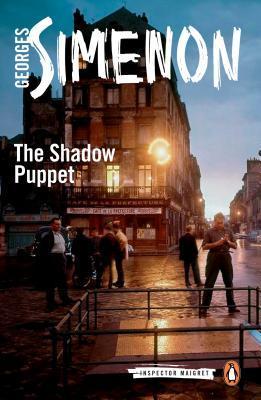
A new translation of this gripping domestic tragedy, set in Simenon’s very own neighbourhood. Book twelve in the new Penguin Maigret series.One by one the lighted windows went dark. The silhouette of the dead man could still be seen through the frosted glass like a Chinese shadow puppet. A taxi pulled up. It wasn’t the public prosecutor yet. A young woman crossed the courtyard with hurried steps, leaving a whiff of perfume in her wake. Summoned to the dimly-lit Place des Vosges one night, where he sees shadowy figures at apartment windows, Maigret uncovers a tragic story of desperate lives, unhappy families, addiction and a terrible, fatal greed.

While on holiday, Inspector Maigret is drawn into the murder of a teenage girl and subsequent disappearance of her brother and must confront an evil that is hidden in plain sight. During their holidays in Sables-d’Olonne, Maigret’s wife is hospitalized with appendicitis, and Maigret receives a strange note instructing him to visit a patient in another ward. To solve the mysterious case that has left a young woman dead and her brother missing, Maigret must give one of his best performances yet in a story laced with mood, class tension, and in the end, of course, justice. “One of the greatest writers of the twentieth century . . . Simenon was unequaled at making us look inside, though the ability was masked by his brilliance at absorbing us obsessively in his stories.” — The GuardianAlors que le couple Maigret se repose quelques jours aux Sables-d'Olonne, Mme Maigret est victime d'une crise d'appendicite. A l'hôpital où elle est soignée, une religieuse implore le commissaire de s'inté

Sailors don't talk much to other men, especially not to policemen. But after Captain Fallut's body is found floating near his trawler, they all mention the Evil Eye when they speak of the Ocean's voyage. Featured the inimitable Inspector Maigret and written in the dark, grimly comic prose that Simenon is renowned for, A Crime In Holland will delight lifelong fans and new readers alike.

In The Friend of Madame Maigret , Simenon?s economic prose brilliantly portrays the Marais quarter of Paris and those who haunt its narrow streets as Inspector Maigret attempts to prove that a murder has actually been committed without a corpse anywhere to be found. As the investigation becomes increasingly complex, seemingly unconnected characters are drawn into the case, and Maigret begins to wonder if his wife?s earlier strange encounter with a woman and her baby may be the missing link.

Seasonal stories set in Paris at Christmas from the celebrated creator of Inspector Maigret, Georges Simenon.It is Christmas in Paris, but beneath the sparkling lights and glittering decorations lie sinister deeds and dark secrets... This collection brings together three of Simenon's most enjoyable Christmas tales, newly translated, featuring Inspector Maigret and other characters from Simenon's Paris.The first is the only story which mentions Maigret by name. In 'A Maigret Christmas,' the Inspector receives two unexpected visitors early on the morning of Christmas Day. They lead him on the trail of a mysterious intruder dressed in red and white. Is Santa Claus real? In 'Seven Small Crosses in a Notebook', the sounds of police call-box alarms all over Paris send many officers on a cat and mouse chase across the city. 'The Little Restaurant near Place des Ternes, A Christmas Story for Grown-Ups' tells of a cynical woman who is moved to an unexpected act of festive charity in a nightclub - one that surprises even her.The stories are: 1. A Maigret Christmas, 2. Seven Small Crosses in a Notebook, and 3. The Little Restaurant near Place des Ternes.Librarian's note: this entry is for the collection, "A Maigret Christmas and Other Stories." Entries for each of the individual stories by the author, including the title story, can be found elsewhere on Goodreads.