
George Gamow
George Gamow (Russian pronunciation: [ˈɡaməf:]; March 4 [O.S. February 20:] 1904 – August 19, 1968), born Georgiy Antonovich Gamov (Георгий Антонович Гамов), was a theoretical physicist and cosmologist born in the Russian Empire. He discovered alpha decay via quantum tunneling and worked on radioactive decay of the atomic nucleus, star formation, stellar nucleosynthesis, big bang nucleosynthesis, cosmic microwave background, nucleocosmogenesis and genetics.
29 Books Written
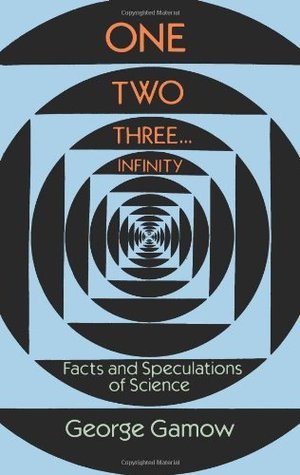
One, Two, Three...Infinity: Facts and Speculations of Science
by George Gamow
Rating: 4.2 ⭐
• 2 recommendations ❤️
Whatever your level of scientific expertise, chances are you'll derive a great deal of pleasure, stimulation, and information from this unusual and imaginative book. It belongs in the library of anyone curious about the wonders of the scientific universe.One of the world's foremost nuclear physicists (celebrated for his theory of radioactive decay, among other accomplishments), George Gamow possessed the unique ability of making the world of science accessible to the general reader. He brings that ability to bear in this delightful expedition through the problems, pleasures, and puzzles of modern science.In the pages of this book readers grapple with such crucial matters as whether it is possible to bend space , why a rocket shrinks , the " end of the world problem ," excursions into the fourth dimension , and a host of other tantalizing topics for the scientifically curious Brimming with amusing anecdotes and provocative problems, One Two Three . . . Infinity also includes over 120 delightful pen-and-ink illustrations by the author , adding another dimension of good-natured charm to these wide-ranging explorations.". . . full of intellectual treats and tricks, of whimsy and deep scientific philosophy. It is highbrow entertainment at its best, a teasing challenge to all who aspire to think about the universe." — New York Herald TribuneDover publishes an impressive collection of popular science books including technology and invention, space and time, basic machines and computers, forces and fields, chaos, biographies of Einstein and Newton, and much more.

Mr. Tompkins is back! The mild-mannered bank clerk with the short attention span and vivid imagination has inspired, charmed, and informed young and old alike since the publication of the hugely successful Mr Tompkins in Paperback (by George Gamow) in 1965. Now, this highly affable character returns to embark on a set of adventures that explore the extreme edges of the universe--the smallest, the largest, the fastest, and the farthest. Just by following the experiences and dreams of Mr. Tompkins, readers discover and come to know the merry dance of cosmic mysteries, including: Einstein's theory of relativity, bizarre effects near light-speed, the birth and death of the universe, black holes, quarks, space warps and antimatter, the fuzzy world of the quantum, and that ultimate cosmic mystery--love. The story of Mr. Tompkins' journey to the frontiers of modern physics will delight and inform all readers. Russell Stannard is a best-selling popular science writer and the author of the critically acclaimed Uncle Albert series of science books for children.

Mr Tompkins has become known and loved by many thousands of readers (since his first appearance over fifty years ago) as the bank clerk whose fantastic dreams and adventures lead him into a world inside the atom. George Gamow's classic provides a delightful explanation of the central concepts in modern physics, from atomic structure to relativity, and quantum theory to fusion and fission. Roger Penrose's new foreword introduces Mr Tompkins to a new generation of readers, and reviews his adventures in the light of current developments in physics today.

A distinguished physicist and teacher, George Gamow also possessed a special gift for making the intricacies of science accessible to a wide audience. In Gravity , he takes an enlightening look at three of the towering figures of science who unlocked many of the mysteries behind the laws of physics: Galileo, the first to take a close look at the process of free and restricted fall; Newton, originator of the concept of gravity as a universal force; and Einstein, who proposed that gravity is no more than the curvature of the four-dimensional space-time continuum.Graced with the author's own drawings, both technical and fanciful, this remarkably reader-friendly book focuses particularly on Newton, who developed the mathematical system known today as the differential and integral calculus. Readers averse to equations can skip the discussion of the elementary principles of calculus and still achieve a highly satisfactory grasp of a fascinating subject.Starting with a chapter on Galileo’s pioneering work, this volume devotes six chapters to Newton's ideas and other subsequent developments and one chapter to Einstein, with a concluding chapter on post-Einsteinian speculations concerning the relationship between gravity and other physical phenomena, such as electromagnetic fields.

"This book is Gamow at his best, which means the very best in science for the layman." — Library JournalWidely recognized as one of the 20th century's foremost physicists, George Gamow was also an unusually capable popularizer of science. His talents are vividly revealed in this exciting and penetrating explanation of how the central laws of physical science evolved — from Pythagoras' discovery of frequency ratios in the 6th century B.C. to today's research on elementary particles.Unlike many books on physics which focus entirely on fact and theory with little or no historic detail, the present work incorporates fascinating personal and biographical data about the great physicists of past and present. Thus Dr. Gamow discusses on an equal basis the trail of Galileo and the basic laws of mechanics which he discovered, or gives his personal recollections about Niels Bohr along with detailed discussion of Bohr's atomic model. You'll also find revealing glimpses of Newton, Huygens, Heisenberg, Pauli, Einstein, and many other immortals of science.Each chapter is centered around a single great figure, or at most two, with other physicists of the era and their contributions forming a background. Major topics include the dawn of physics, the Dark Ages and the Renaissance, Newtonian physics, heat as energy, electricity, the relativistic revolution, quantum theory, and the atomic nucleus and elementary particles.As Dr. Gamow points out in the Preface, the aim of this book is to give the reader the feeling of what physics is , and what kind of people physicists are . This delightfully informal approach, combined with the book's clear, easy-to-follow explanations, will especially appeal to young readers but will stimulate and entertain science enthusiasts of all ages. 1961 edition."The whole thing is a tour de force covering all the important landmarks." — Guardian

In "Mr. Tompkins in Wonderland" his protagonist is a bank clerk who strays into a physics lecture. Of course, Mr. Tompkins does not understand much of what the professor is saying - his skills in mathematics are limited to addition, subtraction, multiplication and division, "of which he uses the first two in his profession". But he picks up enough interesting impressions to have a vivid dream related to the lecture. He likes his dream and comes back to enjoy additional lectures which in turn inspire new dreams.

This lively and authoritative survey by an internationally famous physicist offers captivating perspectives on the origins of the galaxies, stars, chemical elements, and planetary systems. Illustrated with diagrams and the author's own drawings, it explains complex concepts in a simple manner. "Fascinating."—San Francisco Chronicle 40 figures. 1961 edition.
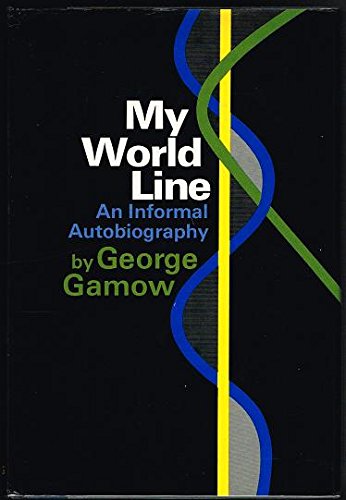
George Gamow, a theoretical physicist and cosmologist and an early advocate and developer of Lemaître's Big Bang theory. was awarded the Kalinga Prize by UNESCO for his popularization of science. Born in Odessa, Russia, he was a colleague of Albert Einstein, Marie Curie, Peter Kapitza and Francis Crick. He was a fellow at Cambridge, Univ. of Copenhagen, Univ. of Leningrad, Univ. of London, Washington Univ. (Wash., DC), Univ. of California, Berkeley, and Univ. of Colorado. My World Line is an intimate portrait of an unorthodox, witty and warm man, whose free spirit and creative intuition endeared him to his colleagues in the scientific community.

A lucid explanation of stellar evolution and atomic energy. Professor George Gamow outlines in simple terms the fundamental discoveries and theories of modern physics that illuminate the evolution of our world. Includes an Index. "A most significant and scholarly book, it encompasses such vast reaches of astronomical knowledge that one's imaginagtion is stimulated and one's intelligence richly satisfied."

يروى الكتاب السيرة الذاتية لعلم الفيزياء، حسبما أشارت مقدمة الكتاب، إلى أن لكل علم من العلوم سيرة ذاتية، تحكى ظروف نشأته، ومراحل تطوره عبر التاريخمؤلف الكتاب، اشتهر فى مجال تبسيط النظريات الفيزيائية لغير المتخصصين، واشتهر بنظريته التى وضعها عام 1928، عن انحلال الذرات ذات النشاط الإشعاعى، كما تنسب إليه نظرية الانفجار الكبير لتفسير نشأة الكون التى وضعها عام 1948ويحوى الكتاب 8 أبواب، تتناول نشأة الفيزياء، وفى الباب الثانى فترتى العصور المظلمة وعصر النهضة.وخصص المؤلف الفصل الثالث للحديث عن العالم " نيوتن"، كما خصص الرابع لتناول الحرارة كصورة من صور الطاقة، وفى الخامس عصر الكهرباء، وفى السادس ثورة النسبية، وفى السابع قانون الكم، وختم فى الثامن بعرضه لموضوع نواة الذرة والجسيمات الأولية

Mr. Tompkins Gets Serious: The Essential George Gamow (2005) Pi Press, ISBN 0-13-187291-5. Incorporates material from Matter, Earth & Sky & The Atom & Its Nucleus. Notwithstanding the title, this book is not part of the Mr. Tompkins series.

The eponymous character of Mr Tompkins appears in a series of four books by the physicist George Gamow in which he aims to explain modern scientific theories to a popular audience.



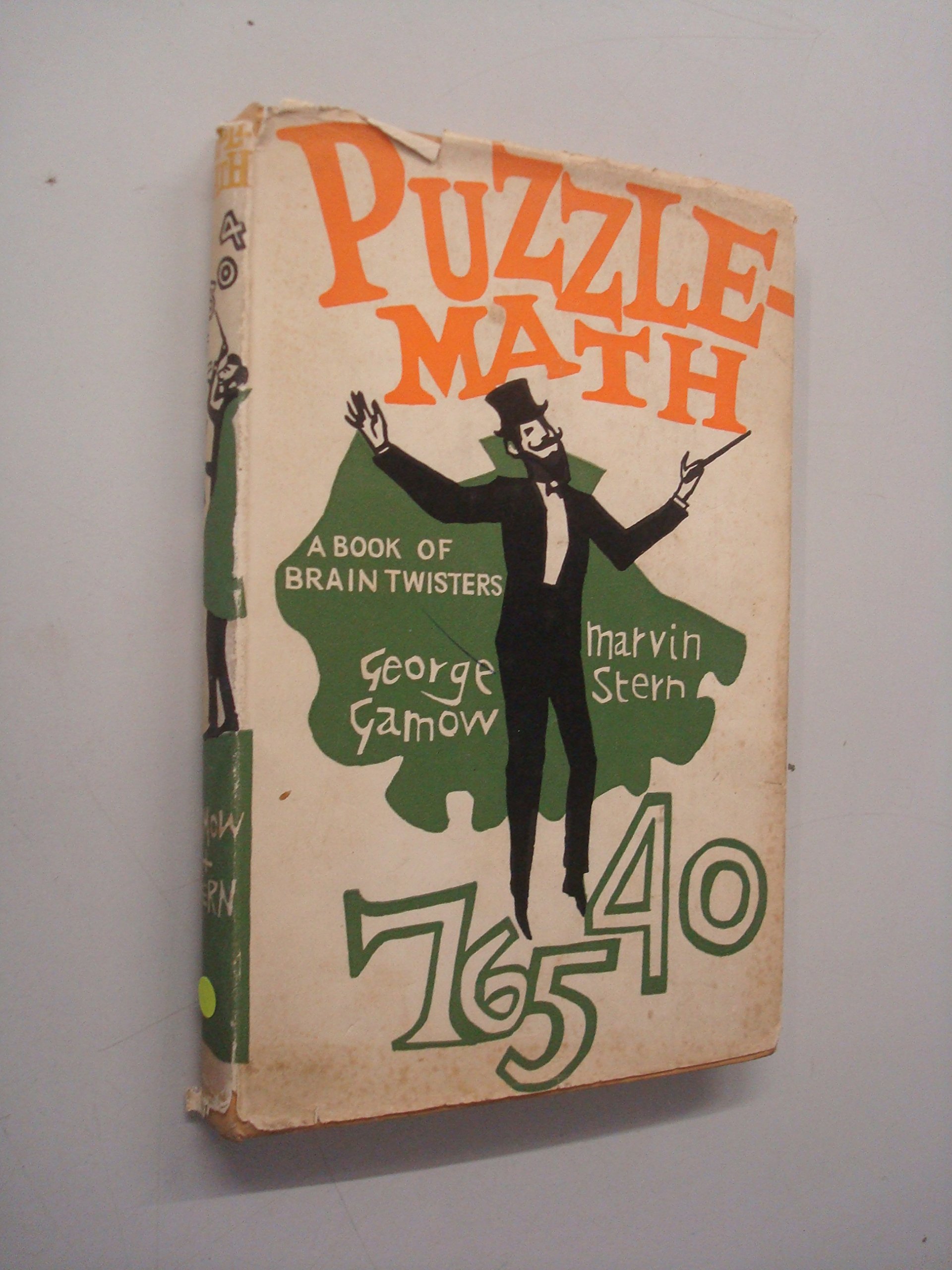
Very RARE edition!! UNIQUE offer!! Don’t wait to be OWNER of this special piece of HISTORY!!!


George Gamow's first Tompkins book, Mr Tompkins in Wonderland, created a 'toy universe' where, as his son comments in the preface to this 2010 reprint, 'the maximum speed of light is assumed to be 10 miles per hour, while all the laws of general relativity still hold'. Since the death of the author in 1968, the Mr Tompkins series has gone through a number of reincarnations. The latest reincarnation, The Adventures of Mr Tompkins (www.theadventuresofmrtompkins.com), has Mr Tompkins not only visiting physicists, well also one biologist in Mr Tompkins Learns the Facts of Life but he also visits a slew of scientists from all branches of science and mathematics, from their very beginnings to the present time, from Aristotle to Watson and Crick.

From Back Cover: "How did the birth of the Earth come about? How was the Moon, Earth's offspring, born? What good are earthquakes? How hot is the Earth's center? How did life originate on the Earth? Read the answers in this absorbing illustrated book that tells the whole exciting story of our Earth's birth, its growth and change, and gives a startling preview of its probable future."


Recent explorations of the lunar surface are related in a history of man's knowledge about the moon

First Edition. 1958. (First Edition due For Prentice Hall - copyright page shows No Additional Printings only the number line 56575) Clothed boards in very good condition with some edge wear. Tears to DJ. Some of the tears taped in the back. Creasing to DJ. Price still shows on DJ. Pages are clean and binding is tight.
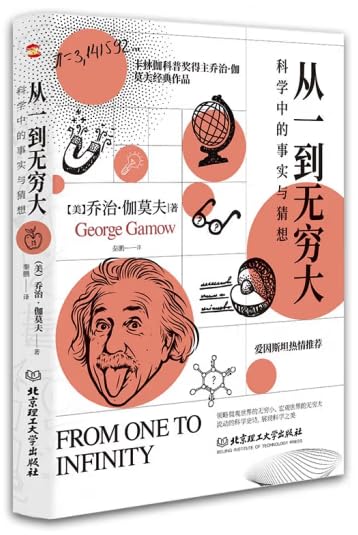
本书是乔治·伽莫夫的科普代表作品,以通俗易懂的方式介绍了20世纪以来自然科学领域取得的重大进展。由漫谈基础数学知识入手,阐明了时间、空间的相对性,讲述了爱因斯坦的相对论及四维世界结构,最后全面讨论了人类在微观世界和宏观世界等方面的成就。本书语言幽默生动,论述深入浅出,已成为广大读者喜好阅读的自然科普读物之一。


First published in 1945, in the aftermath of the bombing of Hiroshima and Nagasaki, Atomic Energy in Cosmic and Human Life offers a unique account of the problem of atomic energy and the underlying principles of radioactive decay. Written by the pre-eminent physicist George Gamow, and dedicated to the hope of lasting peace, the book was originally designed to give a complete picture of what atomic energy is, where it comes from, and how it can be used for better or worse. Featuring a number of graphs and illustrations by the author himself, this small volume will continue to be of value to those interested in the history of the study of radioactivity.

Gravity is either pushing on your head or pulling on your feet, Many Physics scientists disagree. Who? Why?

George Gamow 1904'te Çarlık Rusya'sının Odesa kentinde doğdu. Leningrad Üniversitesi'nde öğrenci iken evrenin genişlemekte olduğu tezinin savunucusu Friedman ile çalıştı.Mezuniyetinden sonra, Göttingen ve Kopenhag'da, nükleer fizik ve yıldızların yapıları konularında ortaya koyduğu model ve kuramlarla çağdaş fiziğin önemli isimleri arasında yerini aldı.1934'te ABD'ye göç etti.Teller ile beraber yaptığı çalışmalarla güneş enerjisinin termonükleer doğasını açıkladı. 1948'de genişleyen evren kuralını geliştirerek ulaştığı 'Büyük Patlama' (Big -Bang) modeli ile evrenin ve elementlerin oluşumuna ışık tuttu. Gamow genetik konusunda da yaptığı öncü katkılarla yirminci yüzyılda her alanda bilimin ilerlemesini hızlandıran çok yönlü bilim adamlarından birisidir.Gamow, 1956'dan 1968'de ölümüne kadar Colorado Üniversitesi'nde sürdürdüğü profesörlüğü sırasında, relativite, nükleer fizik, kuantum kuramı, kozmoloji gibi zor konuları genç kuşaklara anlatmak amacı ile 'Bay Tompkins Harikalar Ülkesinde' kitabı ile başlayan bir dizi öykü yayınladı. Bu alandaki diğer eserleri 'Bir, İki, Üç Sonsuz', 'Bilimin Gerçekleri ve Analizi', 'Evrenin Yaratılışı', 'Dünya İsimli Gezegen' ve 'Güneş İsimli Yıldız' dır. Bilimi tanıtma ve yayma çabalarındaki başarılarından dolayı Unesco tarafından ödüllendirilmiştir.'Sadece eğlendirici değil, sade okuyucu bu kitaptan atom altı parçacıklar elektron, nötron ve diğerleri ve onların davranışlarının belirleyen garip kurallar hakkında çok şey öğrenilebilir."The Observer'Hem olağanüstü şaşırtıcı hem de tümü ile bilimsel."Scientific American'Bilimle ilgili ve genel okuyuculara önemle salık verilir."The Guardian
Biography of Physics, Illustrated by the Author
by George Gamow
An exciting and penetrating view of physics, the great physicists, and the development of the central laws and ideas of physical science from the Greeks to the present.