
George Catlin
George Catlin (July 26, 1796 – December 23, 1872) was an American painter, author, and traveler, who specialized in portraits of Native Americans in the Old West. https://en.wikipedia.org/wiki/George_...
29 Books Written

Last Rambles Amongst The Indians Of The Rocky Mountains And The Andes
by George Catlin
• 2 recommendations ❤️
This work has been selected by scholars as being culturally important, and is part of the knowledge base of civilization as we know it. This work was reproduced from the original artifact, and remains as true to the original work as possible. Therefore, you will see the original copyright references, library stamps (as most of these works have been housed in our most important libraries around the world), and other notations in the work. This work is in the public domain in the United States of America, and possibly other nations. Within the United States, you may freely copy and distribute this work, as no entity (individual or corporate) has a copyright on the body of the work.As a reproduction of a historical artifact, this work may contain missing or blurred pages, poor pictures, errant marks, etc. Scholars believe, and we concur, that this work is important enough to be preserved, reproduced, and made generally available to the public. We appreciate your support of the preservation process, and thank you for being an important part of keeping this knowledge alive and relevant.

"Of all those who have visited the wilds of the Northwest, no one was received with greater attention than George Catlin." -Fur Trader, H.H. Sibley, 1856George Catlin (1796 –1872) was an American painter, author, and traveler of the Old West who specialized in portraits of Native Americans. Travelling to the American West five times during the 1830s, Catlin was the first white man to depict Plains Indians in their native territory.The author spent eight years traveling among the Indians of the Northwest and the prairies, noting their customs and recording his observations with pen and brush. Catlin published his observation in a multi-volume set of books on the Indian tribes he witnessed.In "My Life Among the Indians" the parts of Catlin's volumes on the North American Indians which will be of most interest to the public have been condensed and brought together in chronological order.It is a splendid book to read and to own, being made up from two large volumes of letters written by George Catlin, the well-known painter of Indian subjects. There are sixteen illustrations from the artist's original drawings. Mr. Catlin traveled extensively in the Indian country, making a fine collection of Indian specimens which he afterwards exhibited in this country and in foreign lands. Many of these specimens, together with his paintings, which were so true to life among the Indians, are still preserved in Washington. It was Catlin who, in 1832, made the suggestion that the government should set aside a great National Park in the Yellowstone region."Mr. Catlin's scheme, as it then took shape in his mind, and was carried out without deviation, was the formation of an Indian gallery, for which he would use his skill as a painter in securing portraits among the different tribes he would personally visit; in reproducing pictorially their customs, hunt games, and manner of living; in collecting their robes, headdresses, pipes, weapons, musical instruments, and articles of daily life; and in studying their social life, government, and religious views, that he might arrive at their own view of their relation to the world in which they lived. This world he also wished to investigate geographically and topographically. In brief, he wished to see the Indian in his native state, and, if possible, to discover his past. His future he knew. The Indian would disappear before advancing civilization."Mr. Catlin's personal equipment for his task was a lithe, alert frame, about five feet eight inches tall, made sturdy and enduring by the outdoor life of his boyhood, a knowledge of woodcraft, a trained eye with the rifle, fine horsemanship, simple habits, a mechanical, even an inventive mind, and great steadfastness of purpose."
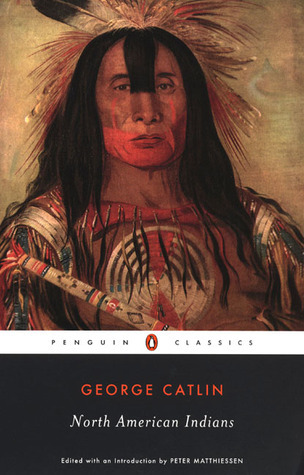
From 1831 to 1837, George Catlin traveled extensively among the native peoples of North America—from the Muskogee and Miccosukee Creeks of the Southeast to the Lakota, Mandan, and Pawnee of the West, and from the Winnebagos and Menominees of the North to the Comanches of eastern Texas. Studying their habits, customs, and modes of life, he made copious notes and numerous sketches of ceremonies, buffalo hunts, symbols, and totems. Catlin’s unprecedented fieldwork culminated in more than five hundred oil paintings and his now-legendary journals, which, as Peter Matthiessen writes in his introduction, “taken together... constitute the first, last, and only ‘complete’ record of the Plains Indians ever made at the height of their splendid culture, so soon destroyed by traders’ liquor and disease, rapine and bayonets.”

This is a reproduction of a book published before 1923. This book may have occasional imperfections such as missing or blurred pages, poor pictures, errant marks, etc. that were either part of the original artifact, or were introduced by the scanning process. We believe this work is culturally important, and despite the imperfections, have elected to bring it back into print as part of our continuing commitment to the preservation of printed works worldwide. We appreciate your understanding of the imperfections in the preservation process, and hope you enjoy this valuable book.

Letters and Notes of the Manners, Customs, and Conditions of the North American Indians: Written during Eight Years' Travel (1832-1839) amongst the Wildest Tribes of Indians in North America, Volume I
by George Catlin
Rating: 4.2 ⭐
Crow, Blackfoot, Pawnee, Sioux, Comanche, Mandan, Choctaw, Cheyenne, Winnebago, Creek, Assiniboin; wild prairies teeming with buffalo; the sacred site of Catlinite stone — all were subjects of Catlin's letters and paintings. For eight years (1832–39) George Catlin ventured among the Indians of the North American Plains capturing in verbal and visual pictures every facet of their lives. For the rest of his life, Catlin carried to Eastern America and Europe the true pictures of the North American Indians enjoying their last years of freedom and dignity in their native home.Catlin's book is an adventure. It is an adventure of the painter who was called "the great white medicine man" for his ability to paint. It is an adventure of a self-taught painter who vowed: "…nothing short of the loss of my life, shall prevent me visiting their country, and of becoming their historian." It is a story of the great mysteries of the many tribes of Indians he visited — the mysteries of costume, posture and myth, the mystery of weapons, hunts, and manly games, the mystery of a life still close in connection with the Great Spirit, with the buffalo and with the traditions of thousands of years, all which would soon be destroyed. "Art may mourn," said Catlin, "when these people are swept from the earth." Most importantly, his book is a book of direct, fresh, and accurate illustrations, illustrations that keep the best in Indian life alive.Now for the first time Catlin's illustrations are shown as he meant them to be seen. Through a process unknown when his book was first published, photographs of his actual paintings have been used to capture the many layers of depth and accurate depiction that could only be hinted at in the line drawings of the early editions. Two-hundred and fifty-seven photographs of Catlin's original oil paintings are included together with fifty-five of the original book illustrations. As a result this is the definitive edition of Catlin that can never be superseded, far more useful than any earlier edition.George Catlin's North American Indians is still one of the most readable books about the Indians of the Plains, capturing, as it does, the tribes when they were still in touch with their most important traditions. It has also become an invaluable historic and ethnographic document for study of the American West. The Mandan tribe, which Catlin so carefully set down, disappeared in a small-pox epidemic only five years after his visit. Other tribes changed radically, their traditional mode of life seen only in Catlin's notes and illustrations. As Marjorie Halpin says in her introduction, " ... we can share the feeling of gratitude he expressed when he said, 'I was luckily born in time to see these people in their native dignity, and beauty, and independence …."Unabridged republication of the fourth (1844) edition. 312 illustrations, including 257 photographic reproductions of the original paintings. New introduction of Marjorie Halpin.

From the foremost collection of the artist's work, a remarkable portrait of Native American life. In 1832, George Catlin―showman, entrepreneur, and artist―made the first of four trips into Indian country, painting as he went, in a wonderfully spontaneous, if somewhat naive style. His ambition was to paint every tribe. He fell short. But what he did achieve, and the subject of this splendid volume, is a remarkable look into the faces and daily activities of Native Americans before their lands and their numbers were so radically diminished. And while Catlin was clearly influenced by the idea that Indians were Noble Savages (rapidly acquiring the vices of the white man while losing their "savage" virtues), his passion for his work is evidence of a profound respect and affection for his subjects, clearly demonstrated in this magnificent book. 275 illustrations, 150 in color.

Letters and Notes of the Manners, Customs, and Conditions of the North American Indians: Written during Eight Years' Travel (1832-1839) amongst the Wildest Tribes of Indians in North America, Volume II
by George Catlin
Rating: 4.2 ⭐
Crow, Blackfoot, Pawnee, Sioux, Comanche, Mandan, Choctaw, Cheyenne, Winnebago, Creek, Assiniboin; wild prairies teeming with buffalo; the sacred site of Catlinite stone — all were subjects of Catlin's letters and paintings. For eight years (1832–39) George Catlin ventured among the Indians of the North American Plains capturing in verbal and visual pictures every facet of their lives. For the rest of his life, Catlin carried to Eastern America and Europe the true pictures of the North American Indians enjoying their last years of freedom and dignity in their native home.Catlin's book is an adventure. It is an adventure of the painter who was called "the great white medicine man" for his ability to paint. It is an adventure of a self-taught painter who vowed: "…nothing short of the loss of my life, shall prevent me visiting their country, and of becoming their historian." It is a story of the great mysteries of the many tribes of Indians he visited — the mysteries of costume, posture and myth, the mystery of weapons, hunts, and manly games, the mystery of a life still close in connection with the Great Spirit, with the buffalo and with the traditions of thousands of years, all which would soon be destroyed. "Art may mourn," said Catlin, "when these people are swept from the earth." Most importantly, his book is a book of direct, fresh, and accurate illustrations, illustrations that keep the best in Indian life alive.Now for the first time Catlin's illustrations are shown as he meant them to be seen. Through a process unknown when his book was first published, photographs of his actual paintings have been used to capture the many layers of depth and accurate depiction that could only be hinted at in the line drawings of the early editions. Two-hundred and fifty-seven photographs of Catlin's original oil paintings are included together with fifty-five of the original book illustrations. As a result this is the definitive edition of Catlin that can never be superseded, far more useful than any earlier edition.George Catlin's North American Indians is still one of the most readable books about the Indians of the Plains, capturing, as it does, the tribes when they were still in touch with their most important traditions. It has also become an invaluable historic and ethnographic document for study of the American West. The Mandan tribe, which Catlin so carefully set down, disappeared in a small-pox epidemic only five years after his visit. Other tribes changed radically, their traditional mode of life seen only in Catlin's notes and illustrations. As Marjorie Halpin says in her introduction, " ... we can share the feeling of gratitude he expressed when he said, 'I was luckily born in time to see these people in their native dignity, and beauty, and independence …."Unabridged republication of the fourth (1844) edition. 312 illustrations, including 257 photographic reproductions of the original paintings. New introduction of Marjorie Halpin.

Book by Catlin, George

The Breath of Life Or Mal-respiration: And Its Effects Upon the Enjoyments & Life of Man
by George Catlin
Rating: 4.0 ⭐
This is a reproduction of a classic text optimised for kindle devices. We have endeavoured to create this version as close to the original artefact as possible. Although occasionally there may be certain imperfections with these old texts, we believe they deserve to be made available for future generations to enjoy.

This is a reproduction of a book published before 1923. This book may have occasional imperfections such as missing or blurred pages, poor pictures, errant marks, etc. that were either part of the original artifact, or were introduced by the scanning process. We believe this work is culturally important, and despite the imperfections, have elected to bring it back into print as part of our continuing commitment to the preservation of printed works worldwide. We appreciate your understanding of the imperfections in the preservation process, and hope you enjoy this valuable book.

Este libro colorista, espontáneo y auténtico comprende el relato de los viajes y aventuras del pintor y etnólogo George Catlin (1796-1872) por tierras de América del Norte y del Sur en su afán por registrar todos los aspectos de la vida de los indios y recorrer las tierras desconocidas que se le ofrecían en toda su tentadora inmensidad.George Catlin (1796 – 1872) constituye un admirable ejemplo del viajero aventurero en el sentido más noble de la palabra. Movido por su pasión por los indios pieles rojas, cuya cultura, tipos y costumbres quería conservar para el futuro, Catlin viajó durante largos años por las tierras vírgenes de América del Norte y del Sur, dedicado a pintar sin descanso tipos humanos y paisajes que él creía, con razón, amenazados de destrucción. Así pintó centenares de cuadros con retratos de indios y paisajes de tierras vírgenes, reunió una importante colección de objetos de las culturas indias y escribió varios libros de gran valor histórico y etnográfico sobre las tribus que visitaba. Su labor pionera como etnólogo, el valor artístico y documental de sus pinturas y su arrolladora vitalidad de viajero incansable, hacen de Catlin un personaje singular y sumamente interesante. Como viajero, encarna el explorador de tierras desconocidas para el común de los mortales, el hombre de acción que se abre camino en parajes inhóspitos, peligrosos y a menudo en unas condiciones ambientales muy duras. Este libro —pensado en principio para un público juvenil, lo que en este caso no significa trivialización ni menoscabo alguno del rigor e interés de la obra— es un resumen realizado por el propio Catlin a partir de los materiales más interesantes de sus obras anteriores y cubre sus viajes por el Oeste de América del Norte, América Central y América del Sur, es decir, la práctica totalidad del continente americano.

American West Collection (Annotated): My Life Among the Indians, The Life of John Wesley Hardin and Days on the Road
by George Catlin
Rating: 4.0 ⭐
American West Collection includes three classic primary texts from the Old My Life Among the Indians by George Catlin. Prolific artist-author-explorer-entrepreneur George Catlin’s incredible one-man tour across the Americas is a record of countless forgotten tribes. This remarkable travelogue, from one of the first experts on Native Americans, includes many of Catlin’s original portraits. The Life of John Wesley Hardin by John Wesley Hardin. Although not as famous as Wyatt Earp or Butch Cassidy, Wes Hardin was the deadliest shooter of them all with 27 confirmed murders. He was also the only Old West outlaw to write an autobiography. This is his memoirs, penned from prison in the 1880s, embellished most likely but still an informative and exciting read. Crack-shot Hardin takes us from his early days causing trouble as a preacher’s son to the mid to late 1870s when he was the most wanted man in America, a fugitive pursued halfway across the country by the indomitable Texas Rangers. Days on the Road - Crossing the Plains in 1865 by Sarah Raymond Herndon. A complete pioneer diary from one who made the arduous trek west in a covered wagon train, Herndon’s narrative is a vivid, immersive experience, as though one were right there beside her in the prairie schooner.
Book by Catlin, George

The Boy's My Life Among the Indians is a memoir written by George Catlin, an American painter, ethnologist, and traveler. The book is a first-person account of Catlin's experiences living among various Native American tribes during the mid-19th century. The book is written for young readers and is intended to provide an introduction to the culture and customs of Native Americans. Catlin describes his encounters with different tribes, including the Mandan, Sioux, and Comanche, and provides detailed descriptions of their daily lives, traditions, and beliefs. Throughout the book, Catlin reflects on his own experiences living among the Native Americans, including his interactions with tribal leaders, his observations of tribal ceremonies and rituals, and his experiences hunting and fishing with the tribes. The Boy's My Life Among the Indians is an engaging and informative book that provides a unique perspective on Native American culture and history. It is a valuable resource for young readers interested in learning about different cultures and traditions.1909. With sixteen illustrations from the author's original drawings. During Catlin's eight-year odyssey among the Blackfoot, Poncas, Crow, and Mandans, he lived with them, acquired their languages, and studied very thoroughly their habits, customs and mode of life, making copious notes and many studies for paintings. Afterward he wrote books about them, building a unique record of the people America was destroying. See other titles by this author available from Kessinger Publishing.This scarce antiquarian book is a facsimile reprint of the old original and may contain some imperfections such as library marks and notations. Because we believe this work is culturally important, we have made it available as part of our commitment for protecting, preserving, and promoting the world's literature in affordable, high quality, modern editions, that are true to their original work.

Fascinating account of famed artist's travels among the indigenous peoples of North and South America in the 1850s. 163 scenes and portraits, including 12 color plates, Indians, their clothing, ornamentation and weapons — plus views of village life and landscapes. One of the best, most reliable sources of information on many now-vanished native cultures.

George Catlin was born in Pennsylvania in 1796 and started his career as a lawyer, a job he was not particularly fond of. His dream was to paint. Catlin loved people, and their faces, and painted faces expressing feelings. His life was changed forever when he met a delegation of about fifteen Native Americans from several tribes who passed through Philadelphia on their way to Washington D.C.Catlin was fascinated by the Indians and their looks and culture. Within a few days, he decided to make it his life's mission to paint and document the Indians and their culture and history. Between 1830 and 1860, Catlin visited more than 150 Native American tribes in North, Central, and South America. In total, these tribes had more than two million members.Catlin was very productive and made hundreds of paintings of landscapes, animals, adults, and children. His paintings were shown in several cities in the USA, at the Louvre Museum in Paris, and in London. What Catlin has left behind is nothing less than a unique insight into how the Native Americans lived. His testimony also carries the fundamental key to what true health is based upon.Catlin noted that those Indian tribes not influenced by the Western lifestyle had zero infant mortality. Moreover, there were no deformities in their children and no child deaths from diseases. Records of mortality in Europe during the 1850s show that around one in four children died at birth, and only one in four survived beyond 25 years of age.The main difference behind these extreme health differences? According to Catlin, it could be tracked down to their breathing. The Indians were predominately nasal breathers, while the people living in the civilized communities were predominately breathing through their mouths.

«El aliento de la vida», el libro clásico de George Catlin (reimpreso posteriormente como «Cierra tu boca y salva tu vida» es una pequeña joya que se anticipó a la cada vez mayor importancia dada por la medicina a la respiración.La importancia de la respiración en la salud.A partir de sus propias experiencias y observaciones entre los nativos americanos el autor observó que incluso los ancianos de aquellos pueblos tenían un aspecto inusitadamente sano y vigoroso. Observó su costumbre de dormir con la boca cerrada e interensándose más, se preguntó si esa era la razón de su vigor y excelente forma física.En este libro se detalla cómo se puede animar a los niños y a los jóvenes a no respirar por la boca, y se señala lo diferente que parece el semblante facial entre las personas que respiran por la boca y las que lo hacen por la nariz.Hoy en día, la noción de que la respiración bucal favorece la fealdad o la decrepitud física se rechaza omo una idea excéntrica sin fundamento. Sin embargo, los investigadores del sueño han demostrado que respirar con la boca abierta mientras se duerme puede provocar una menor calidad del sueño y, por ende, de la salud.A George Catlin hoy se le conoce principalmente por su faceta de pintor y viajero que se convirtió en una especie de emisario de las tribus de las llanuras.

The Breath of Life, or Mal-Respiration: And Its Effects Upon the Enjoyments & Life of Man
by George Catlin
Rating: 5.0 ⭐

George Catlin: Une vie à peindre les Indiens des plaines (MERVEILLES DU M)
by George Catlin
Rating: 5.0 ⭐
La découverte et la fascination pour une civilisation...En 1838, George Catlin a constitué une « collection » avec tout le matériel rassemblé patiemment. C’est la première du genre, la plus complète, obtenue sans contrainte ni spoliation. Il la présente sur la côte est des États-Unis, où il obtient un succès d’estime mais pas la reconnaissance officielle qu’il attendait ; puis il s’embarque pour l’Europe où il restera huit ans avec sa « troupe d’Indiens », recrutée pour l’occasion. Londres et Paris lui font un triomphe. Le roi Louis-Philippe le reçoit au palais des Tuileries en 1845. Les danseurs amérindiens qui accompagnent le peintre font sensation. Baudelaire, Théophile Gautier, Delacroix, George Sand… sont admiratifs de cet ethnologue avant l’heure qui les plonge dans un monde inconnu, même s’ils ne sont pas dupes de la signification un peu mortifère de ce spectacle d’une civilisation en sursis, qui va disparaître dans peu d’années…Un ouvrage qui dévoile les mémoires du peintre George Catlin, à lire absolument !EXTRAITJ’accourus sur le pont (les chercheurs d’or dormaient encore) et je trouvai l’avant-pont à moitié couvert d’Indiens ; il y en avait encore un grand nombre autour du vaisseau, appuyés sur leurs rames, dans leurs canot peints.Ils apportaient du saumon frais et du saumon sec, des huîtres et des baies d’airelle, pour faire des échanges. Le capitaine et le lieutenant étaient très occupés à serrer les provisions, tandis que César, debout, plus grand de la tête que tout le groupe, le soleil brillant sur ses joues luisantes et sur son front, sa carabine à la main, essayait en vain de se faire comprendre. Tous les yeux étaient fixés sur lui, c’était le héros de la scène. Les Indiens qui étaient sur le pont lui donnaient des poignées de main, et il finit par causer avec eux au moyen de signes exécutés avec les doigts ; ce qui est curieux, c’est qu’au nord et au sud de l’Amérique toutes les tribus emploient des signes identiques. Il put, grâce à eux, me servir d’interprète d’une manière assez supportable.À PROPOS DE L'AUTEURGeorge Catlin (1796-1872) est un drôle de pistolet. Tout le poussait à assurer son existence, joyeuse, entreprenante, tonique comme savent le faire mieux que quiconque ceux que nous nommons aujourd’hui « les Américains ». Au début du XIXe siècle, sur ce vaste territoire qui incite à l’aventure, il se destine par conformisme familial à une brillante carrière d’avocat, mais l’aventure, justement, le rattrape. Il préfère la peinture à la vie morne des bureaux ; il y passe tout son temps, et quand il ne peint pas, il voyage à la recherche de ses sujets. À vingt-cinq ans, en 1821, emporté par sa fougue, il lâche tout pour se faire le témoin de ce qui sera l’unique passion de toute sa vie : les Indiens, premiers et légitimes habitants de cette terre qui s’étend à perte de vue. Pour les peindre et les dessiner d’abord, rassembler ce qui fait leur spécificité ensuite : costumes, masques, coiffes, bijoux, armes, objets, artisanat… Et toujours prendre des notes innombrables.

Catlin, George

Souvenir of the North American Indians: A Facsimile of the Original Album
by George Catlin
Rating: 5.0 ⭐

Illustrations of the Manners, Customs, and Condition of the North American Indians, Vol. 2 of 2
by George Catlin
Rating: 4.0 ⭐
Excerpt from Illustrations of the Manners, Customs, and Condition of the North American IndiansFourth of July at the Fall of St. Anthony, and amusements, p. 135-6.-dog dance of the Sioux, p. 136, pl. 237. — Chippeway village, p. 137, pl. 238.-chippeways making the portage around the Fall of St. Anthony, p. 138, pl. 239. — Chippeway bark canoe Mandan canoes of skins — Sioux canoes — Sioux and Chippeway snow-shoes, p. 138. Pl. 240. — Portraits of Chippeways, p. 139, pls. 241, 242, 244, 245, — 8now-shoe dance, p. 139, pl. 243.

North and South American Indians: Catalogue Descriptive and Instructive of Catlin'S Indian Cartoons
by George Catlin
Rating: 4.0 ⭐
This book was originally published prior to 1923, and represents a reproduction of an important historical work, maintaining the same format as the original work. While some publishers have opted to apply OCR (optical character recognition) technology to the process, we believe this leads to sub-optimal results (frequent typographical errors, strange characters and confusing formatting) and does not adequately preserve the historical character of the original artifact. We believe this work is culturally important in its original archival form. While we strive to adequately clean and digitally enhance the original work, there are occasionally instances where imperfections such as blurred or missing pages, poor pictures or errant marks may have been introduced due to either the quality of the original work or the scanning process itself. Despite these occasional imperfections, we have brought it back into print as part of our ongoing global book preservation commitment, providing customers with access to the best possible historical reprints. We appreciate your understanding of these occasional imperfections, and sincerely hope you enjoy seeing the book in a format as close as possible to that intended by the original publisher.

Caminando entre varias tribus nativas americanas y estudiándolas en el siglo XIX, el autor observó que muchos de los ancianos poseían un aspecto sereno y bien conservado. Los miembros jóvenes parecían especialmente sanos, con una resistencia innata a ciertas enfermedades y afecciones congénitas. Al ver a los miembros de la tribu durmiendo, observó que todos lo hacían con la boca cerrada.Catlin reflexionó sobre si este hábito contribuía al vigor físico del pueblo, e investigó más a fondo. Tras aventurarse en los pueblos del Medio Oeste, atestigua que muchas personas que habían practicado la respiración bucal durante toda su vida parecían terribles, y se opusieron profundamente a su práctica. Este libro detalla cómo se puede animar a los niños y a los jóvenes a no respirar por la boca, y señala lo diferente que parece el semblante facial entre las personas que respiran por la boca y las que lo hacen por la nariz.Hoy en día, la noción de que la respiración bucal favorece la fealdad o la decrepitud física se rechaza por completo como una idea excéntrica sin fundamento. Sin embargo, los investigadores del sueño han demostrado que respirar con la boca abierta mientras se duerme puede provocar más ronquidos y, por tanto, una menor calidad del sueño y, por ende, de la salud. En general, se puede aventurar que las ideas de Catlin tienen cierto mérito, aunque su libro sea una exageración.Aunque hoy se le conoce principalmente como pintor y viajero que se convirtió en una especie de emisario de las tribus de las llanuras, George Catlin también fue un escritor entusiasta aunque ocasional. Admiraba a los pueblos nativos americanos por sus tradiciones y su aspecto distintivo, y se dedicó a pintarlos; su marcado talento hizo que respetaran sus dones, y lo acogieron debidamente con amistad.

Originally published in 1939, this book was intended as a guide to political theory intelligible to the common reader, with quotations from the original sources sufficiently extensive to enable them to sample for themselves the 'taste' and 'colour' of these writings. This history of theory has been placed against brief descriptions, as background, of the civilization of the times, as the reader passes down the avenues of thought from age to age. It is a history of political thought set against the background of the history of civilization, but that thought is also displayed in the setting of the characteristics and biographies of the thinkers, whose minds we search and whom we seek to know familiarly, however long ago gone to dust.

Illustrations of the Manners, Customs, and Condition of the North American Indians: With Letters and Notes Written During Eight Years of Travel and ... ; With 360 Engravings, From the Author
by George Catlin
Rating: 2.0 ⭐
This work has been selected by scholars as being culturally important, and is part of the knowledge base of civilization as we know it. This work was reproduced from the original artifact, and remains as true to the original work as possible. Therefore, you will see the original copyright references, library stamps (as most of these works have been housed in our most important libraries around the world), and other notations in the work.This work is in the public domain in the United States of America, and possibly other nations. Within the United States, you may freely copy and distribute this work, as no entity (individual or corporate) has a copyright on the body of the work.As a reproduction of a historical artifact, this work may contain missing or blurred pages, poor pictures, errant marks, etc. Scholars believe, and we concur, that this work is important enough to be preserved, reproduced, and made generally available to the public. We appreciate your support of the preservation process, and thank you for being an important part of keeping this knowledge alive and relevant.

Notes on the surnames of Francus, Farnceis, French, etc. in Scotland, with an account of the Frenches of Thorndykes
by George Catlin
Trieste Publishing has a massive catalogue of classic book titles. Our aim is to provide readers with the highest quality reproductions of fiction and non-fiction literature that has stood the test of time. The many thousands of books in our collection have been sourced from libraries and private collections around the world.The titles that Trieste Publishing has chosen to be part of the collection have been scanned to simulate the original. Our readers see the books the same way that their first readers did decades or a hundred or more years ago. Books from that period are often spoiled by imperfections that did not exist in the original. Imperfections could be in the form of blurred text, photographs, or missing pages. It is highly unlikely that this would occur with one of our books. Our extensive quality control ensures that the readers of Trieste Publishing's books will be delighted with their purchase. Our staff has thoroughly reviewed every page of all the books in the collection, repairing, or if necessary, rejecting titles that are not of the highest quality. This process ensures that the reader of one of Trieste Publishing's titles receives a volume that faithfully reproduces the original, and to the maximum degree possible, gives them the experience of owning the original work.We pride ourselves on not only creating a pathway to an extensive reservoir of books of the finest quality, but also providing value to every one of our readers. Generally, Trieste books are purchased singly - on demand, however they may also be purchased in bulk. Readers interested in bulk purchases are invited to contact us directly to enquire about our tailored bulk rates.

Wer sich für die Ureinwohner Nordamerikas interessiert, wird an Catlins toleranter und lebendig geschriebener Darstellung nicht vorbei kommen. Seine Portraits und Szenen aus dem Leben der nordamerikanischen Ureinwohner zählen zu den Klassikern der amerikanischen Malerei und fanden zahlreiche Bewunderer unter den Vertretern der europäischen Moderne, wie etwa George Sand oder Charles Baudelaire. Ebenso eindringlich, wie in seinen Bildern, dokumentiert Catlin seine achtjährige Reise zu den Indianerstämmen in dieser frühen ethnographischen Studie, in der es ihm gelingt, die Evolution der indianischen Lebensweise unter dem Einfluss des weißen Mannes in feinfühlig-präzisen Schilderungen zu porträtieren.