
Fred Pearce
Fred Pearce is an English author and journalist based in London. He has been described as one of Britain's finest science writers and has reported on environment, popular science and development issues from 64 countries over the past 20 years. He specialises in global environmental issues, including water and climate change, and frequently takes heretic and counter-intuitive views - "a sceptic in the best sense", he says.
30 Books Written

The Coming Population Crash: and Our Planet's Surprising Future
by Fred Pearce
Rating: 3.7 ⭐
• 2 recommendations ❤️
Demography is destiny. It underlies many of the issues that shake the world, from war and economics to immigration. No wonder, then, that fears of overpopulation flared regularly over the last century, a century that saw the world's population quadruple. Even today, baby booms are blamed for genocide and terrorism, and overpopulation is regularly cited as the primary factor driving global warming and other environmental issues.Yet, surprisingly, it appears that the explosion is past its peak. Around the world, in developing countries as well as in rich ones, today's women are having on average 2.6 children, half the number their mothers had. Within a generation, world fertility will likely follow Europe's to below replacement levels—and by 2040, the world's population will be declining for the first time since the Black Death, almost seven hundred years ago.In The Coming Population Crash , veteran environmental writer Fred Pearce reveals the dynamics behind this dramatic shift. Charting the demographic path of our species over two hundred years, he begins by chronicling the troubling history of authoritarian efforts to contain the twentieth century's population explosion, as well as the worldwide trend toward the empowerment of women that led to lower birthrates. And then, with vivid reporting from around the globe, he dives into the environmental, social, and economic effects of our surprising demographic future.Now is probably the last time in history that our world will hold more young people than elders. Most fear that an aging world population will put a serious drain on national resources, as a shrinking working population supports a growing number of retirees. But is this necessarily so? Might an older world population have an upside? Pearce also shows us why our demographic future holds increased migration rates, and reveals the hypocrisy at the heart of anti-immigrant rhetoric in the developed the simple fact is that countries with lower birthrates need workers and countries with higher birthrates need work. And he tackles the truism that population density always leads to environmental degradation, taking us from some of the world's most densely packed urban slums to rural Africa to argue that underpopulation can sometimes be the cause of environmental woes, while cities could hold the key to sustainable living.Pearce's provocative book is essential reading for anyone who wants to know what demographics tell us about our global future, and for all those who believe in learning from the mistakes of the past.

When the Rivers Run Dry: Water - The Defining Crisis of the Twenty-first Century
by Fred Pearce
Rating: 4.0 ⭐
In this groundbreaking book, veteran science correspondent Fred Pearce travels to more than thirty countries to examine the current state of crucial water sources. Deftly weaving together the complicated scientific, economic, and historic dimensions of the world water crisis, he provides our most complete portrait yet of this growing danger and its ramifications for us all.Named as one of the Top 50 Sustainability Books by University of Cambridges Programme for Sustainability Leadership and Greenleaf Publishing.

Named one of the best books of 2015 by The EconomistA provocative exploration of the “new ecology” and why most of what we think we know about alien species is wrong For a long time, veteran environmental journalist Fred Pearce thought in stark terms about invasive they were the evil interlopers spoiling pristine “natural” ecosystems. Most conservationists and environmentalists share this view. But what if the traditional view of ecology is wrong—what if true environmentalists should be applauding the invaders?In The New Wild , Pearce goes on a journey across six continents to rediscover what conservation in the twenty-first century should be about. Pearce explores ecosystems from remote Pacific islands to the United Kingdom, from San Francisco Bay to the Great Lakes, as he digs into questionable estimates of the cost of invader species and reveals the outdated intellectual sources of our ideas about the balance of nature. Pearce acknowledges that there are horror stories about alien species disrupting ecosystems, but most of the time, the tens of thousands of introduced species usually swiftly die out or settle down and become model eco-citizens. The case for keeping out alien species, he finds, looks increasingly flawed.As Pearce argues, mainstream environmentalists are right that we need a rewilding of the earth, but they are wrong if they imagine that we can achieve that by reengineering ecosystems. Humans have changed the planet too much, and nature never goes backward. But a growing group of scientists is taking a fresh look at how species interact in the wild. According to these new ecologists, we should applaud the dynamism of alien species and the novel ecosystems they create.In an era of climate change and widespread ecological damage, it is absolutely crucial that we find ways to help nature regenerate. Embracing the new ecology, Pearce shows us, is our best chance. To be an environmentalist in the twenty-first century means celebrating nature’s wildness and capacity for change.
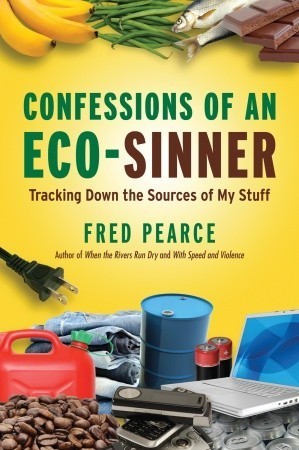
Where does everything in our daily lives come from? The clothes on our backs, the computers on our desks, the cabinets in our kitchens, and the food behind their doors? Under what conditions-environmental and social-are they harvested or manufactured? Veteran science journalist Fred Pearce set off to find out, and the resulting 100,000-mile journey took him to the end of his street and across the planet to more than twenty countries.Pearce deftly shows us the hidden worlds that sustain a Western lifestyle, and he does it by examining the sources of everything in his own life; as an ordinary citizen of the Western world, he, like all of us, is an "eco-sinner."In Confessions of an Eco-Sinner , Pearce surveys his home and then launches on a global tour to track down, among other things, the Tanzanians who grow and harvest his fair-trade coffee (which isn't as fair as one might hope), the Central American plantations that grow his daily banana (a treat that may disappear forever), the women in the Bangladeshi sweatshops who sew his jeans, the Chinese factory cities where the world's computers are made, and the African afterlife for old cell phones. It's a fascinating portrait, by turns sobering and hopeful, of the effects the world's more than 6 billion inhabitants-all eating, consuming, making-have on our planet, and of the working and living conditions of the people who produce most of these goods.
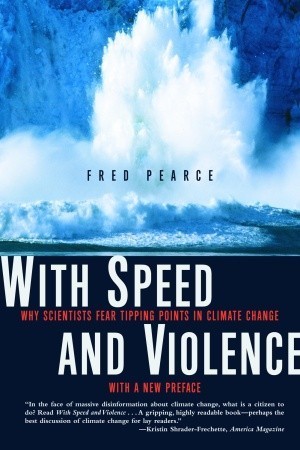
With Speed and Violence: Why Scientists Fear Tipping Points in Climate Change
by Fred Pearce
Rating: 4.0 ⭐
Fred Pearce has been writing about climate change for eighteen years, and the more he learns, the worse things look. Where once scientists were concerned about gradual climate change, now more and more of them fear we will soon be dealing with abrupt change resulting from triggering hidden tipping points. Even President Bush's top climate modeler, Jim Hansen, warned in 2005 that "we are on the precipice of climate system tipping points beyond which there is no redemption."As Pearce began working on this book, normally cautious scientists beat a path to his door to tell him about their fears and their latest findings. With Speed and Violence tells the stories of these scientists and their work—from the implications of melting permafrost in Siberia and the huge river systems of meltwater beneath the icecaps of Greenland and Antarctica to the effects of the "ocean conveyor" and a rare molecule that runs virtually the entire cleanup system for the planet.Above all, the scientists told him what they're now learning about the speed and violence of past natural climate change-and what it portends for our future. With Speed and Violence is the most up-to-date and readable book yet about the growing evidence for global warming and the large climatic effects it may unleash.

An investigation into our complicated 8-decade-long relationship with nuclear technology, from the bomb to nuclear accidents to nuclear waste.From Hiroshima to Chernobyl, Fukushima to the growing legacy of lethal radioactive waste, humanity's struggle to conquer atomic energy is rife with secrecy, deceit, human error, blatant disregard for life, short-sighted politics, and fear. Fallout is an eye-opening odyssey through the first eight decades of this struggle and the radioactive landscapes it has left behind. We are, he finds, forever torn between technological hubris and all-too-human terror about what we have created.At first, Pearce reminds us, America loved the bomb. Las Vegas, only seventy miles from the Nevada site of some hundred atmospheric tests, crowned four Miss Atomic Bombs in 1950s. Later, communities downwind of these tests suffered high cancer rates. The fate of a group of Japanese fishermen, who suffered high radiation doses from the first hydrogen bomb test in Bikini atoll, was worse. The United States Atomic Energy Commission accused them of being Red spies and ignored requests from the doctors desperately trying to treat them.Pearce moves on to explore the closed cities of the Soviet Union, where plutonium was refined and nuclear bombs tested throughout the '50s and '60s, and where the full extent of environmental and human damage is only now coming to light. Exploring the radioactive badlands created by nuclear accidents--not only the well-known examples of Chernobyl and Fukushima, but also the little known area around Satlykovo in the Russian Ural Mountains and the Windscale fire in the UK--Pearce describes the compulsive secrecy, deviousness, and lack of accountability that have persisted even as the technology has morphed from military to civilian uses.Finally, Pearce turns to the toxic legacies of nuclear technology: the emerging dilemmas over handling its waste and decommissioning of the great radioactive structures of the nuclear age, and the fearful doublethink over the world's growing stockpiles of plutonium, the most lethal and ubiquitous product of nuclear technologies.For any reader who craves a clear-headed examination of the tangled relationship between a powerful technology and human politics, foibles, fears, and arrogance, Fallout is the definitive look at humanity's nuclear adventure.

“Raises complex and urgent issues.”—Booklist, starred reviewHow Wall Street, Chinese billionaires, oil sheiks, and agribusiness are buying up huge tracts of land in a hungry, crowded world.An unprecedented land grab is taking place around the world. Fearing future food shortages or eager to profit from them, the world’s wealthiest and most acquisitive countries, corporations, and individuals have been buying and leasing vast tracts of land around the world. The scale is astounding: parcels the size of small countries are being gobbled up across the plains of Africa, the paddy fields of Southeast Asia, the jungles of South America, and the prairies of Eastern Europe. Veteran science writer Fred Pearce spent a year circling the globe to find out who was doing the buying, whose land was being taken over, and what the effect of these massive land deals seems to be. The Land Grabbers is a first-of-its-kind exposé that reveals the scale and the human costs of the land grab, one of the most profound ethical, environmental, and economic issues facing the globalized world in the twenty-first century. The corporations, speculators, and governments scooping up land cheap in the developing world claim that industrial-scale farming will help local economies. But Pearce’s research reveals a far more troubling reality. While some mega-farms are ethically run, all too often poor farmers and cattle herders are evicted from ancestral lands or cut off from water sources. The good jobs promised by foreign capitalists and home governments alike fail to materialize. Hungry nations are being forced to export their food to the wealthy, and corporate potentates run fiefdoms oblivious to the country beyond their fences. Pearce’s story is populated with larger-than-life characters, from financier George Soros and industry tycoon Richard Branson, to Gulf state sheikhs, Russian oligarchs, British barons, and Burmese generals. We discover why Goldman Sachs is buying up the Chinese poultry industry, what Lord Rothschild and a legendary 1970s asset-stripper are doing in the backwoods of Brazil, and what plans a Saudi oil billionaire has for Ethiopia. Along the way, Pearce introduces us to the people who actually live on, and live off of, the supposedly “empty” land that is being grabbed, from Cambodian peasants, victimized first by the Khmer Rouge and now by crony capitalism, to African pastoralists confined to ever-smaller tracts. Over the next few decades, land grabbing may matter more, to more of the planet’s people, than even climate change. It will affect who eats and who does not, who gets richer and who gets poorer, and whether agrarian societies can exist outside corporate control. It is the new battle over who owns the planet.

300 stunning before-and-after photographs that show the staggering transformation of our world.Earth Then and Now records the dramatic way our planet has changed over the past century. On one page is a specific part of the world as it was 5, 20, 50 or even 100 years ago. On the facing page is the same place as it looks today. Each stark visual comparison tells a compelling story -- a melting glacier, an expanding desert, an encroaching cityscape, a natural disaster.Earth Then and Now reminds us that nothing is without a cost. Highly topical and thought provoking chapters in this book include:Environmental change Bearing witness to the effects of global warmingIndustrialization Revealing the hidden costs of "progress"Urbanization Showing the effects of our spreading citiesNatural disasters Reminding us of the power of natureWar Using comparisons to show the impact of armed conflictTravel and tourism Illustrating the predatory nature of development. Concise captions explain the facts and then allow the reader to draw personal conclusions. Anyone concerned about the environment will enjoy and appreciate Earth Then and Now.

Trees keep our planet cool and breathable. They make the rain and sustain biodiversity. They are essential for nature and for us. And yet, we are cutting and burning them at such a rate that many forests are fast approaching tipping points beyond which they will simply shrivel and die. But there is still time, and there is still hope. If we had a trillion more trees, the damage could be undone. So should we get planting? Not so fast. Fred Pearce argues in this inspiring new book that we can have our forests back, but mass planting should be a last resort. Instead, we should mostly stand back, make room and let nature — and those who dwell in the forests — do the rest.Taking us from the barren sites of illegal logging and monocrop farming to the smouldering rainforests of the Amazon, Fred Pearce tells a revelatory new history of the relationship between humans and trees – and shows us how we can change it for the better. Here we meet the pilot who discovered flying rivers, the village elders who are farming amid the trees, and the scientists challenging received wisdom. And we visit some of the world’s most wondrous treescapes, from the orchid-rich moutaintops of Ecuador to the gnarled and ancient glades of the South Downs.Combining vivid travel writing with cutting edge science, A Trillion Trees is both an environmental call to arms and a celebration of our planet’s vast arboreal riches.
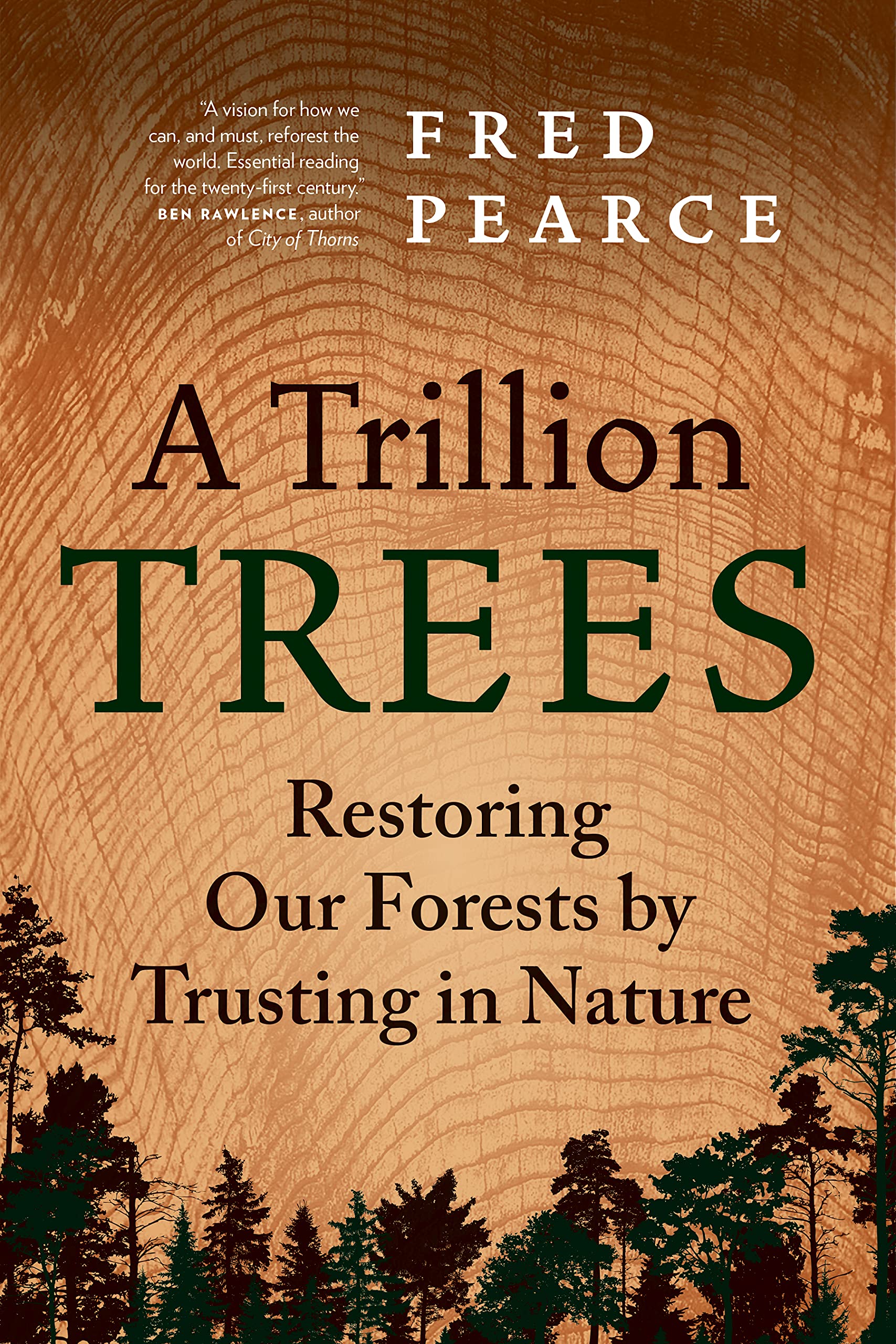
“A vivid, important, and inspiring book.”— Elizabeth Kolbert, Pulitzer Prize winning author of The Sixth Extinction and Under a White Sky “Eloquently mulls the ecological dynamics of forests as well as the social, economic, cultural, and political forces that determine their fate.” —LA REVIEW OF BOOKS A powerful book about the decline and recovery of the world’s forests––with a provocative argument for their survival. In A Trillion Trees, veteran environmental journalist Fred Pearce takes readers on a whirlwind journey through some of the most spectacular forests around the world. Along the way, he charts the extraordinary pace of forest destruction, and explores why some are beginning to recover. With vivid, observant reporting, Pearce transports readers to the remote cloud forests of Ecuador, the remains of a forest civilization in Nigeria, a mystifying mountain peak in the middle of the Atlantic Ocean, and the boreal forests of western Canada and the United States, where devastating wildfires are linked to suppressing the natural fire cycles of forests and the maintenance practices of Indigenous peoples. Throughout the book, Pearce interviews the people who traditionally live in forests. He speaks to Indigenous peoples in western Canada and the United States who are fighting to control their traditional forested lands and manage them according to their traditional practices. He visits and speaks with Nepalese hill dwellers, Kenyan farmers, and West African sawyers who show him that forests are as much human landscapes as they are natural paradises. The lives of humans are now imprinted in forest ecology. At the heart of Pearce’s investigationis a provocative planting more trees isn’t the answer to declining forests. If given room and left to their own devices, forests and the people who live in them will fight back to restore their own domain.

An award-winning journalist takes us deep into the heart of the rain forests, past and present, to explore the many wonders of one of the final frontiers of biological science, where new discoveries occur daily.

The real story behind the leaking of climate change emails at the University of East Anglia—the biggest scandal to hit global warming science in yearsOne of the world's leading writers on climate change tells the inside story of the events leading up to the much-publicized theft of climate-change related emails. He explores the personalities involved, the feuds and disagreements at the heart of climate science, and the implications the scandal has for the future. In November 2009 it emerged that thousands of documents and emails had been stolen from one of the top climate science centers in the world. The emails appeared to reveal that scientists had twisted research in order to strengthen the case for global warming. With the UN's climate summit in Copenhagen just days away, the hack could not have happened at a worse time for climate researchers, or at a better time for climate skeptics. Although the scandal caused a media frenzy, the fact is that just about everything the public heard and read about the University of East Anglia emails is wrong. They are not, as some have claimed, the smoking gun for a great global warming hoax, nor do they reveal a sinister conspiracy by scientists to fabricate global warming data. They do, however, raise deeply disturbing questions about the way climate science is conducted, about researchers' preparedness to block access to climate data and downplay flaws in their data, and about the siege mentality and scientific tribalism at the heart of the most important international issue of the age.

Big ideas made simple -- six books in an incredible new series that explains important scientific ideas more clearly than ever before. Climate change resulting from an increase in greenhouse gases is perhaps the greatest threat to our planet's future. Here, Fred Pearce examines the causes and dramatic effects, and what can be done to remedy the situation -- before it's too late. This stimulating new series uses an innovative mix of graphics, artwork, and photographs to explain and illuminate the most important scientific topics of the day. Unique in popular science guides, Essential Science uses bright, full-color images to make traditionally "difficult" subjects more accessible. Each title focuses on a scientific or technological topic that is currently provoking debate and is likely to have a widespread impact on our lives. Lively, readable text from top science writers ensures all readers -- from 14+ schoolchildren to academics -- gain a full understanding of the facts and related issues. Under the direction of renowned science writer John Gribbin, expert authors describe, in lively, jargon-free text, the principles and discoveries behind each subject, summarize what is currently known, and predict future issues and trends.

Water has long been the object of political ambition and conflict. Recent history is full of leaders who tried to harness water to realize national dreams. Yet the people who most need water-farmers, rural villages, impoverished communities-are too often left, paradoxically, with desiccated fields, unfulfilled promises, and refugee status. It doesn't have to be this way, according to Fred Pearce. A veteran science news correspondent, Pearce has for over fifteen years chronicled the development of large-scale water projects like China's vast Three Gorges dam and India's Sardar Sarovar. But, as he and numerous other authors have pointed out, far from solving our water problems, these industrial scale projects, and others now in the planning, are bringing us to the brink of a global water crisis. Pearce decided there had to be a better way. To find it, he traveled the globe in search of alternatives to mega-engineering projects. In Keepers of the Spring, he brings back intriguing stories from people like Yannis Mitsis, an ethnic Greek Cypriot, who is the last in his line to know the ways and whereabouts of a network of underground tunnels that have for centuries delivered to farming communities the water they need to survive on an arid landscape. He recounts the inspiring experiences of small-scale water stewards like Kenyan Jane Ngei, who reclaimed for her people a land abandoned by her government as a wasteland. And he tells of many others who are developing new techniques and rediscovering ancient ones to capture water for themselves. In so doing, Pearce documents that these "keepers" are not merely isolated examples, but collectively constitute an entire alternative tradition of working with natural flows rather than trying to reengineer nature to provide water for human needs. The solution to our water problems, he finds, may not lie in new technologies-though they will play a role-but in recovering ancient traditions, using water more efficiently, and better understanding local hydrology. Are these approaches adequate to serve the world's growing populations? The answer remains unclear. But we ignore them at our own peril.

Explains a range of environmental concerns, including global warming, acid rain, destruction of the rainforests, overpopulation, and recycling, and discusses how they affect the earth's ecological balance
This book investigates the conflicting new theories of global warming and the ozone hole, confirming the greenhouse effect at work on our planet. Extreme climates suggest that it could upset ocean currents, trigger the destruction of icecaps and wipe out forests.


Where water meets land, life abounds. This is the story of the nature and people of the wetlands of the world.From Wetlands International comes Water Lands, a beautifully illustrated book about this life-giving, global ecosystem.From the peat bogs of Ireland to the bayous of Louisiana; from the flooded forests of Cambodia to the permafrost of Siberia; from the mangroves of the Ganges Delta to the ‘everlasting swamps’ of the Nile; and from the marshes of the Brazilian Pantanal to the boggy upland pastures of Tibet, wetlands are in-between and ever-changing worlds. Sometimes wet and sometimes dry, sometimes land and sometimes water, sometimes saline and sometimes fresh; they change character with the seasons, or may lie dormant for decades before bursting into life.Through this highly accessible book, the authors tell intriguing and untold stories of how people interact with wetlands around the world, from the mountains to the sea. They emphasise how wetland communities have shaped and nurtured natural resources over the centuries – and how vital this knowledge and practices are in shaping future plans for managing land and water. They assert a positive narrative for wetlands and their role as climate buffers and in preventing and reducing droughts, floods and human conflicts over water. Water Lands brings together a world of experience and presents a new vision as well as real-life examples, to inspire and influence actions to revive wetlands.Wetlands International is the global not-for-profit organisation dedicated to safeguarding and restoring wetlands for people and nature. Their vision is a world where wetlands are treasured and nurtured for their beauty, the life they support and the resources they provide. With 20 offices around the world, Wetlands International has a strong global presence and a wealth of experience.


Nous n'échapperons pas à la crise mondiale de l'eau, une crise à côté de laquelle les chocs pétroliers de 1973 et 1979 paraîtront anecdotiques. Nous consommons actuellement plus d'eau douce que la planète n'en fabrique par le cycle naturel de l'évaporation et des précipitations. Pour compenser ce déficit croissant et subvenir aux besoins exponentiels des populations, de l'agriculture et de l'industrie, nous vidons des nappes phréatiques vieilles de millions d'années, nous détournons le cours de fleuves majeurs, nous érigeons des barrages gigantesques. Et que récoltons-nous ? Un lessivage mortel de terres autrefois fertiles, des inondations à répétition, une pollution des océans et des rivières qui menace la biodiversité, une désertification galopante, des dérèglements climatiques en chaîne? Mais aussi des inégalités criantes entre le Nord et le Sud : alors qu'un milliard d'êtres humains n'ont pas accès à l'eau potable, l'Occident dilapide ses ressources en eau comme si elles étaient inépuisables. Des steppes d'Asie centrale au Pakistan et à la Chine, en passant par les États-Unis, l'Espagne et la France, Fred Pearce dresse un tableau saisissant, parfois effrayant mais toujours précis et documenté de la situation de l'eau à travers le monde. Il nous invite à méditer la leçon de frugalité de nos ancêtres, qui géraient l'eau comme un bien précieux, avec respect et parcimonie, et plaide pour une « révolution bleue », une prise de conscience mondiale débouchant sur un changement radical des modes de consommation de l'eau, ce bien commun précieux entre tous qui n'est rien moins que la substance même de la vie.


Deep Jungle: Travel to the Heart of the Rainforest by Pearce, Fred (2006) Paperback
by Fred Pearce
Rating: 3.0 ⭐
Deep Travel to the Heart of the Rainforest by Pearce, Fred [Transworl...

O ΔPOMOΣ ΓIA THN OIKOΛOΓIKH KOΛAΣH EINAI ΣTPΩMENOΣ ME TPIANTAΦYΛΛA. EXETE ΠOTE ANAPΩTHΘEI ΠOΣO ΘA EΠHPEAΣETE TOYΣ ΦTΩXOYΣ AΓPOTEΣ THΣ KENYAΣ ΠOY KAΛΛIEPΓOYN ΦAΣOΛIA AN ΣTAMATHΣETE NA AΓOPAZETE TA ΠPOIONTA TOYΣ; H AN OI ΓYNAIKEΣ ΣTA KATEPΓA TOY MΠAΓKΛANTEΣ ΠPAΓMATIKA ΘEΛOYN NA MHN AΓOPAZETE TA POYXA AΠO TIΣ PAΠTOMHXANEΣ TOYΣ; OTAN AΓOPAΣATE TO KINHTO ΣAΣ THΛEΦΩNO ΠEPAΣE ΠOTE AΠO TO MYAΛO ΣAΣ OTI MΠOPEI NA XPHMATOΔOTEITE TOYΣ EΠANAΣTATIKOYΣ ΠOΛEMAPXOYΣ ΠOY YΠOXPEΩNOYN TA ΠAIΔIA-ΣTPATIΩTEΣ NA ΔOYΛEYOYN ΣE OPYXEIA;TO BIBΛIO AYTO ΠEPIOΔEYEI TON KOΣMO ΓIA NA ΣAΣ AΦHΓHΘEI THN KPYMMENH IΣTOPIA ΠIΣΩ AΠO OΛA TA KAΘHMEPINA ΠPAΓMATA MAΣ, KAI ΠAPEXEI MIA HΘIKH ΠYΞIΔA MEΣA AΠO TO NAPKOΠEΔIO TΩN EΠIΛOΓΩN TOY ΣYΓXPONOY KATANAΛΩTH.

Despite It All: A Handbook for Climate Hopefuls
by Fred Pearce
There is a climate crisis, extinctions are accelerating, forests are disappearing, water cycles are collapsing and pollution is choking our skies and seas. It is easy to be defeatist about the fate of our planet. And yet, despite it all, it's not too things can change for the better. Fred Pearce has been reporting from the frontline of climate change and environmental recovery for over four decades and what he has seen has given him reason - in fact, seven reasons - for (cautious) hope. Here, we learn how nature is finding ways to thrive in unexpected places, how the population bomb has been defused, how our consumerist societies are finally approaching 'peak stuff', and how a combination of ancient wisdom and modern technology can help us correct our course.

写真が語る地球激変―過去の地球、現在の地球、そして未来の地球は…?
by Fred Pearce
![Generation of Earth last - nature began to avenge humanity (2009) ISBN: 4140813822 [Japanese Import]](https://m.media-amazon.com/images/S/compressed.photo.goodreads.com/books/1678236674i/77325900.jpg)
Generation of Earth last - nature began to avenge humanity (2009) ISBN: 4140813822 [Japanese Import]
by Fred Pearce

Das Wetter von morgen Wenn das Klima zur Bedrohung wird
by Fred Pearce