
Euclid
Euclid (Ancient Greek: Εὐκλείδης Eukleidēs -- "Good Glory", ca. 365-275 BC) also known as Euclid of Alexandria, was a Greek mathematician, often referred to as the "Father of Geometry". He was active in Alexandria during the reign of Ptolemy I (323–283 BC). His Stoicheia (Elements) is a 13-volume exploration all corners of mathematics, based on the works of, inter alia, Aristotle, Eudoxus of Cnidus, Plato, Pythagoras. It is one of the most influential works in the history of mathematics, presenting the mathematical theorems and problems with great clarity, and showing their solutions concisely and logically. Thus, it came to serve as the main textbook for teaching mathematics (especially geometry) from the time of its publication until the late 19th or early 20th century. In the Elements, Euclid deduced the principles of what is now called Euclidean geometry from a small set of axioms. Euclid also wrote works on perspective, conic sections, spherical geometry, number theory and rigor. He is sometimes credited with one original theory, a method of exhaustion through which the area of a circle and volume of a sphere can be calculated, but he left a much greater mark as a teacher.
28 Books Written

Green Lion Press has prepared a new one-volume edition of T.L. Heath's translation of the thirteen books of Euclid's Elements. In keeping with Green Lion's design commitment, diagrams have been placed on every spread for convenient reference while working through the proofs; running heads on every page indicate both Euclid's book number and proposition numbers for that page; and adequate space for notes is allowed between propositions and around diagrams. The all-new index has built into it a glossary of Euclid's Greek terms.Heath's translation has stood the test of time, and, as one done by a renowned scholar of ancient mathematics, it can be relied upon not to have inadvertantly introduced modern concepts or nomenclature. We have excised the voluminous historical and scholarly commentary that swells the Dover edition to three volumes and impedes classroom use of the original text. The single volume is not only more convenient, but less expensive as well.

Volume 1 of 3-volume set containing complete English text of all 13 books of the Elements plus critical apparatus analyzing each definition, postulate, and proposition in great detail. Covers textual and linguistic matters; mathematical analyses of Euclid's ideas; commentators; refutations, supports, extrapolations, reinterpretations and historical notes. Vol. 1 includes Introduction, Books 1-2: Triangles, rectangles.

Volume 2 of 3-volume set containing complete English text of all 13 books of the Elements plus critical analysis of each definition, postulate, and proposition. Covers textual and linguistic matters; mathematical analyses of Euclid's ideas; classical, medieval, Renaissance and modern commentators; refutations, supports, extrapolations, reinterpretations and historical notes. Vol. 2 includes Books III-IX: Circles, relationships, rectilineal figures.

Volume 3 of three-volume set containing complete English text of all 13 books of the Elements plus critical apparatus analyzing each definition, postulate, and proposition in great detail. Covers textual and linguistic matters; mathematical analyses of Euclid's ideas; classical, medieval, Renaissance and modern commentators; refutations, supports, extrapolations, reinterpretations and historical notes. Vol. 3 includes Books X-XIII: Commensurable magnitudes, solids, cones, cylinders.

A handy where-to-find-it pocket reference companion to Euclid's Elements. Provides all the propositions and diagrams without the detailed proofs. Readers can use it to see the scope and structure of Elements, identify exactly what Euclid covers and what he doesn't, and to find the location of remembered propositions.
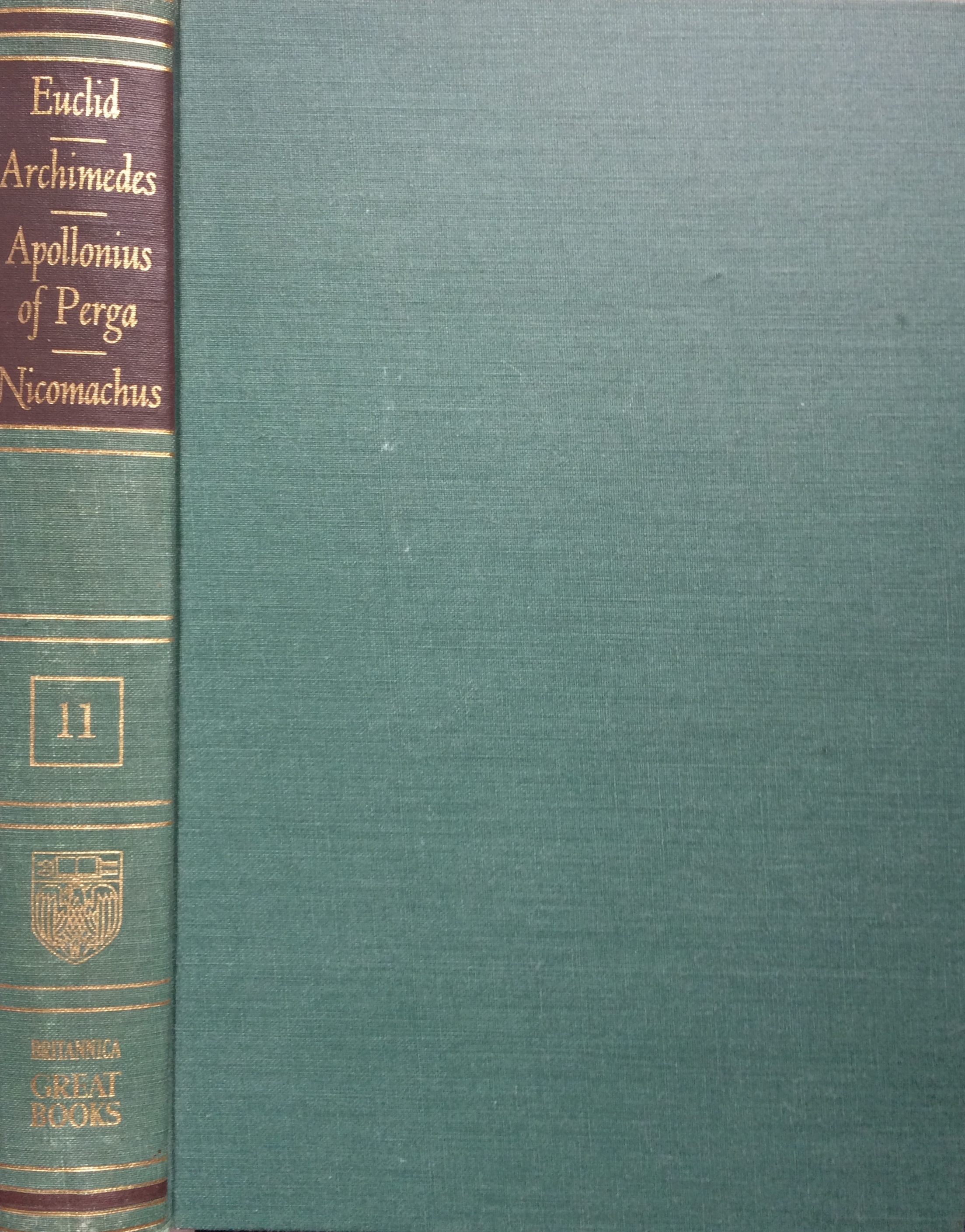
Contains the 13 books of Euclid's Elements, the works of Archimedes including the Method, the Conics of Apollonius of Perga, and the Introduction to Arithmetic of Nicomachus of Gerasa.
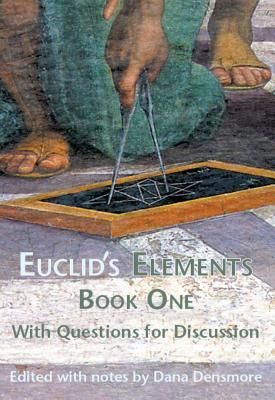
Presents Book One of Euclid's Elements for students in humanities and for general readers. This treatment raises deep questions about the nature of human reason and its relation to the world. Dana Densmore's Questions for Discussion are intended as examples, to urge readers to think more carefully about what they are watching unfold, and to help them find their own questions in a genuine and exhilarating inquiry.

"Euclid viết sách Cơ Sở Của Hình Học ở Alexandria khoảng 300 năm trước Công nguyên.() Trải qua 2400 năm, các mệnh đề phát biểu và chứng minh trong Cơ Sở Của Hình Học vẫn còn tươi tắn một cách đáng ngạc nhiên. Từ hình học tam giác mà chúng ta học những năm cấp hai, cho đến chứng minh tuyệt đẹp bằng phản chứng cho sự tồn tại vô hạn những số nguyên tố, từ thuật toán Euclid tìm ước số chung lớn nhất mà chúng ta vẫn phải học trong giáo trình cơ sở toán học trong tin học, cho đến chứng minh không tồn tại khối đều nào khác ngoài năm khối đều của Platon, đều là những nội dung đã được triển khai một cách đầy đủ trong Cơ Sở Của Hình Học.Đấy có lẽ là những lý do tại sao Cơ Sở Của Hình Học được coi là một trong những quyển sách có tầm ảnh hưởng nhất tới sự phát triển của văn minh nhân loại. Sách đã được tái bản hàng ngàn lần, số lần tài bản có lẽ chỉ thua Kinh Thánh. Từ thời kỳ Phục hưng cho đến đầu thế kỷ hai mươi, sách của Euclid được coi là một trong những quyển sách mà người học phải đọc."

The Elements of Euclid for the Use of Schools and Colleges: Comprising the first six books and portions of the eleventh and twelfth books
by Euclid
Rating: 4.1 ⭐
This Elibron Classics book is a facsimile reprint of a 1864 edition by Macmillan and Co., Cambridge and London.

The First Three Books of Euclid's Elements of Geometry from the text of Dr. Robert Simson
by Euclid
Rating: 4.2 ⭐
Together with Various Useful Theorems and Problems as Geometrical Exercises on Each BookThis Elibron Classics edition is a facsimile reprint of a 1866 edition by Longmans, Green, and Co., London.

Euclid (FL. C. 300 BC) The Thirteen Books of Euclid’s Elements Archimedes (C. 287-212 BC) On the Sphere and Cylinder Measurement of a Circle On Conoids and Spheroids On Spirals On the Equilibrium of Planes The Sand-Reckoner Quadrature of the Parabola On Floating Bodies Book of Lemmas The Method Treating of Mechanical Problems NicomachusThe Introduction to Arithmetic of Nicomachus
Euclid's Elements Of Geometry, Containing The Whole Twelve Books: To Which Are Added, Algebraic Demonstrations To The Second And Fifth Books
by Euclid
Rating: 4.0 ⭐
This scarce antiquarian book is included in our special Legacy Reprint Series. In the interest of creating a more extensive selection of rare historical book reprints, we have chosen to reproduce this title even though it may possibly have occasional imperfections such as missing and blurred pages, missing text, poor pictures, markings, dark backgrounds and other reproduction issues beyond our control. Because this work is culturally important, we have made it available as a part of our commitment to protecting, preserving and promoting the world's literature.

Los Elementos han tenido una influencia enorme, y no no sólo en geometrí por su método y exposición, han sido modelo para Galeno en medicina y Spinoza en ética, entre otros autores y disciplinas.De los trece libros que componen los Elementos, los seis primeros corresponden a lo que se entiende todavía como geometría elemental; recogen las técnicas utilizadas por los pitagóricos para resolver lo que hoy se consideran ejemplos de ecuaciones lineales y cuadráticas, e incluyen también la teoría general de la proporción, atribuida tradicionalmente a Eudoxo.Los libros que van del séptimo al décimo tratan de cuestiones numéricas y los tres restantes se ocupan de geometría de los sólidos, hasta culminar en la construcción de los cinco poliedros regulares y sus esferas circunscritas, que había sido ya objeto de estudio por parte de Teeteto.La influencia de los Elementos fue se adoptaron de inmediato como libro de texto ejemplar en la enseñanza inicial de la matemática, y fuera del ámbito de esta disciplina, los tomaron como modelo, en su método y exposición, autores como Galeno, para la medicina, o Spinoza, para la ética, entre otras varias ramas de la ciencia.
This edition of the Elements of Euclid, undertaken at the request of the prin-cipals of some of the leading Colleges and Schools of Ireland, is intended tosupply a want much felt by teachers at the present day—the production of awork which, while giving the unrivalled original in all its integrity, would alsocontain the modern conceptions and developments of the portion of Geometryover which the Elements extend. A cursory examination of the work will showthat the Editor has gone much further in this latter direction than any of hispredecessors, for it will be found to contain, not only more actual matter thanis given in any of theirs with which he is acquainted, but also much of a specialcharacter, which is not given, so far as he is aware, in any former work on thesubject. The great extension of geometrical methods in recent times has madesuch a work a necessity for the student, to enable him not only to read with ad-vantage, but even to understand those mathematical writings of modern timeswhich require an accurate knowledge of Elementary Geometry, and to which itis in reality the best introduction.In compiling his work the Editor has received invaluable assistance from thelate Rev. Professor Townsend, s.f.t.c.d. The book was rewritten and con-siderably altered in accordance with his suggestions, and to that distinguishedGeometer it is largely indebted for whatever merit it possesses.The Questions for Examination in the early part of the First Book are in-tended as specimens, which the teacher ought to follow through the entire work.Every person who has had experience in tuition knows well the importance ofsuch examinations in teaching Elementary Geometry.The Exercises, of which there are over eight hundred, have been all selectedwith great care. Those in the body of each Book are intended as applications ofEuclid’s Propositions. They are for the most part of an elementary character,and may be regarded as common property, nearly every one of them havingappeared already in previous collections. The Exercises at the end of eachBook are more advanced; several are due to the late Professor Townsend, someare original, and a large number have been taken from two important Frenchworks—Catalan’s Th´eor`emes et Probl`emes de G´eom´etrie El´ementaire, andthe Trait´e de G´eom´etrie, by Rouch´ e and De Comberousse.The second edition has been thoroughly revised and greatly enlarged. Thenew matter includes several alternative proofs, important examination questionson each of the books, an explanation of the ratio of incommensurable quantities,the first twenty-one propositions of Book XI., and an Appendix on the propertiesof the Prism, Pyramids, Cylinder, Sphere, and Cone.The present Edition has been very carefully read throughout, and it is hopedthat few misprints have escaped detection.The Editor is glad to find from the rapid sale of former editions (each 3000copies) of his Book, and its general adoption in schools, that it is likely to accomplish the double object with which it was written, viz. to supply studentswith a Manual that will impart a thorough knowledge of the immortal workof the great Greek Geometer, and introduce them, at the same time, to someof the most important conceptions and developments of the Geometry of thepresent day.

Zrcadlová řecko-česká antologie vybraných textů řecké matematiky. Obsahuje mj. podstatný výbor z Eukleidových Základů a ze spisů Archimédových, ukázky z Apollóniových Kuželoseček, z Ptolemaiova Almagestu a Diofantovy Aritmetiky. Antologii uspořádal, úvodní studii napsal a poznámkami opatřil Z. Šír. Přeložili R. Mašek a A. Šmíd.

Tanto para expertos como para novicios, el nombre "Euclides" se ha convertido en sinónimo de geometría.Euclides estableció lo que se convertiría en la forma clásica de una proposición matemá un enunciado deducido lógicamente a partir de unos principios previamente aceptados. En el caso de los Elementos, los principios que se toman como punto de partida son veintitrés definiciones, cinco postulados y cinco axiomas o nociones comunes.El enorme magisterio de los Elementos se ha mantenido hasta hoy, pues buena parte de su contenido se sigue impartiendo en las escuelas; sin embargo, las aportaciones de la geometría moderna le han arrebatado la desde el siglo XIX se han definido geometrías consistentes, llamadas "no euclidianas", a partir de la supresión o modificación del quinto axioma, el de las paralelas. Sin embargo, la misma denominación de estas variantes contemporáneas indica que, tanto para expertos como para novicios, el nombre "Euclides" se ha convertido en sinónimo de geometría.
The father of geometry, Euclid was a Greek mathematician active in Alexandria during the reign of Ptolemy I (323-283 BC). His treatise on geometry, ‘Elements’, is one of the most influential works in the history of mathematics, serving as the main textbook for teaching mathematics from the time of its first publication until the early twentieth century. In the ‘Elements’, Euclid deduces the theorems of what is now called Euclidean geometry from a small set of axioms. Euclid compiled his treatise from a number of works of earlier mathematicians including Pythagoras, Hippocrates of Chios and Eudoxus of Cnidus, preserving many otherwise lost ideas. One of the very earliest mathematical works to be printed after the invention of the printing press, it has been estimated that ‘Elements’ is second only to the Bible in the number of editions published. Delphi’s Ancient Classics series provides eReaders with the wisdom of the Classical world, with both English translations and the original Greek texts. This comprehensive eBook presents Euclid’s collected (almost complete) works, with illustrations, informative introductions and the usual Delphi bonus material. (Version 1) * Beautifully illustrated with images relating to Euclid's life and works * Features the collected works of Euclid in English translation * Includes the original Greek text of ‘Elements’ * Includes Thomas Heath’s seminal translation of ‘Elements’ for Cambridge University Press * Excellent formatting of the texts * Includes Euclid's rare works ' Data' and ‘Optics’, first time in digital print * Features a bonus biography — discover Euclid's ancient world * Scholarly ordering of texts into chronological order and literary genres Please visit www.delphiclassics.com to explore our range of Ancient Classics titles or buy the entire series as a Super Set CONTENTS: The Translations Elements (translated by Thomas Heath) Data (translated by Robert Simson) On Divisions of Figures (translated by Raymond Clare Archibald) Optics (translated by Harry Edwin Burton) The Greek Text Elements The Biography Euclid by John Sturgeon Mackay Please visit www.delphiclassics.com to browse through our range of exciting titles
The Definitions, Postulates, Axioms, And Enunciations Of The Propositions Of The First Six, And The Eleventh And Twelfth Books Of Euclid's Elements Of Geometry
by Euclid
Rating: 4.0 ⭐
This is an EXACT reproduction of a book published before 1923. This IS NOT an OCR'd book with strange characters, introduced typographical errors, and jumbled words. This book may have occasional imperfections such as missing or blurred pages, poor pictures, errant marks, etc. that were either part of the original artifact, or were introduced by the scanning process. We believe this work is culturally important, and despite the imperfections, have elected to bring it back into print as part of our continuing commitment to the preservation of printed works worldwide. We appreciate your understanding of the imperfections in the preservation process, and hope you enjoy this valuable book.

Euclid: Elements / Archimedes: Works / Apollonius: Conic Sections / Nicomachus: Arithmetic
by Euclid
Rating: 3.7 ⭐
A thirteenth-century adaptation of Robert of Chester's version of Euclid's Elements (Algorismus : Studien zur Geschichte der Mathematik und der Naturwissenschaften)
by Euclid
Rating: 4.5 ⭐
Latin
![An Epitome of the First Three Books of Euclid's Elements of Geometry [For the Cadets Of] H.M.S. Britannia](https://m.media-amazon.com/images/S/compressed.photo.goodreads.com/books/1677869844i/66996872.jpg)
An Epitome of the First Three Books of Euclid's Elements of Geometry [For the Cadets Of] H.M.S. Britannia
by Euclid
Rating: 4.5 ⭐
This is a reproduction of a book published before 1923. This book may have occasional imperfections such as missing or blurred pages, poor pictures, errant marks, etc. that were either part of the original artifact, or were introduced by the scanning process. We believe this work is culturally important, and despite the imperfections, have elected to bring it back into print as part of our continuing commitment to the preservation of printed works worldwide. We appreciate your understanding of the imperfections in the preservation process, and hope you enjoy this valuable book.
The Commentary of Albertus Magnus on Book I of Euclid's Elements of Geometry is the third in Lo Bello's series on the Elements. Lo Bello provides the first modern translation of a key Latin text of the Elements in the Middle Ages, the commentary of the Dominican scholastic philosopher Albertus Magnus (d. 1280), the teacher of Thomas Aquinas. The volume includes a translation, notes on the translation, and a critical examination of the mathematical content of the three commentaries on Euclid's Elements of Geometry thus far treated in this series.The Three Volumes are also available as set (ISBN 0 391 04197 5)
![The Elements of Geometry [Euclid Book 1-3] in General Terms, With Notes &c. &c. Also a Variety of Problems & Theorems. [Ed. by J. Luby. With] the ... Book, and the Sixth Book in General Terms](https://m.media-amazon.com/images/S/compressed.photo.goodreads.com/books/1677826657i/31074263.jpg)
The Elements of Geometry [Euclid Book 1-3] in General Terms, With Notes &c. &c. Also a Variety of Problems & Theorems. [Ed. by J. Luby. With] the ... Book, and the Sixth Book in General Terms
by Euclid
Rating: 4.0 ⭐
This work has been selected by scholars as being culturally important, and is part of the knowledge base of civilization as we know it. This work was reproduced from the original artifact, and remains as true to the original work as possible. Therefore, you will see the original copyright references, library stamps (as most of these works have been housed in our most important libraries around the world), and other notations in the work.This work is in the public domain in the United States of America, and possibly other nations. Within the United States, you may freely copy and distribute this work, as no entity (individual or corporate) has a copyright on the body of the work.As a reproduction of a historical artifact, this work may contain missing or blurred pages, poor pictures, errant marks, etc. Scholars believe, and we concur, that this work is important enough to be preserved, reproduced, and made generally available to the public. We appreciate your support of the preservation process, and thank you for being an important part of keeping this knowledge alive and relevant.

Euclid's Book On Divisions of Figures (peri Diaipeseon Biblion): With a Restoration Based on Woepcke's Text and on the Practica Geometriae of Leonardo Pisano
by Euclid
Rating: 4.0 ⭐
This work has been selected by scholars as being culturally important, and is part of the knowledge base of civilization as we know it. This work was reproduced from the original artifact, and remains as true to the original work as possible. Therefore, you will see the original copyright references, library stamps (as most of these works have been housed in our most important libraries around the world), and other notations in the work.This work is in the public domain in the United States of America, and possibly other nations. Within the United States, you may freely copy and distribute this work, as no entity (individual or corporate) has a copyright on the body of the work.As a reproduction of a historical artifact, this work may contain missing or blurred pages, poor pictures, errant marks, etc. Scholars believe, and we concur, that this work is important enough to be preserved, reproduced, and made generally available to the public. We appreciate your support of the preservation process, and thank you for being an important part of keeping this knowledge alive and relevant.
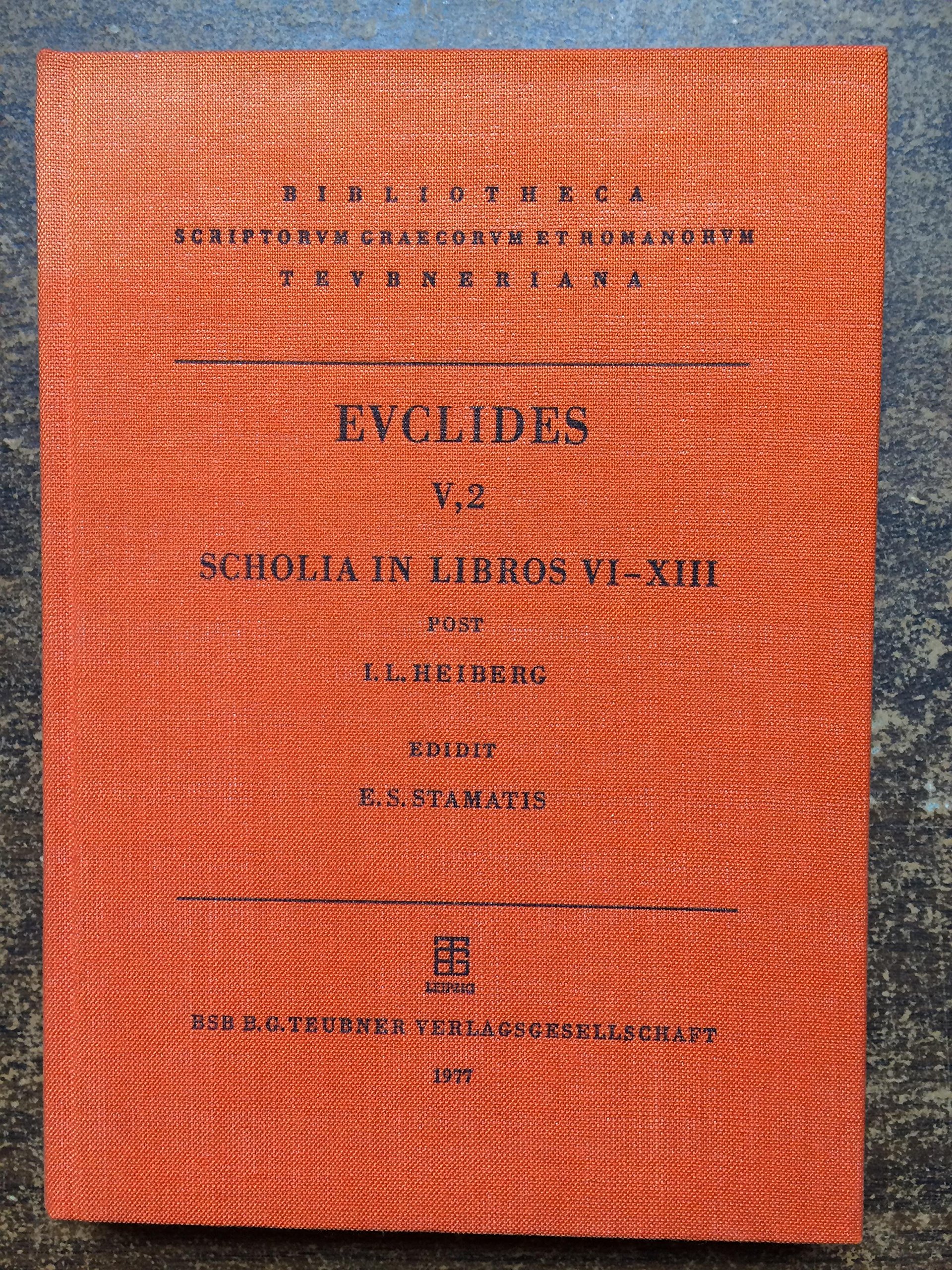
Euclidis elementa Vol. V Pars 2: Scholia in libros VI-XIII cum appendicibus (Bibliotheca Teubneriana)
by Euclid
Rating: 4.0 ⭐