
Eric R. Kandel
Eric Richard Kandel is an Austrian-born American medical doctor who specialized in psychiatry, a neuroscientist and a professor of biochemistry and biophysics at the College of Physicians and Surgeons at Columbia University. He was a recipient of the 2000 Nobel Prize in Physiology or Medicine for his research on the physiological basis of memory storage in neurons. He shared the prize with Arvid Carlsson and Paul Greengard. Kandel was from 1984 to 2022 a Senior Investigator in the Howard Hughes Medical Institute. He was in 1975 the founding director of the Center for Neurobiology and Behavior, which is now the Department of Neuroscience at Columbia University. He currently serves on the Scientific Council of the Brain & Behavior Research Foundation. Kandel's popularized account chronicling his life and research, In Search of Memory: The Emergence of a New Science of Mind, was awarded the 2006 Los Angeles Times Book Prize for Science and Technology.
17 Books Written
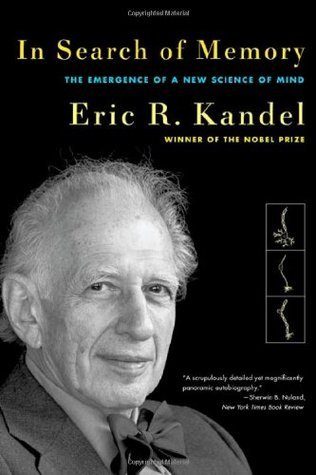
Nobel Prize winner Kandel intertwines cogntive psychology, neuroscience, and molecular biology with his own quest to understand memory.

This book introduces undergraduate students to the fundamentals of biology in mental processes.


Brought together for the first time in a single volume, these eight important and fascinating essays by Nobel Prize-winning psychiatrist Eric Kandel provide a breakthrough perspective on how biology has influenced modern psychiatric thought. Complete with commentaries by experts in the field, Psychiatry, Psychoanalysis, and the New Biology of Mind reflects the author's evolving view of how biology
A Doody's Core Title for 2011! 5 STAR DOODY'S REVIEW!"This is a simply wonderful book that makes accessible in one place all the details of how the neuron and brain work. The writing is clear. The drawings are elegant and educational. The book is a feast for both the eye and mind. The richness, the beauty, and the complexity of neuroscience is all captured in this superb book."-- Doody's Rev
Cellular Basis of Behavior: An Introduction to Behavioral Neurobiology
by Eric R. Kandel
Rating: 4.3 ⭐
Book by Kandel, Eric R.
Behavioral Biology of Aplysia: A Contribution to the Comparative Study of Opisthorbranch Molluscs
by Eric R. Kandel
Rating: 4.1 ⭐

Fully searchable and PowerPoint-importable, this CD-ROM contains the nearly 1000 images that beautifully illustrate the fourth edition of "Principles of Neural Science".

The Age of Insight: The Quest to Understand the Unconscious in Art, Mind, and Brain from Vienna 1900 to the Present
by Eric R. Kandel
Rating: 4.2 ⭐
A brilliant book by Nobel Prize winner Eric R. Kandel, The Age of Insight takes us to Vienna 1900, where leaders in science, medicine, and art began a revolution that changed forever how we think about the human mind—our conscious and unconscious thoughts and emotions—and how mind and brain relate to art. At the turn of the century, Vienna was the cultural capital of Europe.

The molecular biology of memory: cAMP, PKA, CRE, CREB-1, CREB-2, and CPEB
by Eric R. Kandel
Rating: 3.3 ⭐
The analysis of the contributions to synaptic plasticity and memory of cAMP, PKA, CRE, CREB-1, CREB-2, and CPEB has recruited the efforts of many laboratories all over the world. These are six key steps in the molecular biological delineation of short-term memory and its conversion to long-term memory for both implicit (procedural) and explicit (declarative) memory. I here first trace the backgrou
Are art and science separated by an unbridgeable divide? Can they find common ground? In this new book, neuroscientist Eric R. Kandel, whose remarkable scientific career and deep interest in art give him a unique perspective, demonstrates how science can inform the way we experience a work of art and seek to understand its meaning. Kandel illustrates how reductionism―the distillation of larger sci

Nobel Prize recipient Eric R. Kandel investigates The Disordered Mind to uncover what brain disorders reveal about human nature. This challenging study will not only help transform medical care but also encourage a new humanism based in part on the biological confirmation of individuality.Eric R. Kandel, the winner of the Nobel Prize in Physiology or Medicine for his foundational r
One day in 1996, the neuroscientist Eric R. Kandel took a call from his program officer at the National Institute of Mental Health, who informed him that he had been awarded a key grant. Also, the officer said, he and his colleagues thought Kandel would win the Nobel Prize. “I hope not soon,” Kandel’s wife, Denise, said when she heard this. Sociologists had found that Nobel Prize winners often did

In Search of Memory Eric R. Kandel 1 edition Paperback
by Eric R. Kandel
![by Thomas M. Jessel,by J.H. Schwartz,by Eric R. Kandel Principles of Neural Science(text only)4th (Fourth) edition[Hardcover]2000](https://m.media-amazon.com/images/S/compressed.photo.goodreads.com/books/1697991870i/170250914.jpg)
by Thomas M. Jessel,by J.H. Schwartz,by Eric R. Kandel Principles of Neural Science(text only)4th (Fourth) edition[Hardcover]2000
by Eric R. Kandel
Rating: 5.0 ⭐

When we view a work of art, we often experience an emotional response, but the causes of our reactions are complex. Our knowledge of why we respond to art as we do is rooted in science―in psychology and biology. Eric R. Kandel traces the origins of this understanding to early twentieth-century Vienna, which gave rise to the concept of the “beholder’s share,” the realization that art is incomplete