
Donald Hall
Donald Hall was considered one of the major American poets of his generation. His poetry explores the longing for a more bucolic past and reflects the poet’s abiding reverence for nature. Although Hall gained early success with his first collection, Exiles and Marriages (1955), his later poetry is generally regarded as the best of his career. Often compared favorably with such writers as James Dickey, Robert Bly, and James Wright, Hall used simple, direct language to evoke surrealistic imagery. In addition to his poetry, Hall built a respected body of prose that includes essays, short fiction, plays, and children’s books. Hall, who lived on the New Hampshire farm he visited in summers as a boy, was also noted for the anthologies he has edited and is a popular teacher, speaker, and reader of his own poems. Born in 1928, Hall grew up in Hamden, Connecticut. The Hall household was marked by a volatile father and a mother who was “steadier, maybe with more access to depths because there was less continual surface,” as Hall explained in an essay for Contemporary Authors Autobiography Series (CAAS). “To her I owe my fires, to my father my tears. I owe them both for their reading.” By age twelve, Hall had discovered the poet and short story writer Edgar Allan Poe: “I read Poe and my life changed,” he remarked in CAAS. Another strong influence in Hall’s early years was his maternal great-grandfather’s farm in New Hampshire, where he spent many summers. Decades later, he bought the same farm and settled there as a full-time writer and poet. Hall attended Philips Exeter Academy and had his first poem published at age 16. He was a participant at the prestigious Bread Loaf Writer’s Conference, where he met Robert Frost, that same year. From Exeter, Hall went to Harvard University, attending class alongside Adrienne Rich, Robert Bly, Frank O’Hara, and John Ashbery; he also studied for a year with Archibald MacLeish. Hall earned a BLitt from Oxford University and won the Newdigate contest for his poem “Exile,” one of the few Americans ever to win the prize. Returning to the United States, Hall spent a year at Stanford, studying under the poet-critic Yvor Winters, before returning to Harvard to join the prestigious Society of Fellows. It was there that Hall assembled Exiles and Marriages, a tightly-structured collection crafted in rigid rhyme and meter. In 1953, Hall also became the poetry editor of the Paris Review, a position he held until 1961. In 1957 he took a position as assistant professor of English at the University of Michigan, where he remained until 1975. While at Michigan, Hall met the young Jane Kenyon. They later married and, when Hall’s grandmother, who owned Eagle Pond Farm, passed away, bought the farm, left teaching, and moved there together. The collections Kicking the Leaves (1978) and The Happy Man (1986) reflect Hall’s happiness at his return to the family farm, a place rich with memories and links to his past. Many of the poems explore and celebrate the continuity between generations. The Happy Man won the Lenore Marshall/Nation Prize. Hall’s next book, The One Day (1988), won the National Book Critics Circle Award. A long poem that meditates on the on-set of old age, The One Day, like much of Hall’s early work, takes shape under formal pressure: composed of 110 stanzas, split over three sections, its final sections are written in blank verse. The critic Frederick Pollack praised the book as possibly “the last masterpiece of American Modernism. Any poet who seeks to surpass this genre should study it; any reader who has lost interest in contemporary poetry should read it.” Old and New Poems (1990) contains several traditional poems from earlier collections, as well as more innovative verses not previously published. “Baseball,” included in The Museum of Clear Ideas (1993), is the poet’s ode to the great American pastime and is structured around t
27 Books Written

The former US Poet Laureate contemplates life, death, and the view from his window in these “alternately lyrical and laugh-out-loud funny” essays ( New York Times ).His entire life, Donald Hall dedicated himself to the written word, putting together a storied career as a poet, essayist, and memoirist. Here, in the “unknown, unanticipated galaxy” of very old age, his essays startle, move, and delight.In Essays After Eighty, Hall ruminates on his “thirty was terrifying, forty I never noticed because I was drunk, fifty was best with a total change of life, sixty extended the bliss of fifty . . .” He also addresses his “When I turned eighty and rubbed testosterone on my chest, my beard roared like a lion and gained four inches.”Most memorably, Hall writes about his enduring love affair with his ancestral Eagle Pond Farm and with the writing life that sustains him every “Yesterday my first nap was at 9:30 a.m., but when I awoke I wrote again.”“Alluring, inspirational hominess . . . Essays After Eighty is a treasure . . . balancing frankness about losses with humor and gratitude.”— Washington Post“A fine book of remembering all sorts of things past, Essays After Eighty is to be treasured.”— Boston Globe

Winner of the Caldecott Medal (1980)Thus begins a lyrical journey through the days and weeks, the months, and the changing seasons in the life of one New Englander and his family. The oxcart man packs his goods - the wool from his sheep, the shawl his wife made, the mittens his daughter knitted, and the linen they wove. He packs the birch brooms his son carved, and even a bag of goose feathers from the barnyard geese.He travels over hills, through valleys, by streams, past farms and villages. At Portsmouth Market he sells his goods, one by one - even his beloved ox. Then, with his pockets full of coins, he wanders through the market, buying provisions for his family, and returns to his home. And the cycle begins again."Like a pastoral symphony translated into picture book format, the stunning combination of text and illustrations recreates the mood of 19-century rural New England."--The Horn Book

You might expect the fact of dying--the dying of a beloved wife and fellow poet--to make for a bleak and lonely tale. But Donald Hall's poignant and courageous poetry, facing that dread fact, involves us all: the magnificent, humorous, and gifted woman, Jane Kenyon, who suffered and died; the doctors and nurses who tried but failed to save her; the neighbors, friends, and relatives who grieved for her; the husband who sat by her while she lived and afterward sat in their house alone with his pain, self-pity, and fury; and those of us who till now had nothing to do with it. As Donald Hall writes, "Remembered happiness is agony; so is remembered agony." Without will touch every feeling reader, for everyone has suffered loss and requires the fellowship of elegy. In the earth's oldest poem, when Gilgamesh howls of the death of Enkidu, a grieving reader of our own time may feel a kinship, across the abyss of four thousand years, with a Sumerian king. In Without Donald Hall speaks to us all of grief, as a poet lamenting the death of a poet, as a husband mourning the loss of a wife. Without is Hall's greatest and most honorable achievement -- his give and testimony, his lament and his celebration of loss and of love.

“Hall lived long enough to leave behind two final books, memento mori titled ‘Essays After Eighty’ (2014) and now ‘A Carnival of Notes Nearing Ninety.’ They’re up there with the best things he did .” —Dwight Garner, New York TimesFrom the former poet laureate of the United States, essays from the vantage point of very old ageDonald Hall lived a remarkable life of letters, one capped most recently by the New York Times bestseller Essays After Eighty, a “treasure” of a book in which he “balance[s] frankness about losses with humor and gratitude” ( Washington Post ). Before his passing in 2018, nearing ninety, Hall delivered this new collection of self-knowing, fierce, and funny essays on aging, the pleasures of solitude, and the sometimes astonishing freedoms arising from both. He intersperses memories of exuberant days—as in Paris, 1951, with a French girl memorably inclined to say, “I couldn’t care less”—with writing, visceral and hilarious, on what he has called the “unknown, unanticipated galaxy” of extreme old age. “Why should a nonagenarian hold anything back?” Hall answers his own question by revealing several vivid instances of “the worst thing I ever did," and through equally uncensored tales of literary friendships spanning decades, with James Wright, Richard Wilbur, Seamus Heaney, and other luminaries. Cementing his place alongside Roger Angell and Joan Didion as a generous and profound chronicler of loss, Hall returns to the death of his beloved wife, Jane Kenyon, in an essay as original and searing as anything he's written in his extraordinary literary lifetime.

A candid memoir of love, art, and grief from a celebrated man of letters, United States poet laureate Donald HallIn an intimate record of his twenty-three-year marriage to poet Jane Kenyon, Donald Hall recounts the rich pleasures and the unforeseen trials of their shared life. The couple made a home at their New England farmhouse, where they rejoiced in rituals of writing, gardening, caring for pets, and connecting with their rural community through friends and church. The Best Day the Worst Day presents a portrait of the inner moods of "the best marriage I know about," as Hall has written, against the stark medical emergency of Jane's leukemia, which ended her life in fifteen months. Between recollections of better times, Hall shares with readers the daily ordeal of Jane's dying through heartbreaking but ultimately inspiring storytelling.

The revered American Poet Laureate reflects on the meaning of work, solitude, and love with “extraordinary nobility and wisdom” ( The New York Times )When Donald Hall moved to his grandparents’ New Hampshire farm in 1975, his work as a writer and a life devoted to the literary arts must have seemed remote from the harsh physical labor of his ancestors. However, he reveals a similar kind of artistry in the lives of his grandparents, Kate and Wesley. From them, he learned that the devotion to craft—be it canning vegetables, writing poems, or carting manure—creates its own special discipline and an ‘absorbedness’ that no wage can compensate.In this “sustained meditation on work as the key to personal happiness” ( Los Angeles Time s), we see how the writer has modeled his own life on his family’s lives of work, solitude, and love. When Hall comes face to face with his own mortality halfway through writing this book, we understand both his obsession with work and its ultimate consolation.
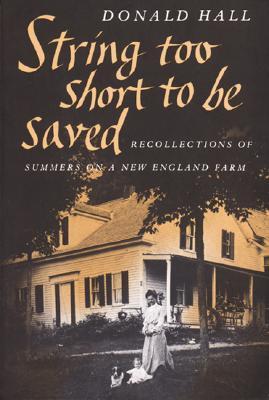
String Too Short to Be Saved: Recollections of Summers on a New England Farm
by Donald Hall
Rating: 4.2 ⭐
This is a collection of stories diverse in subject, but sutured together by the limitless affection the author holds for the land and the people of New England. Donald Hall tells about life on a small farm where, as a boy, he spent summers with his grandparents. Gradually the boy grows to be a young man, sees his grandparents aging, the farm become marginal, and finally, the cows sold and the barn abandoned. But these are more than nostalgic memories, for in the measured and tender prose of each episode are signs of the end of things - a childhood, perhaps a culture.

White Apples and the Taste of Stone is the definitive lifetime work of an American master -- with a bound-in audio CD of selections read by the author.One of the most significant poets of his generation, Donald Hall has garnered numerous accolades and honors, including the Frost Medal from the Poetry Society of America, the National Book Critics Circle Award, the Los Angeles Times Book Prize, and the Ruth Lilly Poetry Prize. White Apples and the Taste of Stone collects more than two hundred poems from across sixty years of Hall's celebrated career, with new poems recently published in The New Yorker, the American Poetry Review, and the New York Times. Greatly anticipated, this is Hall's first selected volume in fifteen years, and also the first to include poems from his seminal bestseller, Without.The bound-in audio CD was specially recorded by Hall for this publication -- more than an hour of favorite poems from throughout the book. Hall's distinctive, sonorous voice and inimitable humor provide a perfect companion for fans of his work and for classroom use.
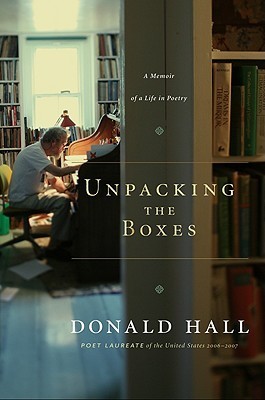
Donald Hall’s remarkable life in poetry — a career capped by his appointment as U.S. poet laureate in 2006 — comes alive in this richly detailed, self-revealing memoir.Hall’s invaluable record of the making of a poet begins with his childhood in Depression-era suburban Connecticut, where he first realized poetry was “secret, dangerous, wicked, and delicious,” and ends with what he calls “the planet of antiquity,” a time of life dramatically punctuated by his appointment as poet laureate of the United States. Hall writes eloquently of the poetry and books that moved and formed him as a child and young man, and of adolescent efforts at poetry writing — an endeavor he wryly describes as more hormonal than artistic. His painful formative days at Exeter, where he was sent like a naive lamb to a high WASP academic slaughter, are followed by a poetic self-liberation of sorts at Harvard. Here he rubs elbows with Frank O’Hara, John Ashbery, and Edward Gorey, and begins lifelong friendships with Robert Bly, Adrienne Rich, and George Plimpton. After Harvard, Hall is off to Oxford, where the high spirits and rampant poetry careerism of the postwar university scene are brilliantly captured. At eighty, Hall is as painstakingly honest about his failures and low points as a poet, writer, lover, and father as he is about his successes, making Unpacking the Boxes — his first book since being named poet laureate — both revelatory and tremendously poignant.

Donald Hall's fourteenth collection opens with an epigraph from the Urdu poet Faiz: "The true subject of poetry is the loss of the beloved." In that poetic tradition, as in THE PAINTED BED, the beloved might be a person or something else - life itself, or the disappearing countryside. Hall's new poems further the themes of love, death, and mourning so powerfully introduced in his WITHOUT (1998), but from the distance of passed time. A long poem, "Daylilies on the Hill 1975 - 1989," moves back to the happy repossession of the poet's old family house and its history - a structure that "persisted against assaults" as its generations of residents could not. These poems are by turns furious and resigned, spirited and despairing - "mania is melancholy reversed," as Hall writes in another long poem, "Kill the Day." In this book's fourth and final section, "Ardor," the poet moves toward acceptance of new life in old age; eros reemerges.

Former poet laureate Donald Hall selects the essential work from a moving and brilliant life in poetry.Long-Listed for the 2016 National Book AwardDonald Hall was an American master, one of the nation’s most beloved and accomplished poets. Here, in his eighties, having taken stock of the body of his work—rigorous, gorgeous verse that is the result of seventy years of “ambition and pleasure”—he strips it down. The Selected Poems of Donald Hall reflects the poet’s handpicked, concise selection, showcasing work rich with humor and eros and “a kind of simplicity that succeeds in engaging the reader in the first few lines” (Billy Collins).From the enduring “My Son My Executioner” to “Names of Horses” to “Without,” Donald Hall’s best poems deliver “a banquet in the mouth” (Charles Simic) and an “aching elegance” ( Baltimore Sun ). For the first-time reader or an old friend, these are, above all others, the poems to read, reread, and remember. “However wrenching [Hall’s poems] may be from line to line, they tell a story that is essentially art and love are compatible, genius is companionable, and people stand by one another in the end” ( New York Times Book Review ).

Donald Hall draws on his own childhood memories and gives himself the thing he most wanted but didn't get as a boy: a Christmas at Eagle Pond.It’s the Christmas season of 1940, and twelve-year-old Donnie takes the train to visit his grandparents' place in rural New Hampshire. Once there, he quickly settles into the farm’s routines. In the barn, Gramp milks the cows and entertains his grandson by speaking rhymed pieces, while Donnie’s eyes are drawn to an empty stall that houses a graceful, cobwebby sleigh. Now Model A's speed over the wintry roads, which must be plowed, and the beautiful sleigh has become obsolete. When the church pageant is over, the gifts are exchanged, and the remains of the Christmas feast put away, the air becomes heavy with fine snowflakes—the kind that fall at the start of a big storm—and everyone wonders, how will Donnie get back to his parents on time?

Distinguished poet Donald Hall and award-winning artist Barry Moser have teamed up to create a hilarious, affectionate portrait in contrasts of our companions, and often best friends, a cat and a dog. With evocative words and masterful paintings, they delineate the doginess and catlike qualities that everyone will recognize.

One of America's finest poets joins forces with one of baseball's most outrageous pitchers to paint a revealing portrait of our national game. Donald Hall's forceful, yet elegant, prose brings together all the elements of Dock Ellis's story into a seamless whole. The two of them, the pitcher and the poet, give us remarkable insight into the customs and culture of this closed clannish world. Dock's keen vision, filtered through Hall's extraordinary voice, shows us the hardships and problems of the thinking athlete in an unthinking world.

The first full-length volume of poems in a decade by former poet laureate of the United States Donald HallIn The Back Chamber, Donald Hall illuminates the evocative, iconic objects of deep memory—"a cowbell," "a white stone perfectly round," "a three-legged milking stool"—that serve to foreground the rich meditations on time and mortality that run through his remarkable new collection. While Hall’s devoted readers will recognize many of his long-standing preoccupations—baseball, the family farm, love, sex, and friendship—what will strike them as new is the fierce, pitiless poignancy he reveals as his own life’s end comes into view. The Back Chamber is far from being death-haunted but rather is lively, irreverent, sexy, hilarious, ironic, and sly—full of the life-affirming energy that has made Donald Hall one of America’s most popular and enduring poets.

This volume contains the finest short poetry Donald Hall has written, poems of landscape and love, of dedication and prophecy, poems that have won thousands of readers, as well as various prizes and honors.

A Christmas story from years past, drawn from the author's own family history, tells of an era when gifts were mostly handmade, and the arrival of a new stove from the Sears Catalog is a significant event. Reprint.

A heartfelt celebration of the New England seasons in a charmingly illustrated, slipcased gift edition by New England's pre-eminent poet. Lyrical, comic and elegiac, it sings of a land and culture that is disappearing under the assault of change.
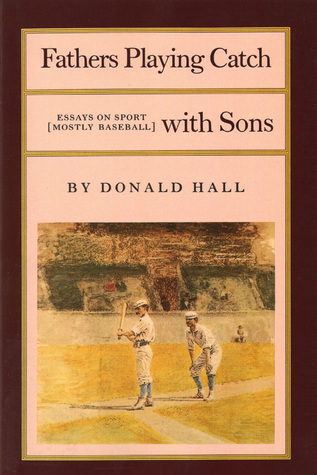
In the pantheon of great sports literature, not a few poets have tried their hand at paying tribute to their love affair with the game -- Walt Whitman, Marianne Moore, and William Carlos Williams among them. This elegant volume collects Donald Hall's prose about sports, concentrating on baseball but extending to basketball, football and Ping-Pong. The essays are a wonderful mixture of reminiscence and observation, of baseball and of fathers and sons, of how a game binds people together and bridges generations.

This original paperback brings together for the first time all of Donald Hall’s writing on Eagle Pond Farm, his ancestral home in New Hampshire, where he visited his grandparents as a young boy and then lived with his wife, the poet Jane Kenyon, until her death. It includes the entire, previously published Seasons at Eagle Pond and Here at Eagle Pond; the poem “Daylilies on the Hill” from The Painted Bed; and several uncollected pieces. In these tender essays, Hall tells of the joys and quiddities of life on the farm, the pleasures and discomforts of a world in which the year has four seasons -- maple sugar, blackfly, Red Sox, and winter. Lyrical, comic, and elegaic, they sing of a landscape and culture that are disappearing under the assault of change.

Co-authored by two esteemed writers, Writing Well , is a beautifully-written and thoroughly readable guide to the craft of writing prose. This concise, lively text covers all aspects of writing but is best known for its signature chapters on words, sentences, and paragraphs. Going beyond the basics of composition, the text teaches originality and elegance in writing encouraging students to develop their own written voice. Sample student papers Ð including several works-in-progress - allow students to learn the writing process through the work of their peers. A brief handbook section rounds out the coverage.

This is Donald Hall's most advanced work, extending his poetic reach even beyond his recent volumes. Conflict dominates this book, and conflict unites it. Hall takes poetry as an instrument for revelation, whether in an elegy for a (fictional) contemporary poet, or in the title series of poems, whose form imitates the first book of the Odes of Horace. The book's final section, "Extra Innings," moves with poignancy to questions about the end of the game.

Lucy Wells's unusual summer of 1910 begins with her mother turning the front parlor into a hat-making emporium and includes unexpected, exciting visitors, a train trip to Boston, and a visit to Woolworth's wondrous toy counter. By the author of Ox-Cart Man.

Winner of the National Book Critics Circle Award in poetry, this serious, ambitious, and graceful book-length poem is the masterwork of one of America's foremost contemporary poets.

A poet recalls his personal encounters with some famous literary figures

HERE AT EAGLE POND is Donald Hall's remarkable collection of essays about the permanent and transparent memory of place and of his coming home to Eagle Pond, New Hampshire, where he grew up and returned to live with his wife Jane Kenyon at the age of 45, where he began writing poems at the age of twelve, and where his ancestors made their livings by free-lancing as farmers. In these tender essays, Hall tells of the joys and quiddities of life in the ancestral New Hampshire place formerly worked as a dairy farm by his grandparents; of the comforts and discomforts of a world in which the year has four seasons -- maple sugar, blackfly, Red Sox, and winter. These essays are also Donald Hall's letters to friends, answers to such life-altering questions as: "What would our lives be like, living here at Eagle Pond, in solitude among relics and memories, in a countryside of birches and GMC pickups?" And they are ghost stories as well: vivid descriptions of Hall's intimate connection with the land and with his family past. Most importantly, HERE AT EAGLE POND is Donald Hall's coming home to language.

Intimate portraits of great poets in old age, giving new insight into their work and their lives, and context to the often flawless art created by flawed human beings. The best of themselves endure, and the old poets’ existence and endurance gives readers courage to pursue their own vision.Donald Hall (Essays After Eighty and A Carnival of Losses: Notes Nearing Ninety) knew a great deal about work, about poetry, and about age. Each of those things come together in this unique collection. We hear about Robert Frost as Hall knew him: vain and cruel, a man possessed by guilt. But, as Hall writes, “The poet who survives is the poet to celebrate; the human being who confronts darkness and defeats it is the one to admire. For all his vanity, Robert Frost is admirable: He looked into his desert places, confronted his desire to enter the oblivion of the snowy woods, and drove on. ”Hall’s essays are once both intimate portraits and learned treatises. He takes us on a pub crawl through the Welsh countryside with the word-mad Dylan Thomas; to the Faber & Faber office of T. S. Eliot, who had discovered more happiness in age than in youth; to a reading where Robert Frost’s public persona hid the truth; to Brooklyn for lunch with the enigmatic Marianne Moore; and to Italy and for a visit with the notorious Ezra Pound. By the time Hall met them, each poet was, he observed, “old enough to have detached from ongoing poetry, to feel alien to the ambitions of the grandchildren. ”Also included are portraits of the poets who taught Hall as a writer: the unfailingly kind Archibald MacLeish and Yvor Winters, from whom he learned the most about poetry. Along the way are observations about many other poets and the literary cultures that sustained them.Contents include: “Vanity, Fame, Love, and Robert Frost,” “Dylan Thomas and Public Suicide,” “Notes on T. S. Eliot,” “Rocks and Whirlpools: Archibald MacLeish and Yvor Winters,” “Marianne Moore: Valiant and Alien,” and “Fragments of Ezra Pound. ”For lovers of literature, this is a gorgeous remembrance and likely to compel an immediate visit to the poetry section of the nearest bookstore—as Hall writes, “Their presences have been emblems in my life, and I remember these poets as if I kept them carved in stone. ”