
Devdutt Pattanaik
Dr. Devdutt Pattanaik (born December 11, 1970) is an Indian physician turned leadership consultant, mythologist and author whose works focus largely on the areas of myth, mythology, and also management. He has written a number of books related to Hindu mythology, including Myth = Mithya: A Handbook of Hindu Mythology, a novel, The Pregnant King, and Jaya: An Illustrated Retelling of the Mahabharata (2010). He is the Chief Belief Officer of Future Group, one of India’s largest retailers, bringing the wisdom of Indian mythology into Indian business, especifically in human resource management. He also writes a column for the newspaper MID DAY. He has also written a novel based on a tale from the Mahabharata titled 'The Pregnant King' published by Penguin Books India
31 Books Written

A unique feature of Hindu mythology is the key role played by animals or pashu. ThePuranas, ancient Hindu story chronicles, reveal that Brahma, the creator, had a soncalled Kashyapa, whose many wives gave birth to different types of pashu:• Timi gave birth to animals who swim• Vinata gave birth to animals who fly• Kadru gave birth to animals who crawl• Surabhi gave birth to animals with hooves• Sarama gave birth to animals with paws• Surasa gave birth to animals who defy classificationThis book retells their stories. With over 75 gorgeously illustrated anecdotes, DevduttPattanaik reveals how our ancestors imagined the animal kingdom, and the key roleanimals played in human lives.

High above the sky stands Swarga, paradise, abode of the gods. Still above is Vaikuntha, heaven, abode of God.The doorkeepers of Vaikuntha are the twins, Jaya and Vijaya, both whose names mean 'victory'. One keeps you in Swarga; the other raises you into Vaikuntha.In Vaikuntha there is bliss forever, in Swarga there is pleasure for only as long as you deserve. What is the difference between Jaya and Vijaya? Solve this puzzle and you will solve the mystery of the Mahabharata.In this enthralling retelling of India's greatest epic, the Mahabharata originally known as Jaya, Devdutt Pattanaik seamlessly weaves into a single narrative plots from the Sanskrit classic as well as its many folk and regional variants, including the Pandavani of Chhattisgarh, Gondhal of Maharashtra, Terukkuttu of Tamil Nadu and Yakshagana of Karnataka.Richly illustrated with over 250 line drawings by the author, the 108 chapters abound with little-known details such as the names of the hundred Kauravas, the worship of Draupadi as a goddess in Tamil Nadu, the stories of Astika, Madhavi, Jaimini, Aravan and Barbareek, the Mahabharata version of the Shakuntalam and the Ramayana, and the dating of the war based on astronomical data.With clarity and simplicity, the tales in this elegant volume reveal the eternal relevance of the Mahabharata, the complex and disturbing meditation on the human condition that has shaped Indian thought for over 3000 years.

SITA : AN ILLUSTRATED RETELLING OF THE RAMAYANAIt is significant that the only character in Hindu mythology, a king at that, to be given the title of ekam-patni-vrata, devoted to a single wife, is associated with the most unjust act of abandoning her in the forest to protect family reputation. This seems a deliberate souring of an uplifting narrative. Rams refusal to remarry to produce a royal heir adds to the complexity. The intention seems to be to provoke thought on notions of fidelity, property and self-image.And so the mythologist and illustrator Devdutt Pattanaik retells the Ramayana, drawing attention to the many oral, visual and written retellings composed in different times, in different places, by different poets, each one trying to solve the puzzle in its own unique way. This book approaches Ram by speculating on Sita: her childhood with her father, Janaka, who hosted sages mentioned in the Upanishads; her stay in the forest with her husband, who had to be a celibate ascetic while she was in the prime of her youth; her interactions with the women of Lanka, recipes she exchanged, emotions they shared; her connection with the earth, her mother, and with the trees, her sisters; her role as the Goddess, the untamed Kali as well as the demure Gauri, in transforming the stoic prince of Ayodhya into God.

In My Gita, acclaimed mythologist Devdutt Pattanaik demystifies The Bhagavad Gita for the contemporary reader. His unique approach—thematic rather than verse-by-verse—makes the ancient treatise eminently accessible, combined as it is with his trademark illustrations and simple diagrams.In a world that seems spellbound by argument over dialogue, vi-vaad over sam-vaad, Devdutt highlights how Krishna nudges Arjuna to understand rather than judge his relationships. This becomes relevant today when we are increasingly indulging and isolating the self (self-improvement, self-actualization, self-realization—even selfies!).We forget that we live in an ecosystem of others, where we can nourish each other with food, love and meaning, even when we fight.So let My Gita inform your Gita.

On this festival of Janmashtami or Gokulashtami, renowned author Devdutt Pattanaik in an extract from his book, 7 Secrets of Vishnu, reminds is that Krishna is an unusual God—most unconventional, whether as an endearing cowherd or the astute charioteer in the Mahabharata. ‘His mother is not his real mother, his beloved is not his wife…; his lovemaking is not really lovemaking; his war is not really war. There is always more than meets the eye. And so, only Krishna, of all the avatars, sports a smile, a mischievous, meaningful smile. There is always more than meets the eye, when Krishna is around.’

Smeared with ash, draped in animal hide, he sits atop the snow-capped mountain, skull in hand, withdrawn, with dogs for company, destroying the world with his indifference. He is God who the Goddess shall awaken. His name is Shiva. Locked in his stories, symbols and rituals are the secrets of our ancestors. This book attempts to unlock seven.

A decoding of Hindu mythology Hindus have one God. They also have 330 million gods: male gods; female gods; personal gods; family gods; household gods; village gods; gods of space and time; gods for specific castes and particular professions; gods who reside in trees; in animals; in minerals; in geometrical patterns and in man-made objects. Then there are a whole host of demons. But no Devil. In this groundbreaking book Dr Devdutt Pattanaik; one of India’s most popular mythologists; seeks an answer to these apparent paradoxes and unravels an inherited truth about life and death; nature and culture; perfection and possibility. He retells sacred Hindu stories and decodes Hindu symbols and rituals; using a unique style of commentary; illustrations and diagrams. We discover why the villainous Kauravas went to heaven and the virtuous Pandavas (all except Yudhishtira) were sent to hell; why Rama despite abandoning the innocent Sita remains the model king; why the blood-drinking Kali is another form of the milk-giving Gauri; and why Shiva wrenched off the fifth head of Brahma.

Among the many characters who inhabit the Mahabharata, the world's greatest epic and the oldest, sometimes other stories unravelled from it, such as Shilavati, who cannot be king because she is a woman.
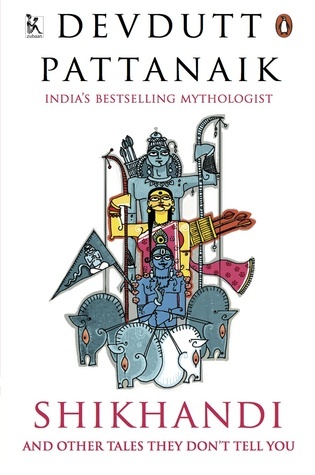
Patriarchy establishes men as superior to women.Feminism views women and men as equal.Queerness questions what constitutes male and female.Queerness isn’t only modern, Western or sexual, says mythologist Devdutt Pattanaik. Take a close look at the vast written and oral traditions in Hinduism, some over two thousand years old, and you will find many overlooked tales, such as those of Shikhandi, who became a man to satisfy her wife; Mahadeva, who became a woman to deliver his devotee’s child; Chudala, who became a man to enlighten her husband; Samavan, who became the wife of his male friend; and many more . . .Playful and touching—and sometimes disturbing—these stories, when compared with their Mesopotamian, Greek, Chinese and Biblical counterparts, reveal the unique Indian way of making sense of queerness.

Devdutt Pattanaik is an acclaimed business thinker and strategist. His profound management sutras are derived from his bestselling books on business and management. They show how individuals can realize their potential, create wealth and achieve lasting success by following uniquely Indian principles (based on Hindu, Jain and Buddhist mythology) of goal setting, strategic thinking and decision-making.

230 (Throughout B/W Illustrations)Authors NoteIt is significant that the stories of Vishnu rose to prominence after the rise of Buddhism. Prior to that Hinduism was the religion of the elite based complex rituals known as yagna and esoteric speculations captured in texts known as the Aranyakas and the Upanishads. These seemed very distant to the common man who focused on fertility rituals worship of plants and animals and nature.Buddhism spoke directly to the common man in the language of the people and addressed every day concerns. It naturally became very popular. But the Buddhist worldview leaned towards Monasticism. By contrast the Hindu worldview made room for both the hermit and the householder. To fire the imagination of the people moving towards monasticism this had to be communicated using a tool that the masses relished stories.Stories of Vishnu communicate the hindu worldview from the point of view of the householder. This is complemented by stories of Shiva that communicate an equally valid but alternate viewpoint that of the hermit. Since both Vishnu and shiva were forms of God both worldviews that of the Householder and that of the hermit were held in equal regard.To ensure that these stories were not reduced to entertainment they were deemed sacred and anchored with symbols and rituals. The symbols and rituals of Vishnu are different from the symbols and rituals of Shiva. For example Vishnu is visualized bedecked in gold while Shiva is worshipped smeared in ash Vishnu is offered sprigs of the Tulsi that is grown inside the house while shiva is offered leaves of the bilva that is grown outside the house Vishnu dances with his eyes open while Shiva dances with his eyes shut. Through these differences different ideas were communicated.Wisdom that was once restri

Reflecting on one of Hinduism’s most popular prayer for positive energyAcclaimed mythologist Devdutt Pattanaik demystifies the Hanuman Chalisa for the contemporary reader. His unique approach makes the ancient hymn accessible, combined as it is with his trademark illustrations.Every time we experience negativity in the world and within ourselves, every time we encounter jealousy, rage and frustration, manifesting as violation and violence, we hear, or read, the Hanuman Chalisa. Composed over four hundred years ago by Tulsidas, its simple words in Awadhi, a dialect of Hindi and its simple metre, musically and very potently evoke the mythology, history and mystery of Hanuman, the much-loved Hindu deity, through whom Vedic wisdom reached the masses. As verse follows verse, our frightened, crumpled mind begins to expand with knowledge and insight and our faith in humanity, both within and without, is restored.
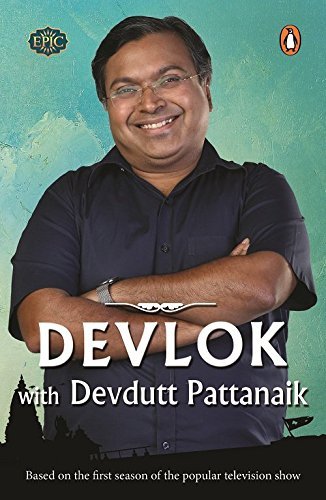
Journey into the amazing world of Hindu mythology with Devdutt PattanaikWhy are most temples dedicated to Vishnu, Shiva or the goddess, but not to Brahma or Indra?How are an asura, rakshasa,yaksha and pishacha different from each other?Why did the Pandavas find themselves in naraka rather than swarga? Over several months, EPIC Channel s ground-breaking show Devlok with Devdutt Pattanaik has enthralled countless viewers. Here, finally, is the book based on the first series of the everpopular show, which will take you on a scintillating tour through the myriad stories, symbols and rituals that form the basis of Hindu culture. Prepare to be surprised and thrilled as Devdutt narrates magical tales about larger-thanlife figures gods, goddesses, demi-gods and demons who you thought you knew well but didn t. Learn about the intricacies of Hindu thought as he explains the origin and meaning of different creation myths, and throws light on why we believe in a cyclical not linear concept of time. This book is your perfect introduction to the endlessly fascinating world of Hindu mythology.

Why we do business impacts how we do it and what ultimately gets done. As is belief, so is behavior, so is business. This is Business Sutra, a very Indian way of doing business.It is very different from Management Science, taught in business schools around the world, which does not factor in belief, because belief is subjective truth, hence cannot be measured.Despite the veneer of objectivity, Management Science is rooted in Western belief. Just as ancient Greeks celebrated Elysium, much-cherished heaven of heroes, and the Bible speaks of the Promised Land, ultimate destination of faithful, Management Science is goal-oriented, obsessed with vision, mission, objectives, milestones, and targets.By contrast, Business Sutra is gaze-oriented. Great value is placed on the practice of darshan: how we see the world and our relationship with Lakshmi, goddess of wealth, whose image adorns Hindu homes, Jain temples and Buddhist stupas.If we believe that wealth is something that needs to be pursued, we end up turning the workplace into a rana-bhoomi, a battleground of investors, regulators, employers, employees, vendors, competitors and customers.If we believe that wealth is something that needs to be attracted, we end up turning the workplace into a ranga-bhoomi, a playground where everyone is happy.Communicated symbolically through the stories, symbols and rituals of India, which have been transmitted across the subcontinent for centuries, Business Sutra reveals a radically different approach to management, business, goverance, leadership, even economics and politics, that India seems to have forgotten, and the world has overlooked.Who better to unravel it than India’s foremost mythologist, renowned speaker, columnist, author, leadership coach and Chief Belief Officer of Future Group, Devdutt Pattanaik.He reveals how Management Science is based on the assumption that the world is finite, certain, controllable and linear. But in a global village, where everything is volatile and vibrant, there is need for a theory that is more comfortable with infinity, diversity, uncertainty and non-linear modes of thinking. Hence, Business Sutra.


On this Ganesh Chathurti or Ganpati, as the festival is popularly known in Maharashtra, Devdutt Pattanaik in this extract from 7 Secrets of Shiva , narrates several stories about Ganesha’s birth -- the one in which Shiva beheads him; when Shiva and Shakti make love taking the form of elephants; when Shiva creates a child of his own image for His wife’s pleasure but since he looks too much like the father, Shakti replaces his head with that of an elephant. A perfect obeisance to a God who is worshipped across India as the ‘remover of obstacles’ during the ten-day festival which is celebrated with much gusto.

The Book Of Ram is a book with a fresh perspective written by noted author, Devdutt Pattanaik. It which outlines the entire story of the Ramayana taking into consideration various accounts of the great Indian epic, right from the standard Sanskrit Aryan version, to the Dravidian version, all the way up to the Burmese, and the Thailand versions.

‘Her unbound hair reveals that she is still wild like Kali, but her nose-ring reveals she is domesticated like Gauri. The weapons in her multiple hands reveal a different kind of violence, one that is restrained unlike Kali’s, one that offers protection but can also be used to punish. She is Brahma’s defiant daughter, Vishnu’s protected and protective sister, and Shiva’s affectionate wife.’ In this festive season heralded by Navratri, when the entire country celebrates Durga or shakti, the primordial female form, renowned author Devdutt Pattanaik reveals the various aspects of the Goddess in ‘Durga’s Secret’ from his bestselling, 7 Secrets of the Goddess.

In the forest of insecurities, is it possible to discover humanity through pleasure?Can we stop seeing each other as predator, prey, rival or mate, and rediscover ourselves as lovers?Does the divine reside in sensual delight, in emotional intimacy and in aesthetic experience?Yes, yes, yes.That is the promise of the Bhagavata.The Bhagavata is the story of Krishna, known as Shyam to those who find beauty, wisdom and love in his dark complexion. It is the third great Hindu epic after the Mahabharata and the Ramayana. However, this narration was composed in fragments over thousands of years, first as the Harivamsa, then as the Bhagavata Purana, and finally as the passionate songs of poet-sages in various regional languages.This book seamlessly weaves the story from Krishna's birth to his death, or rather from his descent to the butter-smeared world of happy women to his ascent from the blood-soaked world of angry men.

• Olympus is the home of the Greek gods, much like Amravati of the Hindu devas.• Zeus, leader of Olympians, wields a thunderbolt like Indra, and rides an eagle like Vishnu.• The feats of the Greek hero Heracles, known to Romans as Hercules, reminded many of Krishna, as did his name, ‘Hari-kula-esha’ or lord of the Hari clan.• The Greek epic of a husband sailing across the sea with a thousand ships to bring his wife, Helen, back from Troy seems strikingly similar to the story of Ram rescuing Sita from Lanka.Is there a connection between Greek and Hindu mythology then? Does it have something to do with a common Indo-European root? Or maybe an exchange of ideas in the centuries that followed the arrival of Alexander the Great, when Greek emissaries travelled to the kingdoms of Mathura and Magadha?In this book, mythologist Devdutt Pattanaik turns his attention to ancient Greek tales, and explores a new world of stories. Long have Europeans and Americans retold Indic mythologies. It is time for Indians to reverse the gaze.

99 Thoughts On Ganesha: Stories, Symbols And Rituals Of India's Beloved Elephant Headed Deity
by Devdutt Pattanaik
Rating: 3.7 ⭐
Stories, Symbols and Rituals of India's beloved elephant-headed deity.In the game of cricket, having scored 99 runs, when a bats-man stands poised on the threshold of that much coveted century, he experiences the moment that is best associated with Ganesha. Fear and uncertainty envelope him; between him and his achievement stand hurdles, both real and imaginary: a possible spin from the bowler can overwhelm him, his own anxiety can paralyze him, cheering fans can distract him. He needs divine intervention then. He needs to focus, get rid of all hurdles, perform, get the final run, and achieve what he so longs for. In other words, he needs to think of Ganapati. This book brings together 99 meditations to better understand the stories, symbols and rituals of that adorable elephant-headed Hindu god who removes hurdles and brings prosperity and peace. Known variously as Ganapati, Gajanana, Vinayaka or Pillayar, he can help all of us score a century in the game called life.

The renowned author takes the reader on a journey through the Adi Purana, covering the entire Veda in a single story.

It is a popular belief that the Ramayana is idealistic, while the Mahabharata is realistic. Yet these two epics have identical building blocks, identical themes, and identical history.In this ground-breaking book, Devdutt Pattanaik, India’s most popular mythologist, explores the similarities and dissimilarities between the two epics in a ‘playful analysis’ accompanied by his signature illustrations. Whether it is the family structure, forest exile, or war, the comparison between the two epics proves a startling point—the Mahabharata is in fact a reaction to the events in the Ramayana.Ideas in this book are distributed over 56 chapters. In temple ritual, Vishnu is offered 8 different meals daily, different on all seven days of the week—56 dishes in all. May each chapter serve as a mouth-watering offering to the Vishnu within you.

We live in times where people have extreme views. On the one hand, there are scholars who describe Shiva's linga literally as a phallus, and see all metaphoric meaning as embarrassed apology of the uneducated. On the other hand, we have puritanical Hindus who want to strip the Shiva linga of all sexual meaning and sanitize Shiva's lore. In both cases, a symbol is being reduced to a sign. In Shiva to Shankara, Devdutt Pattanaik, India's leading mythologist, seeks to bridge the gap. As he explores the layers of meanings embedded in Shiva's linga, we discover why and how the Goddess transforms Shiva, the hermit, into Shankara, the householder.

Marriage, by mythologist Devdutt Pattanaik, brings together stories from Vedic, Puranic, Tamil, and Sanskrit literature, from regional, classical, folk and tribal lore, from oral and textual traditions, across 3000 years of history and 3 million square kilometres of geography, to reveal the diversity and fluidity of Indian customs and beliefs around marriage. ‘Let all the gods and the waters anoint our two hearts.’ —Rig Veda

Hindu mythology abounds with fascinating gods, goddesses and characters whose visual representations - through calendar art - are equally colourful. Hindu calendar art may seem fantastic and kitsch, but it is in fact the most democratic expression of a mythic imagery that was once restricted to temple walls and palm leaf manuscripts. These portraits of the Hindu pantheon of gods and the stories that surround them can be found on the walls and puja rooms of almost every Hindu household in India. Rich in symbols, each image is a piece of an ancient metaphysical jigsaw puzzle. In this book, Dr Devdutt Pattanaik, India's renowned mythologist, decodes these symbols to reveal a wisdom that has nourished India for thousands of years.

Indian Mythology: Tales, Symbols, and Rituals from the Heart of the Subcontinent
by Devdutt Pattanaik
Rating: 3.8 ⭐
An exploration of 99 classic myths of India from an entirely non-Western paradigm that provides a fresh understanding of the Hindu spiritual landscape• Compares and contrasts Indian mythology with the stories of the Bible, ancient Egypt, Greece, Scandinavia, and Mesopotamia• Looks at the evolution of Indian narratives and their interpretations over the millennia• Demonstrates how the mythology, rituals, and art of ancient India are still vibrant today and inform the contemporary generationFrom the blood-letting Kali to the mysterious Ganesha, the Hindu spiritual landscape is populated by characters that find no parallel in the Western spiritual world. Indian Mythology explores the rich tapestry of these characters within 99 classic myths, showing that the mythological world of India can be best understood when we move away from a Western, monotheistic mindset and into the polytheistic world of Hindu traditions.Featuring 48 artistic renderings of important mythological figures from across India, the author unlocks the mysteries of the narratives, rituals, and artwork of ancient India to reveal the tension between world-affirming and world-rejecting ideas, between conformism and contradiction, between Shiva and Vishnu, Krishna and Rama, Gauri and Kali. This groundbreaking book opens the door to the unknown and exotic, providing a glimpse into the rich mythic tradition that has empowered millions of human beings for centuries.

In this wonderful extract, bestselling author, Devdutt Pattanaik draws our attention to the story of Ram in its entirety—‘…the one who upheld the code of civilisation and refused to succumb to animal instincts despite every provocation.’ As the King of Ayodhya, the author draws our attention to the ‘controversial conclusion of the Ramayana’ : the abandonment of Sita after she was held captive by Ravana. Devdutt Pattanaik asks a very significant question about the complexity of dharma –‘ Is Ram the King of Ayodhya first or husband of Sita? Even as the nation witnesses a tug-of-war apropos the building of the Ram Temple in Ayodhya, Ram’s Secret helps us understand what made Ram a righteous king and most importantly, an avatar of Vishnu.
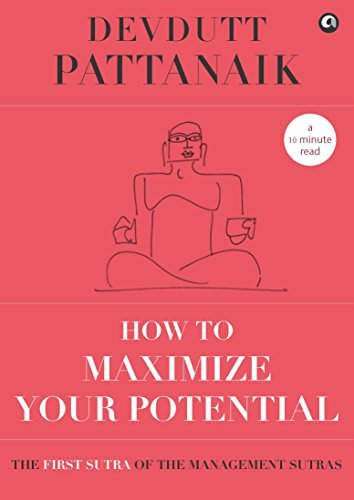
Devdutt Pattanaik is an acclaimed business thinker and strategist. His profound management sutras are derived from his bestselling books on business and management. They show how individuals can realize their potential, create wealth and achieve lasting success by following uniquely Indian principles (based on Hindu, Jain and Buddhist mythology) of goal setting, strategic thinking and decision-making.

How to Become Rich: 12 Lessons I Learnt from Vedic and Puranic Stories
by Devdutt Pattanaik
Rating: 3.7 ⭐
Lakshmi is worshipped as the goddess of wealth. Her arrival is considered auspicious, while her departure is bad and inauspicious. In temples, gods are bedecked with jewels; during festivals, our houses are decorated with flowers, lamps and Lakshmi’s footprints. Clearly, she is a much-desired goddess. Yet, some friends and relatives, even gurus, tell us not to be money-minded, or that it is wrong to equate Lakshmi with money because Lakshmi is spiritual and money is material. Why this mockery of money? Why are we driving Lakshmi out of India instead of inviting her lovingly into our lives? How to Become Rich is a simple retelling of the stories of Lakshmi found in the Vedas and Puranas. Devdutt Pattanaik deftly explains what Hinduism says about economics at a personal level as well as at the social level.

BRAND NEW, Exactly same ISBN as listed, Please double check ISBN carefully before ordering.