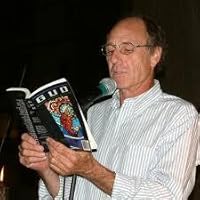
David Lenson
David Lenson (1945–2020) was a poet, essayist, musician, and legendary professor. His father Michael Lenson was the New Jersey director of the Works Progress Administration murals project. David went to Princeton University and completed three degrees there, including his doctorate in Comparative Literature. He was the author of two books of poetry as well as three scholarly works, and best known for his last, On Drugs. He was head editor of the Massachusetts Review for eight years, host of the magazine's radio show on WMUA, an inspiration and mentor to several generations of UMass students, and an accomplished sax player, having performed with many of the greats, including Buddy Guy and Junior Wells, and locally with the Reprobate Blues Band.
7 Books Written

Unlike Thomas Szasz, who argues forcefully for the legalization of drugs in Our Right to Drugs (Praeger, 1992), Lenson tackles this subject by meditating on the national consumerist paradigm, the way the war on drugs closed avenues for heterogeneity, the lack of a vocabulary to describe changes in a user's consciousness, the senselessness of talking about "drugs" indiscriminately, and the differences among the users, the drugs, and the effects of psychedelics, cannabis, stimulants (cocaine, crack, amphetamines), depressants (heroin), opiates, and alcohol. He contrasts drugs of pleasure to drugs of desire and believes that "to legislate against drugs of pleasure is like legislating against music, chess, golf...." Lenson says that nothing in his professional life qualifies him to write about drugs, but his style and his literary and philosophical references would pinpoint him as an academic even if he were not identified as a University of Massachusetts professor of literature, albeit one who surveys his students' usage habits. Lenson's credentials as a user were probably the impetus for this work, but they are not much evident in the text. In the national debate and reevaluation of attitudes toward drugs, this is a different kind of contribution, one that is speculative, discursive, and visionary. For academic collections.?Janice Dunham, John Jay Coll. Lib., New YorkCopyright 1995 Reed Business Information, Inc.

Discusses the background of Nietzsche's work, analyzes its themes and concepts, and describes its critical reception

Why, during the last two hundred years, when critical achievement in the field of tragedy has been outstanding, has there been little creative practice? David Lenson examines the work of various writers not ordinarily placed in the tragic tradition―among them, Kleist, Goethe, Melville, Yeats, and Faulkner―and suggests that the tradition of tragedy does continue in genres other than drama, that is, in the novel and even in lyric poetry.The notion of tragedy's migration from one genre to others indicates, however, rather sweeping modifications in the theory of tragedy. Achilles' Choice proposes a structural model for tragic criticism that synthesizes the almost scientific theories predominant since World War II with the irrationalist theories they replaced.Originally published in 1975.The Princeton Legacy Library uses the latest print-on-demand technology to again make available previously out-of-print books from the distinguished backlist of Princeton University Press. These editions preserve the original texts of these important books while presenting them in durable paperback and hardcover editions. The goal of the Princeton Legacy Library is to vastly increase access to the rich scholarly heritage found in the thousands of books published by Princeton University Press since its founding in 1905.

Ride The Shadow
by David Lenson
The Gambler
by David Lenson
The Gambler: Poems by David Lenson for Michael Lenson
by David Lenson