
David J. Chalmers
David Chalmers is University Professor of Philosophy and Neural Science and codirector of the Center for Mind, Brain and Consciousness at New York University. He is the author of The Conscious Mind, The Character of Consciousness, and Constructing the World. He has given the John Locke Lectures and has been awarded the Jean Nicod Prize. He is known for formulating the “hard problem” of consciousness, which inspired Tom Stoppard’s play The Hard Problem, and for the idea of the “extended mind,” which says that the tools we use can become parts of our minds.
19 Books Written
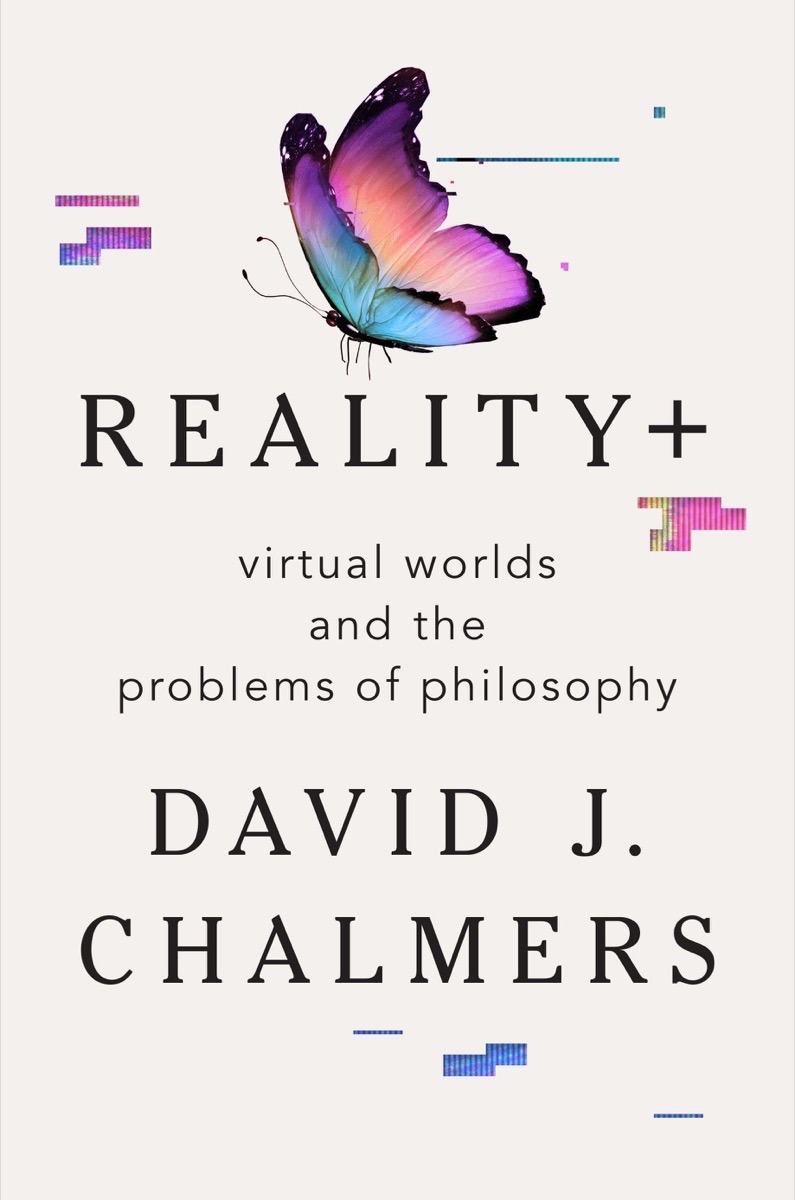
Reality+: Virtual Worlds and the Problems of Philosophy
by David J. Chalmers
Rating: 3.7 ⭐
• 1 recommendation ❤️
Virtual reality is genuine reality; that’s the central thesis of Reality+. In a highly original work of “technophilosophy,” David J. Chalmers gives a compelling analysis of our technological future. He argues that virtual worlds are not second-class worlds, and that we can live a meaningful life in virtual reality. We may even be in a virtual world already.Along the way, Chalmers conducts a grand tour of big ideas in philosophy and science. He uses virtual reality technology to offer a new perspective on long-established philosophical questions. How do we know that there’s an external world? Is there a god? What is the nature of reality? What’s the relation between mind and body? How can we lead a good life? All of these questions are illuminated or transformed by Chalmers’ mind-bending analysis.Studded with illustrations that bring philosophical issues to life, Reality+ is a major statement that will shape discussion of philosophy, science, and technology for years to come.

What is consciousness? How do physical processes in the brain give rise to the self-aware mind and to feelings as profoundly varied as love or hate, aesthetic pleasure or spiritual yearning? These questions today are among the most hotly debated issues among scientists and philosophers, and we have seen in recent years superb volumes by such eminent figures as Francis Crick, Daniel C. Dennett, Gerald Edelman, and Roger Penrose, all firing volleys in what has come to be called the consciousness wars. Now, in The Conscious Mind, philosopher David J. Chalmers offers a cogent analysis of this heated debate as he unveils a major new theory of consciousness, one that rejects the prevailing reductionist trend of science, while offering provocative insights into the relationship between mind and brain.Writing in a rigorous, thought-provoking style, the author takes us on a far-reaching tour through the philosophical ramifications of consciousness. Chalmers convincingly reveals how contemporary cognitive science and neurobiology have failed to explain how and why mental events emerge from physiological occurrences in the brain. He proposes instead that conscious experience must be understood in an entirely new light--as an irreducible entity (similar to such physical properties as time, mass, and space) that exists at a fundamental level and cannot be understood as the sum of its parts. And after suggesting some intriguing possibilities about the structure and laws of conscious experience, he details how his unique reinterpretation of the mind could be the focus of a new science. Throughout the book, Chalmers provides fascinating thought experiments that trenchantly illustrate his ideas. For example, in exploring the notion that consciousness could be experienced by machines as well as humans, Chalmers asks us to imagine a thinking brain in which neurons are slowly replaced by silicon chips that precisely duplicate their functions--as the neurons are replaced, will consciousness gradually fade away? The book also features thoughtful discussions of how the author's theories might be practically applied to subjects as diverse as artificial intelligence and the interpretation of quantum mechanics.All of us have pondered the nature and meaning of consciousness. Engaging and penetrating, The Conscious Mind adds a fresh new perspective to the subject that is sure to spark debate about our understanding of the mind for years to come.

What is consciousness? How does the subjective character of consciousness fit into an objective world? How can there be a science of consciousness? In this sequel to his groundbreaking and controversial The Conscious Mind, David Chalmers develops a unified framework that addresses these questions and many others. Starting with a statement of the "hard problem" of consciousness, Chalmers builds a positive framework for the science of consciousness and a nonreductive vision of the metaphysics of consciousness. He replies to many critics of The Conscious Mind, and then develops a positive theory in new directions. The book includes original accounts of how we think and know about consciousness, of the unity of consciousness, and of how consciousness relates to the external world. Along the way, Chalmers develops many provocative ideas: the "consciousness meter," the Garden of Eden as a model of perceptual experience, and The Matrix as a guide to the deepest philosophical problems about consciousness and the external world. This book will be required reading for anyone interested in the problems of mind, brain, consciousness, and reality.
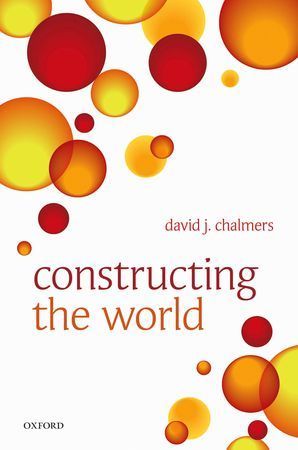
David Chalmers develops a picture of reality on which all truths can be derived from a limited class of basic truths. The picture is inspired by Rudolf Carnap's construction of the world in Der Logische Aufbau Der Welt. Carnap's Aufbau is often seen as a noble failure, but Chalmers argues that a version of the project can succeed. With the right basic elements and the right derivation relation, we can indeed construct the world. The focal point of Chalmers' project is scrutability: the thesis that ideal reasoning from a limited class of basic truths yields all truths about the world. Chalmers first argues for the scrutability thesis and then considers how small the base can be. The result is a framework in "metaphysical epistemology": epistemology in service of a global picture of the world. The scrutability framework has ramifications throughout philosophy. Using it, Chalmers defends a broadly Fregean approach to meaning, argues for an internalist approach to the contents of thought, and rebuts W.V. Quine's arguments against the analytic and the a priori. He also uses scrutability to analyze the unity of science, to defend a sort of conceptual metaphysics, and to mount a structuralist response to skepticism. Based on Chalmers's 2010 John Locke lectures, Constructing the World opens up debate on central philosophical issues concerning knowledge, language, mind, and reality.


Questo scritto di David Chalmers, filosofo australiano tra i più influenti rappresentanti della philosophy of mind, ha segnato un importante punto di svolta nelle indagini sulla coscienza. Ricollegandosi al saggio di Thomas Nagel Cosa si prova ad essere un pipistrello (Castelvecchi, 2013), Chalmers sostiene che la coscienza presenta i problemi «facili», che riguardano le diverse modalità dei processi cerebrali e che possono ricevere una spiegazione esaustiva dagli studi neurobiologici, e il problema «difficile», che riguarda invece il significato di avere un’esperienza cosciente. Tale problema, avendo a che fare con l’aspetto soggettivo dell’esperienza, non può ricevere alcuna risposta dalle neuroscienze, che non sono in grado di spiegare il senso che hanno per l’individuo esperienze anche semplici come «vedere il rosso» o «sentire un suono». L’approccio di Chalmers si propone allora di formulare una spiegazione filosofica, che integri concettualmente le descrizioni puramente scientifiche della vita mentale, perché «il problema difficile è un difficile problema, ma non c’è motivo di credere che resterà per sempre insoluto». Questa edizione è completata da una selezione delle risposte dell’autore alle critiche e osservazioni mosse in seguito alla pubblicazione del saggio da alcuni dei più autorevoli studiosi della coscienza.

Chalmers is best known for formulating what he calls the "hard problem of consciousness," in both his 1995 paper "Facing Up to the Problem of Consciousness" and his 1996 book The Conscious Mind. He makes a distinction between "easy" problems of consciousness, such as explaining object discrimination or verbal reports, and the single hard problem, which could be stated "why does the feeling which accompanies awareness of sensory information exist at all?" The essential difference between the (cognitive) easy problems and the (phenomenal) hard problem is that the former are at least theoretically answerable via the dominant strategy in the philosophy of mind: physicalism. Chalmers argues for an "explanatory gap" from the objective to the subjective, and criticizes physicalist explanations of mental experience, making him a dualist. Chalmers characterizes his view as "naturalistic dualism": naturalistic because he believes mental states supervene "naturally" on physical systems (such as brains); dualist because he believes mental states are ontologically distinct from and not reducible to physical systems. He has also characterized his view by more traditional formulations such as property dualism.
Quote from footnote 1:"This paper was published in the Journal of Consciousness Studies 17:7-65, 2010. I first became interested in thiscluster of ideas as a student, before first hearing explicitly of the “singularity” in 1997. I was spurred to think further about these issues by an invitation to speak at the 2009 Singularity Summit in New York City. I thank many people at that event for discussion, as well as many at later talks and discussions at West Point, CUNY, NYU, Delhi, ANU,Tucson, Oxford, and UNSW. Thanks also to Doug Hofstadter, Marcus Hutter, Ole Koksvik, Drew McDermott, CarlShulman, and Michael Vassar for comments on this paper."

Neuroscientists and others are at last plumbing one of the most profound mysteries of existence. But knowledge of the brain alone may not get them to the bottom of it.

La realtà virtuale è realtà a tutti gli effetti; questa è la tesi centrale di Più realtà. In un'opera molto originale di "tecnofilosofia", David Chalmers offre un'analisi avvincente del nostro futuro tecnologico. Sostiene che i mondi virtuali non sono mondi di seconda classe e che possiamo vivere una vita significativa nella realtà virtuale. Ipotizza che potremmo anche già trovarci all'interno di un mondo virtuale.Lungo la strada, Chalmers ci guida in un grand tour delle idee più importanti in ambito filosofico e sfrutta la tecnologia della realtà virtuale per offrire una nuova prospettiva su annose questioni. Come facciamo a sapere che esiste un mondo esterno? C'è un dio? Qual è la natura della realtà? Qual è la relazione tra mente e corpo? Come possiamo condurre una vita buona all'interno della realtà virtuale? Tutti questi interrogativi sono illuminati o trasformati dall'analisi di Chalmers.
When I was in graduate school, I recall hearing “One starts as a materialist, then one becomes a dualist, then a panpsychist, and one ends up as an idealist”. I don’t know where this comes from,but I think the idea was something like this. First, one is impressed by the successes of science, endorsing materialism about everything and so about the mind. Second, one is moved by problem of consciousness to see a gap between physics and consciousness, thereby endorsing dualism,where both matter and consciousness are fundamental. Third, one is moved by the inscrutability of matter to realize that science reveals at most the structure of matter and not its underlying nature, and to speculate that this nature may involve consciousness, thereby endorsing panpsychism.Fourth, one comes to think that there is little reason to believe in anything beyond consciousness and that the physical world is wholly constituted by consciousness, thereby endorsing idealism.Some recent strands in philosophical discussion of the mind–body problem have recapitulated this progression: the rise of materialism in the 1950s and 1960s, the dualist response in the 1980s and 1990s, the festival of panpsychism in the 2000s, and some recent stirrings of idealism.In my own work, I have taken the first two steps and have flirted heavily with the third. In this paper, I want to examine the prospects for the fourth step: the move to idealism.

Vous aimez le goût du sirop à la fraise et celui du sorbet au citron. Vous avez un orgasme. Vous contemplez le bleu gris d'un ciel froid d’automne. Vous ne parvenez pas à vous rappeler une pensée que vous avez pourtant sur le bout de la langue…Toutes ces expériences accompagnent une activité cérébrale. Notre cerveau traite en effet une foule d’informations en provenance du monde extérieur et de notre propre corps. Mais à quoi bon ces expériences ? Pourquoi ce traitement de l’information ne se limite-t-il pas à guider notre comportement ? Pourquoi faut-il encore qu’il nous fasse de l'effet ? Et pourquoi ces informations-là doivent-elles produire précisément ces effets-là ?En un mot, quels sont les rapports entre les excitations neuronales et nos expériences ? Comment la matière grise peut-elle fabriquer la conscience ? Selon Chalmers, si deux êtres physiquement indiscernables peuvent avoir des expériences différentes (vous et votre zombie ou deux personnes ayant des expériences inversées), il faut en conclure que la conscience n’est pas physique. Partant, les sciences cognitives sont incapables de rendre effectivement compte de nos expériences : si leur méthode matérialiste et réductionniste nous permet de comprendre certaines fonctions associées à la conscience, comme l’apprentissage, la mémoire ou l’attention, elles n'expliquent pas l’effet qui accompagne ces processus. La conscience ne peut être réduite ni à des fonctions cognitives, ni aux états cérébraux qui réalisent habituellement les fonctions. Mais une telle thèse est-elle recevable ? Ne serait-elle pas antiscientifique, non naturaliste ?Non. La science se définit non par son ontologie matérialiste, mais par sa volonté d’expliquer de la façon la plus économique et la plus élégante possible l’ensemble des phénomènes de l’univers. Le rejet du matérialisme n’implique pas le rejet du naturalisme, pas plus que celui des résultats de la science. Car il faut bien plutôt tenir la conscience pour un élément fondamental du monde, régi par des lois spécifiques et compatibles avec les données actuelles de la science, du même ordre que le temps, l’espace ou d’autres propriétés fondamentales. Déterminer quelle place occupe la conscience dans l’univers est un défi qui nous oblige à partir en quête d’une théorie fondamentale.
![Reality+ [Hardcover] By David J. Chalmers And Fully Human By Steve Biddulph 2 Books Collection Set](https://m.media-amazon.com/images/S/compressed.photo.goodreads.com/books/1694960104i/113036716.jpg)
Reality+ [Hardcover] By David J. Chalmers And Fully Human By Steve Biddulph 2 Books Collection Set
by David J. Chalmers
Rating: 4.0 ⭐
Please Note That The Following Individual Books As Per Original ISBN and Cover Image In this Listing shall be Dispatched Titles In This Reality+ [Hardcover]Fully HumanReality+ [Hardcover] By David J. Chalmers And Fully Human By Steve Biddulph 2 Books Collection Reality+ [Hardcover]:A leading philosopher takes a mind-bending journey through virtual worlds, illuminating the nature of reality and our place within it. Virtual reality is genuine reality; that’s the central thesis of Reality+. In a highly original work of “technophilosophy,” David J. Chalmers gives a compelling analysis of our technological future. He argues that virtual worlds are not second-class worlds, and that we can live a meaningful life in virtual reality. We may even be in a virtual world already.Fully What if there were parts of our minds which we never use, but if awakened, could make us so much happier, connected and alive? What if awakening those parts could bring peace to the conflicts and struggles we all go through? From the cutting edge, where therapy meets neuroscience, Steve Biddulph explores the new concept of 'supersense' – the feelings beneath our feelings – which can guide us to a more awake and free way of living every minute of our lives. And the Four-storey Mansion, a way of using your mind that can be taught to a five-year-old, but can also help the most damaged adult.
Philosophy of Mind: Classical and Contemporary Readings by Unknown
by David J. Chalmers
Conscious Mind: In Search of a Fundamental Theory.
by David J. Chalmers
Conscious Mind - The Brain And Mind To Seek Fundamental Theory And Japanese Language Book
by David J. Chalmers
The Two-Dimensional Argument Against Materialism
by David J. Chalmers