
David J.C. MacKay
David MacKay was a Professor in the Department of Physics at the University of Cambridge. He studied Natural Sciences at Cambridge and then obtained his PhD in Computation and Neural Systems at the California Institute of Technology. He returned to Cambridge as a Royal Society research fellow at Darwin College. He was internationally known for his research in machine learning, information theory, and communication systems, including the invention of Dasher, a software interface that enables efficient communication in any language with any muscle. He has taught Physics in Cambridge since 1995. Since 2005, he devoted much of his time to public teaching about energy. He was a member of the World Economic Forum Global agenda Council on Climate Change.
2 Books Written

Addressing the sustainable energy crisis in an objective manner, this enlightening book analyzes the relevant numbers and organizes a plan for change on both a personal level and an international scale—for Europe, the United States, and the world. In case study format, this informative reference answers questions surrounding nuclear energy, the potential of sustainable fossil fuels, and the possibilities of sharing renewable power with foreign countries. While underlining the difficulty of minimizing consumption, the tone remains positive as it debunks misinformation and clearly explains the calculations of expenditure per person to encourage people to make individual changes that will benefit the world at large.
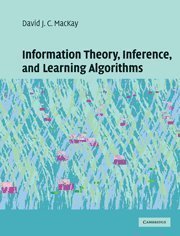
Information theory and inference, often taught separately, are here united in one entertaining textbook. These topics lie at the heart of many exciting areas of contemporary science and engineering - communication, signal processing, data mining, machine learning, pattern recognition, computational neuroscience, bioinformatics, and cryptography. This textbook introduces theory in tandem with applications. Information theory is taught alongside practical communication systems, such as arithmetic coding for data compression and sparse-graph codes for error-correction. A toolbox of inference techniques, including message-passing algorithms, Monte Carlo methods, and variational approximations, are developed alongside applications of these tools to clustering, convolutional codes, independent component analysis, and neural networks. The final part of the book describes the state of the art in error-correcting codes, including low-density parity-check codes, turbo codes, and digital fountain codes -- the twenty-first century standards for satellite communications, disk drives, and data broadcast. Richly illustrated, filled with worked examples and over 400 exercises, some with detailed solutions, David MacKay's groundbreaking book is ideal for self-learning and for undergraduate or graduate courses. Interludes on crosswords, evolution, and sex provide entertainment along the way. In sum, this is a textbook on information, communication, and coding for a new generation of students, and an unparalleled entry point into these subjects for professionals in areas as diverse as computational biology, financial engineering, and machine learning.