
Colin Woodard
20 Books Written

American Nations: A History of the Eleven Rival Regional Cultures of North America
by Colin Woodard
Rating: 4.3 ⭐
• 2 recommendations ❤️
* A New Republic Best Book of the Year * The Globalist Top Books of the Year * Winner of the Maine Literary Award for Non-fiction *Particularly relevant in understanding who voted for who in this presidential election year, this is an endlessly fascinating look at American regionalism and the eleven "nations" that continue to shape North AmericaAccording to award-winning journalist and historian Colin Woodard, North America is made up of eleven distinct nations, each with its own unique historical roots. In American Nations he takes readers on a journey through the history of our fractured continent, offering a revolutionary and revelatory take on American identity, and how the conflicts between them have shaped our past and continue to mold our future. From the Deep South to the Far West, to Yankeedom to El Norte, Woodard (author of American A History of the Epic Struggle Between Individual Liberty and the Common Good ) reveals how each region continues to uphold its distinguishing ideals and identities today, with results that can be seen in the composition of the U.S. Congress or on the county-by-county election maps of any hotly contested election in our history. This updated edition brings the story to the post-pandemic era.
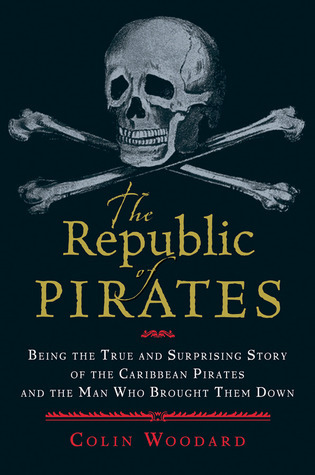
The Republic of Pirates: Being the True and Surprising Story of the Caribbean Pirates and the Man Who Brought Them Down
by Colin Woodard
Rating: 3.9 ⭐
The untold story of a heroic band of Caribbean pirates whose defiance of imperial rule inspired revolt in colonial outposts across the world. In the early eighteenth century, the Pirate Republic was home to some of the great pirate captains, including Blackbeard, "Black Sam" Bellamy, and Charles Vane. Along with their fellow pirates—former sailors, indentured servants, and runaway slaves—this "Flying Gang" established a crude but distinctive democracy in the Bahamas, carving out their own zone of freedom in which servants were free, blacks could be equal citizens, and leaders were chosen or deposed by a vote. They cut off trade routes, sacked slave ships, and severed Europe from its New World empires, and for a brief, glorious period the Republic was a success.

The Lobster Coast: Rebels, Rusticators, and the Struggle for a Forgotten Frontier
by Colin Woodard
Rating: 3.9 ⭐
“A thorough and engaging history of Maine’s rocky coast and its tough-minded people.” —Boston Herald“[A] well-researched and well-written cultural and ecological history of stubborn perseverance.” —USA TodayFor more than four hundred years the people of coastal Maine have clung to their rocky, wind-swept lands, resisting outsiders’ attempts to control them while harvesting the astonishing bounty of the Gulf of Maine. Today’s independent, self-sufficient lobstermen belong to the communities imbued with a European sense of ties between land and people, but threatened by the forces of homogenization spreading up the eastern seaboard. In the tradition of William Warner’s Beautiful Swimmers , veteran journalist Colin Woodard (author of American A History of the Epic Struggle Between Individual Liberty and the Common Good ) traces the history of the rugged fishing communities that dot the coast of Maine and the prized crustacean that has long provided their livelihood. Through forgotten wars and rebellions, and with a deep tradition of resistance to interference by people “from away,” Maine’s lobstermen have defended an earlier vision of America while defying the “tragedy of the commons”—the notion that people always overexploit their shared property. Instead, these icons of American individualism represent a rare example of true communal values and collaboration through grit, courage, and hard-won wisdom.

American Character: A History of the Epic Struggle Between Individual Liberty and the Common Good
by Colin Woodard
Rating: 4.0 ⭐
The author of American Nations examines the history of and solutions to the key American how best to reconcile individual liberty with the maintenance of a free societyThe struggle between individual rights and the good of the community as a whole has been the basis of nearly every major disagreement in our history, from the debates at the Constitutional Convention and in the run up to the Civil War to the fights surrounding the agendas of the Federalists, the Progressives, the New Dealers, the civil rights movement, and the Tea Party. In American Character , Colin Woodard traces these two key strands in American politics through the four centuries of the nation’s existence, from the first colonies through the Gilded Age, Great Depression and the present day, and he explores how different regions of the country have successfully or disastrously accommodated them. The independent streak found its most pernicious form in the antebellum South but was balanced in the Gilded Age by communitarian reform efforts; the New Deal was an example of a successful coalition between communitarian-minded Eastern elites and Southerners.Woodard argues that maintaining a liberal democracy, a society where mass human freedom is possible, requires finding a balance between protecting individual liberty and nurturing a free society. Going to either libertarian or collectivist extremes results in tyranny. But where does the “sweet spot” lie in the United States, a federation of disparate regional cultures that have always strongly disagreed on these issues? Woodard leads readers on a riveting and revealing journey through four centuries of struggle, experimentation, successes and failures to provide an answer. His historically informed and pragmatic suggestions on how to achieve this balance and break the nation’s political deadlock will be of interest to anyone who cares about the current American predicament—political, ideological, and sociological.

By the bestselling author of American Nations, the story of how the myth of U.S. national unity was created and fought over in the nineteenth century--a myth that continues to affect us today Union tells the story of the struggle to create a national myth for the United States, one that could hold its rival regional cultures together and forge an American nationhood. On one hand, a small group of individuals--historians, political leaders, and novelists--fashioned and promoted the idea of America as nation that had a God-given mission to lead humanity toward freedom, equality, and self-government. But this emerging narrative was swiftly contested by another set of intellectuals and firebrands who argued that the United States was instead the homeland of the allegedly superior Anglo-Saxon race, upon whom divine and Darwinian favor shined.Colin Woodard tells the story of the genesis and epic confrontations between these visions of our nation's path and purpose through the lives of the key figures who created them, a cast of characters whose personal quirks and virtues, gifts and demons shaped the destiny of millions.

Book description: Here’s the true story of the British Royal Navy’s struggle with the greatest pirate gang of all time. Drawing on archives in Great Britain and the United States, award-winning journalist and author Colin Woodard separates fact from fiction, revealing the real motivations and struggles of Blackbeard, Black Sam Bellamy, Calico Jack Rackham, and more.

The Black Sea is already dead. Because of sea-level rise, an entire nation in the South Pacific, the Republic of the Marshall Islands, is being washed away. Throughout the Caribbean Sea, vast stretches of coral reef-called the "rainforests of the ocean" because of their diversity of life-are dying at increasingly rapid rates. The reefs along the entire north coast of Jamaica are dead. Ocean's End is not about the damage our oceans could suffer (and inflict) in ten or a hundred years, if we're not careful. It's an eyewitness account, in compelling and vivid detail, of the massive worldwide destruction that's already happened.

A saga chronicling 50 years of triumph and tragedy, "Unsettled" first appeared as a newspaper series on the front page of the Portland Press Herald and Maine Sunday Telegram in the summer of 2014. The story – which unfolded for 29 straight days and concluded with an epilogue a week later – traces the recent history of Maine’s Passamaquoddy people and explains how past events continue to affect their lives today. Reporter Colin Woodard spent more than a year researching "Unsettled," logging thousands of miles and more than 250 hours of interviews with 70 sources, including past governors of Maine and the reservations. The result is a story that shocked many in Maine.

The bestselling author of American Nations offers a powerful paradigm for understanding the defining hot button issues of contemporary America and the action we can take to bridge our cultural divisions and save the republic.To truly grasp the roots of America’s public health crises, economic inequality, and political polarization, we must examine the country’s longstanding regional divides. In Nations Apart, Colin Woodard—an expert on North American regionalism and European ethnonationalism —delves into how centuries-old settlement patterns and the cultural geography they created have shaped today’s most contentious policy debates and brought American democracy to the brink. Drawing on original, quantitative research conducted through Woodard’s own think tank project, Nations Apart offers a fresh perspective on the issues most threatening our national cohesion, GunsHealthHistorythe History WarsAbortionClimate ChangeDemocracyAuthoritarianismBlending groundbreaking original findings from commissioned polls and surveys with new cultural insights into our current reality, Nations Apart offers actionable strategies to bridge the rifts that divide us and points the way toward a more united nation.

Returning the plunder of war to its rightful owner may sound straightforward, writes award-winning author and journalist Colin Woodard but in practice it is extremely difficult, particularly for objects seized during the depths of World War II.

American Nations- A History of The Eleven Rival Regional Cultures of North America
by Colin Woodard
Rating: 2.0 ⭐
Brand New
Nature Conservancy, Vol. 54, No. 3 (Fall 2004)
by Colin Woodard
This issue of Nature Conservancy (Fall 2004) features articles on prairie dogs, life-giving waters, searching for oil, and more. Includes news on Conservancy work in most states and around the world.
La republica de los piratas
by Colin Woodard

American Character: A History of the Epic Struggle Between Individual Liberty and the Common Good
by Colin Woodard
The sinking city: Venice's $3 billion plan to stop a rising sea gets mixed reviews. (Currents).: An article from: E
by Colin Woodard
Remember the Maine Yankee.(controversial plan for disposal of nuclear power plant waste): An article from: Bulletin of the Atomic Scientists
by Colin Woodard
This digital document is an article from Bulletin of the Atomic Scientists, published by Educational Foundation for Nuclear Science, Inc. on January 1, 2001. The length of the article is 1708 words. The page length shown above is based on a typical 300-word page. The article is delivered in HTML format and is available in your Amazon.com Digital Locker immediately after purchase. You can view it with any web browser.Citation Details Remember the Maine Yankee.(controversial plan for disposal of nuclear power plant waste) Colin Woodard Bulletin of the Atomic Scientists (Refereed) January 1, 2001 Educational Foundation for Nuclear Science, Inc. 57 1 11Distributed by Thomson Gale

11の国のアメリカ史――分断と相克の400年
by Colin Woodard