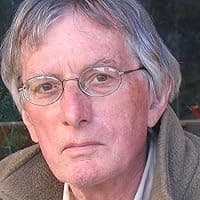
Charles Wright
Charles Wright is an American poet. He shared the National Book Award in 1983 for Country Music: Selected Early Poems and won the Pulitzer Prize in 1998 for Black Zodiac. From 2014 to 2015, he served as the 20th Poet Laureate of the United States. Charles Wright is often ranked as one of the best American poets of his generation. He attended Davidson College and the Iowa Writers’ Workshop; he also served four years in the U.S. Army, and it was while stationed in Italy that Wright began to read and write poetry. He is the author of over 20 books of poetry. Charles Wright is a Chancellor of The Academy of American Poets and the Souder Family Professor of English at the University of Virginia in Charlottesville. His many collections of poetry and numerous awards—including the Pulitzer Prize, the Griffin International Poetry Prize, and a Ruth Lilly Poetry Prize—have proven that he is, as Jay Parini once said, “among the best poets” of his generation. Yet Wright remains stoic about such achievements: it is not the poet, but the poems, as he concluded to Genoways. “One wants one’s work to be paid attention to, but I hate personal attention. I just want everyone to read the poems. I want my poetry to get all the attention in the world, but I want to be the anonymous author.”
26 Books Written

Hard to imagine that no one counts,that only things endure.Unlike the seasons, our shirts don't shed,Whatever we see does not see us,however hard we look,The rain in its silver earrings against the oak trunks,The rain in its second skin.--from "Scar Tissue II"In his new collection, the Pulitzer Prize-winning poet Charles Wright investigates the

The culmination of the cycle that won Wright the Pulitzer Prize and National Book Critics Circle AwardTime will append us like suit coats left out overnightOn a deck chair, loose change dead weight in the right pocket,Silk handkerchief limp with dew,sleeves in a slow dance with the wind.And love will kill us--Love, and the winds from under the eartht

Almost thirty years ago, Charles Wright (who teaches at the University of Virginia in Charlottesville and has won both the Pulitzer Prize and the National Book Award for Poetry) began a poetic project of astonishing scope--a series of three trilogies. The first trilogy was collected in Country Music , the second in The World of the Ten Thousand Things , and the third began with Chickamauga and con

After the end of something, there comes another end,This one behind you, and far away.Only a lifetime can get you to it,and then just barely.Littlefoot , the eighteenth book from one of this country's most acclaimed poets, is an extended meditation on mortality, on the narrator's search of the skies for a road map and for last instructions on "the other side of my own

This volume, Wright's eleventh book of poetry, is a vivid, contemplative, far-reaching, yet wholly plain-spoken collection of moments appearing as lenses through which to see the world beyond our moments. Chickamauga is also a virtuoso exploration of the power of concision in lyric poetry--a testament to the flexible music of the long line Wright has made his own. As a reviewer in Library Journal

A compilation of powerful and moving poems from early in the poet's career.Co-winner of the 1983 National Book Award for Poetry, Country Music is comprised of eighty-eight poems selected from Charles Wright's first four books published between 1970 and 1977. From his first book, The Grave of the Right Hand, to the extraordinary China Trace, this selection of early works represents "Cha

This important book--shot through with reflections on, explorations of, and hymns to both our natural and spiritual realms--features the three poetry collections Charles Wright published during the 1980 The Southern Cross (1981), The Other Side of the River (1984), and Zone Journals (1988).

"I myself am interested in a kind of structural investigation of the line, an attempt at some kind of harmonics involving new patterns and new designs using a long image-freighted line (the odd marriage of Emily and Walt) that can carry information (and 'sincerity' and a lyric intensity at the same time. Not only will it sing, but it will tell time too. Or as Fats Domino once observed, 'I don't wa


Luminous new poems from one who "has long been a poet of gorgeous description" ―William Logan, The New CriterionLandscape, as Wang Wei says, softens the sharp edges of isolation.Don't just do something, sit there.And so I have, so I have,the seasons curling around me like smoke,Gone to the end of the earth and back without a sound. ―from "Body and Soul II"


Quarter Notes harvests recent reviews, essays, memoirs, and interviews by acclaimed poet Charles Wright. Wright uses creative variations on the form of the linear essay including interviews with himself as interviewee, correspondence (with Charles Simic), and experimentation with what he calls Improvisations "non- linear associational storylines". The book's short, staccato-like bursts add up to m

“Wright has a hunk of the ineffable in his teeth and he won’t let go. In poem after poem, he plumbs our deepest relationships with nature, time, love, death, creation. Wright’s search breaks all the barriers of time, space, action, for its dramatic narrative simply refuses to acknowledge the usual unities, as though all time were this time, all places this place and all actions one.”—Philip Levine

Poems deal with mortality, the past, poetry, art, and the importance of place

"[Wright's] penetrating and ravishingly gorgeous lyrical poems are at once classically philosophical and freshly revealing" ( Booklist )Never has Charles Wright's vision been more closely aligned with the work of the ancient Chinese painters and writers who inform his poetry than in his newest collection. Wright's short lyrics, in Charles Simic's words, "achieve a level of eloquence wh

Charles Wright called his seventh collection Zone Journals to emphasize how the poems draw on time and place as their starting point. But despite the air of immediacy and informality, they are artfully composed, informed as always by Wright's profound sense of subliminal order.


Winner of the Pulitzer Prize and the National Book Critics Circle AwardBlack Zodiac offers poems suffused with spiritual longing—lyrical meditations on faith, religion, heritage, and morality. The poems also explore aging and mortality with restless grace. Approaching his vast subjects by way of small moments, Wright magnifies details to reveal truths much larger than the quotid

Twenty poems look at the past, dreams, art, nature, other lands, time, and the lie beyond everyday life

Sestets is the nineteenth book from one of the country's most acclaimed poets, a masterpiece of formal rigor and a profound meditation on nature and mortality. It is yet another virtuosic showcase for Charles Wright's acclaimed descriptive powers, and also an inquiry into the nature of description itself, both seductive and "a virtual world/ Unfit for the virtuous." Like his previous books, Sestet

Graphic art and poems that are rueful, but never grim, offer a graceful meditation on the approach of death.

Over the course of nineteen collections of poems, Charles Wright has built "one of the truly distinctive bodies of poetry created in the second half of the twentieth century" (David Young, Contemporary Poets ). Bye-and-Bye , which brings together selections from Wright's more recent work―including the entirety of Littlefoot , Wright's moving, book-length meditation on mortality―showcases the theme

A powerfully moving meditation on life, nature, and the beyond, from one of our finest American poetsThis is an old man’s poetry, written by someone who’s spent his lifeLooking for one truth.Sorry, pal, there isn’t one. —from “Ancient of Days”Charles Wright’s truth—the truth of nature, of man’s yearning for the divine, of aging—is at

The selected works of one of our finest American poetsThe thread that dangles usbetween a dark and a darker dark,Is luminous, sure, but smooth sided.Don’t touch it here, and don’t touch it there.Don’t touch it, in fact, anywhere―Let it dangle and hold us hard, let it flash and swing.―from “Scar Tissue”Over the course of his work―more than

The Way of the Heart: The Spiritual Experience of André Louf (Volume 72)
by Charles Wright
Rating: 3.0 ⭐
Award-winning French author shares the biography and spiritual journey of Cistercian abbot Dom André Louf. Based on a wide variety of interviews, printed sources, and Dom André Louf’s spiritual journal, The Way of the Heart narrates Louf’s spiritual journey from his childhood in Flanders through his becoming a monk in a Cistercian monastery, his ten years of retire