
Cathy O'Neil
Cathy O’Neil is the author of the bestselling Weapons of Math Destruction, which won the Euler Book Prize and was longlisted for the National Book Award. She received her PhD in mathematics from Harvard and has worked in finance, tech, and academia. She launched the Lede Program for data journalism at Columbia University and recently founded ORCAA, an algorithmic auditing company. O’Neil is a regular contributor to Bloomberg View.
8 Books Written
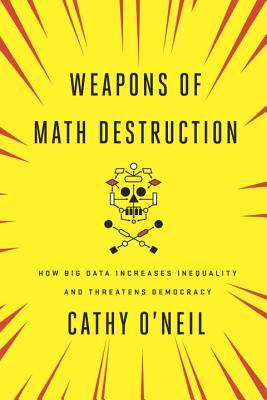
Weapons of Math Destruction: How Big Data Increases Inequality and Threatens Democracy
by Cathy O'Neil
Rating: 3.9 ⭐
• 2 recommendations ❤️
We live in the age of the algorithm. Increasingly, the decisions that affect our lives--where we go to school, whether we can get a job or a loan, how much we pay for health insurance--are being made not by humans, but by machines. In theory, this should lead to greater fairness: Everyone is judged according to the same rules.But as mathematician and data scientist Cathy O'Neil reveals, the mathematical models being used today are unregulated and uncontestable, even when they're wrong. Most troubling, they reinforce discrimination--propping up the lucky, punishing the downtrodden, and undermining our democracy in the process.

A clear-eyed warning about the increasingly destructive influence of America’s “shame industrial complex” in the age of social media and hyperpartisan politics—from the New York Times bestselling author of Weapons of Math DestructionShame is a powerful and sometimes useful tool: When we publicly shame corrupt politicians, abusive celebrities, or predatory corporations, we reinforce values of fairness and justice. But as Cathy O’Neil argues in this revelatory book, shaming has taken a new and dangerous turn. It is increasingly being weaponized—used as a way to shift responsibility for social problems from institutions to individuals. Shaming children for not being able to afford school lunches or adults for not being able to find work lets us off the hook as a society. After all, why pay higher taxes to fund programs for people who are fundamentally unworthy?O’Neil explores the machinery behind all this shame, showing how governments, corporations, and the healthcare system capitalize on it. There are damning stories of rehab clinics, reentry programs, drug and diet companies, and social media platforms—all of which profit from “punching down” on the vulnerable. Woven throughout The Shame Machine is the story of O’Neil’s own struggle with body image and her recent decision to undergo weight-loss surgery, shaking off decades of shame.With clarity and nuance, O’Neil dissects the relationship between shame and power. Whom does the system serve? Is it counter-productive to call out racists, misogynists, and vaccine skeptics? If so, when should someone be “canceled”? How do current incentive structures perpetuate the shaming cycle? And, most important, how can we all fight back?
Now that people are aware that data can make the difference in an election or a business model, data science as an occupation is gaining ground. But how can you get started working in a wide-ranging, interdisciplinary field that’s so clouded in hype? This insightful book, based on Columbia University’s Introduction to Data Science class, tells you what you need to know.In many of these chapter-long lectures, data scientists from companies such as Google, Microsoft, and eBay share new algorithms, methods, and models by presenting case studies and the code they use. If you’re familiar with linear algebra, probability, and statistics, and have programming experience, this book is an ideal introduction to data science.Topics include:Statistical inference, exploratory data analysis, and the data science processAlgorithmsSpam filters, Naive Bayes, and data wranglingLogistic regressionFinancial modelingRecommendation engines and causalityData visualizationSocial networks and data journalismData engineering, MapReduce, Pregel, and HadoopDoing Data Science is collaboration between course instructor Rachel Schutt, Senior VP of Data Science at News Corp, and data science consultant Cathy O’Neil, a senior data scientist at Johnson Research Labs, who attended and blogged about the course.
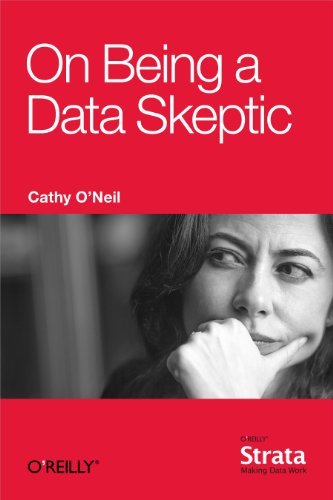
"Data is here, it's growing, and it's powerful." Author Cathy O'Neil argues that the right approach to data is skeptical, not cynical it understands that, while powerful, data science tools often fail. Data is nuanced, and "a really excellent skeptic puts the term 'science' into 'data science.'" The big data revolution shouldn't be dismissed as hype, but current data science tools and models shouldn't be hailed as the end-all-be-all, either."

L'era dell'umiliazione: Come le aziende, i social media e gli algoritmi alimentano la macchina della vergogna che ci domina
by Cathy O'Neil
Rating: 4.1 ⭐
VERGOGNA! urlano molti commenti sui social, molti cartelli alle manifestazioni. È una voce rabbiosa che si alza dal basso verso l'alto, a chiedere giustizia in una società ingiusta. E d'altra parte gli antropologi ci spiegano che esistono da sempre riti di purificazione collettiva in cui la vergogna è uno strumento attraverso una benefica umiliazione, il trasgressore viene perdonato e ricondotto verso virtuosi comportamenti. Ma è sempre così? Cathy O'Neil è una brillante matematica esperta di algoritmi. Ma è anche una persona che conosce da vicino l' fin da bambina si è impegnata in diete continue e fallimentari, provando sulla sua pelle le mille forme in cui le persone grasse sono ridicolizzate nella società statunitense. Così ha deciso di imbarcarsi in questa ricerca che punta al cuore della vergogna contemporanea, troppo spesso usata come arma di colpisce i poveri nel labirintico sistema dei sussidi, i tossicodipendenti in cerca di recupero, gli anziani, i malati, gli ex carcerati, colpisce gli stranieri che «dovrebbero essere grati», ma anche le donne che «non stanno al loro posto». L'era dell'umiliazione mostra bene, alternando testimonianze, esempi di cronaca e dati statistici, come la "macchina della vergogna" diventi un meccanismo diabolico ogniqualvolta la collettività si disgrega e perde coesione, riducendosi in una rabbiosa guerra tra bande. In questo il mondo digitale ha un ruolo di accelerazione e basta un video di dieci secondi su un social network per rovinare la vita di una persona; e basta consultare una volta un sito di diete per finire perseguitati da mail e pubblicità che fanno leva sulle insicurezze per spillare soldi. Perché, e questa è forse la cosa più odiosa, la macchina della vergogna è anche un business che arricchisce tanto aziende tradizionali che vendono cure miracolose anti-aging quanto giganti dell'hi-tech che lucrano sul traffico creato dalle gogne social. Ma, spiega O'Neil, è possibile sottrarsi a tutto questo, imparando a smantellare la macchina spietata e reimparando invece il ciclo virtuoso della vergogna, fatto di empatia, condivisione e soprattutto perdono. «L'era dell'umiliazione sfata molti miti pseudoscientifici su diete miracolose e affini, ma è soprattutto una critica sociale, tanto lucida quanto spesso commovente, in grado di portare alla luce i costi umani della "macchina della vergogna".» - The New Yorker «Forte di una montagna di dati e storie vere, Cathy O'Neil racconta la miriade di situazioni in cui ogni giorno le persone vengono derise e umiliate. E mostra bene come queste storie di dolore nascondano anche una fonte di lucro per qualcun altro.» - The Washington Post «La vergogna, dimostra Cathy O'Neil, è una lente preziosa attraverso cui guardare le nostre azioni e il sistema in cui viviamo.» - Financial Times «L'era dell'umiliazione smonta con cura la nostra tendenza ad abdicare al dovere sociale di proteggere chi è più spesso ci convinciamo che chi è povero, o tossicodipendente, se lo merita perché è un fallito.» - The New York Times

ESCOLHA DOS EDITORES DO THE NEW YORK TIMESELEITO COMO UM DOS MELHORES LIVROS DO ANO PELO THE TIMESDa mesma autora do best-seller Algoritmos de Destruição em Massa, um alerta claro sobre a influência destrutiva do "complexo industrial da vergonha"."Cathy O'Neil encoraja os leitores a pensar profundamente não apenas sobre o que é a vergonha, mas para que ela pode servir. Uma resposta à nossa alucinação digital." — Jennifer Szalai, The New York Times"Qual é a relação entre vergonha e poder? A vergonha se transformou em uma arma? Neste livro, Cathy O'Neil aborda a questão, explorando até que ponto a vergonha pública está se tornando perigosa." — Evening StandardTraduzido do inglês por Rafael Abraham

Weapons of Math Destruction, Algorithms to Live By, The Courage To Be Disliked 3 Books Collection Set
by Cathy O'Neil
Rating: 1.0 ⭐
Please Note That The Following Individual Books As Per Original ISBN and Cover Image In this Listing shall be Dispatched Weapons of Math Destruction, Algorithms to Live By, The Courage To Be Disliked 3 Books Collection Weapons of Math We live in the age of the algorithm. Increasingly, the decisions that affect our lives - where we go to school, whether we get a loan, how much we pay for insurance - are being made not by humans, but by mathematical models. In theory, this should lead to greater everyone is judged according to the same rules. Algorithms to Live In this dazzlingly interdisciplinary work, acclaimed author Brian Christian and cognitive scientist Tom Griffiths show us how the simple, precise algorithms used by computers can also untangle very human questions. Modern life is constrained by limited space and time, limits that give rise to a particular set of problems. The Courage To Be The Courage to be Disliked shows you how to unlock the power within yourself to become your best and truest self, change your future and find lasting happiness. Using the theories of Alfred Adler, one of the three giants of 19th century psychology alongside Freud and Jung, the authors explain how we are all free to determine.

Algoritmos de Destruição em Massa: Como o Big Data aumenta a desigualdade e ameaça a democracia
by Cathy O'Neil
Bem-vindo ao outro lado do Big Data. – Best Seller do New York Times – Indicado ao National Book Award – "Um manual para o cidadão do século XXI… Relevante e urgente." ― Financial Times "O livro de Cathy O'Neil oferece um olhar assustador sobre como os algoritmos estão regulando as pessoas. Seu conhecimento do poder e dos riscos dos modelos matemáticos, juntamente com o dom da analogia, torna-a uma das mais valiosas observadoras da contínua ameaça do Big Data." ― The New York Times Vivemos na Era do Algoritmo. Cada vez mais, as decisões que afetam nossas vidas ― onde estudamos, se obtemos um empréstimo para comprar um carro, quanto pagamos pelo seguro saúde ― estão sendo tomadas por modelos matemáticos. Em teoria, isso deveria nos conduzir para um mundo mais todos são julgados de acordo com as mesmas regras e o preconceito é eliminado. Mas, como Cathy O'Neil revela neste livro urgente e necessário, a verdade é justamente o contrário. Os modelos usados hoje são opacos, não regulamentados e incontestáveis, mesmo quando estão errados. Cathy O'NeilO mais preocupante é que eles reforçam a discriminaçã se um estudante pobre não consegue obter um empréstimo porque o modelo matemático o considera muito arriscado (graças ao endereço onde mora), ele também é recusado na universidade que poderia tirá-lo da pobreza. Os algoritmos criam uma espiral discriminatória. Os modelos amparam os privilegiados e punem os oprimidos, criando um "coquetel tóxico para a democracia".