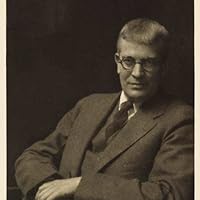
Carl van Doren
Carl Clinton van Doren, a United States critic and biographer, won Pulitzer Prize. He was the brother of Mark van Doren and the uncle of Charles van Doren.
25 Books Written

Carl Van Doren received the 1938 Pulitzer Prize in Biography for this work. It contains the most extensive collection of Benjamin Franklin's autobiographical writings, much of which was long out-of-print. Also included are some fifty letters written by Franklin that was never published before.

Carl Van Doren received the 1938 Pulitzer Prize in Biography for this work. It contains the most extensive collection of Benjamin Franklin's autobiographical writings, much of which was long out-of-print. Also included are some fifty letters written by Franklin that were never published before.

s/t: The Story of the Making & Ratifying of the Constitution of the United StatesPrefaceCommander & PhilosopherPreliminary Planning Revision or Creation The Legislature & the PeopleThe Virginia Plan Small & Large States The Federal CompromisePlans for the United StatesA Rising Sun The War of Words & IdeasNine Necessary States The Remaining StatesThe Federal ProcessionAppendicesSources & AcknowledgmentsIndex
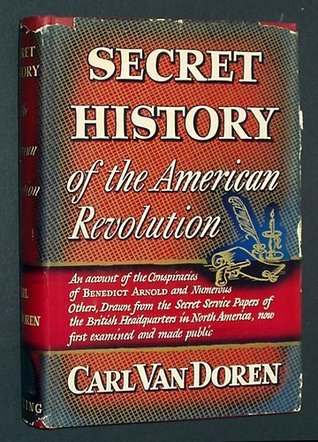
s/t: An Account of the Conspiracies of Benedict Arnold & Numerous Others Drawn from the Secret Service Paper

The American author & editor, Van Doren, traces the life of James Branch Cabell. Today, Cabell is recognized by some as one of the 1st contemporary writers from the South. He's also noted for his unique ability to blend classic myths & legends with his own imagination; & is considered a pioneer of fantasy writing.Cabell MinorCabell MajorScholiaBibliography

THE AMERICAN NOVEL By Carl Van Doren CONTENTS Preface I. Beginnings of Fiction 1. Arguments and Experiments 2, Three Matters of American Romance II. James Kenimore Cooper III. Romances of Adventure IV. Nathaniel Hawthorne V Herman Melville VI. Blood and Tears VII. Howells and Realism 1. New Frontiers and Old Settlements 2. William Dean Howells. VIII. Mark Twain IX. Henry James X. Types of Fiction XI. Local and Historical 1. Local Color 2. Romantic History XII. Emergence of Naturalism XIII. Theodore Dreiser XIV. Tradition and Transition 1. Stream of Fiction 2. Edith Wharton XV, Willa Gather XVI, Revolt from the Village XVII. Sinclair Lewis........... 303 XVIII. Romance, Comedy, Satire 1. James Branch Caboll 2, Lively Decade XIX, New Realisms 1. Post War 2. Thomas Wolfe XX. Revisions Bibliography Index


This book was converted from its physical edition to the digital format by a community of volunteers. You may find it for free on the web. Purchase of the Kindle edition includes wireless delivery.

"An anthology made with a light heart." Includes works by:Sinclair Lewis,Ernest Hemmingway, Don Marquis, Dorothy Parker and many others for no particular reason that I can fathom. The book is obviously made up of reprints, with page numbers suitable only for the particular piece (which obviously came out of some other anthology), and at least three font sizes. Seems like a "freebie" or a Book-of-the-Month-Club book. Cheap paper. Sinclair Lewis's story, "Ring Around A Rosy: A Story" was published for the first time in this volume, according to the story's flyleaf.

The Great Rehersal: The Story of the Making and Ratifying of the Constitution of the United States
by Carl van Doren
Rating: 5.0 ⭐
The story of the making and ratifying of The Constitution of the United States. The Constitution is such an ingrained part of our everyday lives that sometimes we forget the drama of it's origin. This is the story published in 1948. Illustrations are included of important buildings and several of the forward thinking leaders of our country.

About the Book This title is a Drama title. Drama books mostly analyze the performance of a play in a theater, or contain the entire script of the play. Plays can be divided into a number of genres, including classical and modern, and across cultural lines. Some examples are: Famous Plays: Their Histories and Their Authors, St. Nicholas book of plays & operettas, The Wierd Wanderer of Jutland, The Death of Ivan the Terrible, and The Scarlet Letter. Also in this Book A Family Saga or Family Life novel chronicles the life of a family, or several generations. The story is usually set against the backdrop of history, with the waxing and waning of fortunes and inter-generational issues providing interest. An example is Poor White, by Sherwood Anderson. And in this Book Historical Fiction books set their characters and plot at some time in the past, providing adequate background on the customes and mores of that time to make it seem believable to the reader, whilst not necessarily remaining true to actual historical events in that setting. This genre became quite popular in Europe and North America during the 19th century. Examples include: A Plot and a Peerage, Uncle Moses, Vathek; An Arabian Tale, The Naulahka: A Story of West and East, The Bindweed: A Romantic Novel Concerning the Late Queen of Servia, and Hawk's Nest, or the last of the Cahoonshees. About us Leopold Classic Library’s aim is to provide readers with the highest quality reproductions of fiction and non-fiction literature that has stood the test of time. Our titles are produced from scans of the original books and as a result may sometimes have imperfections. To ensure a high-quality product we have: thoroughly reviewed every page of all the books in the catalog repaired some of the text in some cases, and rejected titles that are not of the highest quality. If You can't find the book You're looking for, please write to us. We will look for it in our catalog and find the best price for You in our eBay store. Come home to the books that made a difference! Thank you for your interest in our books!

Carl Van Doren (1885-1950), longtime professor of English at Columbia University was a widely published literary critic and author of such works as The American Novel (1921) and the biography Benjamin Franklin (1938), which won the Pulitzer Prize. The following statement first published in the Forum for December 1926 and gathered in the anthology Twelve Modern Apostles and Their Creeds (1926) refutes, with simple eloquence, numerous beliefs regarding atheism: that it is merely negative, that it is a bleak view of the world, and that atheists are less moral than believers.

This work has been selected by scholars as being culturally important, and is part of the knowledge base of civilization as we know it. This work was reproduced from the original artifact, and remains as true to the original work as possible. Therefore, you will see the original copyright references, library stamps (as most of these works have been housed in our most important libraries around the world), and other notations in the work.This work is in the public domain in the United States of America, and possibly other nations. Within the United States, you may freely copy and distribute this work, as no entity (individual or corporate) has a copyright on the body of the work.As a reproduction of a historical artifact, this work may contain missing or blurred pages, poor pictures, errant marks, etc. Scholars believe, and we concur, that this work is important enough to be preserved, reproduced, and made generally available to the public. We appreciate your support of the preservation process, and thank you for being an important part of keeping this knowledge alive and relevant.


Sinclair Lewis: A Biographical Sketch
by Carl van Doren
A biographical sketch of American novelist Sinclair Lewis, winner of the Nobel Prize in Literature. Includes a bibliography by Harvey Taylor

Swift: A Biography
by Carl van Doren
Leather Binding on Spine and Corners with Golden Leaf Printing on round Spine (extra customization on request like complete leather, Golden Screen printing in Front, Color Leather, Colored book etc.) Reprinted in 2022 with the help of original edition published long back [1930]. This book is printed in black & white, sewing binding for longer life, Printed on high quality Paper, re-sized as per Current standards, professionally processed without changing its contents. As these are old books, we processed each page manually and make them readable but in some cases some pages which are blur or missing or black spots. If it is multi volume set, then it is only single volume, if you wish to order a specific or all the volumes you may contact us. We expect that you will understand our compulsion in these books. We found this book important for the readers who want to know more about our old treasure so we brought it back to the shelves. Hope you will like it and give your comments and suggestions. - English, Pages 316. EXTRA 10 DAYS APART FROM THE NORMAL SHIPPING PERIOD WILL BE REQUIRED FOR LEATHER BOUND BOOKS. COMPLETE LEATHER WILL COST YOU EXTRA US$ 25 APART FROM THE LEATHER BOUND BOOKS. {FOLIO EDITION IS ALSO AVAILABLE.} Complete Swift 1930 Van Doren, Carl, -
Modern American Prose
by Carl van Doren

Indian Treaties Printed by Benjamin Franklin, 1736-1762
by Carl van Doren
This work has been selected by scholars as being culturally important, and is part of the knowledge base of civilization as we know it. This work was reproduced from the original artifact, and remains as true to the original work as possible. Therefore, you will see the original copyright references, library stamps (as most of these works have been housed in our most important libraries around the world), and other notations in the work.This work is in the public domain in the United States of America, and possibly other nations. Within the United States, you may freely copy and distribute this work, as no entity (individual or corporate) has a copyright on the body of the work.As a reproduction of a historical artifact, this work may contain missing or blurred pages, poor pictures, errant marks, etc. Scholars believe, and we concur, that this work is important enough to be preserved, reproduced, and made generally available to the public. We appreciate your support of the preservation process, and thank you for being an important part of keeping this knowledge alive and relevant.
Benjamin Franklin and Jonathan Edwards Selections from Their Writings, Ed: With an Introduction
by Carl van Doren
Excerpt from Benjamin Franklin and Jonathan Selections From Their WritingsSignificance may justly be attached to the difference between the social classes from which the two sprang, and perhaps to the difference between their native colonies. Edwards, the senior by three years, was born in 17 03 at East Windsor, Connecticut, a compact and orthodox par ish of the most oak-hearted of all the Puritan states. Franklin, on the other hand, passed his first seventeen years in Boston, exposed to the liberal winds which gen erally blow, much or little, even in provincial Puritan metropolises. Moreover, Franklin came from plain tradesman or artisan stock, which boasted - or rather, did not boast - a versifying scion or two, but which had had no clergymen or magistrates. Edwards had in him the blood of both those professions, and was bred in the strict est paths of orthodoxy and responsibility. While Frank lin was being taken about by his thrifty father to see the various trades that he might discover a partiality for some one of them, Edwards was already in Yale, being confirmed in the clerical disposition which was his birth right and fate.The Autobiography has a classic passage upon Frank lin's youthful reading and writing, and upon the careful pains the boy took to form his prose style. He passed somewhat casually by his father's books Of divinity, and rapidly devoured such Virtuous romance and history as came his way, but at sixteen or so he read Locke's Essay Concerning Human Understanding, Xenophon's Memo rabilia, Shaftesbury, and Collins. Becoming a free thinker, he studied, as an aid to argument, the Socratic method of humble, though premeditated, inquiry never using, when I advanced anything that may pos sibly be disputed, the words certainly, undoubtedly, or any others that give the air of positiveness to an Opinion.About the PublisherForgotten Books publishes hundreds of thousands of rare and classic books. Find more at www.forgottenbooks.comThis book is a reproduction of an important historical work. Forgotten Books uses state-of-the-art technology to digitally reconstruct the work, preserving the original format whilst repairing imperfections present in the aged copy. In rare cases, an imperfection in the original, such as a blemish or missing page, may be replicated in our edition. We do, however, repair the vast majority of imperfections successfully; any imperfections that remain are intentionally left to preserve the state of such historical works.

SWIFT
by Carl van Doren